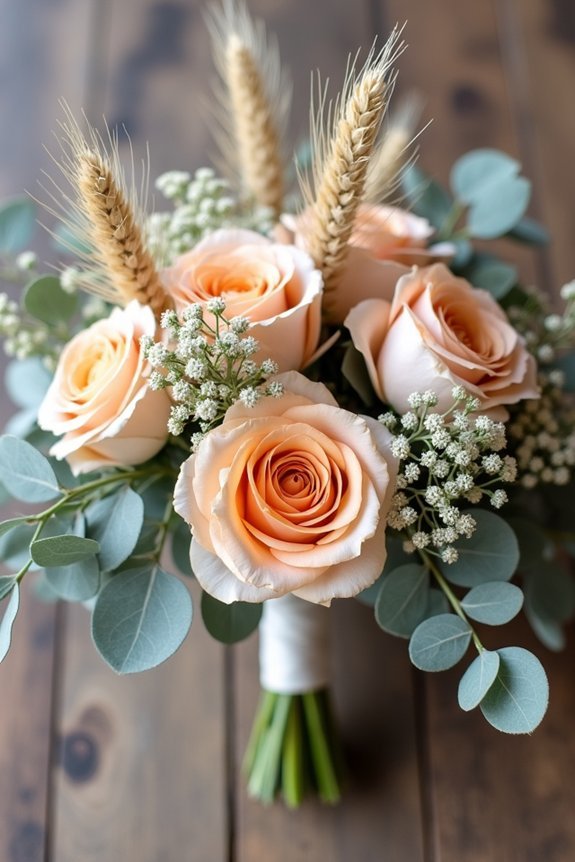
We love how rust-toned bouquets blend warmth and elegance through layered textures. Start with terracotta hues and dried florals like pampas grass for your foundation. Then add seasonal blooms—think dahlias in summer or burgundy carnations in winter. Incorporate copper and gold metallics through ribbon and spray-painted grasses for sophistication. Finally, build depth by arranging tall grasses first, then shorter flowers in front for visibility and drama. Each layer creates intentional beauty that’ll transform your wedding aesthetic.
At a Glance
- Terracotta and dried florals establish a warm, earthy foundation that feels intentional and naturally cohesive for rustic weddings.
- Layer seasonal flowers like ranunculus, dahlias, and celosia with grasses for authentic texture and organic movement throughout bouquets.
- Incorporate metallic accents through copper, bronze, and gold spray paint on dried elements for sophisticated rustic elegance.
- Use pampas grass, wheat, and seedpods to add airiness, dimension, and dramatic focal points to bouquet arrangements.
- Arrange tallest grasses first, layer shorter flowers forward, and turn bouquet regularly to ensure fullness and visibility from all angles.
Terracotta & Dried Florals: Building Your Color Foundation
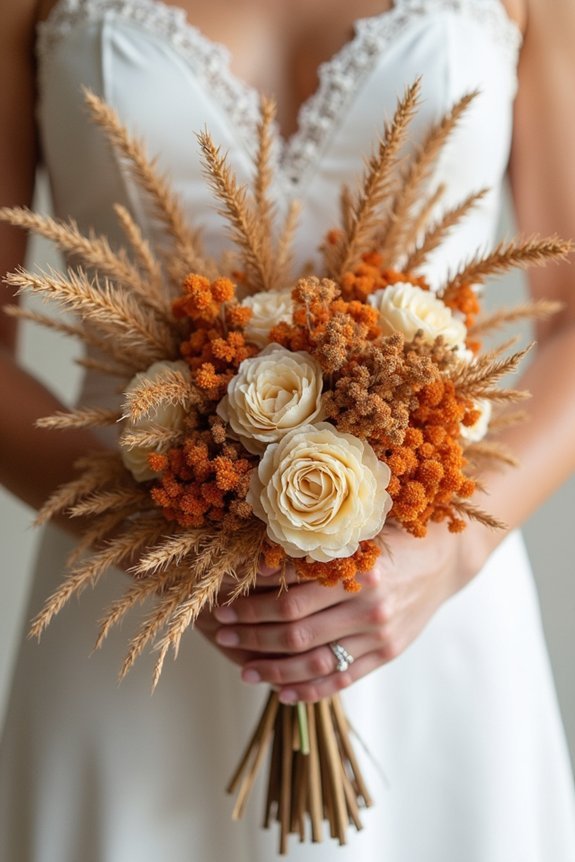
When we think about rustic wedding bouquets, color sets the entire mood—and terracotta paired with dried florals creates a foundation that’s both timeless and effortlessly sophisticated.
Terracotta’s warm, earthy tone anchors your bouquet beautifully, while dried florals like pampas grass, wheat, and dusty rose add texture and movement.
These elements work together to establish a cohesive aesthetic that feels intentional yet natural. The combination allows you to build layers of visual interest without overwhelming your design. For a coordinated bridal look, consider pairing your rustic bouquet with a bridal belt with rhinestones to add elegant sparkle to your wedding ensemble.
Choosing Seasonal Flowers for Rust Weddings
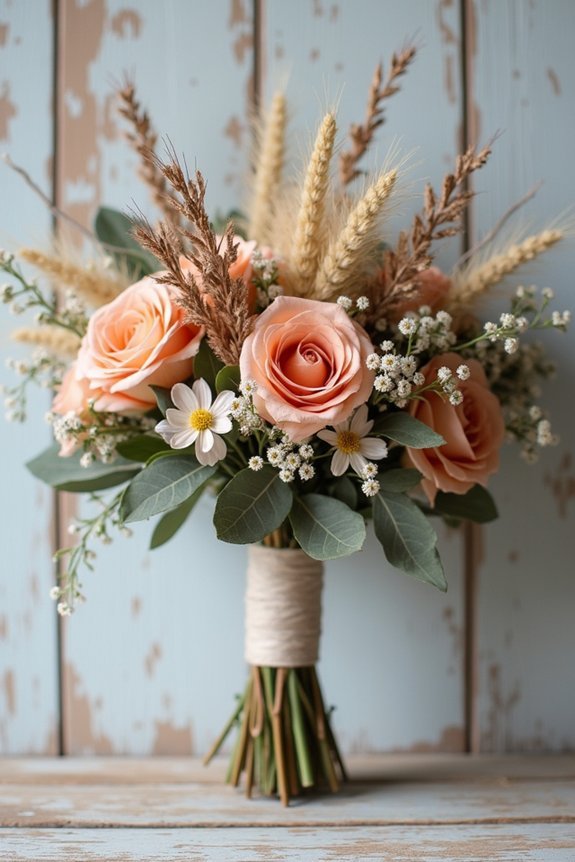
Since we’ve established your terracotta and dried floral foundation, the next step is selecting blooms that’ll actually be available during your wedding season—and that complement your rustic aesthetic beautifully.
Seasonal flowers are your secret weapon. They’re fresher, more affordable, and naturally aligned with what nature’s already offering during your celebration date.
Here’s what to prioritize:
- Spring weddings: Ranunculus, garden roses, and fresh greenery
- Summer celebrations: Dahlias, sunflowers, and wildflowers
- Fall events: Marigolds, celosia, and hypericum berries
- Winter occasions: Amnesia roses, burgundy carnations, and eucalyptus
Working with what’s naturally blooming guarantees your bouquet feels authentically rustic while keeping your budget realistic. Consider using a guest list manager to coordinate flower selections with your caterer’s meal planning for seamless event coordination.
Layering in Copper and Metallics
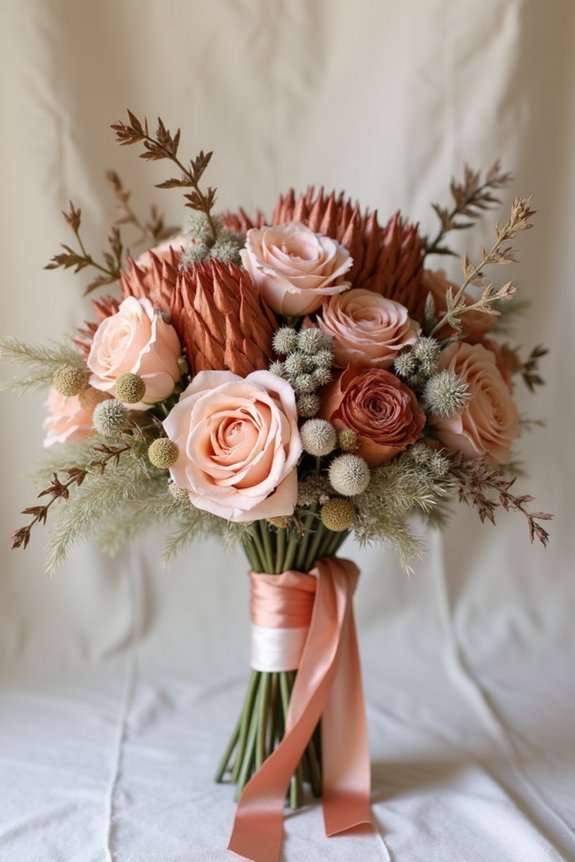
Once you’ve chosen your seasonal flowers and established that terracotta foundation, adding metallic accents becomes the finishing touch that transforms a pretty bouquet into a sophisticated statement.
We recommend weaving in copper, bronze, and gold elements through several methods. Consider incorporating dried grasses with metallic spray paint, adding metallic ribbon wrapping around the stems, or including preserved foliage dusted with gold leaf.
These accents catch light beautifully in photographs and create dimension that elevates your bouquet’s elegance. The key is restraint—we’re enhancing, not overwhelming. A few strategic metallic touches will give you that polished, intentional look you’re after. Pairing your bouquet with complementary jewelry, such as bridal pearl jewelry sets, ensures your entire bridal aesthetic harmonizes beautifully.
Building Depth With Grasses and Seedpods
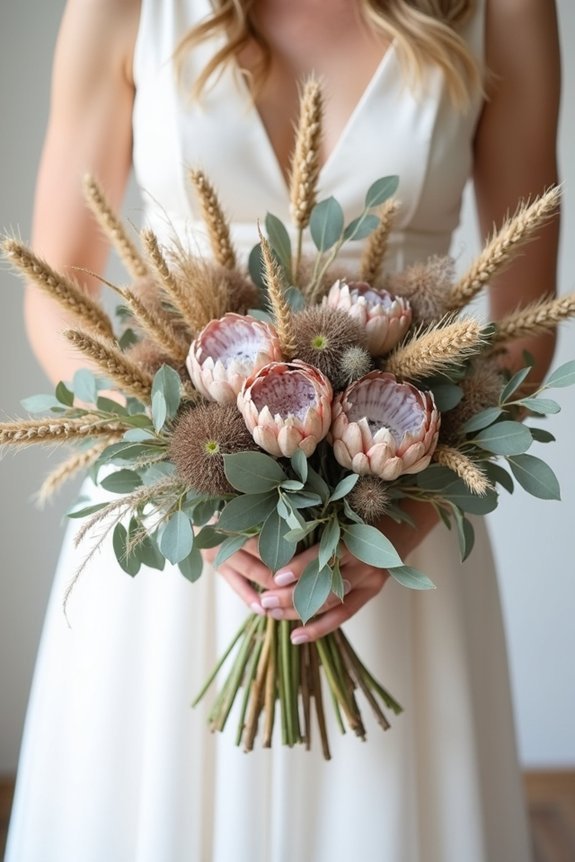
Three elements work together to create bouquet depth: your primary flowers provide the color and focal points, your greenery establishes structure, and grasses plus seedpods add airiness and movement.
We love how these textural additions transform a bouquet from flat to dimensional.
Consider these options for adding depth:
- Pampas grass for soft, feathery texture and height
- Wheat or rye for golden, rustic authenticity
- Dried seedpods like nigella or baptisia for intrigue
- Leather leaf fern for delicate, flowing movement
We find that layering these elements throughout your arrangement creates natural flow.
Mix grasses at varying heights, and tuck seedpods between focal flowers.
This approach guarantees your bouquet feels organic and intentionally crafted, capturing that effortless rustic elegance we’re after. For outdoor wedding venues, consider how outdoor string lighting can complement your bouquet’s warm, textural aesthetic.
Arranging Your Bouquet for Drama and Balance
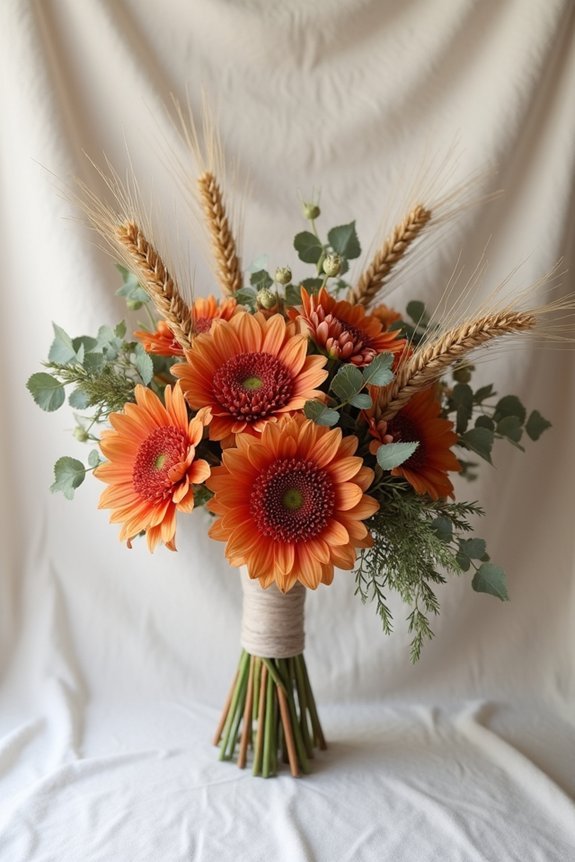
Now that you’ve gathered your textural elements, it’s time to bring them together in a way that captures attention while feeling perfectly balanced.
Start by placing your tallest grasses and seedpods toward the center and back, creating height that draws the eye upward.
Layer shorter flowers in front, allowing each bloom to peek through without hiding others. Turn your bouquet as you work, ensuring fullness from every angle.
We’d suggest stepping back frequently to assess negative space—those pockets of air make dramatic focal flowers pop.
Consider pairing your rustic bouquet with a bridal headpiece that complements the natural, textured aesthetic for a cohesive wedding day look.
This intentional arrangement transforms individual pieces into a cohesive, show-stopping creation.
Frequently Asked Questions
How Do I Preserve My Rustic Bouquet After the Wedding?
We recommend air-drying your bouquet by hanging it upside down in a cool, dark space for two weeks. You can also press individual flowers between book pages or use silica gel for faster preservation that keeps colors vibrant.
What’s the Average Cost of a Rustic Wedding Bouquet Versus Traditional Florals?
Rustic bouquets won’t bankrupt you—they’re shockingly affordable! We’re talking $75–$150 versus traditional florals at $150–$300. You’ll pocket serious savings while getting that Instagram-worthy, effortlessly elegant look we all crave.
Can I Order Rustic Flowers From Local Farmers or Online Suppliers?
We’d absolutely recommend sourcing from local farmers—they’ll offer seasonal blooms at better prices. Online suppliers work too, but farmers’ markets give you direct relationships and fresher stems for your rustic bouquet.
How Far in Advance Should I Order Dried Flowers for My Wedding?
We recommend ordering dried flowers 2-3 months before your wedding. This timeline gives suppliers time to source quality blooms and lets you plan arrangements without rushing. It’s the sweet spot for stress-free coordination.
Will a Rustic Bouquet Photograph Well in Different Lighting Conditions?
You’d think dried flowers might disappear in shadows, but here’s what we’ve found: rustic bouquets actually photograph beautifully across all lighting. Their natural textures catch both soft and harsh light, creating stunning dimension that’ll make your photos magazine-worthy.