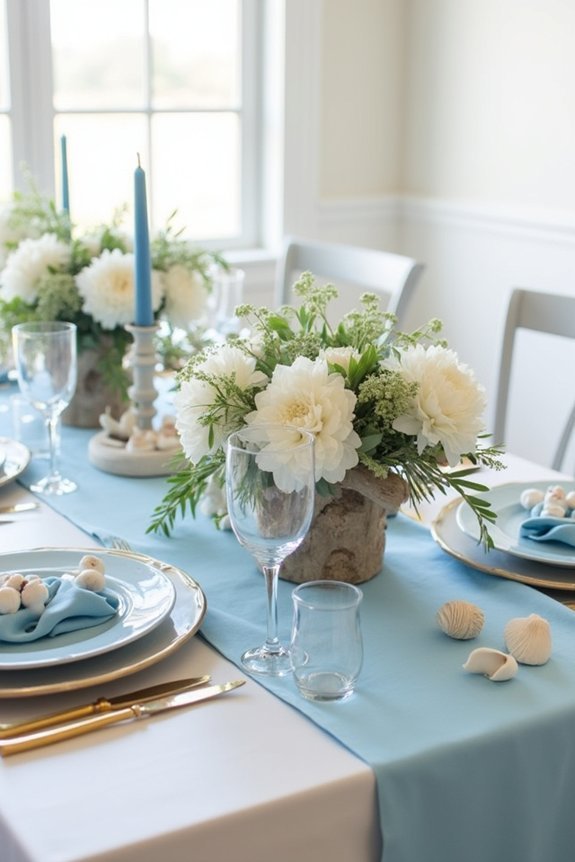
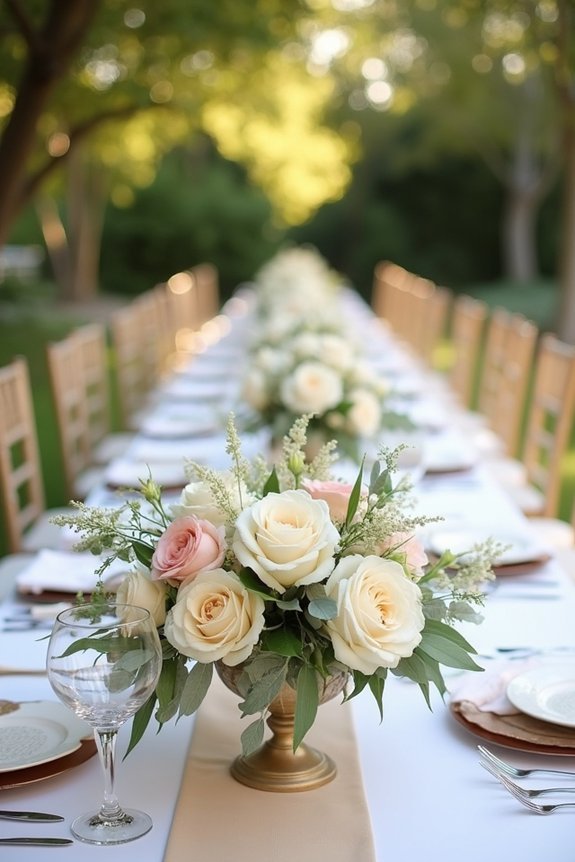
We’ll create stunning spring wedding décor by starting with a solid budget—allocate 8-12% of your total budget for decorations. Scout your venue’s natural light and architecture, then choose 2-3 soft spring colors paired with peonies, tulips, and ranunculus. Mix textures like linens and wood for visual depth, rent large pieces to save money, and DIY simpler accents. Start planning six months ahead, sourcing major décor four months out. Following this strategic timeline guarantees your venue transforms beautifully while staying within budget, and there’s much more to discover about executing each step flawlessly.
At a Glance
- Set a decor budget of 8-12% of your total wedding budget and prioritize key elements like florals, lighting, and rentals.
- Visit your venue at different times to assess natural light, ceiling height, and architectural features for optimal decoration planning.
- Choose two to three spring colors with soft pastels or jewel tones, then select abundant seasonal blooms like peonies and tulips.
- Mix textures and finishes—combine soft linens with sleek glass and natural wood—to create visual depth and catch light effectively.
- Start planning six months ahead; source major pieces four months out, gather smaller accents two months prior, and confirm deliveries one month before.
Set Your Decor Budget Before You Shop
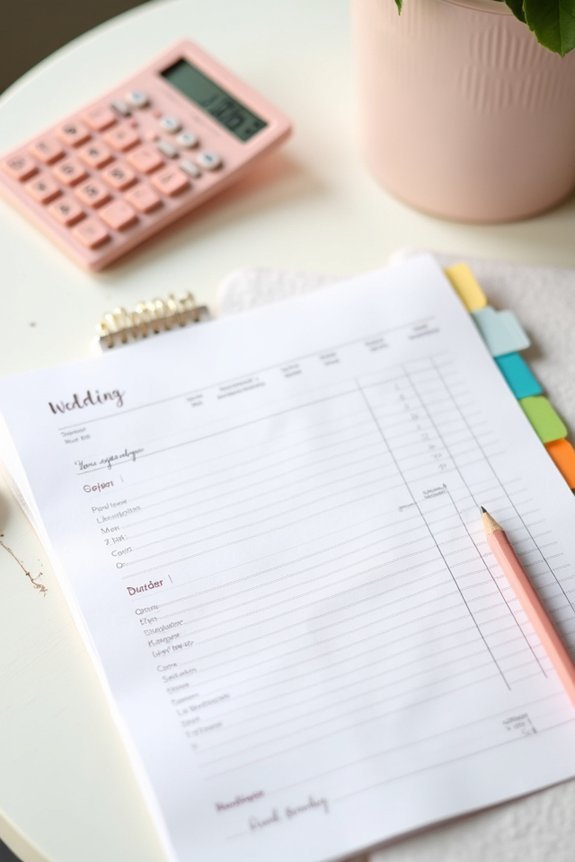
Before you fall in love with that stunning floral installation or hand-calligraphed menu card, let’s talk numbers—because we realize how easy it’s to get swept up in beautiful inspiration and lose sight of what you can actually spend.
Setting a decor budget early keeps you grounded and prevents buyer’s remorse later. Determine what percentage of your total wedding budget you’re comfortable allocating to decorations, typically between 8-12%.
Then, list your priorities: florals, lighting, rentals, or linens. This clarity helps you make intentional choices that align with your vision and finances, allowing you to feel confident and stress-free as you shop. Remember that all information provided here is for entertainment purposes only, so use these guidelines as inspiration rather than absolute rules for your specific situation.
Scout Your Venue’s Layout and Light
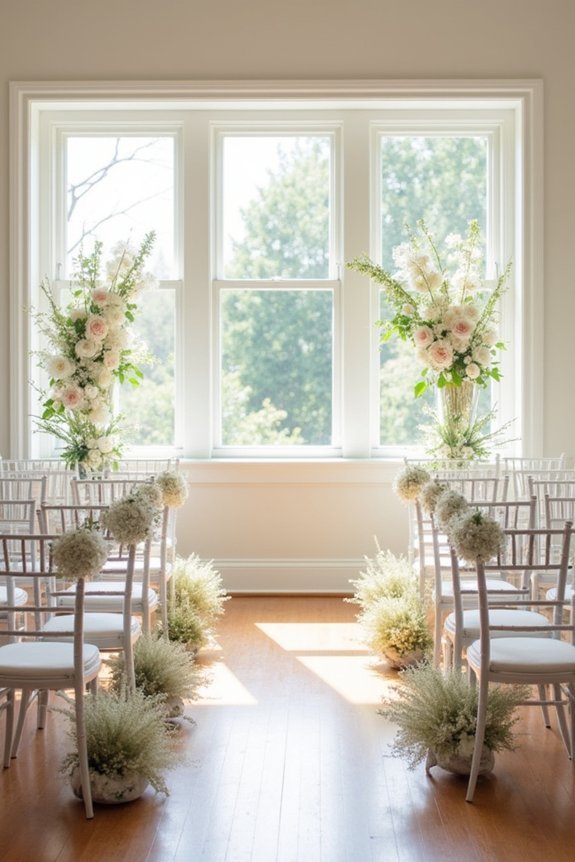
Once you’ve pinned down your budget and priorities, it’s time to visit your venue with fresh eyes and a practical mindset.
Walk through different times of day to observe how natural light shifts across your space. Notice where shadows fall and which areas glow beautifully during your ceremony time.
Check ceiling heights, column placements, and architectural features that’ll influence your decor layout.
Take photos and measurements. Consider using a wedding budget spreadsheet to track how different decor elements fit within your financial allocation. Understanding your venue’s bones helps us make smart design choices that enhance rather than fight against what’s already there, maximizing your budget’s impact and creating that magazine-quality aesthetic you’re after.
Start With Your Spring Color Palette
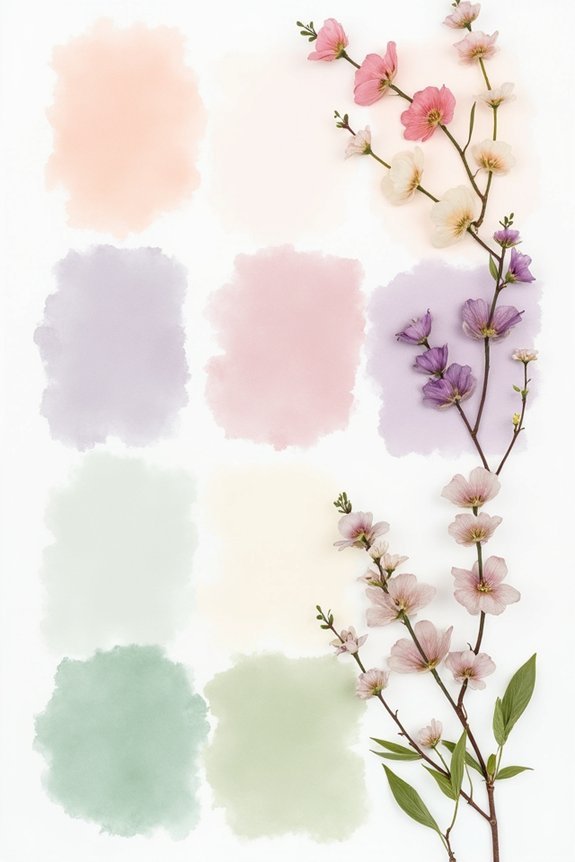
Your venue’s natural light and architecture have set the stage—now it’s time to choose colors that’ll make everything sing together.
Spring offers us incredible possibilities: soft pastels like blush and sage, or jewel tones like emerald and sapphire. Consider what feels authentically you. Will we go romantic and airy, or bold and modern?
Think about how your colors’ll look in photos, especially during golden hour. We recommend selecting two to three main colors, then adding neutrals like cream or gray to balance everything.
This approach keeps things cohesive without feeling matchy or overdone. Complement your color palette with neon wedding signs in coordinating tones to add a modern, eye-catching element to your spring celebration.
Choose Flowers That Peak in Spring
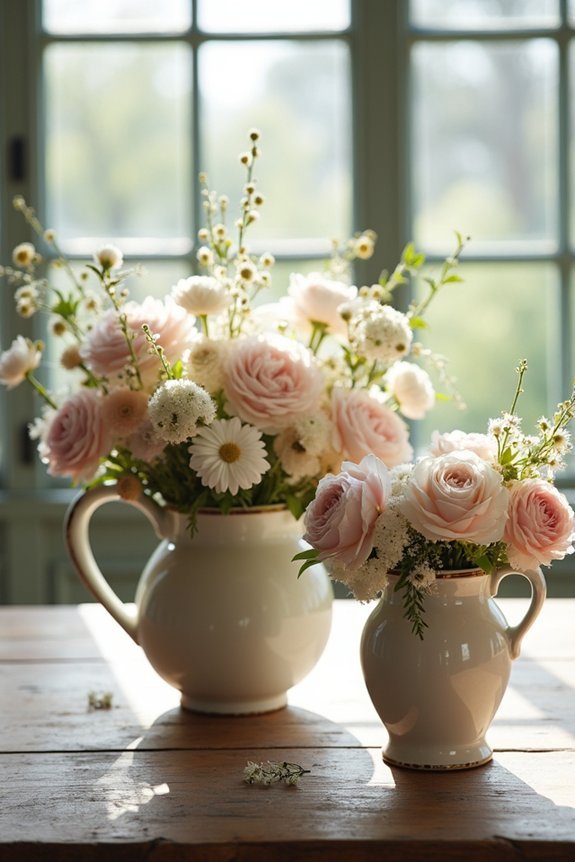
Spring flowers are nature’s way of giving us endless design possibilities, and we can lean into them to create something truly special for your wedding day.
Peonies, tulips, ranunculus, and cherry blossoms bring that soft, romantic feel we’re after. These blooms peak during spring months, so they’re abundant and affordable—a win-win.
Hyacinths add fragrance, while bleeding hearts bring delicate charm. We recommend choosing flowers that naturally thrive in spring rather than forcing out-of-season blooms.
This approach honors the season’s beauty while keeping your budget realistic and your flowers looking their freshest. To complete your spring bridal look, consider pairing your floral arrangements with elegant hair vine accessories that feature pearl and crystal details for a cohesive aesthetic.
Mix Fabrics and Surfaces for Visual Interest
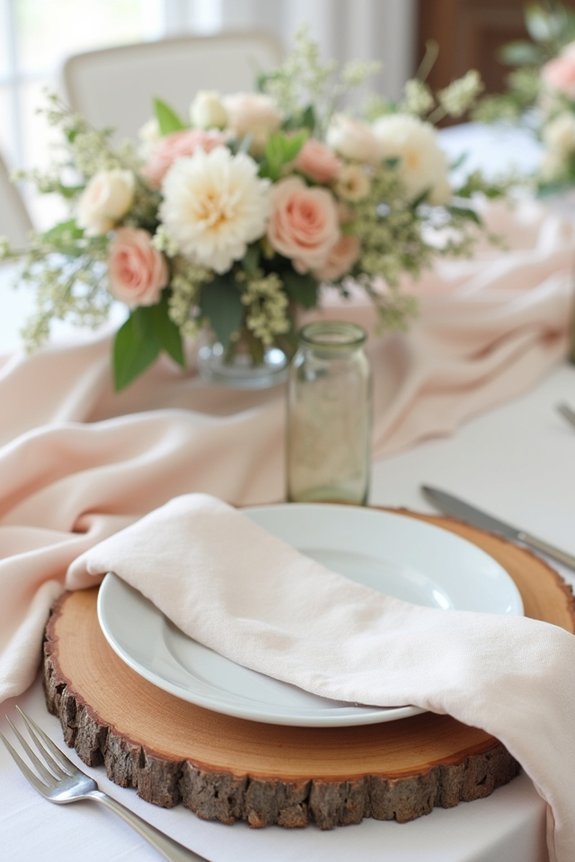
Now that we’ve chosen blooms that celebrate the season, let’s create a layered visual experience through the fabrics and surfaces we pair with them.
Combining different textures—like soft linens with sleek glass, velvet with natural wood, or delicate silk with rough stone—adds depth and sophistication to your décor. These contrasts catch light beautifully and invite guests to engage with your space.
Think about mixing matte and shiny finishes, smooth and tactile elements. This approach transforms a flat aesthetic into something dynamic and memorable, giving your spring wedding the magazine-quality polish you’re envisioning. Consider incorporating material durability options like acrylic or wooden surfaces to ensure your layered textures maintain their beauty throughout the celebration.
Select Ceremony Decor That Frames Your Moment
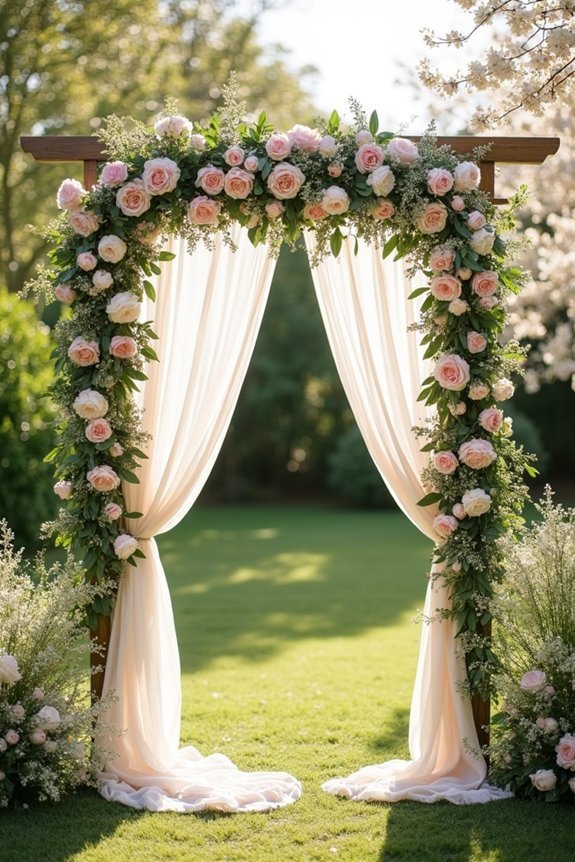
The ceremony backdrop—whether it’s an arch, a wall of flowers, or a simple greenery installation—serves as the visual anchor for your most significant moment.
We recommend choosing a frame that complements your venue and reflects your style. Consider your lighting, too. Soft afternoon light requires different décor choices than golden hour settings.
Think about scale and proportion. Your backdrop should feel substantial enough to matter in photos without overwhelming your couple’s presence.
Spring’s fresh florals and soft textures work beautifully here. Select elements that draw the eye naturally toward where you’ll stand, creating an intentional, polished look.
Design a Reception Space That Feels Intentional
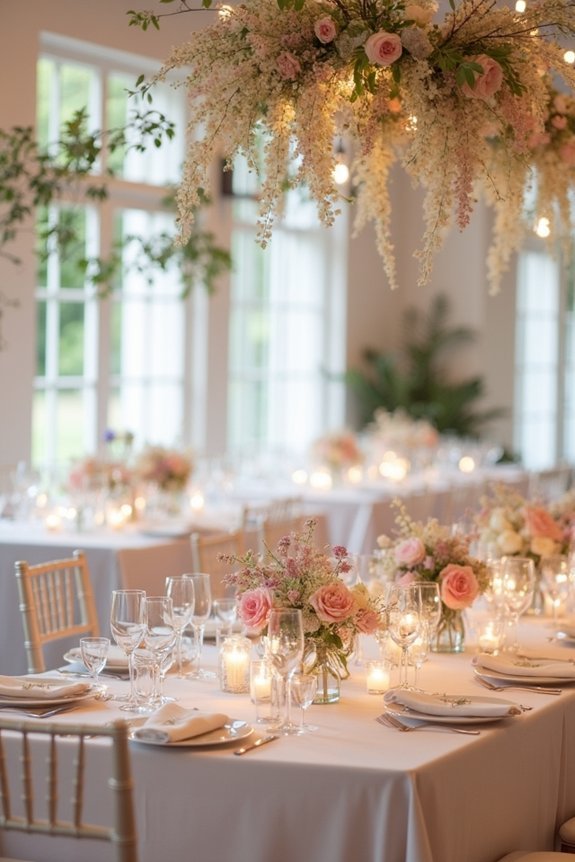
Your reception space is where your guests will spend the bulk of your celebration, so it deserves just as much thoughtful attention as your ceremony backdrop.
We recommend starting with a cohesive color palette that reflects spring’s natural beauty—soft pastels, garden greens, or warm neutrals work wonderfully.
Layer in textures through linens, florals, and lighting to create depth.
Consider your table layouts, centerpiece heights, and how guests will flow through the space.
Every detail, from napkin folds to ambient lighting, shapes the mood and guarantees your reception feels intentional and refined.
Bridge Indoor and Outdoor With Strategic Greenery Placement
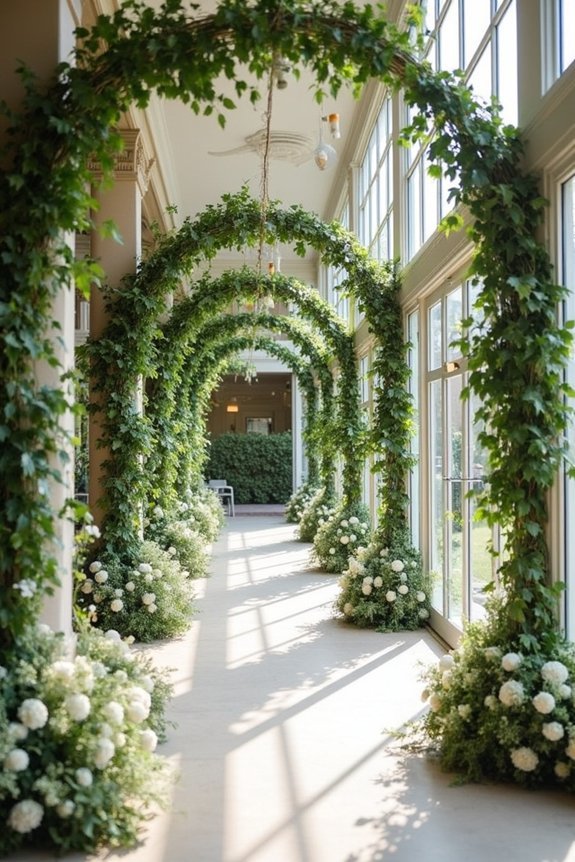
Since spring weddings often blur the line between inside and outside spaces, we can use greenery as a natural connector that ties these areas together seamlessly.
Consider lining doorways with lush garlands, creating a verdant threshold that guides guests between rooms. Place potted plants strategically along hallway corners and entryways to echo outdoor landscaping indoors.
Drape climbing ivy or eucalyptus along window frames to soften the visual shift. This approach doesn’t just look beautiful—it creates a cohesive flow that makes your entire venue feel intentional and thoughtfully designed.
Create a Spring-Ready Tablescape With These Elements
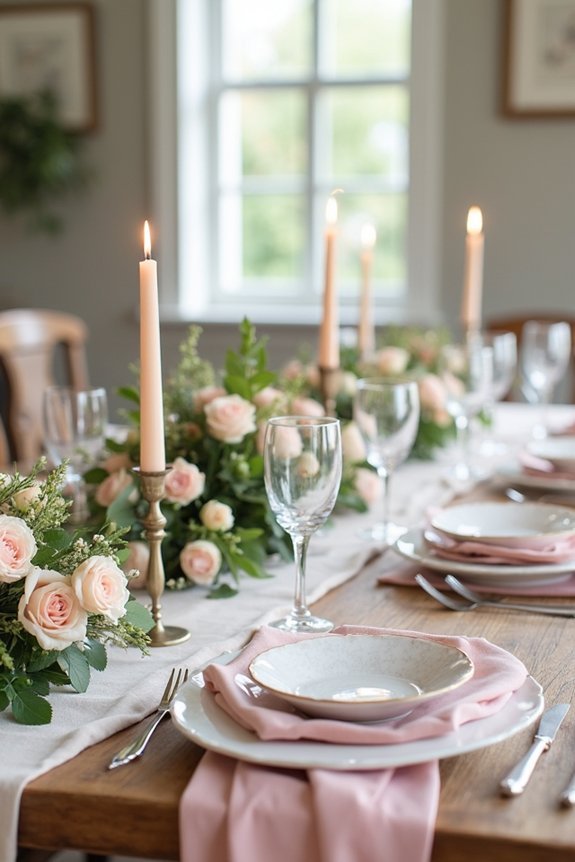
Once we’ve woven greenery through your venue’s spaces, it’s time to focus on what guests will see up close—the tables where they’ll sit, eat, and celebrate with you.
Layer in fresh spring flowers like peonies, tulips, or garden roses as your centerpiece anchor. Add soft linens in cream, blush, or sage to set an elegant tone.
Incorporate natural elements—branches, moss, or linen napkins tied with twine—for texture and warmth. Include place cards with handwritten names to personalize each seat.
These thoughtful details transform your tables into intimate, magazine-worthy settings that guests will genuinely admire and remember.
Anchor Trendy Accents With Timeless Foundations
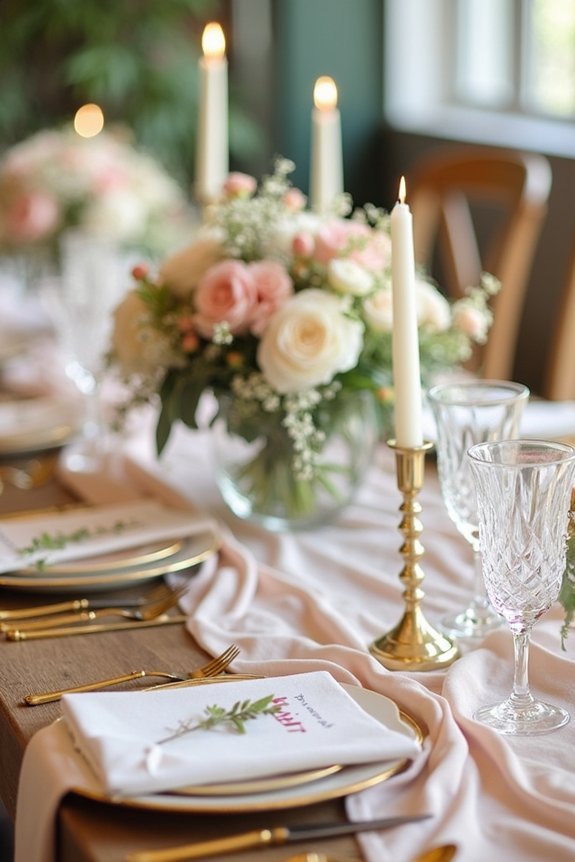
The most elegant spring weddings balance what’s happening in the design world right now with elements that’ll feel just as beautiful in photos ten years from now.
We recommend grounding trendy accents—like pastel linens or modern geometric place cards—with timeless pieces such as classic white dinnerware, simple glassware, and natural wood tables.
This approach guarantees your décor stays sophisticated without feeling dated. Think of trendy elements as the accessories you’ll love immediately, while foundational pieces become the wardrobe staples that anchor everything together beautifully and gracefully.
Decide When to DIY Versus Rent
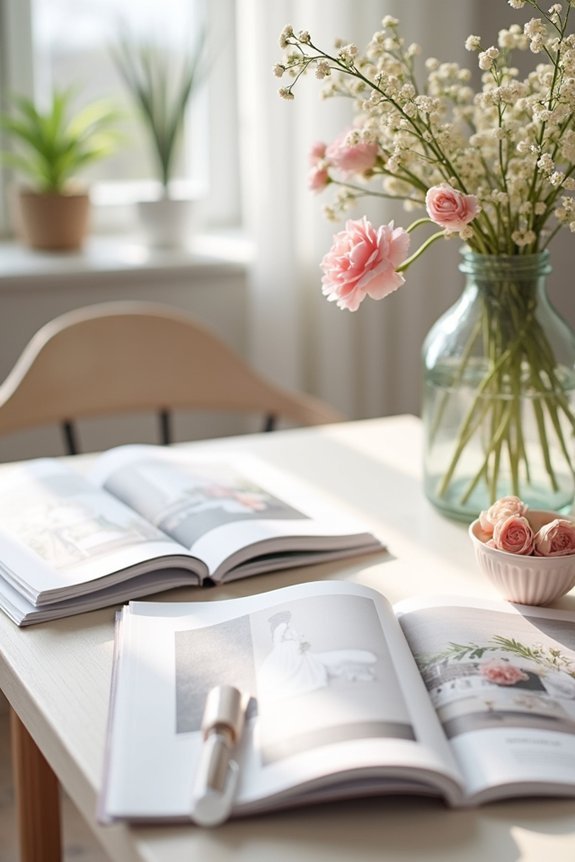
As you’re building your spring wedding’s visual story, you’ll need to make thoughtful choices about which décor elements you’ll create yourself and which ones you’ll rent or purchase from vendors.
DIY projects work best for items requiring minimal technical skill—think paper signage, floral arrangements, or personalized favors.
Renting makes sense for large installations, specialty lighting, and furniture that demands professional setup.
Consider your timeline, budget, and skill level honestly.
We recommend delegating anything requiring expertise or heavy lifting to vendors, freeing you to focus on meaningful creative touches that truly reflect your vision.
Source Wedding Decor Without Overspending
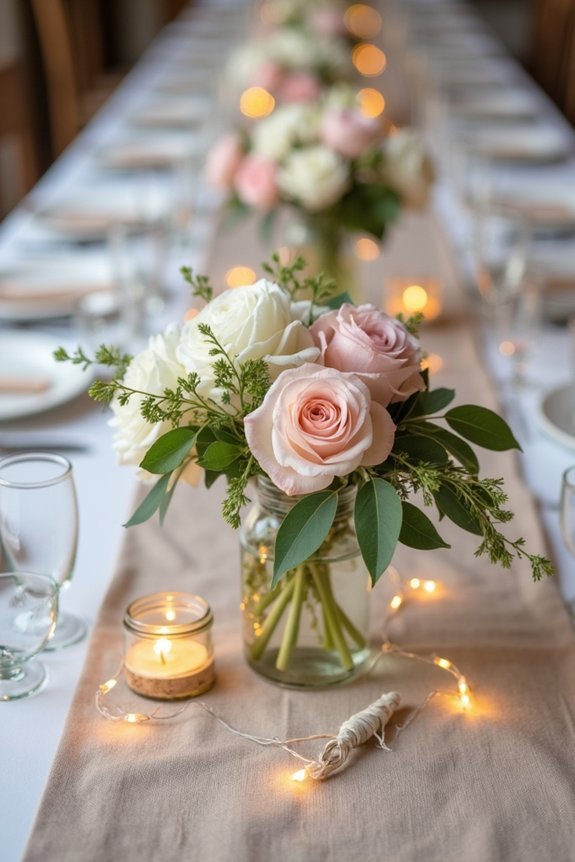
Beautiful spring décor doesn’t require an unlimited budget—it requires smart sourcing and strategic decisions about where to splurge and where to save.
We recommend exploring these budget-friendly options:
- Rent centerpieces and linens from local vendors for immediate savings.
- Buy flowers wholesale through farmers markets or bulk suppliers.
- DIY smaller elements like place cards and programs yourself.
- Shop off-season sales at home décor stores for timeless pieces.
When we prioritize what matters most to us—perhaps those dreamy florals or statement backdrops—we can redirect savings elsewhere.
This approach gives us magazine-worthy results while staying financially comfortable throughout our planning journey.
Build a Realistic Decor Timeline
One of the biggest mistakes we make when planning spring wedding décor is tackling everything at once, which leaves us stressed and scrambling as the big day approaches.
Instead, we’ll break tasks into manageable phases across several months. Start six months ahead by finalizing your color palette and theme.
Four months out, source major pieces like linens and centerpiece containers.
Two months before, gather smaller accents and test arrangements.
One month prior, confirm all deliveries and create setup diagrams.
This measured approach builds confidence, prevents last-minute panic, and guarantees thoughtful, cohesive décor that reflects your vision beautifully.
Frequently Asked Questions
How Do I Prevent Spring Flowers From Wilting Before My Wedding Day?
We’ll keep your spring blooms fresh by conditioning stems, changing water daily, storing flowers in a cool space, and arranging them the morning of your wedding. Avoid direct sunlight and ethylene gas sources like fruit.
What’s the Best Way to Transition Décor Between Ceremony and Reception Spaces?
We’ve seen couples transform ceremony spaces into receptions like magicians—it’s all about strategic placement. Move statement pieces (arch, florals) to reception focal points, swap linens quickly, and let lighting do the heavy lifting between spaces.
How Can I Incorporate Spring Trends Without My Wedding Feeling Dated Next Year?
We recommend anchoring your decor with timeless elements—neutral palettes, classic florals, elegant linens—then layer in trendy accents through affordable details you’ll easily swap out later.
Should I Choose a Cohesive Color Palette or Mix Multiple Spring Colors?
We recommend choosing a cohesive color palette—it’s more sophisticated and photographs beautifully. You’ll anchor your spring wedding in timeless elegance while letting small accent colors add dimension without feeling trendy or chaotic.
What Décor Elements Photograph Best for Social Media and Professional Photos?
We’ve found that layered textures—like linen, florals, and metallics—act as storytellers in your frame, each element whispering details cameras love. Elevated centerpieces, candlelight, and greenery arches photograph beautifully because they naturally draw the eye upward.