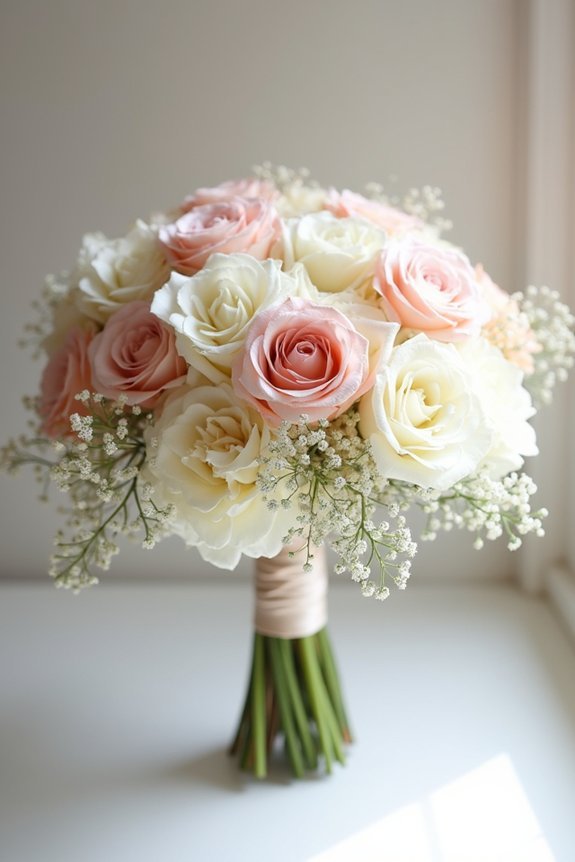
We can create stunning champagne bouquets by selecting gorgeous flowers like garden roses and ranunculus, then layering them with soft blush tones and deep green foliage. Choose a shape—round for romance or cascading for drama—that matches your wedding style. Add texture with eucalyptus and dusty miller, secure everything with floral tape and ribbon, and assemble your bouquet the night before to keep it fresh. Each thoughtful step builds a bouquet that’s uniquely yours, and there’s so much more to discover about making it absolutely perfect.
At a Glance
- Select focal flowers like garden roses, peonies, or dahlias, then position them at varying heights for natural distribution throughout the bouquet.
- Combine champagne blooms with complementary colors such as blush ivory, deep green foliage, and dusty sage for visual depth and elegance.
- Layer varied textures using dusty miller, eucalyptus, ruscus, and dried pampas grass to create interest while framing champagne flowers as focal points.
- Choose bouquet shapes based on your dress neckline and venue formality: round for romance, cascading for drama, or linear for modern aesthetics.
- Assemble bouquets the day before, keep stems in cool water overnight, and wrap in damp paper towels until ribbon application for maximum freshness.
Champagne Bouquets for Every Wedding Style
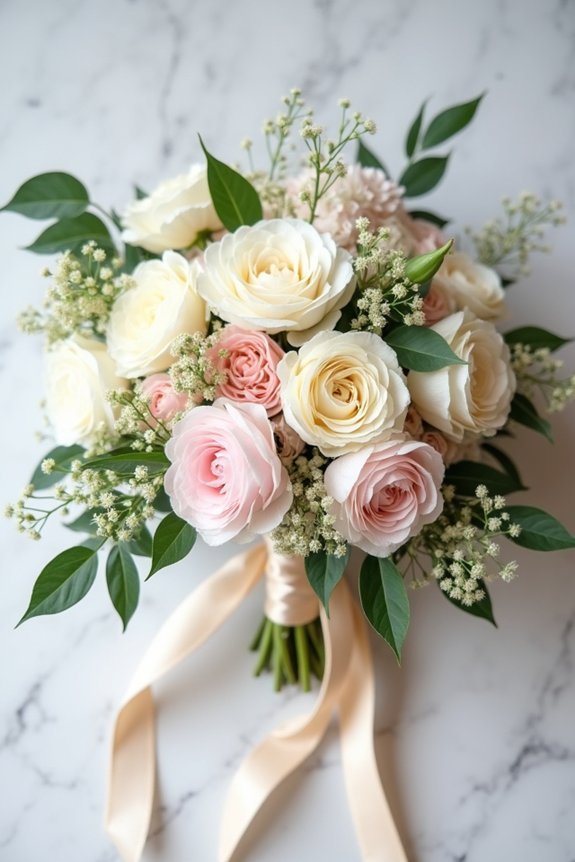
Whether you’re drawn to romantic garden aesthetics, modern minimalism, or classic elegance, champagne flowers offer us a versatile foundation that works beautifully across every wedding style imaginable.
These soft, neutral blooms complement rustic barn weddings with the same ease they enhance contemporary ballroom celebrations. We can layer champagne roses with greenery for organic charm, or pair them with sleek lines and metallic accents for sophisticated modern appeal.
The beauty lies in champagne’s chameleon-like quality—it adapts to our vision while maintaining understated sophistication. Whatever direction we choose, champagne flowers provide an elegant starting point that elevates our bouquet’s overall aesthetic. To complete your champagne bridal look, consider pairing your bouquet with high-quality bridal hair accessories that reflect your chosen wedding theme and enhance your overall aesthetic.
Choose Champagne Flowers by Variety
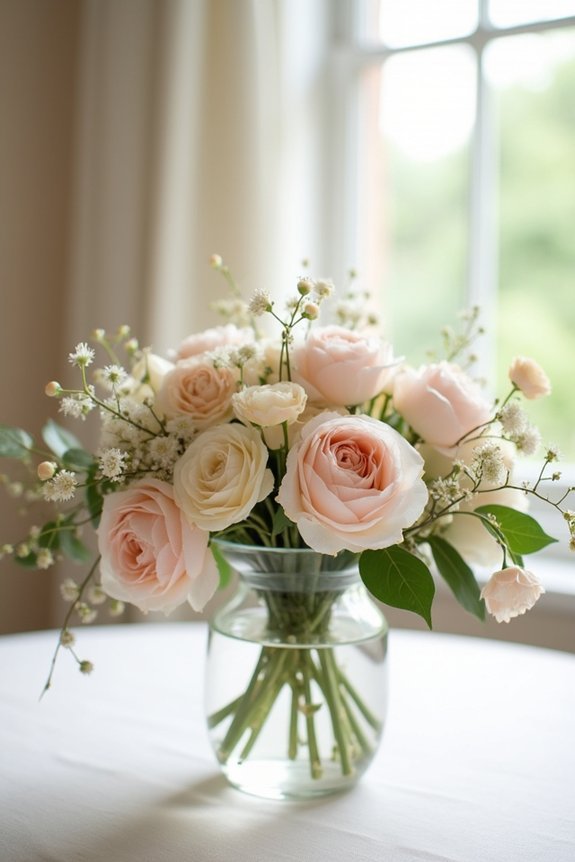
Once we’ve decided on champagne as our bouquet’s foundation, the real magic happens when we explore the different flower varieties available to us.
Garden roses offer romantic, full blooms with layered petals that feel luxurious.
Ranunculus brings delicate, cup-shaped flowers perfect for adding texture and movement.
Spray roses provide smaller, clustered blooms that fill gaps beautifully.
Lisianthus offers elegant, ruffled petals resembling peonies.
Hypericum berries add dimension and visual interest.
Each variety brings its own character, allowing us to craft a bouquet that’s uniquely ours while maintaining that gorgeous champagne color story we’re after. To complete your bridal look, consider pairing your champagne bouquet with hair vine accessories that feature pearls and crystals in matching metallic tones for a cohesive wedding day appearance.
Pair Champagne With Complementary Colors
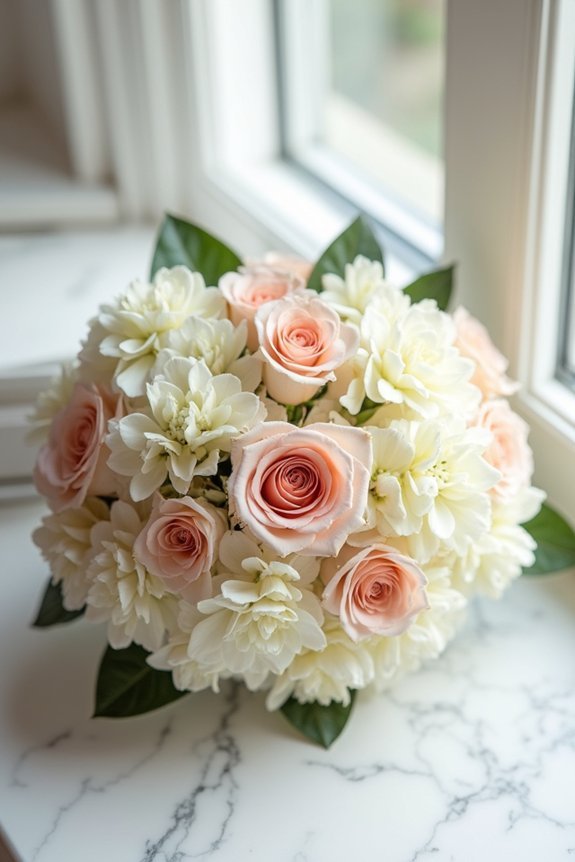
How do we elevate our champagne bouquet from lovely to absolutely stunning? Pairing champagne blooms with complementary colors transforms your arrangement into something truly memorable. Here’s what works beautifully:
- Blush and ivory – Creates a soft, romantic gradient that feels timeless and elegant
- Deep green foliage – Adds sophisticated contrast while letting champagne flowers shine
- Dusty sage or eucalyptus – Brings calming, natural texture that grounds the arrangement
- Subtle gold accents – Metallic touches echo champagne’s warmth without overwhelming the design
These combinations let champagne flowers remain the star while creating visual depth and sophistication. To complete your bridal look, consider how bridal jewelry sets with gold or silver finishes can harmonize with your bouquet’s color palette and overall wedding aesthetic.
Your bouquet becomes a cohesive, magazine-worthy statement that feels intentional and refined.
Select Textures and Greenery for Depth
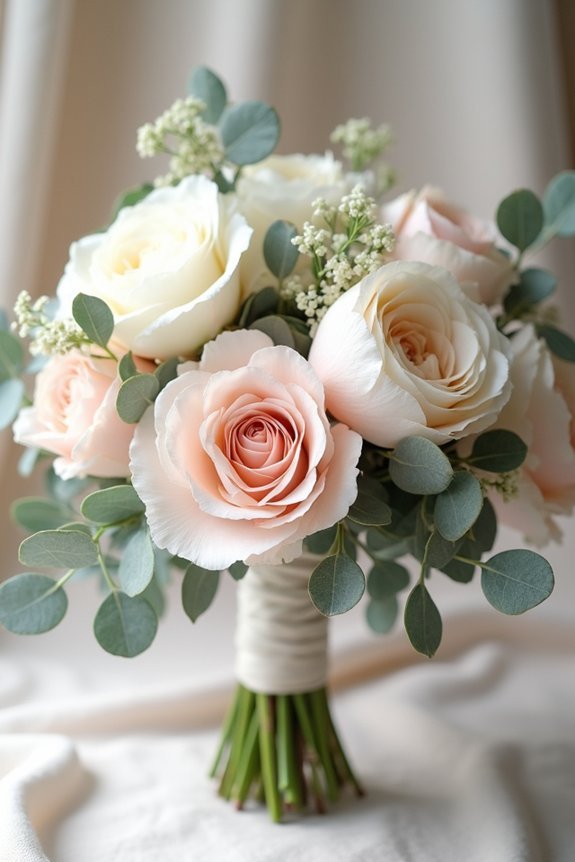
A champagne bouquet with gorgeous texture and greenery is where the real magic happens—it’s what transforms a pretty arrangement into one that catches everyone’s eye and holds it.
We love layering in varied textures like dusty miller, ruscus, and eucalyptus to create visual interest and dimension. These greenery choices add softness and movement that photographs beautifully.
Consider incorporating dried elements such as pampas grass or bleached leaves for an unexpected, sophisticated touch. Mixing delicate ferns with fuller foliage creates balance.
The greenery doesn’t compete with your champagne blooms; instead, it frames them gorgeously and adds that luxe, editorial quality we’re after. Just as secure attachment features ensure your bridal headpiece stays perfectly in place throughout the celebration, thoughtfully secured greenery elements will maintain your bouquet’s stunning composition from ceremony to reception.
Choose Your Bouquet Shape and Size
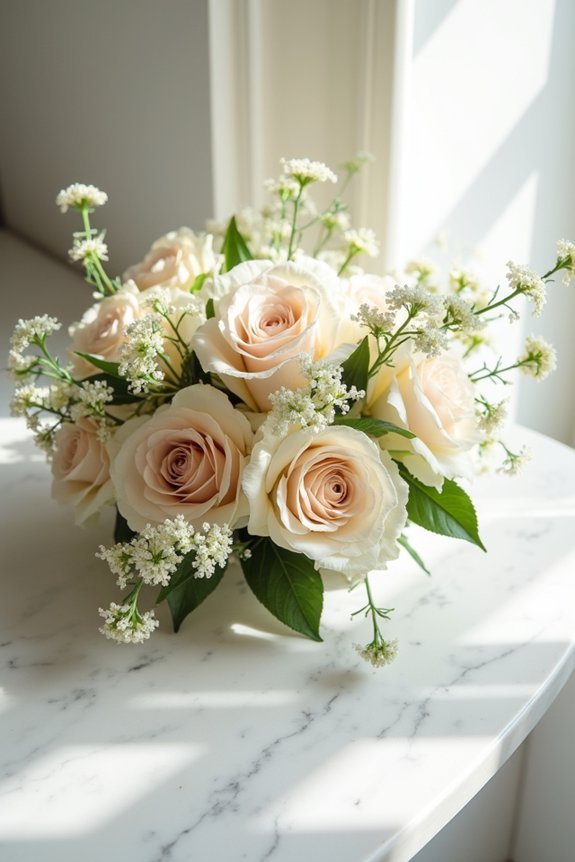
Now that you’ve built your champagne palette and layered in those stunning textures, it’s time to decide the shape and size that’ll work best for your vision and your day.
Your bouquet’s silhouette dramatically impacts your overall look. Consider these classic options:
- Round bouquets offer romantic fullness and work beautifully with most dress styles.
- Cascading designs create elegant drama and suit formal venues perfectly.
- Linear or elongated shapes feel modern and elongate your frame.
- Compact hand-tied bouquets provide easy handling and showcase individual stems.
Think about your dress neckline, venue formality, and personal style. A petite frame pairs nicely with smaller bouquets, while larger arrangements complement bigger venues. Just as color coordination enhances wedding welcome signs, your bouquet’s hue and form should harmonize with your overall wedding aesthetic.
You’re creating the perfect finishing touch.
Gather Tools for Your Champagne Bouquet
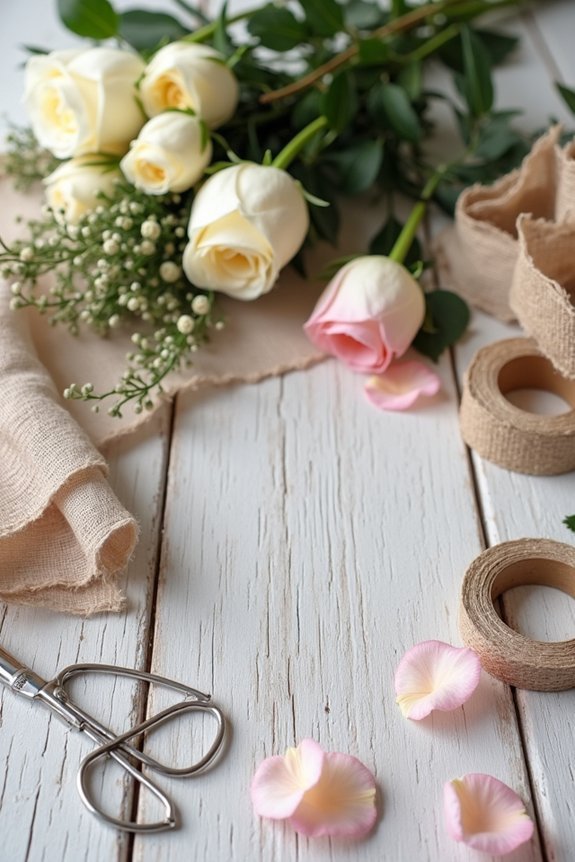
Creating a champagne bouquet by hand requires just a few essential tools—most of which you probably already have at home.
You’ll need sharp floral shears or scissors to cut stems cleanly, preventing damage that can shorten flower life. Floral tape helps secure stems together, while floral wire allows you to adjust flower positioning and create structure. A floral foam holder (optional but helpful) provides stability as you arrange.
Gather these items before starting, and consider keeping floral preservative nearby to nourish your blooms. Having everything ready means you’ll work confidently and create a bouquet you’ll absolutely love.
Prep Champagne Bouquet Flowers
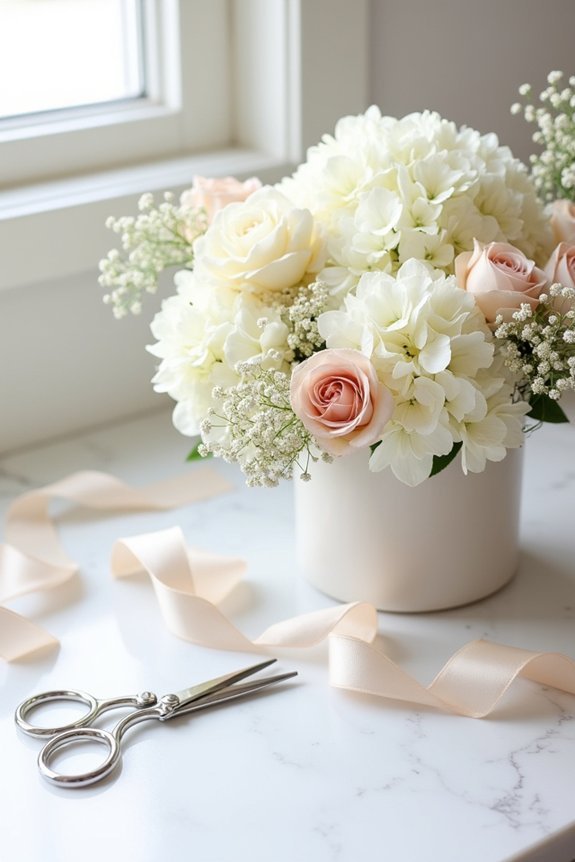
Before we arrange those gorgeous blooms, we’ll want to prep them so they stay fresh and beautiful throughout your wedding day.
Properly prepared flowers make all the difference in how long your bouquet lasts and how stunning it looks in photos.
Here’s what we’ll do:
- Remove lower leaves that’d sit below the waterline, preventing bacterial growth
- Cut stems at a 45-degree angle under running water to maximize water absorption
- Rehydrate flowers by placing them in cool water for several hours before arranging
- Trim stems to your desired length, working from longest to shortest
These simple steps guarantee your champagne bouquet stays vibrant and gorgeous all day long.
Start With Greenery as Your Foundation
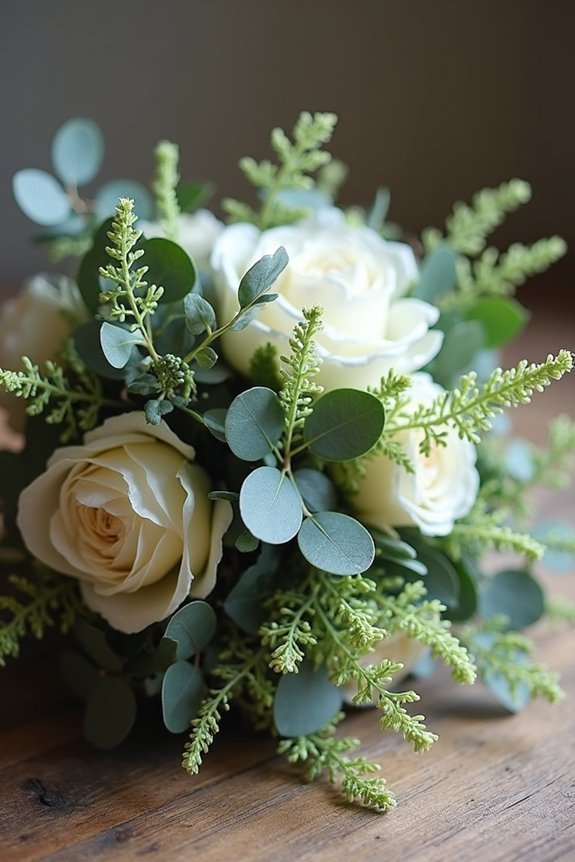
With your stems prepped and ready, we’re set to build the framework that’ll hold everything together—greenery is where every beautiful bouquet starts.
Think of greenery as your bouquet’s skeleton, creating shape and structure before flowers arrive. We’ll use eucalyptus, ruscus, or Italian ruscus to form a lush base that lets champagne blooms truly shine.
Start by arranging greenery in a spiral pattern, building outward from the center. This foundation isn’t just practical; it gives your bouquet fullness and dimension while making each flower placement easier.
Strong greenery means a bouquet that holds its elegant form throughout your wedding day.
Layer in Focal Flowers for Impact
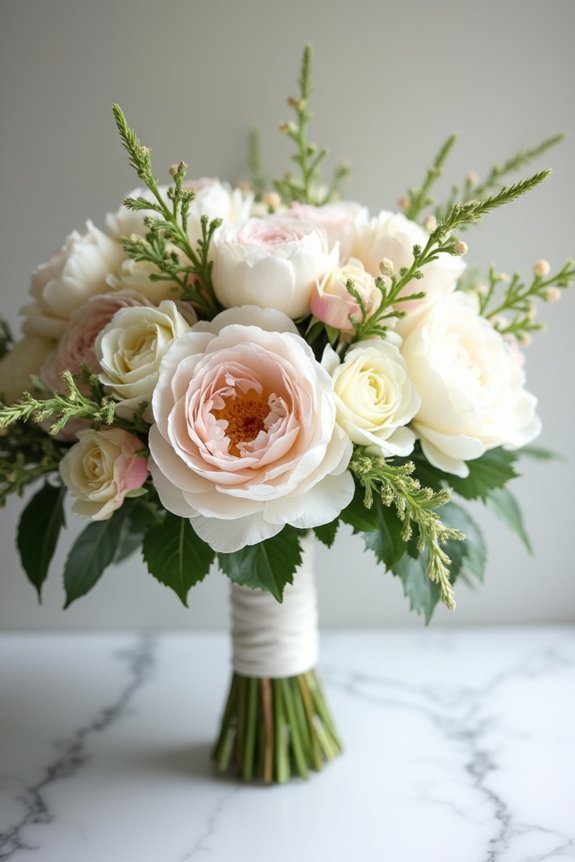
Now that your greenery framework is in place, focal flowers are what transform your bouquet from pretty to absolutely stunning.
These showstopping blooms create depth, dimension, and visual interest that draws the eye immediately.
Consider these focal flower options:
- Roses – Classic, romantic, and available in gorgeous champagne tones
- Peonies – Lush and luxurious with soft, layered petals
- Dahlias – Bold architectural shapes that command attention
- Garden roses – Delicate yet dramatic with romantic ruffled blooms
Position focal flowers throughout your bouquet at varying heights, spacing them evenly so they’re distributed naturally.
This creates a balanced, magazine-worthy arrangement that feels intentional and elegant rather than cluttered.
Add Secondary Blooms and Filler Flowers
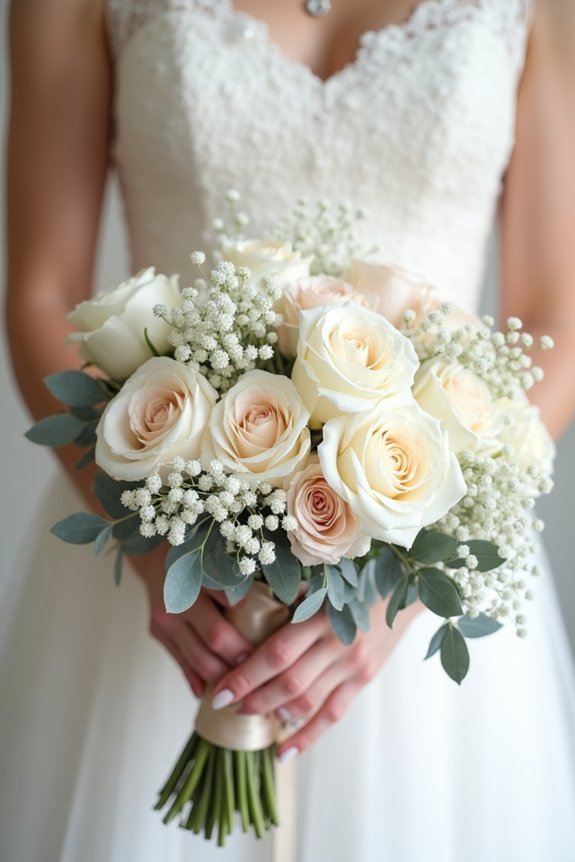
Your focal flowers are doing the heavy lifting, but secondary blooms and filler flowers are what make your bouquet feel complete, romantic, and intentionally designed.
We love pairing champagne roses with garden roses, ranunculus, or astilbe for dimension and texture. These supporting players fill gaps, add movement, and create that lush, magazine-worthy fullness we’re after.
Dusty miller, eucalyptus, and ruscus offer beautiful greenery that softens edges without competing for attention.
The key is choosing flowers that complement your champagne palette while adding visual interest. When we layer thoughtfully, every angle of your bouquet tells a cohesive, beautiful story.
Secure and Finish Your Stems
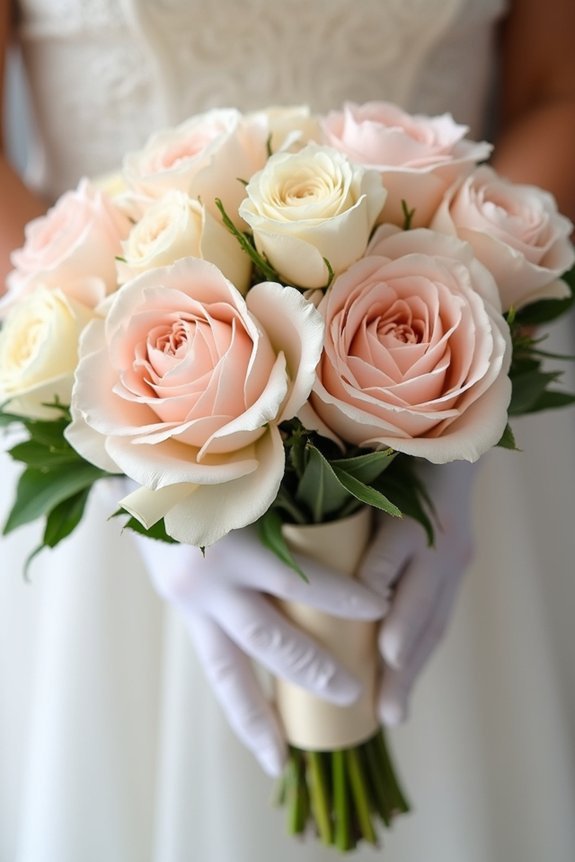
The stems are where all that beautiful design work comes together, and getting them right transforms your bouquet from lovely to truly polished.
We’ll secure everything with floral tape, wrapping at a slight angle to create a smooth, professional finish.
Here’s what we need to do:
- Wrap stems tightly with floral tape, overlapping slightly as we spiral downward
- Trim stems to your desired length, typically 9-10 inches for hand-held bouquets
- Cover tape with ribbon, securing the ends with hot glue for elegance
- Add a final spray of floral sealant to keep everything fresh and protected
Your bouquet’s now ready to shine.
Fix Wilting, Spacing, and Stem Issues
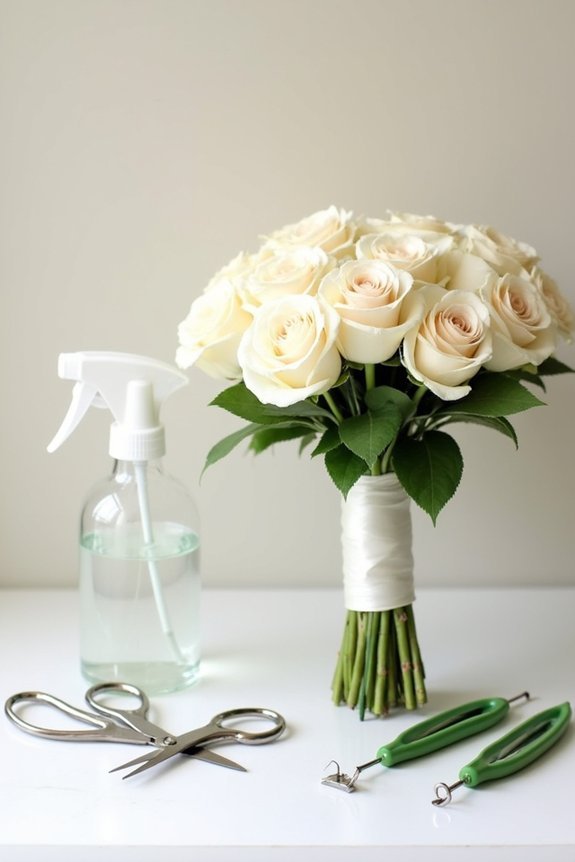
Even with careful preparation, bouquets sometimes need adjustments once we’ve assembled them—and that’s completely normal.
If flowers start drooping, trim stems at a 45-degree angle and rehydrate them immediately in fresh water. For spacing issues, gently adjust stems to create better flow and visual balance.
Remove any leaves sitting below the waterline to prevent bacterial growth.
Check that your bouquet’s structure feels secure and stable—stems shouldn’t shift when held.
These small fixes make a significant difference in how your champagne bouquet looks in photos and throughout your wedding day.
Make Your Bouquet the Right Day Before
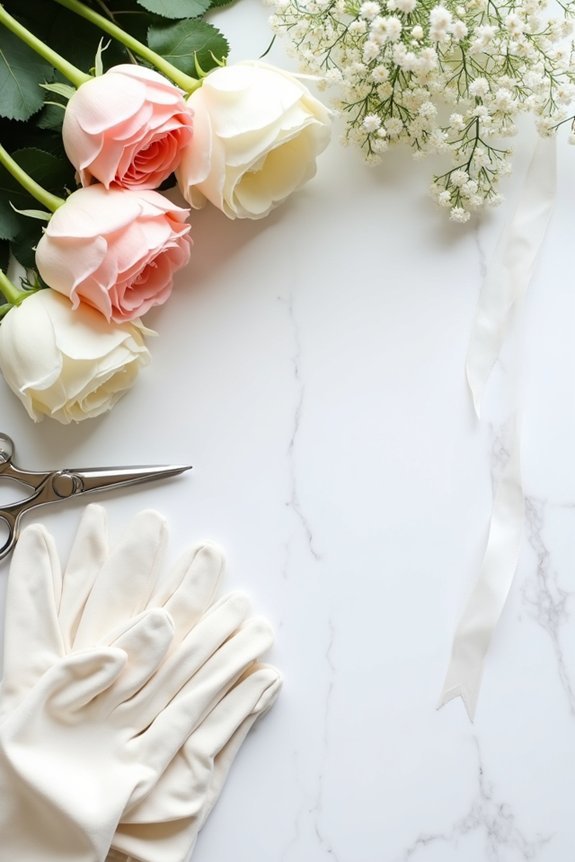
Once we’ve got our bouquet looking gorgeous and stable, timing becomes our next consideration—assembling your champagne bouquet the day before your wedding gives you the best of both worlds: flowers that are fully hydrated and fresh, plus one less thing to worry about on your big day.
- Keep flowers in cool water overnight, changing it once.
- Store your bouquet in the refrigerator if space allows.
- Wrap the stems in damp paper towels before wrapping ribbon.
- Assemble just before leaving for your venue to preserve freshness.
This approach reduces stress while ensuring your bouquet looks absolutely stunning.
Frequently Asked Questions
How Long Will a Champagne Bouquet Last Without Water Before the Wedding?
We recommend keeping your champagne creation carefully conditioned in cool conditions for roughly four to six hours maximum. We suggest securing stems in water immediately after arrangement to preserve petals perfectly.
Can I Make a Champagne Bouquet Weeks in Advance and Preserve It?
We don’t recommend assembling your champagne bouquet weeks ahead. Instead, we suggest you prep flowers individually and arrange them 1-2 days before your wedding for maximum freshness and visual impact.
What’s the Average Cost to Create a DIY Champagne Wedding Bouquet?
We’d budget $75–$150 per bouquet for premium flowers, greenery, and supplies. Your costs depend on flower variety, seasonal availability, and whether you’re sourcing locally or ordering wholesale online.
How Do I Prevent Champagne Flowers From Bruising During Transportation and Handling?
We recommend wrapping stems in floral tape, securing petals gently with tulle, and transporting your bouquet upright in a sturdy box. Keep it cool and handle it minimally until you’re ready to carry it down the aisle.
Should My Bridesmaids’ Bouquets Match My Bridal Bouquet Exactly or Vary Slightly?
Don’t you want your bridesmaids to feel like supporting stars, not extras? We recommend varying their bouquets slightly—different sizes, fewer focal flowers, or complementary champagne tones. This creates cohesion while keeping you the radiant focal point.