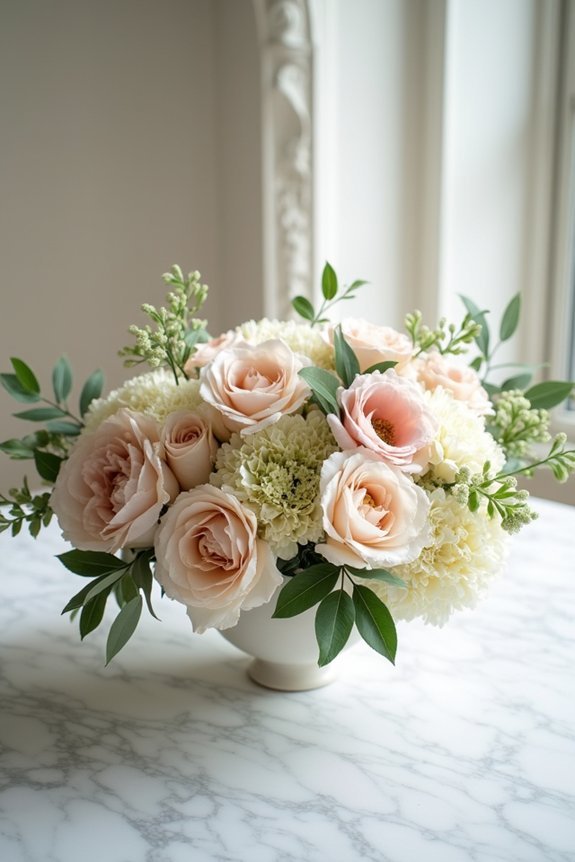
We’re thrilled to help you create a champagne wedding that’s both romantic and breathtaking. Garden roses offer luxurious, full blooms perfect as focal flowers, while spray roses add beautiful dimension and movement to your arrangements. Ranunculus brings dramatic texture without complexity, and hypericum berries paired with feathery astilbe create depth affordably. When we combine these flowers using the right proportions—50% focal blooms, 30% secondary flowers, and 20% texture elements—we craft stunning bouquets that photograph beautifully. Discover how to care for your flowers and coordinate complementary bridal accessories as you explore further.
At a Glance
- Champagne garden roses photograph beautifully with full, layered petals that create luxurious romantic focal points in wedding bouquets.
- Spray roses and Quicksand varieties add dimension, movement, and soft peachy-champagne tones that catch light naturally in arrangements.
- Champagne ranunculus offers voluminous petals, stunning visual impact, and exceptional longevity for fresh-looking flowers throughout your celebration.
- Hypericum berries and astilbe provide affordable textured elements that create depth, organic movement, and dreamy softness without high costs.
- Balance bouquets with 50% focal flowers, 30% secondary blooms, and 20% texture elements; mist daily and trim stems at 45-degree angles.
Champagne Garden Roses: Timeless, Full Blooms
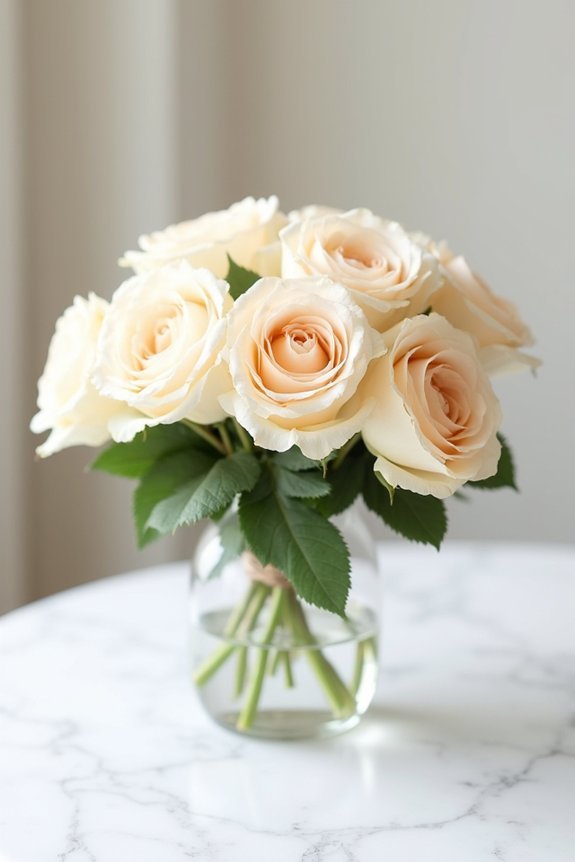
When you’re envisioning your wedding flowers, champagne garden roses deserve a top spot on your shortlist—they’re the blooms that photograph beautifully and feel luxuriously romantic without demanding a massive budget.
These full, layered petals create that coveted garden-style abundance we love. Garden roses work wonderfully as focal flowers in bouquets, arrangements, and installations because their generous size and soft peachy-pink tones complement virtually any wedding palette.
They’re naturally elegant, requiring minimal additional florals to feel complete. Pair them with greenery and complementary blooms, and you’ll achieve that sophisticated, effortlessly curated aesthetic that feels both timeless and intentional. To complete your bridal look, consider pairing your champagne roses with a coordinating bridal belt that matches the romantic warmth of these blooms.
Spray Roses and Quicksand: Texture That Photographs
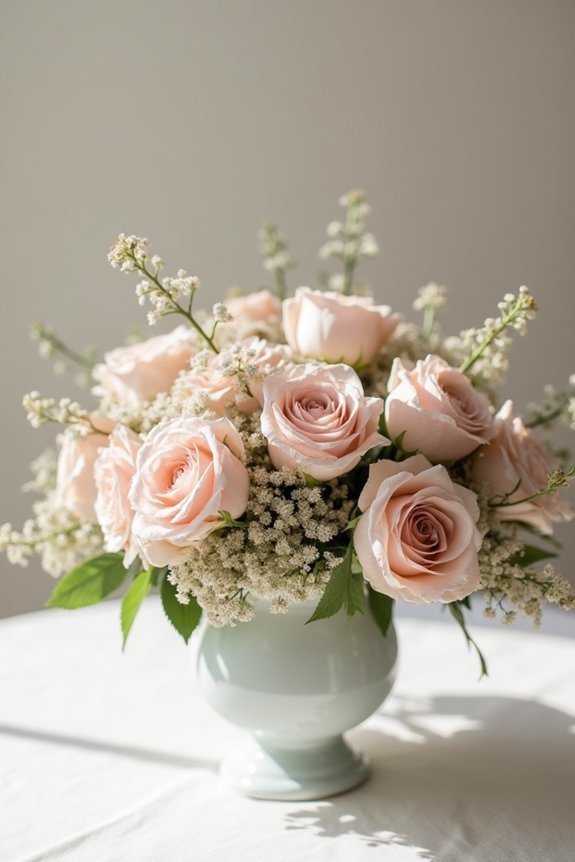
If you’re looking to add dimension and movement to your champagne wedding flowers, spray roses and quicksand roses deliver exactly what you need—they’re the secret weapons that transform a simple arrangement into something with real depth and visual interest.
Spray roses feature multiple smaller blooms on each stem, creating natural clusters that catch light beautifully in photographs. Quicksand roses offer soft, romantic peachy-champagne tones with an almost vintage quality.
Together, they work wonderfully alongside garden roses, providing textural contrast that makes your bouquets and centerpieces feel sophisticated and thoughtfully designed rather than flat or one-dimensional. Consider pairing these floral arrangements with hair vines and rhinestones to create a cohesive bridal look that extends from your bouquet to your hairstyle.
Champagne Ranunculus: Drama Without Difficulty
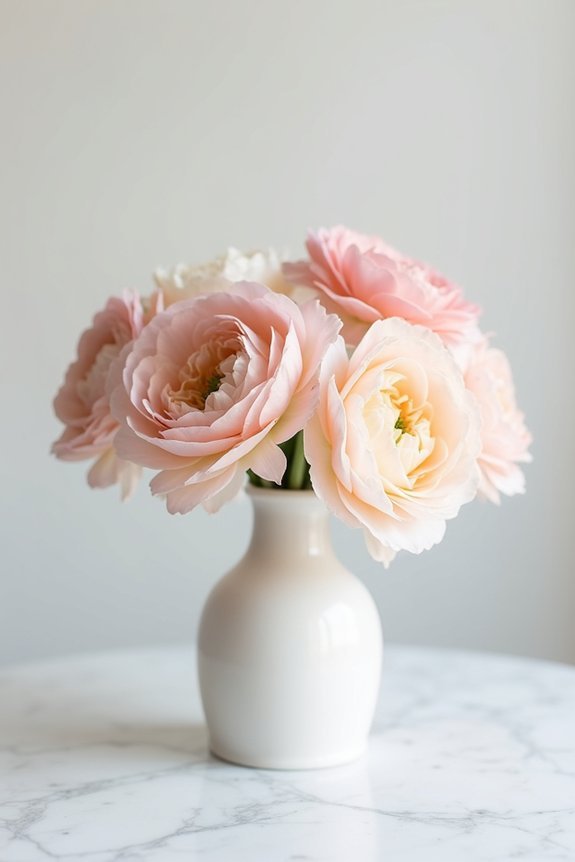
Ranunculus flowers are nature’s way of proving that drama doesn’t require complexity—these blooms deliver stunning visual impact with surprisingly minimal fuss.
We love them for champagne weddings because they’re naturally romantic and layer beautifully in arrangements.
Here’s what makes ranunculus perfect for your vision:
- Voluminous petals that create full, lush textures in photographs
- Soft champagne tones that photograph like silk and shimmer
- Long vase life, meaning your bouquets stay fresh throughout your celebration
These flowers work wonderfully in bridal bouquets, centerpieces, and installations.
They’re forgiving to arrange, making DIY projects achievable for confident couples.
Pair your ranunculus arrangements with high-quality bridal hair accessories to ensure your entire wedding aesthetic feels cohesive and polished from head to floral.
Hypericum and Astilbe: Soft Texture on Budget
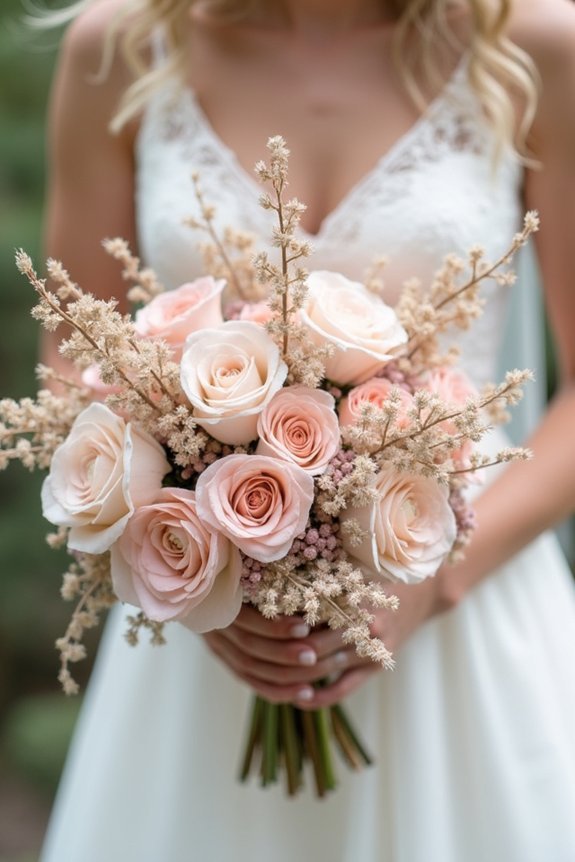
Because achieving that dreamy, textured look doesn’t mean stretching your floral budget to its breaking point, we’re excited to introduce you to hypericum berries and astilbe—two understated flowers that pack serious visual appeal.
Hypericum berries add delicate clusters and gentle color variation that feels organic and layered. Astilbe brings feathery, cloud-like texture that softens any arrangement instantly.
Together, they create depth and movement without the premium price tag of roses or peonies. These flowers work beautifully in bouquets, centerpieces, and installations, giving you that magazine-quality, intentional look you’re after. For added visual impact without extra floral expense, consider complementing your arrangement with a greenery wall backdrop to create a stunning photographic setting for your special day.
Build Your Champagne Bouquet: Proportions and Care
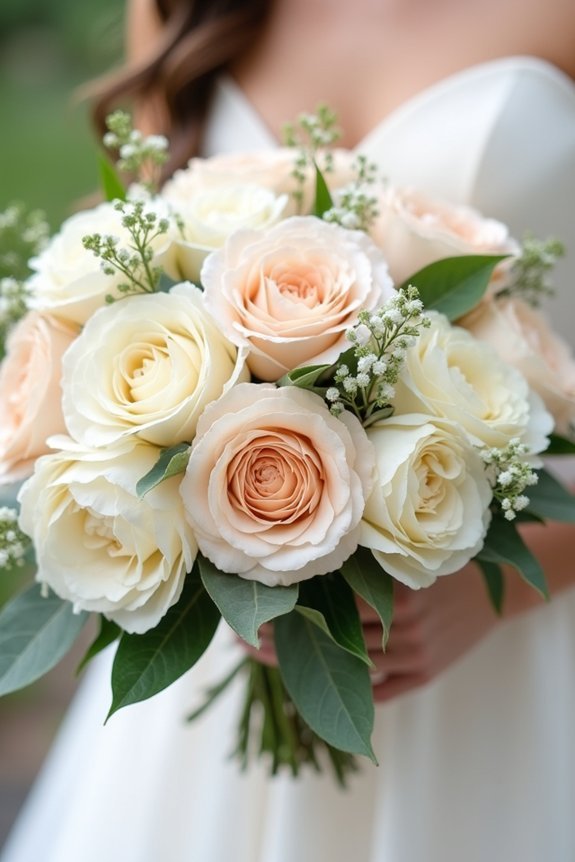
Now that you’ve chosen your champagne flowers—those gorgeous roses, garden roses, ranunculus, hypericum, and astilbe—it’s time to actually build your bouquet with intention and care.
We recommend following these proportions for a balanced, professional look:
- Fifty percent large focal flowers (roses and garden roses) anchoring your design
- Thirty percent secondary blooms (ranunculus and hypericum) adding depth and movement
- Twenty percent texture (astilbe and greenery) creating softness and dimension
Mist your bouquet daily with water, trim stems at forty-five-degree angles, and remove lower leaves to prevent bacterial growth.
Keep flowers in cool conditions away from direct sunlight. Consider pairing your champagne bouquet with bridal headpieces and crowns that feature complementary materials like pearls and crystals to create a cohesive wedding day look. These simple steps maintain your champagne arrangement’s vibrancy and freshness.
Frequently Asked Questions
How Do Champagne Flowers Photograph Differently Under Various Lighting Conditions?
We’ve found that champagne flowers shift dramatically depending on light. In golden hour, they’ll glow warmly with peachy undertones. Under harsh midday sun, they appear pale and washed out. Indoor artificial lighting can cast them too yellow. We always scout venues beforehand to predict how they’ll photograph.
What’s the Best Timeline for Ordering Champagne Flowers Before My Wedding?
We’ve found that 87% of couples who order flowers 6-8 weeks ahead report zero stress. You’ll want to book your champagne florals at least two months before your wedding—it’s the sweet spot that guarantees availability and lets your florist create magic.
Can I Mix Champagne Flowers With Other Wedding Color Palettes Successfully?
Absolutely—champagne flowers work beautifully with virtually any palette. We’ve seen them complement blush, ivory, gold, sage, and even jewel tones. They’re naturally versatile because their warm neutral base bridges traditional and modern aesthetics seamlessly.
How Do Champagne Flowers Compare in Cost to White or Blush Alternatives?
We’ve found that champagne flowers typically cost the same or slightly more than white blooms, while blush varieties fall in between. You’re getting sophisticated color without breaking the budget—it’s a Victorian-era approach to modern florals.
Which Champagne Flowers Work Best for Outdoor Versus Indoor Wedding Venues?
We recommend garden roses, ranunculus, and café au lait dahlias for outdoor venues—they’re hardy and photograph beautifully in natural light. For indoor settings, we’d choose spray roses, quicksand roses, and lisianthus for their elegant, controlled appearance.