Coral flowers bring warmth and elegance to your wedding day, offering year-round options like roses, dahlias, and ranunculus that shift beautifully with each season. We recommend pairing coral with complementary colors—soft blush for romance, navy for sophistication, or sage green for freshness. You can stretch your budget by using coral in bridesmaids’ bouquets or as focal centerpieces rather than filling every arrangement. Proper timing, fresh water, and careful handling keep these blooms vibrant throughout your celebration, and we’ve got specific strategies to help you avoid common mistakes.
At a Glance
- Coral flowers like roses, dahlias, and ranunculus provide versatile, year-round options that photograph beautifully in bridal bouquets.
- Pair coral with complementary colors such as blush, navy, sage green, or gold accents to enhance your venue’s aesthetic.
- Combine multiple coral varieties with textured greenery like eucalyptus to create rich, natural-flowing arrangements with visual depth.
- Order blooms six to eight months ahead and schedule a florist walkthrough one week before your wedding day.
- Keep coral fresh by trimming stems at 45 degrees, changing water daily, and storing in cool, shaded areas.
Coral Blooms for Every Season
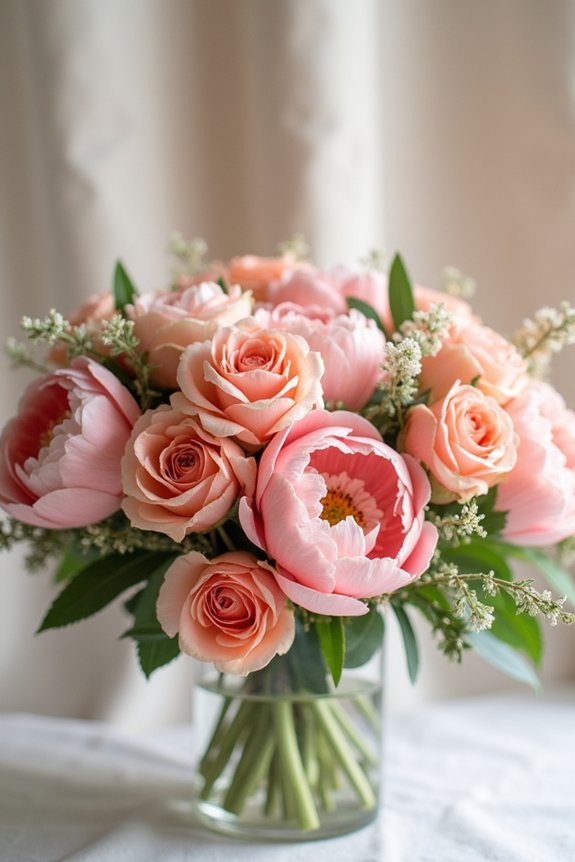
Because coral flowers offer such versatility, we can build a stunning bridal bouquet no matter when you’re saying “I do.”
Whether you’re planning a spring celebration or a winter ceremony, coral blooms are available year-round in various forms—from garden roses and dahlias to ranunculus and astilbe—allowing us to craft arrangements that feel both seasonally appropriate and entirely your own.
Spring brings lighter peachy tones, summer offers vibrant varieties, fall provides deeper coral hues, and winter lets us layer coral with rich greenery.
This flexibility means your vision stays consistent throughout the year.
For events where you prefer low-maintenance alternatives, artificial flower wall panels offer the same stunning coral aesthetic without requiring seasonal sourcing or special care.
The Best Coral Varieties for Bridal Bouquets
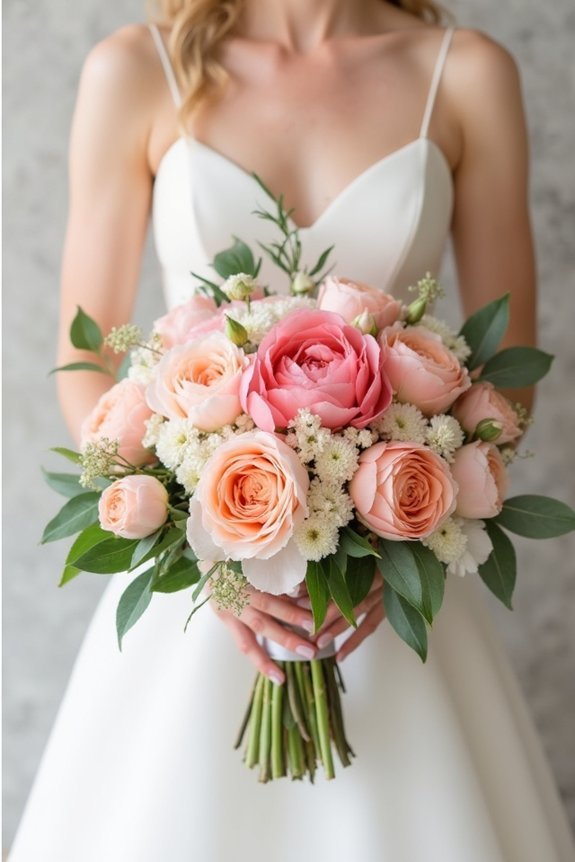
Several standout flowers deserve a place in your coral bridal bouquet, each bringing its own beauty and personality to your arrangement.
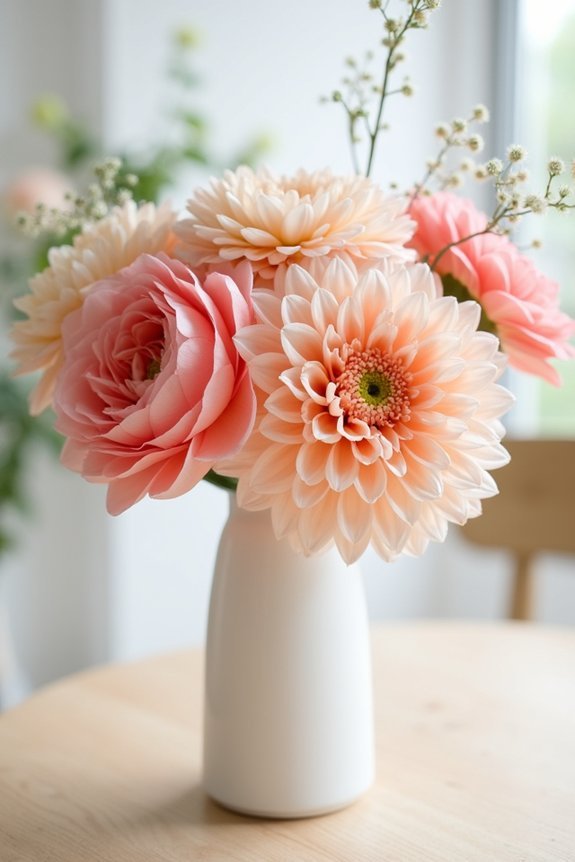
Coral roses offer classic elegance and come in gorgeous peachy shades. Ranunculus flowers provide delicate, romantic layers that feel dreamy and soft. Dahlias bring drama with their full, sculptural blooms—perfect for making a statement.
We love garden roses for their lush, vintage charm. Don’t overlook coral spray roses, which offer volume without overwhelming your design. Astilbe adds feathery texture, while celosia brings unexpected modern flair.
Mixing these varieties creates dimension, depth, and visual interest that’ll truly showcase your sophisticated style. For comprehensive planning guidance, consult the 12-Month Wedding Timeline to ensure your floral selections align with your overall wedding preparation schedule.
Matching Coral to Your Venue
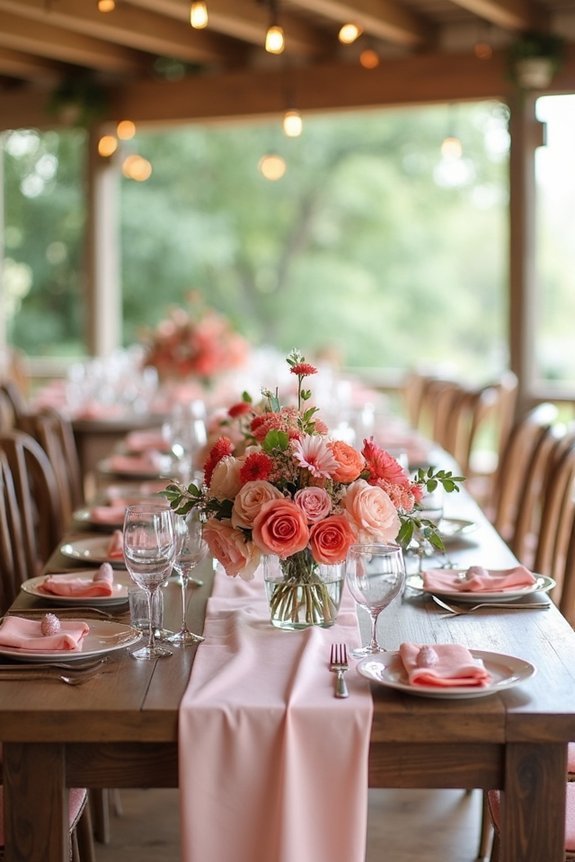
Your venue’s style, lighting, and overall aesthetic should guide your coral shade selection—this thoughtful approach guarantees your flowers harmonize beautifully with your surroundings rather than clash with them.
Consider these key factors:
- Garden settings shine with softer, peachy corals that blend naturally.
- Modern spaces pair wonderfully with bold, saturated coral tones.
- Indoor venues benefit from coral that complements existing décor colors.
- Outdoor lighting affects how coral appears throughout your ceremony and reception.
- Architectural details should either echo or subtly contrast your flower choices.
Similar to how greenery wall backdrops enhance visual impact through thoughtful color coordination, your coral flowers should be selected with consideration for how they’ll appear in your venue’s specific lighting conditions and design context.
We recommend visiting your venue during similar lighting conditions to test coral samples.
This assures your bouquet looks exactly as you’ve envisioned it.
Pairing Coral With Complementary Colors
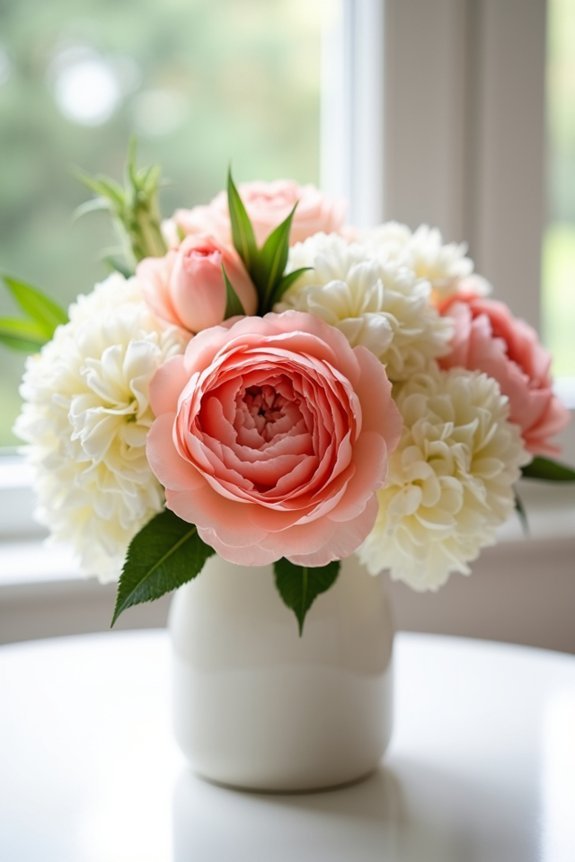
Once you’ve selected your coral shade, the real magic happens when we pair it with complementary colors that make everything pop.
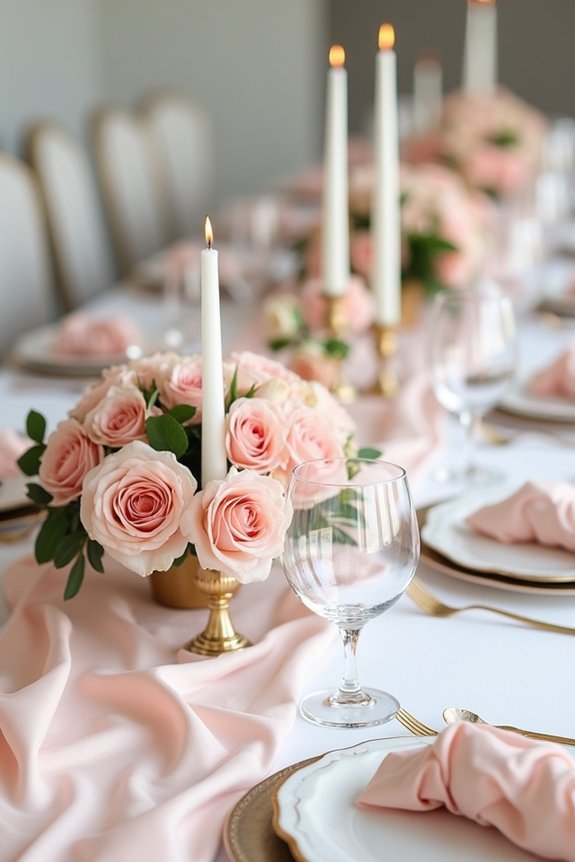
Soft blush and ivory create an elegant, romantic feel that lets coral shine without competing. For drama, we can introduce navy or deep teal—these jewel tones make coral feel sophisticated and modern.
Sage green and coral form a naturally harmonious pairing, evoking garden-fresh beauty. White serves as a beautiful neutral anchor, allowing coral to be the star.
We might also consider gold accents for warmth, or crisp black for contemporary edge. The key is choosing colors that enhance rather than fight your coral choice. A bridal headpiece in gold or silver can tie your color palette together while adding an elegant finishing touch to your overall wedding aesthetic.
Coral Bouquets: Design & Texture
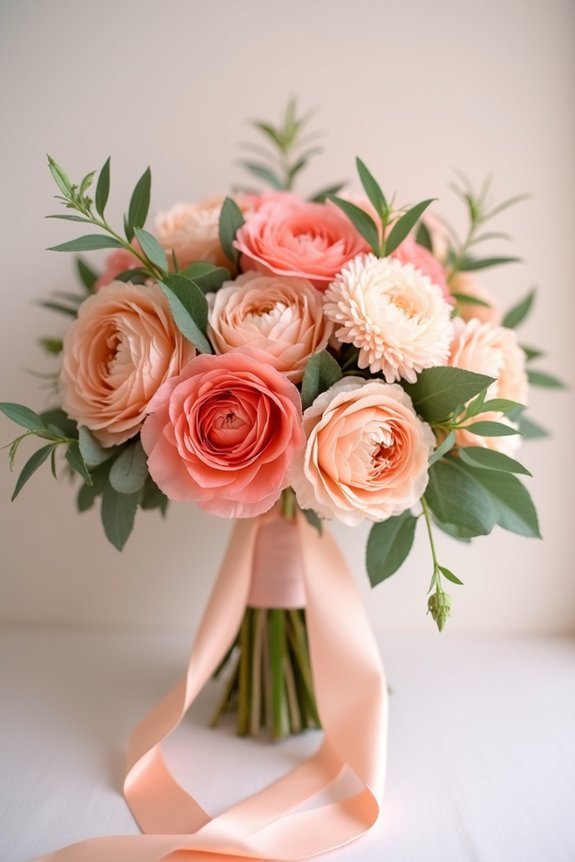
Building a stunning coral bouquet is where color theory meets artistry, and texture becomes your secret weapon for creating depth and visual interest.
We’ll guide you toward layers that feel intentional and sophisticated.
Consider these textural elements:
- Roses for classic elegance and fullness
- Ranunculus for delicate, romantic dimension
- Dahlias for bold, architectural structure
- Eucalyptus or dusty miller for airy greenery
- Hypericum berries for unexpected pops and movement
Mixing soft blooms with structural flowers prevents your arrangement from feeling flat.
Varying heights and shapes creates natural flow.
Just as themed sets create cohesive moods for photo booth experiences, your coral bouquet should balance variety with visual harmony to ensure a polished aesthetic.
We’re building a bouquet that photographs beautifully and feels substantial in your hands—exactly what you deserve on your wedding day.
Coral Centerpieces That Command Attention
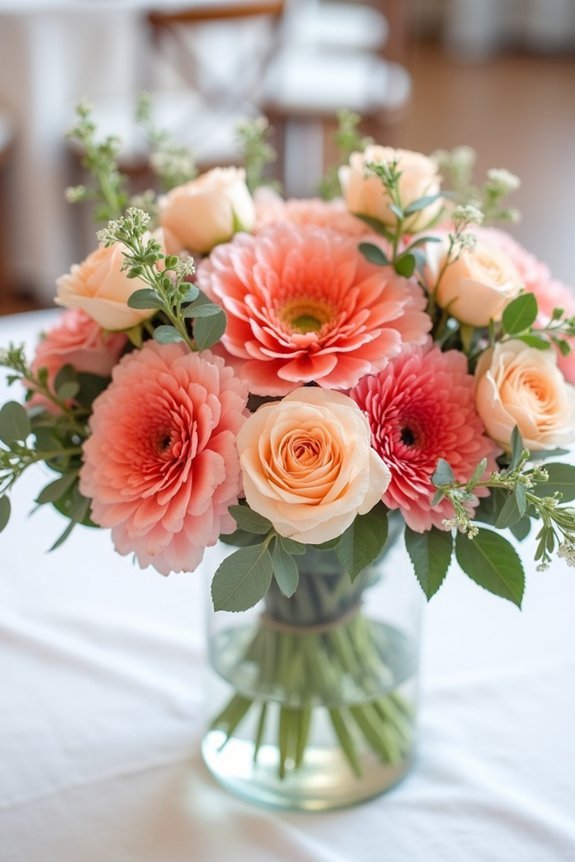
While your bouquet captures the intimate beauty of coral at arm’s length, your centerpieces have the chance to create an entirely different impact—they’re the focal points that anchor each table and set the mood for your whole celebration.
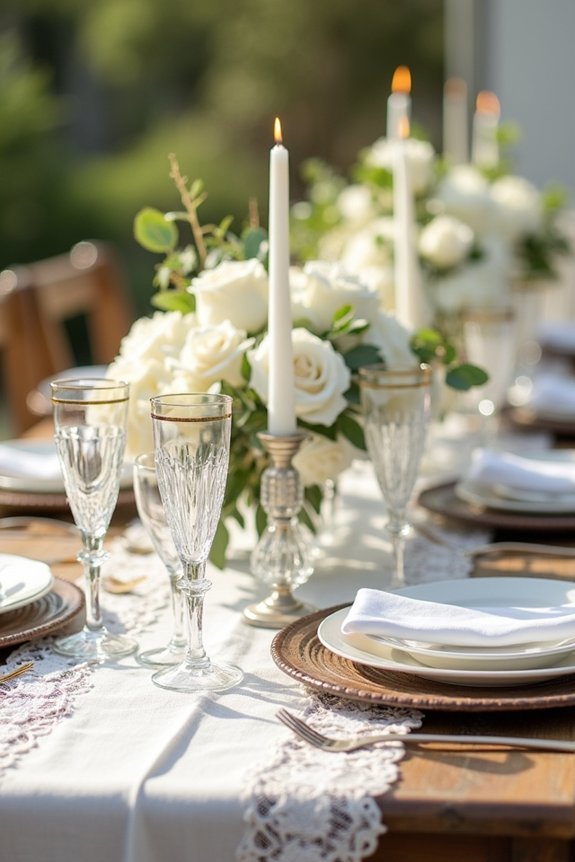
Consider mixing coral blooms with complementary greenery and neutral elements like pampas grass or white flowering branches. Layer varying heights to create visual interest and guarantee guests can see across tables.
Incorporate unexpected textures—think coral dahlias paired with dusty miller or eucalyptus. This thoughtful combination transforms your tables into stunning focal points that feel cohesive, intentional, and absolutely unforgettable.
Coral Flowers for Your Ceremony
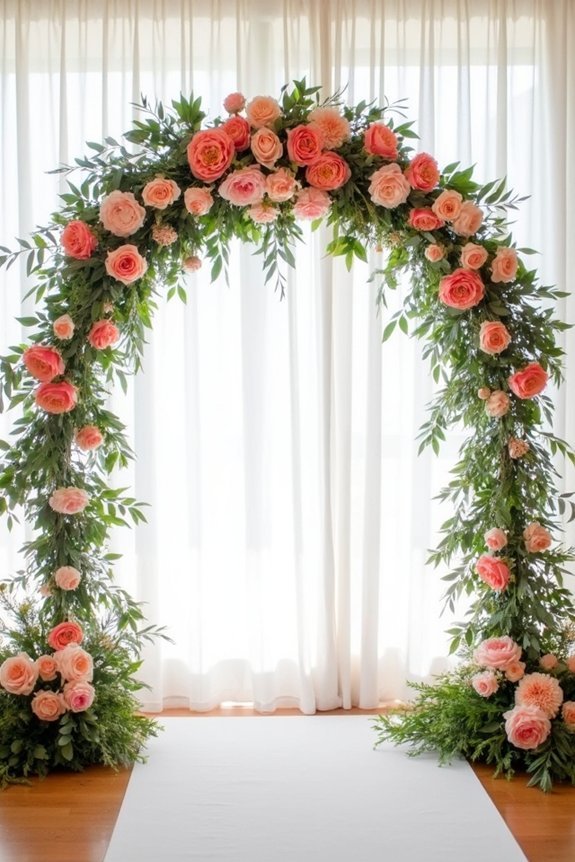
Your ceremony flowers deserve the same thoughtfulness you’ve poured into every other detail—they’re the backdrop to your most meaningful moments and the first floral impression your guests will have.
We recommend considering these elements:
- Altar arrangements with coral roses and eucalyptus for romantic elegance
- Aisle markers using coral ranunculus tied with silk ribbons
- Coral peonies mixed with white flowers for soft sophistication
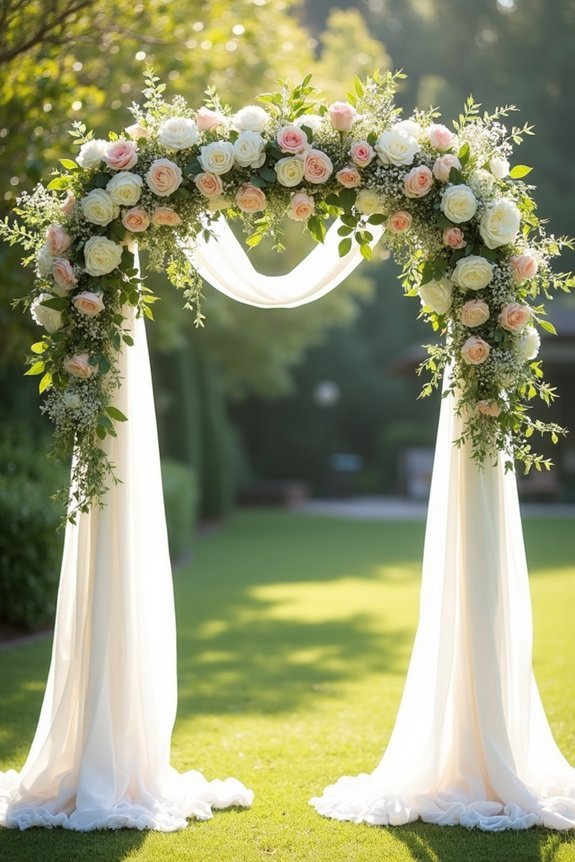
- Statement pieces flanking your arch or backdrop
- Hand-tied bouquets featuring coral as your primary color
Coral ceremony flowers create emotional depth and visual cohesion throughout your space. They’ll photograph beautifully and establish your wedding’s color story immediately.
Coral in Bridesmaids’ Bouquets
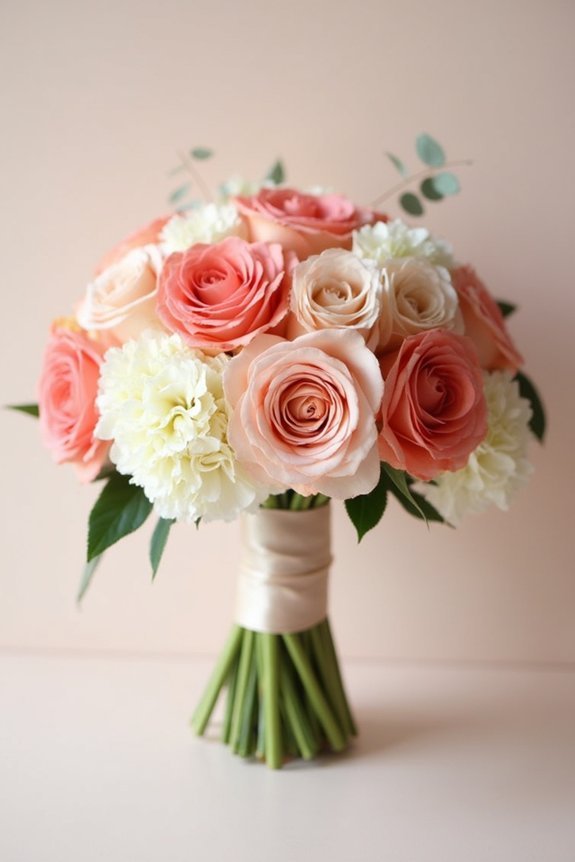
Once you’ve established your ceremony’s coral color story, it’s time to carry that beauty forward into your bridesmaids’ bouquets—because it’s understood consistency creates those magazine-worthy moments your guests will remember.
We recommend layering coral blooms with complementary neutrals like cream, blush, or sage green. This approach lets coral shine without overwhelming the arrangement.
Consider mixing coral peonies with white roses, or pair coral garden roses with eucalyptus for texture and movement. Varying flower types keeps bouquets interesting while maintaining cohesion.
Your bridesmaids will feel celebrated, and your photos will showcase intentional, elegant design throughout every frame.
Affordable Ways to Use Coral Flowers
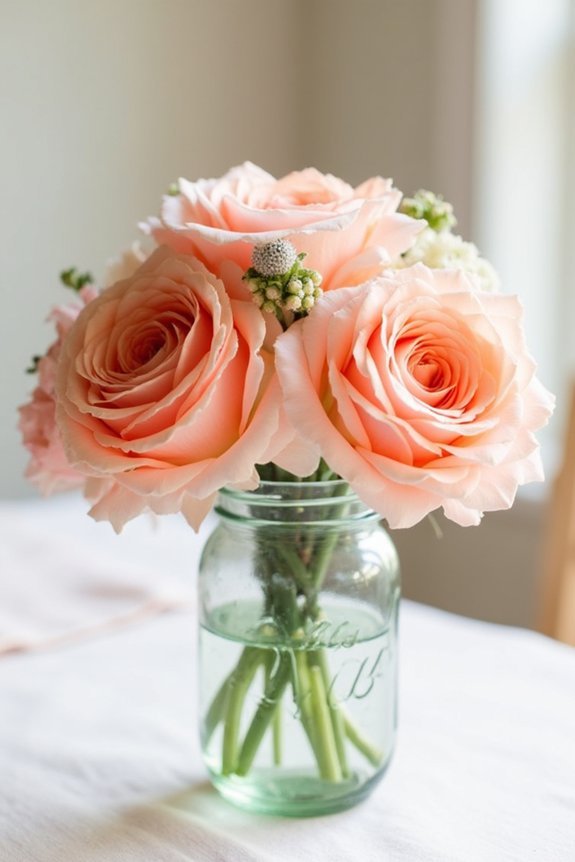
Coral flowers don’t require a luxury budget to make a stunning impact on your wedding day.
We’ve found smart strategies to maximize your floral investment while keeping costs manageable:
- Mix coral blooms with budget-friendly greenery and filler flowers
- Choose seasonal coral varieties available in your area
- Concentrate flowers in key spaces like the altar and reception centerpieces
- Use coral in bridesmaids’ bouquets instead of bridal arrangements
- Incorporate coral branches or stems rather than full blooms
These approaches let you achieve that gorgeous coral aesthetic without overspending.
You’ll create elegant, intentional florals that feel luxurious while respecting your financial priorities.
Your Coral Flower Timeline
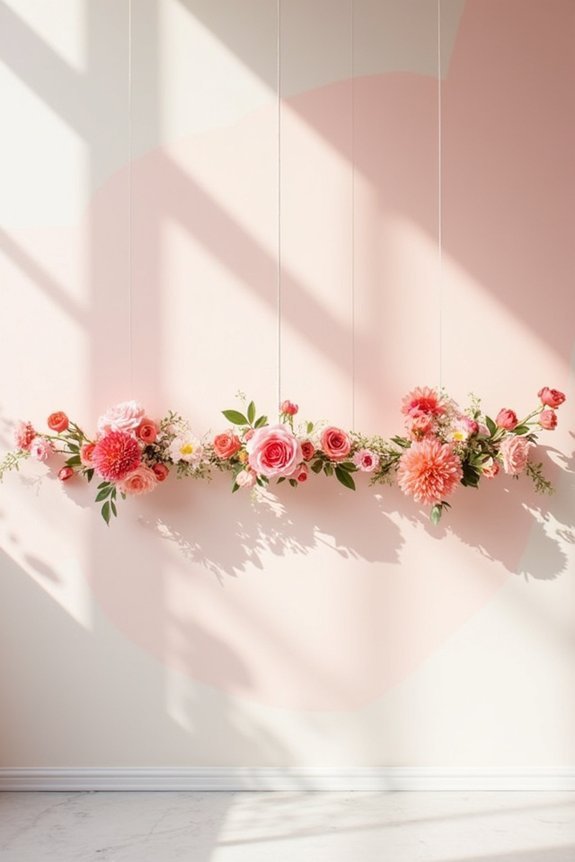
Planning when to order, confirm, and finalize your coral flowers makes all the difference in creating the wedding day you’ve envisioned.
We recommend ordering blooms six to eight months before your wedding, which gives florists adequate time to source quality stems and plan arrangements.
About two months out, you’ll want to confirm final flower selections and quantities.
Then, one week before the big day, we suggest scheduling a final walkthrough with your florist to review placement details.
This timeline guarantees your coral florals arrive fresh and positioned exactly where you’ve imagined them, eliminating last-minute stress.
Keeping Coral Fresh Before & During Your Wedding
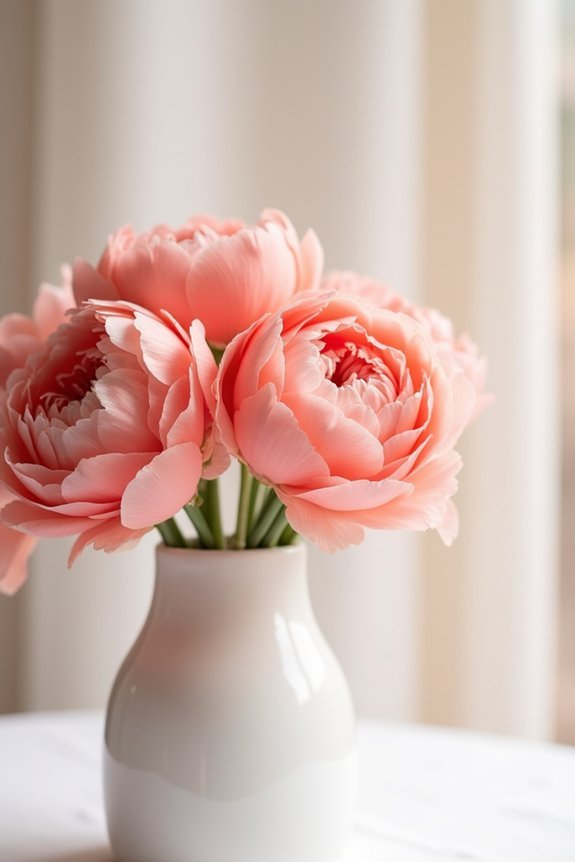
Because your coral flowers represent such a meaningful part of your wedding day, we want to make sure they stay vibrant and gorgeous from the moment they arrive until your last guest leaves the reception.
Keep your blooms fresh by following these essential steps:
- Trim stems at a 45-degree angle under running water
- Change water daily and remove any submerged leaves
- Store flowers in a cool location away from direct sunlight
- Mist petals lightly with water to maintain hydration
- Keep flowers away from ripening fruit and heat sources
These simple practices preserve your coral arrangements’ beauty throughout your celebration.
Coral Pitfalls & How to Sidestep Them
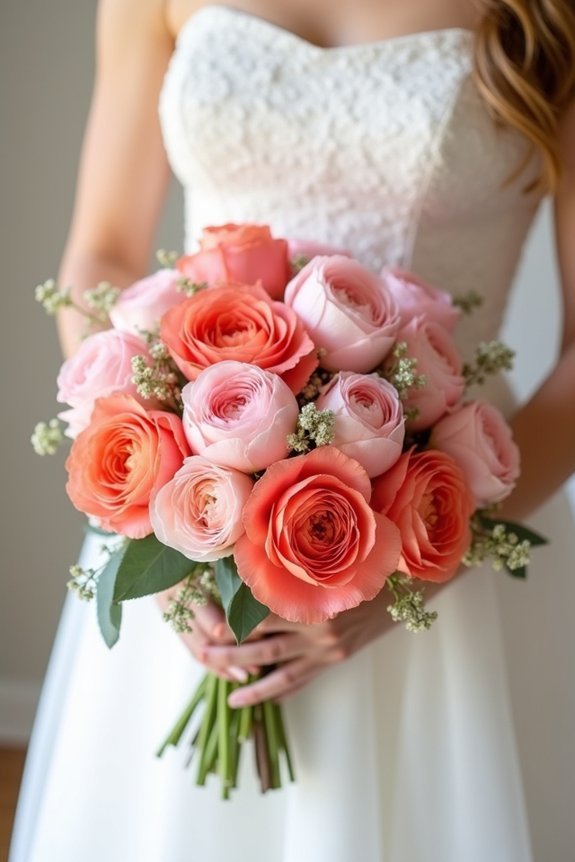
While coral flowers are undeniably stunning, they do come with specific challenges that we can easily navigate with the right knowledge.
Coral blooms fade quickly in direct sunlight, so we’ll want to display arrangements in shaded areas. Some coral varieties bruise easily, requiring gentle handling from florists.
Pairing coral with certain colors—like orange or hot pink—can clash rather than complement. We can solve this by choosing soft neutrals, blush tones, or creamy whites as companions.
We should also verify that our venue’s lighting flatters coral hues, since artificial light can shift their appearance dramatically.
Frequently Asked Questions
How Do I Order Coral Flowers in Advance Without Them Arriving Damaged or Wilted?
We’d move mountains to guarantee your coral blooms arrive flawless—order from florists two weeks prior, specify delivery the day before, request climate-controlled packaging, and confirm they’ll refrigerate arrangements until your wedding morning.
What’s the Average Cost Difference Between Coral and Other Popular Wedding Flower Colors?
We’ve found coral typically costs 10-15% more than neutrals like blush or ivory, but runs similar to trendy options like terracotta or dusty rose. Your final price depends on seasonality and availability.
Can I Use Coral Flowers if My Wedding Dress Is White or Ivory?
Absolutely—coral flowers create stunning contrast against white or ivory gowns. We love pairing them for a sophisticated, modern look that photographs beautifully and lets both elements shine.
How Do I Communicate the Exact Coral Shade I Want to My Florist?
We’ve all watched Pinterest boards mysteriously transform coral into “salmon-adjacent-peachy-maybe-orange” once our florist interprets our vague descriptions. Bring actual flower samples, Pantone cards, and photos of your exact vision—we’ll get that shade right.
Will Coral Flowers Photograph Well, or Do They Look Different in Photos Versus in Person?
Coral photographs beautifully in natural light, but it can shift toward orange or pink depending on your lighting and camera settings. We recommend taking test photos with your florist beforehand to guarantee you’re both happy with how it translates on camera.