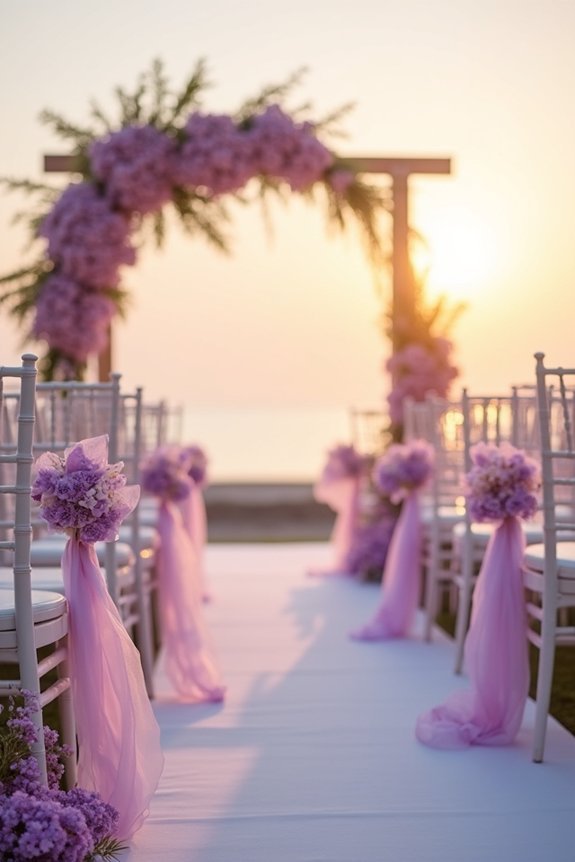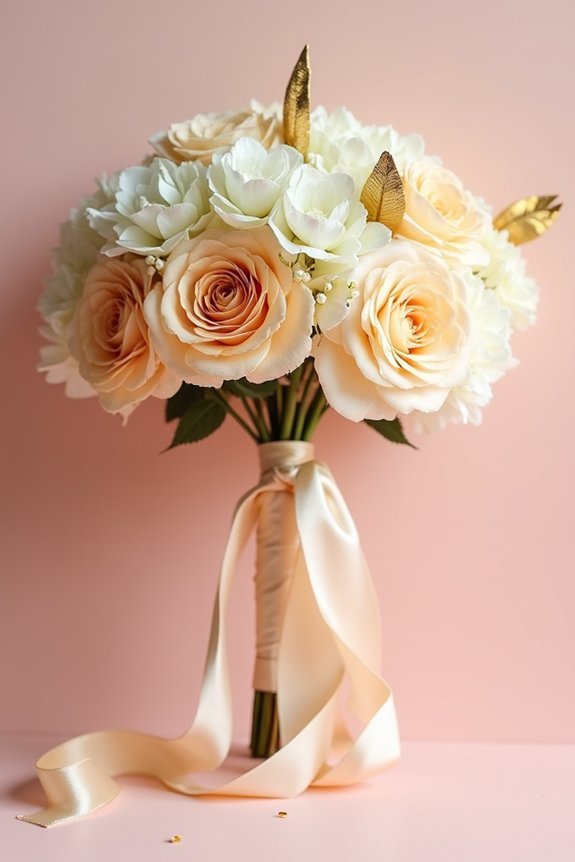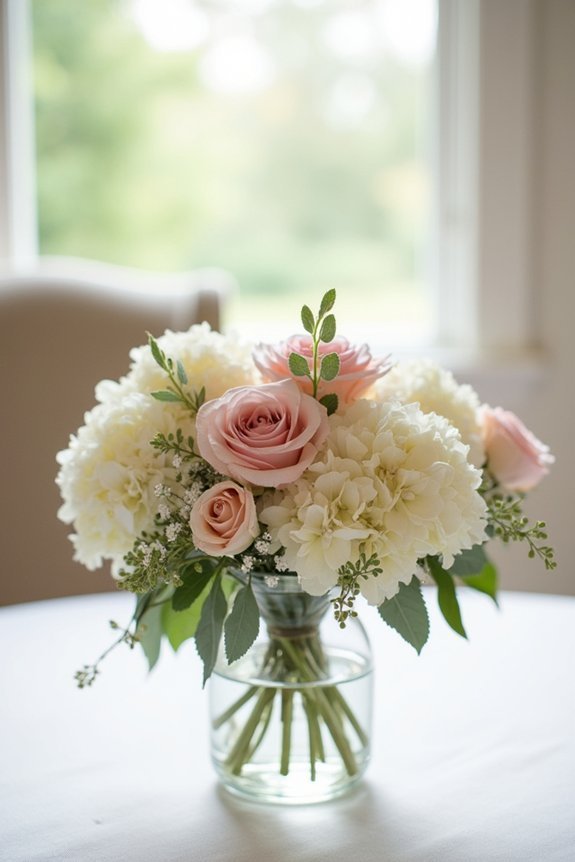
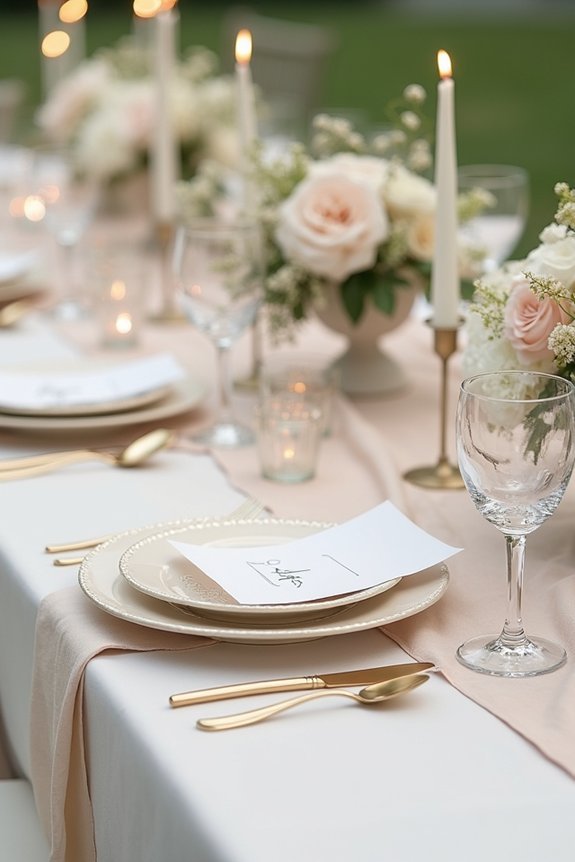
We can build a gorgeous ivory wedding by layering in complementary colors like soft blush, sage green, or navy that reflect your personality. Metallics such as gold, silver, or rose gold add glamour and dimension when used consistently throughout your décor. Don’t forget textures—combining delicate lace with smooth silk or linen creates depth and interest. Consider your season too; spring calls for pastels, while fall welcomes rich burgundy and bronze. There’s much more to discover about avoiding common mistakes and testing your perfect palette.
At a Glance
- Ivory serves as a timeless, adaptable foundation that complements various accent colors and photographs beautifully in natural light.
- Pair ivory with soft blush, sage green, warm gold, navy, or dusty mauve to create romantic, elegant, or classic aesthetics.
- Incorporate metallics like gold, silver, or rose gold consistently throughout décor and bridal jewelry for added glamour and dimension.
- Layer textures by combining delicate lace, smooth silk, and linen in your dress, linens, and décor for visual depth.
- Align your ivory palette with seasonal considerations: pastels for spring, vibrant greens for summer, rich tones for fall, cool elegance for winter.
Why Ivory Works as Your Wedding’s Neutral Base
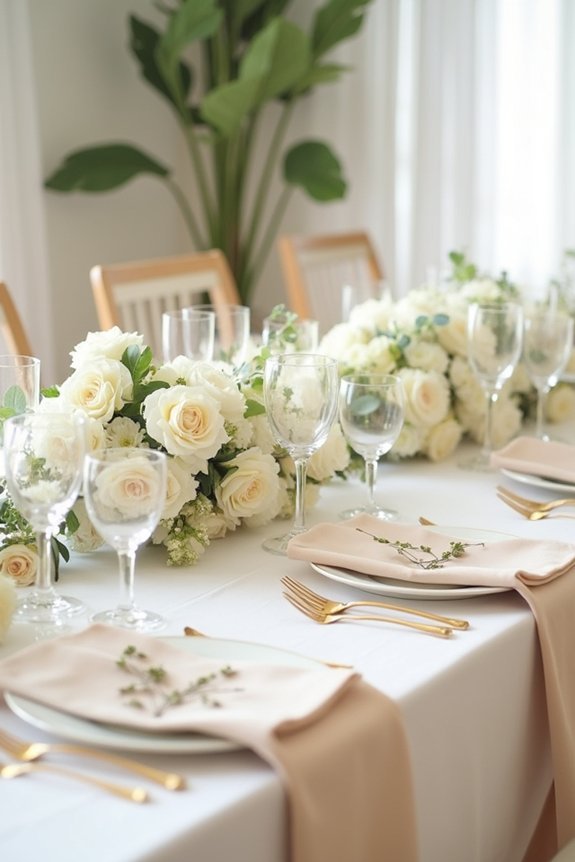
When you’re building your wedding’s color story, ivory serves as the perfect foundation—it’s timeless, adaptable, and genuinely flattering in photographs.
We love how ivory works because it doesn’t demand attention; instead, it lets your other design choices shine. Unlike bright white, ivory carries warmth and softness that feels romantic without being sterile.
It photographs beautifully in natural light, creating an ethereal quality that makes every image feel magazine-worthy. You can pair ivory with virtually any accent color—jewel tones, pastels, metallics, or earth tones all complement it gracefully.
This neutrality means your vision stays fresh and intentional, never trendy or dated. To elevate your ivory palette further, consider incorporating bridal headpieces and crowns that feature materials like Austrian crystals or pearls, which add sparkle and sophistication without overwhelming your neutral aesthetic.
Complementary Colors for Your Ivory Wedding Palette

Now that you’ve got ivory as your foundation, it’s time to choose the colors that’ll make your wedding visually stunning and uniquely yours.
We recommend pairing ivory with soft blush for romance, sage green for natural elegance, or warm gold for timeless sophistication. Navy and ivory create classic contrast, while dusty mauve adds subtle depth.
Consider your venue’s existing colors and lighting—natural outdoor settings shine with greenery, while indoor spaces benefit from jewel tones. A pergola structure can serve as a focal point that complements your color palette while adding architectural interest to your outdoor ceremony space.
Think about what emotions you want to evoke. Your complementary colors should feel intentional and reflect your personal style, not just follow trends.
Ivory + Metallics: Gold, Silver, and Rose Gold Pairings
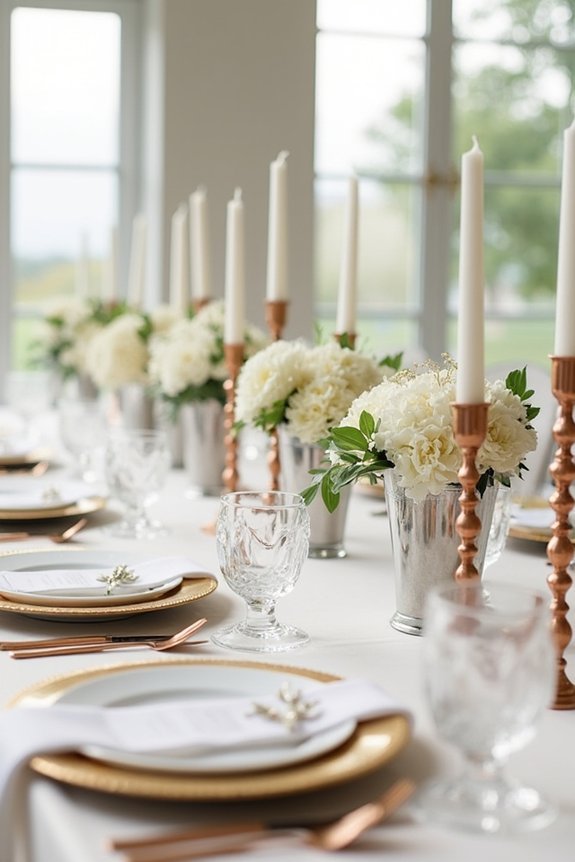
If you’re looking for an effortless way to add glamour and dimension to your ivory wedding, metallics are your answer.
Gold brings warmth and timeless elegance, perfect for romantic, classic celebrations. Silver creates a modern, crisp aesthetic that feels fresh and sophisticated. Rose gold offers a romantic middle ground, blending warmth with contemporary style.
We recommend selecting one primary metallic and using it consistently throughout décor, linens, and details. This creates visual harmony while letting ivory shine as your foundation.
Mix metallics sparingly—perhaps gold for centerpieces and silver for place settings—to add depth without clashing. Consider complementing your metallic palette with bridal jewelry sets that echo your chosen metals, ensuring your personal accessories harmonize seamlessly with your overall wedding design.
Layering Textures: Lace, Silk, and Linen Combinations
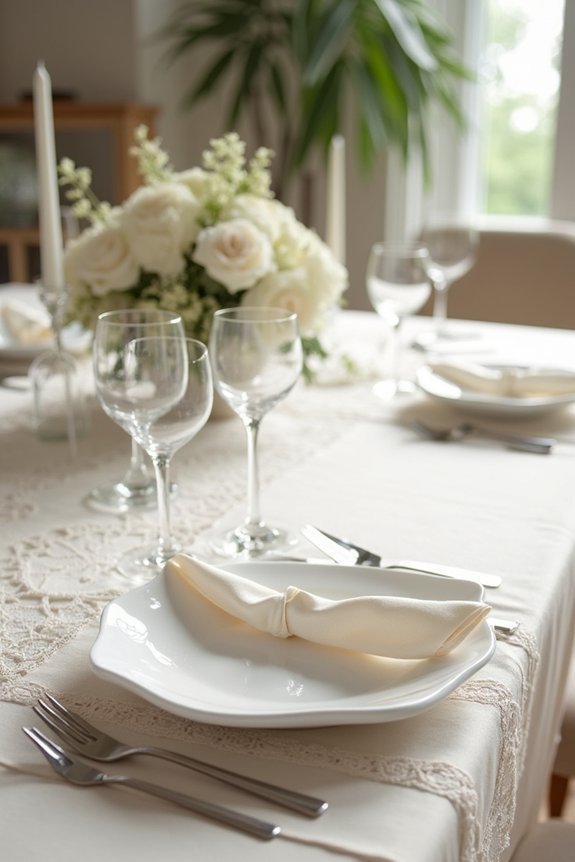
While metallics add sparkle and dimension to your ivory palette, textures create the depth that makes your wedding feel luxurious and intentional.
We love combining delicate lace with smooth silk for an effortlessly elegant contrast. Linen adds organic, relaxed texture that softens formality beautifully.
Consider layering these materials through your dress, linens, and décor—perhaps ivory lace overlays on silk table runners, or a linen ceremony backdrop adorned with lace details.
Complete your textural vision with bridal accessories like hair vines with pearls and crystals, which add dimensional sparkle that complements your layered fabrics beautifully.
This textural interplay transforms your color palette from flat to dimensional, inviting guests to experience your wedding through sight and touch, creating genuinely memorable moments.
Ivory Palettes Across Seasons: Real Wedding Examples
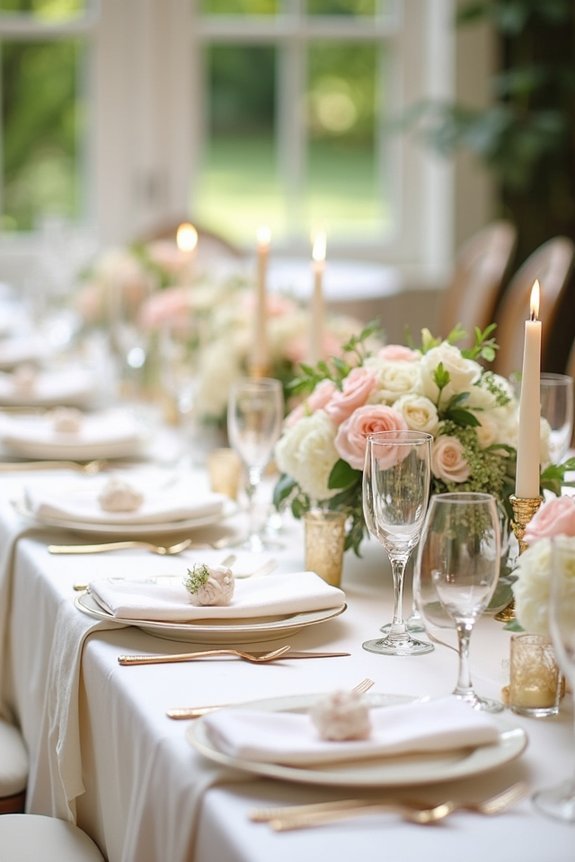
Ivory’s true magic reveals itself when you consider how seasons transform its appearance and feeling.
Spring ivory weddings glow with soft pastels and fresh florals, creating an ethereal atmosphere.
Summer celebrations pair ivory with vibrant greens and gold accents, radiating warmth and joy.
Fall events layer ivory with terracotta, burgundy, and bronze tones, adding richness and sophistication.
Winter ceremonies embrace ivory’s cool elegance, enhanced by silver, deep blues, and evergreen elements.
Each season brings distinct advantages to your palette.
Consider incorporating waterproof decorative lights into your seasonal setup to illuminate your ivory palette beautifully during evening celebrations.
You’ll discover that matching your ivory to seasonal surroundings guarantees your wedding feels intentional and perfectly harmonized with nature’s backdrop.
Common Ivory Palette Mistakes: And How to Fix Them
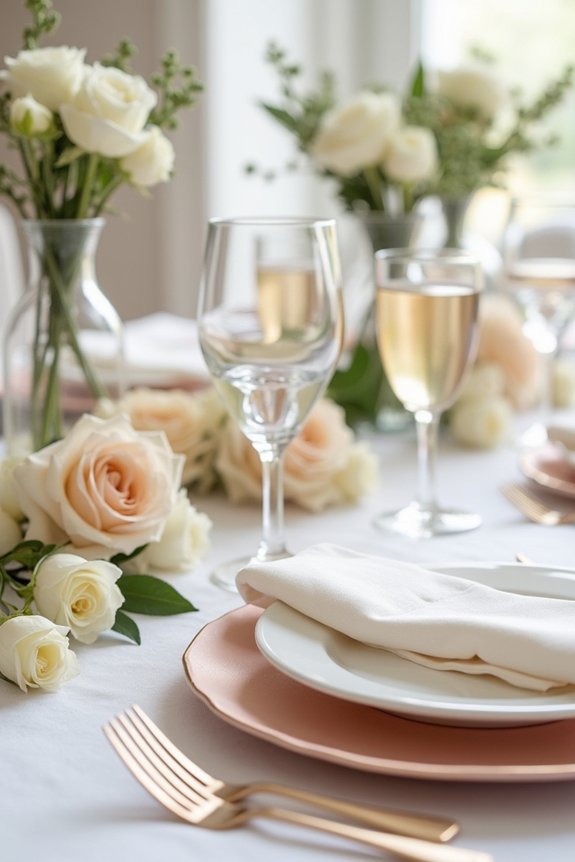
Have you ever seen a wedding photo where the ivory looked dingy or flat instead of elegant? That happens when we skip adding depth to our palettes.
Pairing ivory with only neutrals can feel boring and washed out. Instead, we should layer in jewel tones, metallics, or soft pastels to create visual interest.
Another common mistake? Choosing too many ivory shades at once.
We recommend selecting one ivory as your base, then building around it. This creates cohesion while keeping that sophisticated, intentional look you’re after.
Before You Commit: Testing Your Color Palette
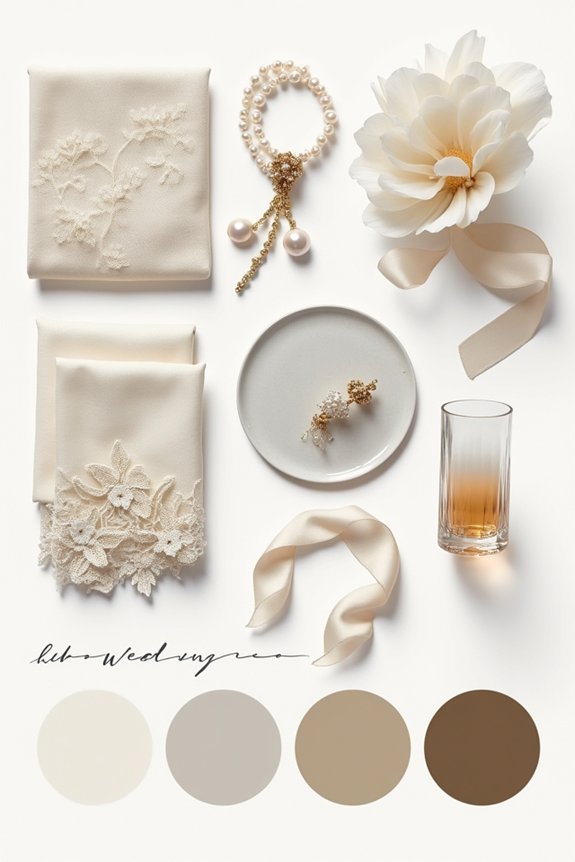
How do you know if your ivory palette will actually work in real life? We recommend gathering fabric swatches, paint samples, and photos in your actual wedding venue during different times of day.
Natural lighting transforms how colors appear, so test your selections at morning, afternoon, and evening hours. Bring potential bridesmaid dress fabrics next to your ivory gown.
Notice how florals interact with your chosen neutrals. Take photos under your venue’s lighting conditions.
This hands-on approach reveals whether your palette creates the sophisticated atmosphere you’re envisioning before making final commitments.
Frequently Asked Questions
How Do I Ensure My Ivory Dress Photographs Well Under Different Lighting Conditions?
We recommend scheduling a pre-wedding photo session in various lighting conditions to test your dress. Bring a professional photographer who’ll adjust settings for ivory’s reflective qualities, ensuring you’ll look luminous everywhere—from golden hour to indoor venues.
What’s the Difference Between Ivory, Cream, Champagne, and Off-White for Weddings?
We recently styled a bride who chose champagne over ivory and loved how it photographed warmer. Ivory’s crisp and pure, cream’s softer, champagne’s golden-toned, and off-white sits neutral between them—pick based on your skin tone and venue lighting.
Can I Use Ivory as My Main Color if I Have Warm or Cool Undertones?
Absolutely, you can use ivory as your main color regardless of your undertones. We’d recommend choosing warm ivory with golden undertones if you’re warm, or cool ivory with pink undertones if you’re cool.
How Do I Prevent My All-Ivory Wedding From Looking Washed Out or Boring?
We’ll weave in warmth through textures, metallics, and layered linens. Incorporate ivory’s complementary colors—blush, gold, or sage—as accents. Play with patterns, lighting, and dimensional details. Ivory’s elegance emerges through intentional styling, not monotone sameness.
Should My Groom Wear Ivory Too, or Stick With Traditional Black or Gray?
We’d recommend your groom wear charcoal gray or black—it’ll create striking visual contrast against your ivory palette while keeping the sophisticated aesthetic you’re building. He’ll stand out beautifully in photos.