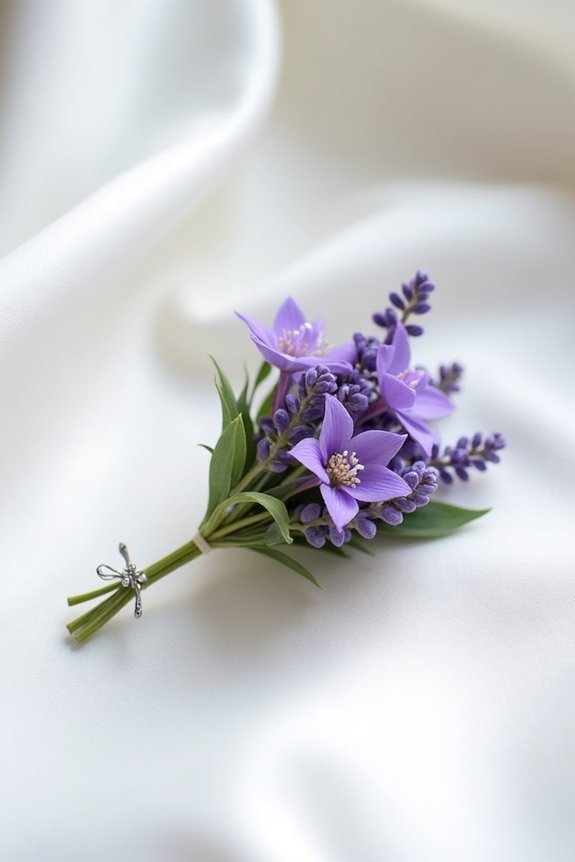
We can create lavender boutonnieres that bring soft sophistication to your wedding in just ten minutes. Start by gathering three to five fresh lavender sprigs with vibrant purple petals, trim them to four inches, and remove lower leaves. Layer them slightly off-center, secure with floral tape at an angle, then finish with a delicate ribbon bow. This polished touch complements any color palette while symbolizing purity and grace. Our guide ahead covers everything from selecting quality stems to fixing common mishaps.
At a Glance
- Select vibrant, firm lavender stems cut within two days and source from reputable florists for optimal freshness and appearance.
- Gather 3-5 lavender sprigs, trim to four inches, remove lower leaves, and layer slightly off-center for added dimension.
- Secure stems with floral tape at a slight angle, trim flush, and finish with a decorative ribbon or twine bow.
- Mist wilting boutonnieres, secure loose petals gently, and trim browning edges to maintain beauty throughout your event.
- Use sharp floral scissors, floral tape, and boutonniere backing to achieve professional results without specialized training or experience.
Why Lavender Boutonnieres Add Elegance to Any Wedding
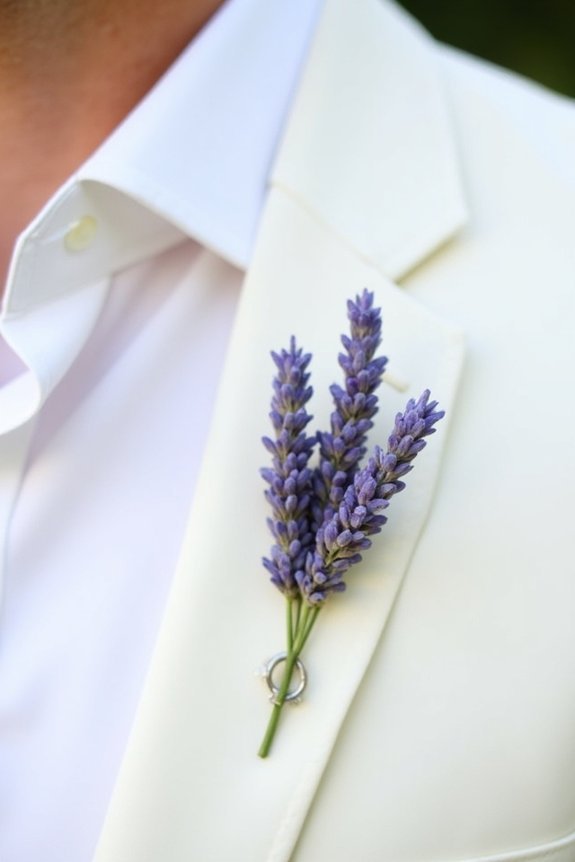
When you’re envisioning your groom and groomsmen walking down the aisle, you want every detail to feel intentional and refined—and that’s exactly what lavender boutonnieres deliver.
We love how lavender brings soft sophistication to formal wear without demanding attention. Its delicate purple hue complements nearly every color palette, from romantic blush tones to bold jewel accents. The flowers whisper elegance rather than shout it, creating a cohesive, curated look throughout your ceremony.
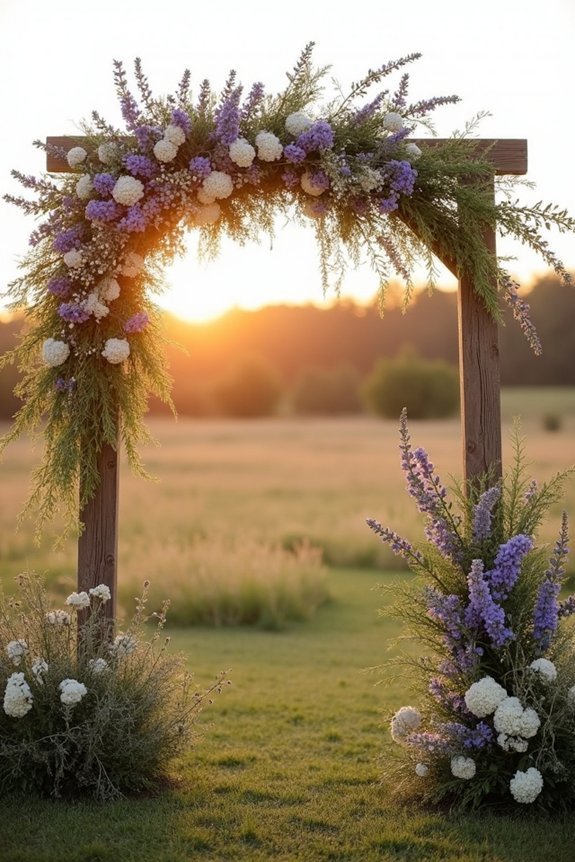
Beyond aesthetics, lavender carries wonderful symbolism: purity, grace, and serenity. These boutonieres transform your groomsmen’s appearance while adding a thoughtful, polished touch that guests will absolutely notice. When paired with a carefully selected wedding arch frame, your groomsmen’s boutonnieres become part of a harmonious visual narrative that ties your entire ceremony aesthetic together.
How to Assemble Your Boutonniere in 10 Minutes
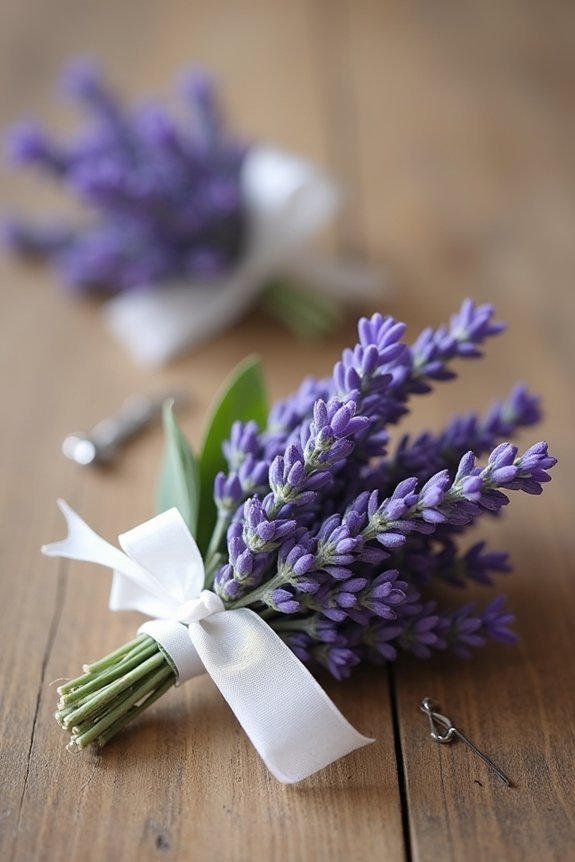
Now that you’ve chosen lavender for its undeniable elegance, the good news is that assembling these boutonnieres doesn’t require florist skills or hours of your time.
Start by gathering your stems—about three to five lavender sprigs per boutonniere work beautifully. Trim each stem to roughly four inches, removing lower leaves that’d sit against fabric.
Layer the lavender slightly off-center for dimension, then secure everything with floral tape, wrapping at a slight angle. Finally, trim the stems flush and add a small ribbon or twine bow.
You’ll create polished, professional-looking boutonnieres that’ll impress your guests and groom. For your ceremony venue, consider how these boutonnieres will complement your selected pergola structure’s aesthetic, as the overall floral design should harmonize with your backdrop.
Choosing Your Lavender Stems and Quality Flowers
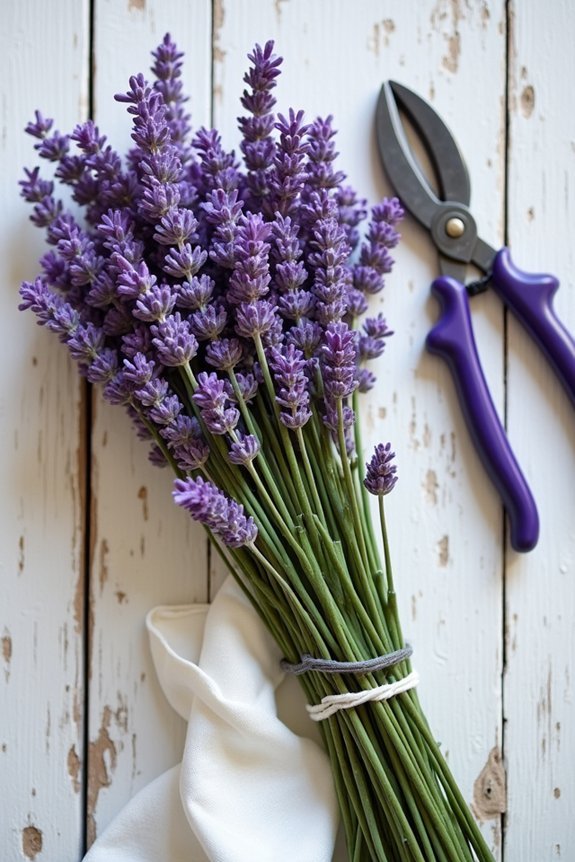
Because lavender’s delicate beauty depends entirely on the freshness of what you’re working with, selecting high-quality stems should be your first priority.
We recommend looking for these key indicators when choosing your flowers:
- Vibrant purple color throughout the stem, not faded or brown sections
- Firm, crisp petals that don’t shed when gently touched
- Fresh-cut stems with no wilting or drooping appearance
Source your lavender from reputable florists or specialty growers who handle flowers properly.
Ask when they received their shipment—stems cut within two days work best.
Just as pearls and crystals enhance bridal accessories, the quality of your lavender stems will elevate the overall appearance and longevity of your boutonniere design.
We’ll notice the difference immediately in how our boutonnieres look and last throughout your event.
Gather Your Materials: The Florist Tools You’ll Need
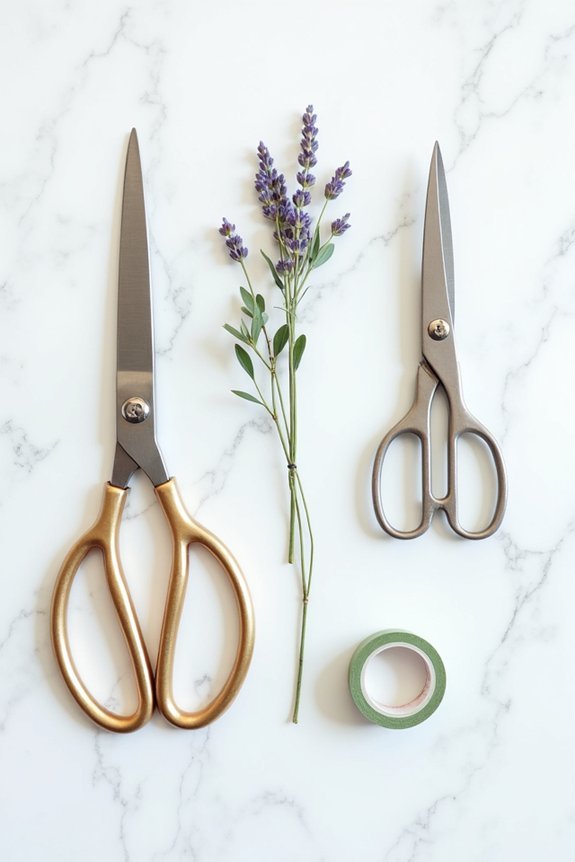
Three essential tools will transform our lavender boutonnieres from lovely to absolutely polished, and we’re fortunate that they’re affordable and easy to find.
First, we need sharp floral scissors or pruners to create clean cuts on stems, which helps flowers absorb water better.
Second, floral tape wraps around stems, securing everything together while creating a neat, finished look.
Finally, a floral pin or boutonniere backing holds everything in place on clothing.
These three items work together beautifully, giving us professional results that feel intentional and elegant without requiring expensive equipment or specialized training. For those looking to add extra elegance to their event, consider pairing your lavender boutonnieres with complementary accessories like adjustable bridal belts to enhance the overall coordinated aesthetic.
Three Boutonniere Styles: Which Fits Your Wedding?
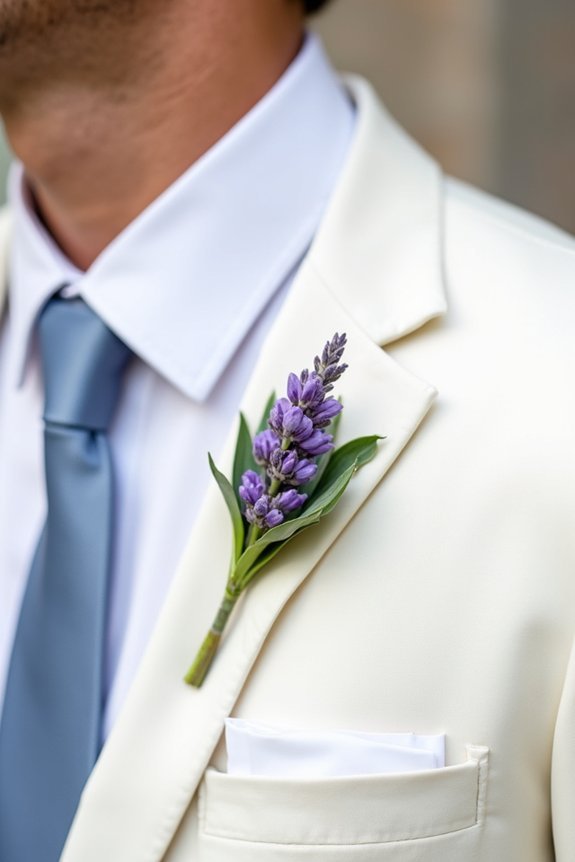
With your tools gathered and ready, we can now explore the styles that’ll make your boutonnieres uniquely yours.
Each style offers distinct elegance for your wedding vision. Consider these options:
- Classic wrapped style — lavender stems bound with ribbon, creating timeless sophistication
- Compact posy — tightly clustered blooms with minimal greenery, perfect for modern weddings
- Organic garden style — loosely arranged lavender with complementary foliage, ideal for romantic or rustic themes
Your choice depends on your overall aesthetic and comfort level. Think about your wedding’s vibe—formal or relaxed?
Your venue matters too. Each style photographs beautifully and makes a meaningful statement about your celebration’s personality. Pairing your boutonniere with hypoallergenic bridal jewelry ensures your accessories remain comfortable and elegant throughout your event.
Prepping Your Lavender Boutonnieres: Timing and Storage
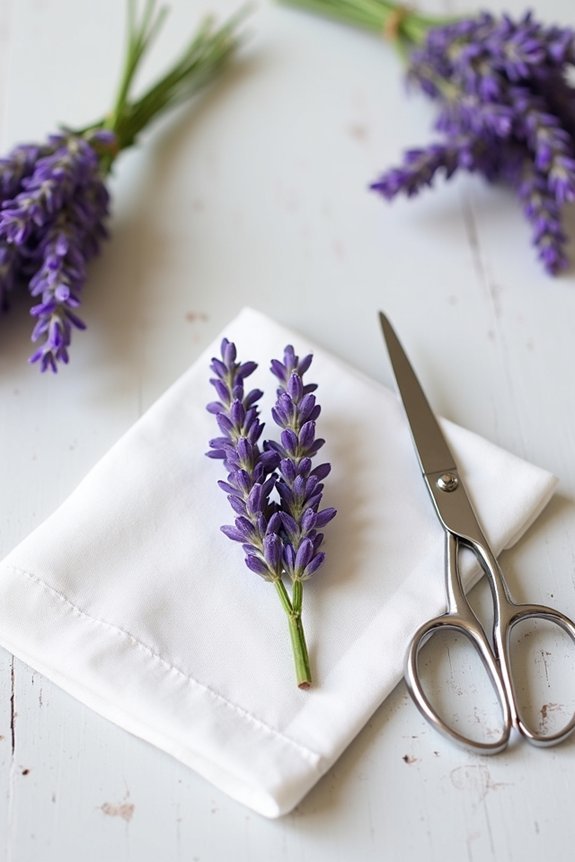
Timing makes all the difference when you’re creating boutonnieres that’ll look fresh and vibrant through your entire wedding day.
We recommend prepping them the morning of your event or the evening before, depending on your climate. Store them in a cool space—think refrigerator or shaded area—to slow wilting.
Keep stems wrapped in damp paper towels and placed in a sealed container or plastic bag. This moisture prevents dehydration while the cool temperature preserves the delicate lavender blooms.
Check them periodically, misting lightly if needed. Proper storage guarantees your boutonnieres stay gorgeous from ceremony through celebration.
When Boutonnieres Go Wrong: Quick Fixes for 5 Common Mistakes
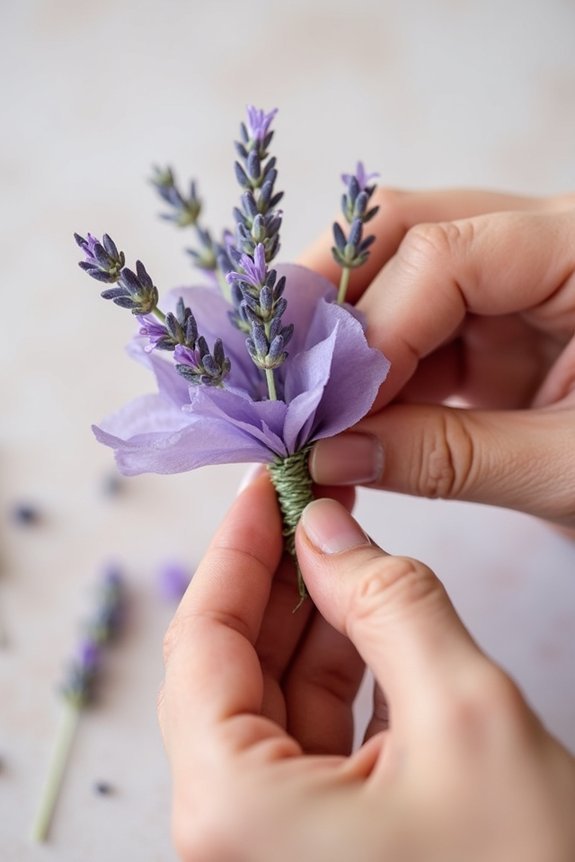
Even with the best planning, things can fall apart when you’re assembling boutonnieres on your wedding day.
We’ve got solutions for the hiccups you might encounter:
- Wilting stems: Mist with water and place in a cool spot immediately
- Loose petals: Secure gently with floral tape wrapped around the base
- Browning edges: Trim discolored portions with sharp scissors for a fresh appearance
Don’t panic—these fixes are simple and effective.
Most issues happen because of heat or timing, which we can control. Your boutonnieres will look beautiful regardless of minor mishaps.
You’ve got this, and your groomsmen will look sharp.
Frequently Asked Questions
Can I Make Lavender Boutonnieres Ahead of Time, and How Far in Advance?
We’ve learned that prepping boutonnieres early is like marinating meat—the flavors deepen with time. You can make lavender boutonnieres 2-3 days ahead, storing them in a cool place wrapped in damp paper towels.
What’s the Cost Difference Between DIY Boutonnieres Versus Hiring a Professional Florist?
We’ll save you $3–$8 per boutonniere by going DIY versus hiring a florist, who typically charges $8–$15 each. You’re basically paying for their labor and expertise, so budget accordingly based on your guest count.
How Do I Prevent Lavender From Shedding Petals During the Wedding Day?
While fresh lavender’s delicate nature tempts us toward elaborate fixes, we’ve found the simplest solution works best: mist boutonnieres lightly with hairspray the morning of, then keep them cool until ceremony time.
Will Lavender Boutonnieres Work With My Bride’s Bouquet, or Do They Clash?
Lavender boutonnieres work beautifully with most bride’s bouquets. We’d pair them with soft pastels, whites, or blush tones for cohesion. They’ll clash only if your bride’s bouquet features bold jewel tones or dramatic colors that compete for attention.
Can I Use Dried Lavender Instead of Fresh for My Boutonnieres?
Just as a vintage photograph preserves memories differently than fresh film, dried lavender offers its own magic. Yes, we can absolutely use dried lavender—it’s actually more forgiving, lasts longer, and won’t wilt during your ceremony.