We’ll create rustic table arrangements by layering natural textures like wood, metal, and dried grasses with intentional spacing for elegance. Start with a foundational element—a pillar candle or potted plant—then add focal flowers at varying heights, filler blooms, and trailing greenery for balance. Finish with linen in earthy tones, hand-lettered place cards on kraft paper, and quality vintage-inspired glassware. This approach guarantees your tablescape feels authentically grounded while remaining beautifully polished. We’re ready to walk you through each step for stunning results.
At a Glance
- Start with a stable foundation using reclaimed wood, natural chargers, and weathered metal candleholders as anchors.
- Layer trailing greenery as the base, then add focal flowers at varying heights for visual interest.
- Balance weighted pieces with lighter textures, leaving intentional gaps for airflow and an uncluttered appearance.
- Incorporate natural elements like dried grasses, burlap, branches, and stone to reflect the rustic aesthetic.
- Polish the setting with natural-toned linens, hand-lettered place cards on kraft paper, and vintage-inspired glassware.
Define Your Rustic Table Arrangement Style
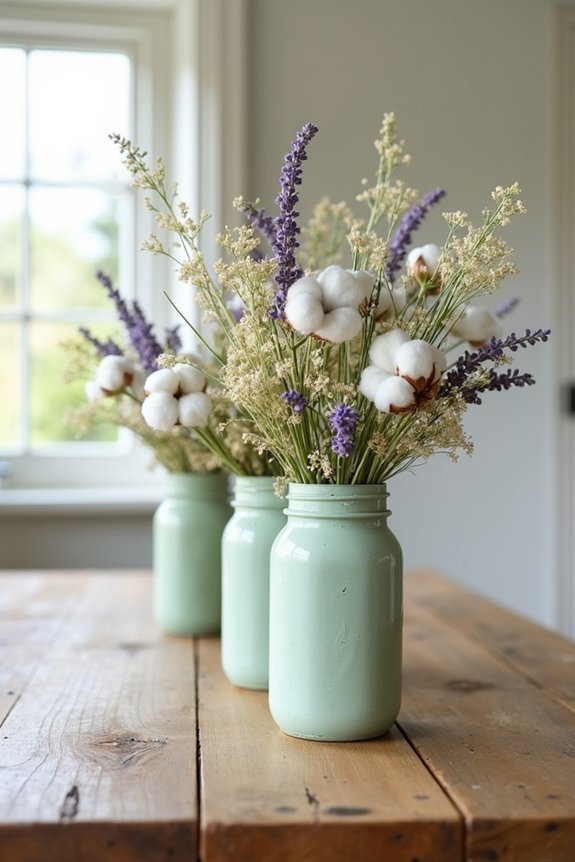
Where do you envision your rustic tablescape fitting within your overall wedding aesthetic? This question helps us narrow down your style direction.
Are we talking farmhouse elegance, bohemian garden vibes, or industrial-chic rustic? Consider your venue, color palette, and existing décor choices.
Your table arrangements should complement these elements seamlessly, not compete with them. Think about the mood you’re creating—intimate and cozy, or grand and dramatic?
Understanding your rustic style foundation means we can select flowers, textures, and centerpieces that feel authentically yours. Consider incorporating artificial flower wall panels to add depth and visual interest to your reception space while maintaining a cohesive design aesthetic. This clarity transforms your tables from nice to magazine-worthy.
Gather Your Materials: Wood, Metal, and Natural Textures
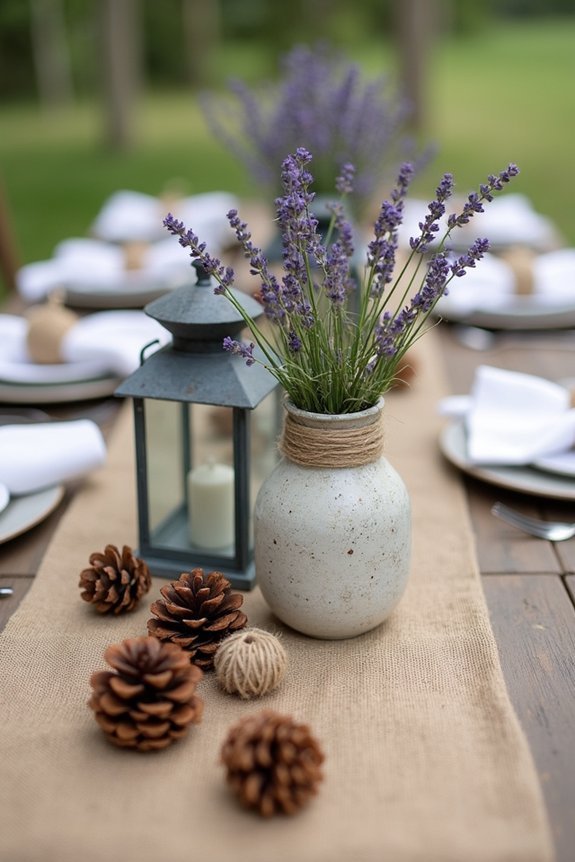
The foundation of a stunning rustic tablescape rests on the materials we choose—each piece working together to build that effortless, elegant look you’re after.
Wood serves as your anchor, from reclaimed table runners to natural tree slices as chargers. Layer in weathered metal through candleholders, cutlery, or vintage frames.
Natural textures matter too: dried grasses, burlap, linen, and raw cotton add depth and authenticity. Don’t overlook stone elements or branches that echo the outdoors.
For outdoor receptions, consider incorporating stable base designs that complement your tablescape while providing structural support for decorative elements and floral arrangements.
When we combine these materials thoughtfully, we create visual interest that feels intentional rather than scattered, grounding your reception in warmth and sophistication.
Plan Your Layout: Height, Balance, and Spacing
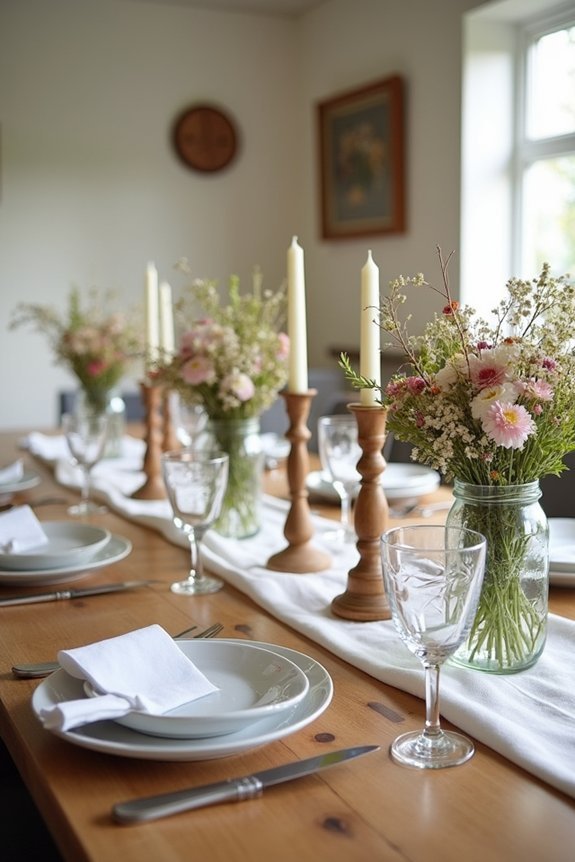
Once we’ve gathered our beautiful materials, it’s time to arrange them in a way that guides the eye and feels balanced rather than busy.
We want to vary heights by layering tall branches with lower blooms and candles, creating visual interest across the table.
Space elements so air flows between them, preventing a cramped feel. Balance weighted pieces—like heavy wood or metal—with lighter textures to distribute visual weight evenly.
Leave breathing room so guests can see each other and enjoy their meal. These intentional choices transform scattered items into a cohesive, elegant display. Consider pairing your rustic table arrangements with removable sidewalls on your outdoor gazebo to create flexible weather protection while maintaining the open, airy aesthetic you’ve worked to achieve.
Build Your Centerpiece From the Inside Out
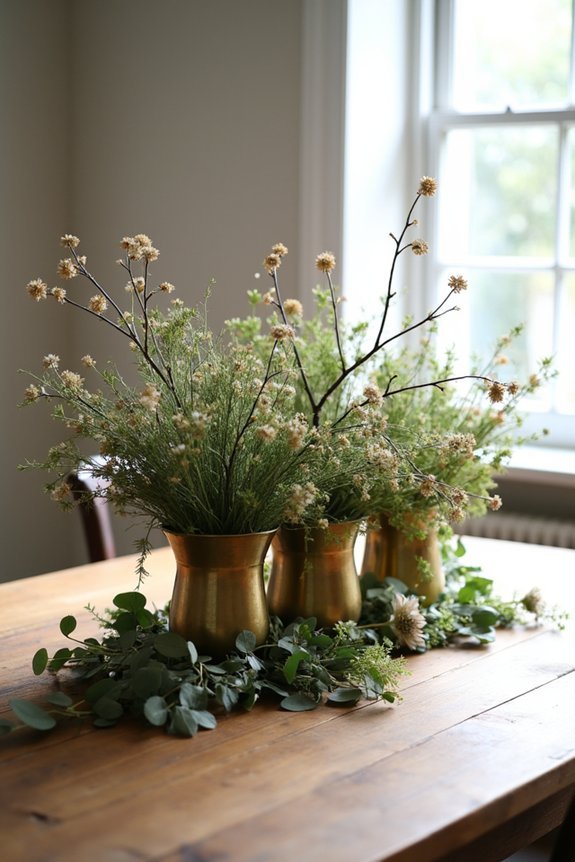
Now that we’ve mapped out our arrangement with intention, it’s time to actually build it, and we’ll do this by starting from the center and working outward.
Begin with a foundational element—perhaps a pillar candle or potted plant—that anchors your design.
Layer in secondary flowers and foliage around this core, rotating as we go to guarantee balanced coverage from every angle. This approach prevents lopsided arrangements and keeps us from overcrowding one side.
We’ll gradually expand outward, adding smaller blooms and textural elements until our centerpiece feels complete and intentional, not chaotic. For added ambiance and visual interest, consider incorporating battery-operated string lights to create a warm glow that enhances your rustic table setting.
Add Florals and Greenery: Layering for Balance and Romance
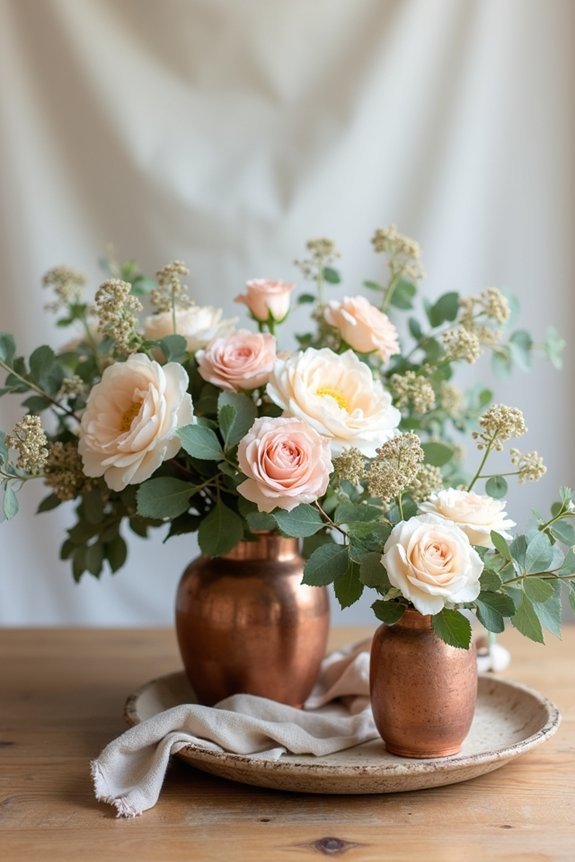
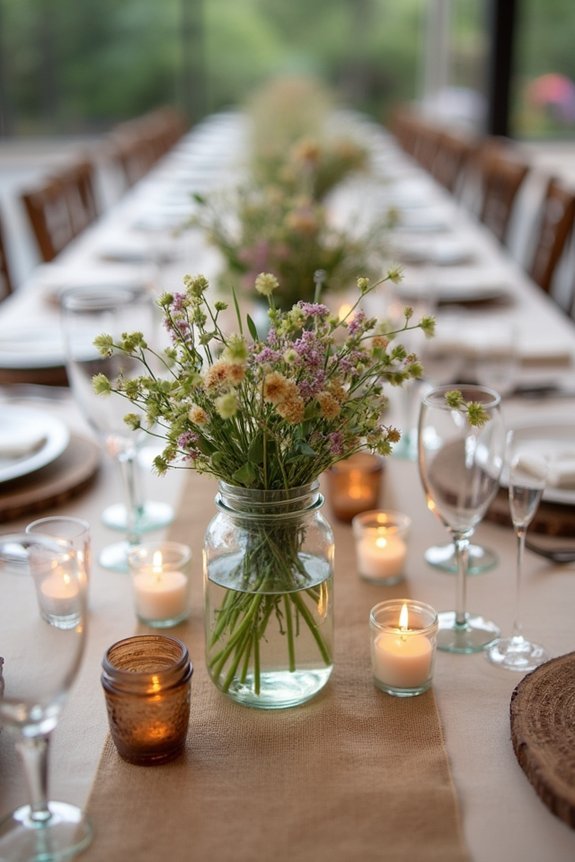
With your anchor in place, we’re ready to build the romantic layers that’ll make your centerpiece truly sing. Florals and greenery create depth and movement that transforms your table design. Here’s how to layer them beautifully:
- Start with trailing greenery as your base, letting stems cascade naturally.
- Nestle focal flowers—roses, peonies, or garden blooms—at varying heights.
- Add filler flowers and textural greenery between focal blooms for fullness.
- Leave intentional gaps so air flows through the arrangement.
This approach prevents overcrowding while building lush romance.
Your rustic centerpiece gains dimension when elements aren’t packed tightly together. Consider incorporating hair vine accessories with pearl and crystal details to add an elegant finishing touch that bridges your table design with coordinating bridal accessories.
Polish With Linens, Place Cards, and Glassware
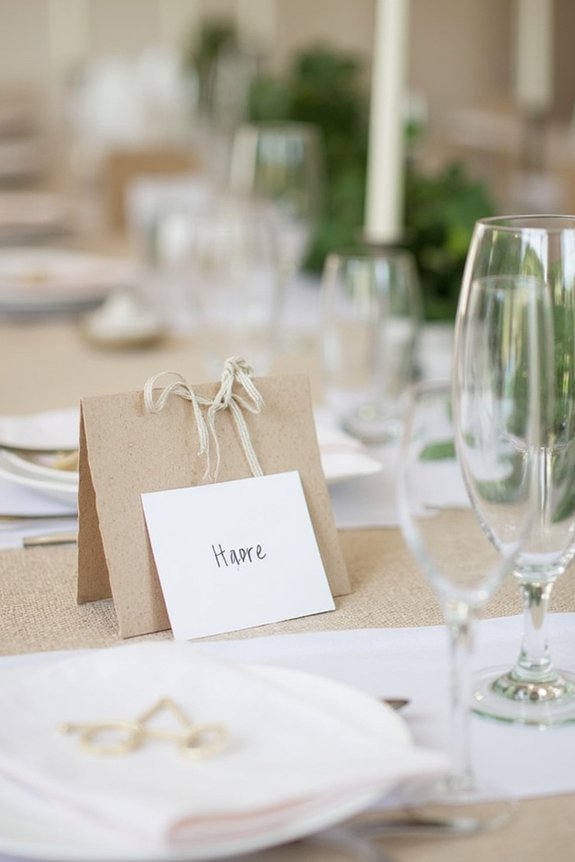
The table’s foundation—linens, place cards, and glassware—transforms your rustic centerpiece from beautiful to absolutely unforgettable.
We recommend choosing linens in natural tones like cream, taupe, or soft gray to complement earthy florals. Linen textures add dimension and authenticity to your design.
For place cards, we love hand-lettered names on kraft paper or wood slices that echo your rustic theme.
Quality glassware catches light beautifully; consider vintage-inspired drinking glasses or mason jars for an authentic touch.
These three elements work together, creating a cohesive, polished table that feels intentional and welcoming for your guests.
Frequently Asked Questions
How Far in Advance Should I Order Flowers and Greenery for My Rustic Arrangements?
We recommend ordering your flowers and greenery 2-3 weeks before your wedding date. This timing guarantees freshness while giving florists adequate preparation time. For seasonal blooms, we’d suggest ordering 4-6 weeks ahead.
What’s the Best Way to Preserve Fresh Flowers if Arranging Tables the Night Before?
We keep stems submerged in cool water until the last moment—imagine flowers drinking deeply before their big reveal. Mist arrangements lightly, refrigerate overnight, and remove them just before guests arrive for maximum freshness and visual impact.
Can I Mix Different Wood Types and Finishes in One Table Arrangement?
Yes, we absolutely recommend mixing wood types and finishes—it’s actually more authentic to rustic style. We’d suggest pairing lighter and darker woods, or mixing matte with natural finishes for visual depth.
How Do I Secure Tall Branches or Stems so They Don’t Topple During Service?
We secure tall branches using floral foam anchored in weighted containers, floral tape across the rim, and strategic branch placement low in the arrangement’s center of gravity to prevent toppling during service.
Should I Choose Matching or Mismatched Vessels for a Cohesive Rustic Table Look?
Ask yourself: does rusticity demand uniformity? We’d argue it doesn’t. Mismatched vessels—vintage bottles, mason jars, copper containers—actually enhance that organic, gathered-over-time aesthetic rustic weddings celebrate.