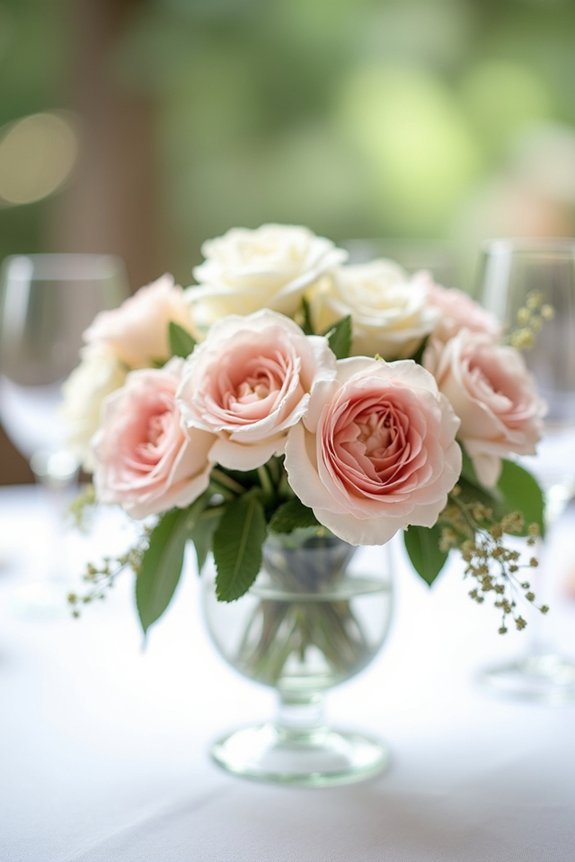
Rose centerpieces transform your wedding tables into stunning focal points that’ll captivate your guests and cameras alike. We’ll help you navigate budget-friendly options ranging from $15 to $30 per arrangement, select varieties that photograph beautifully in your chosen colors, and match heights to your venue’s layout. Timing matters too—order six to eight weeks ahead for best pricing. From conditioning tips to lighting tricks that make roses glow, we’ve got strategies to guarantee your centerpieces shine throughout the night.
At a Glance
- Choose rose varieties like garden roses, David Austin, or Juliet roses based on your color palette and wedding aesthetic for maximum visual impact.
- Match centerpiece height to venue architecture: 14-16 inches for grand ballrooms, 8-10 inches for intimate spaces to ensure unobstructed sightlines.
- Order roses 6-8 weeks in advance during spring or fall for better selection and pricing compared to peak summer or winter seasons.
- Enhance arrangements with complementary containers, greenery, and layered textures while keeping round table designs under 12 inches for conversation flow.
- Condition roses properly by trimming stems at 45-degree angles, removing lower leaves, and hydrating in cool water with flower food before display.
Budget First: What You’ll Actually Spend on Rose Centerpieces
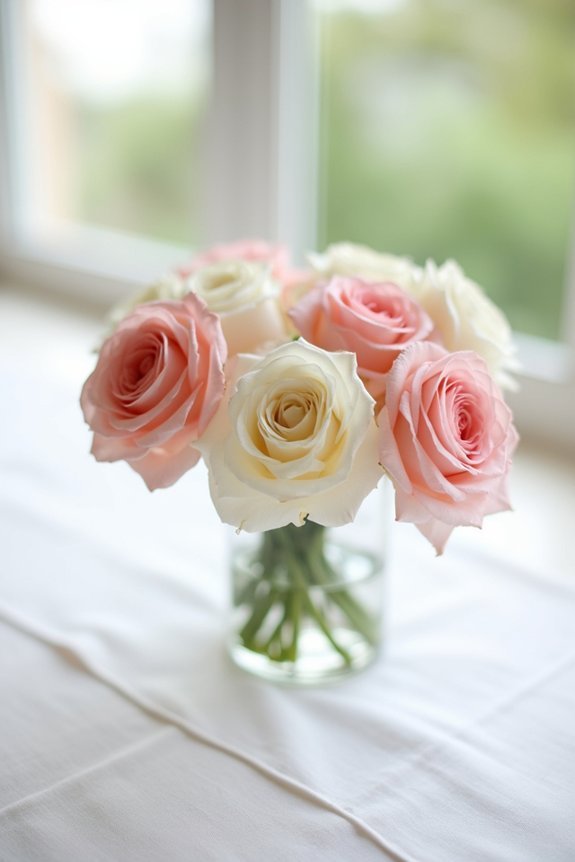
Let’s talk about the real cost of rose centerpieces, because it’s clear that the stunning wedding-magazine look comes with questions—like whether you can actually afford it without cutting corners elsewhere.
Most couples spend between $15 to $30 per centerpiece, depending on rose variety, quantity, and seasonal availability. Premium garden roses cost more than standard varieties.
You’ll also factor in labor, vessel rentals, and delivery. We recommend getting quotes from three florists, then deciding whether DIY arrangements fit your timeline and skill level.
Knowing these numbers upfront helps you budget confidently and make choices aligned with your priorities. Using a wedding budget spreadsheet ensures you track centerpiece costs alongside all your other expenses for complete financial clarity.
Your Venue Matters: Matching Scale and Height to Your Space
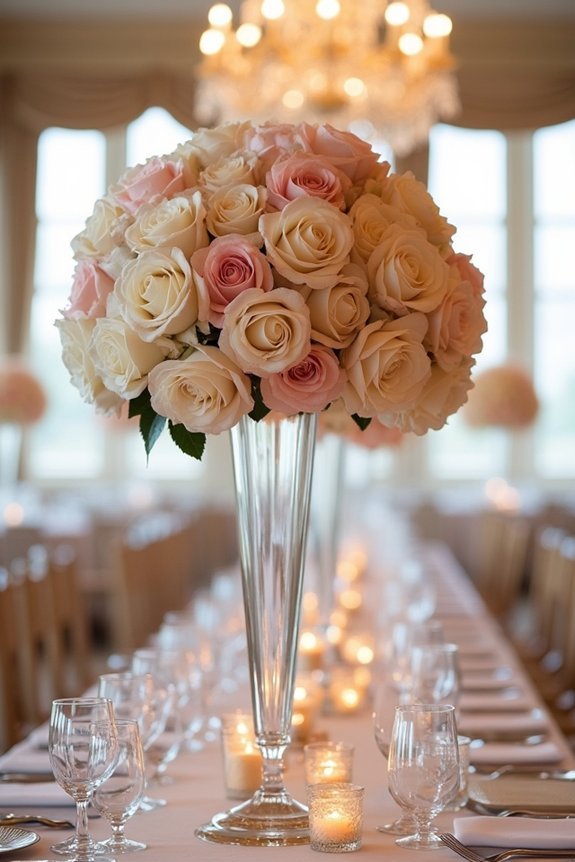
Your venue’s architecture and layout are the invisible design partners that’ll make or break your centerpiece vision.
A grand ballroom calls for taller arrangements—think 14 to 16 inches—so guests can see across the room without obstruction.
Intimate garden venues work beautifully with lower, 8 to 10-inch designs that encourage conversation.
Consider your table size too. Smaller rounds need proportionally smaller centerpieces, while long banquet tables can handle multiple focal points.
If you’re hosting your celebration under a tent, ensure your removable sidewalls provide adequate weather protection while maintaining the open atmosphere you desire.
We recommend visiting your venue and visualizing sightlines from different seats, ensuring your roses enhance rather than hide the space you’re celebrating in.
When to Order: Seasonal Availability and Timeline Planning
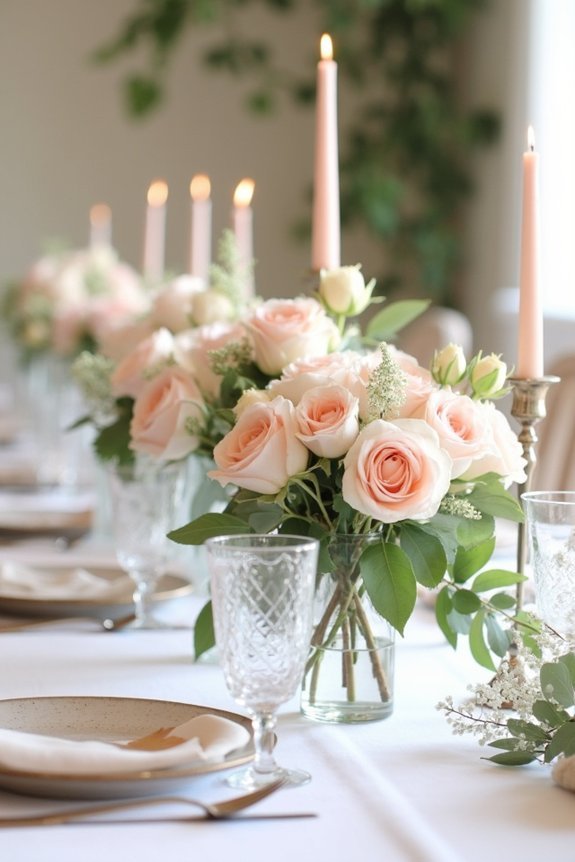
Once you’ve nailed down your venue and centerpiece style, timing becomes everything—because the flowers you’re dreaming of mightn’t be available when you need them.
Peak rose seasons are spring and fall, when prices drop and selection explodes. Summer roses exist but cost more due to heat stress. Winter requires premium pricing for imported blooms.
We recommend ordering six to eight weeks before your wedding, giving florists time to source quality stems. If you’re planning a winter wedding with specific rose varieties, push that timeline to three months out. Consider using a wedding planning timeline to coordinate flower orders with other vendor bookings and preparations.
Early planning protects your vision and your budget.
Rose Varieties That Photograph Best in Your Color Palette
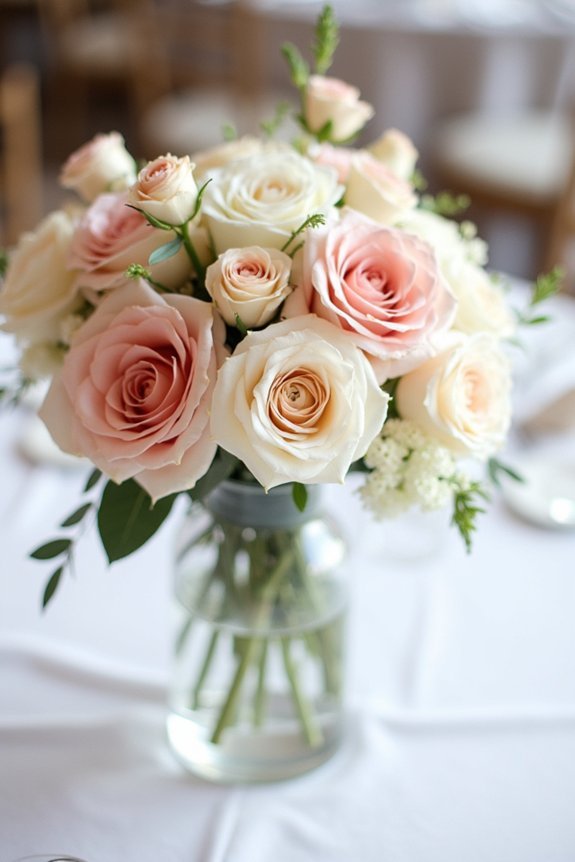
Now that you’ve locked in your timeline, it’s worth considering which rose varieties will actually shine in your wedding photos—because the most gorgeous rose in person can sometimes disappear into certain color palettes on camera.
We recommend thinking strategically about how each variety translates through a lens:
- Garden roses photograph with stunning depth and texture, perfect for romantic palettes.
- David Austin roses offer full blooms that read beautifully in warm, neutral schemes.
- Spray roses create visual interest and pop in bold color combinations.
- Juliet roses showcase layered petals that photograph exceptionally well in blush tones.
- Quicksand roses provide subtle sophistication ideal for moody, jewel-toned palettes.
Pairing your floral choices with bridal jewelry sets that complement your color palette can elevate the overall wedding aesthetic in photographs. Your florist can show you samples under different lighting to confirm your choice.
Building Your Color Story: From Classic Reds to Trending Pastels
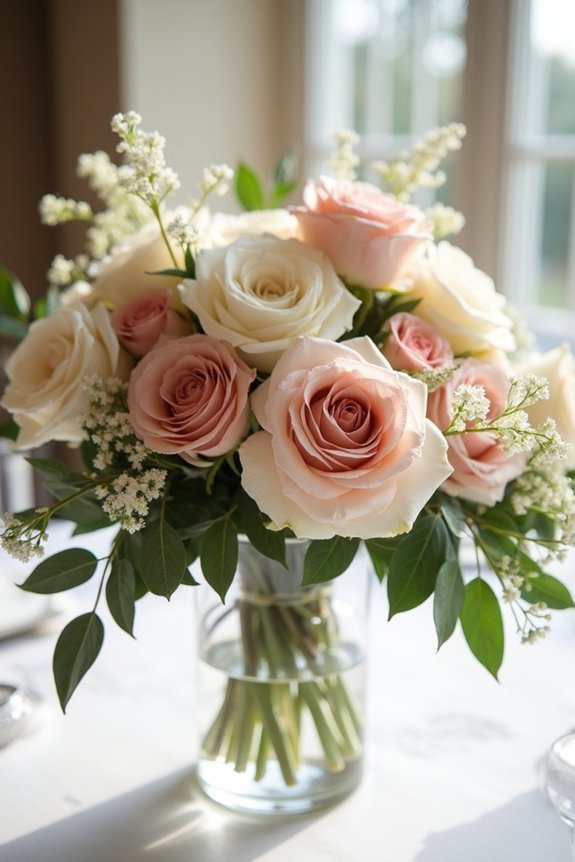
If we’re being honest, choosing your wedding centerpiece colors is where your vision really comes to life—and it’s also where many couples feel the most pressure.
We want to ease that stress. Classic reds bring timeless romance and drama, while soft blush and dusty rose tones whisper elegance and sophistication.
Trending pastels—think lavender, sage, and peachy cream—feel fresh and modern without sacrificing refinement.
Consider your venue’s lighting and season when building your color story. Layer these hues with greenery and neutrals to create depth. Pairing your roses with artificial greenery wall backdrops can enhance the overall aesthetic appeal of your reception space and create a stunning visual impact for photography.
Your centerpiece palette should reflect who you’re as a couple.
Rose Centerpiece Containers That Elevate Your Tables
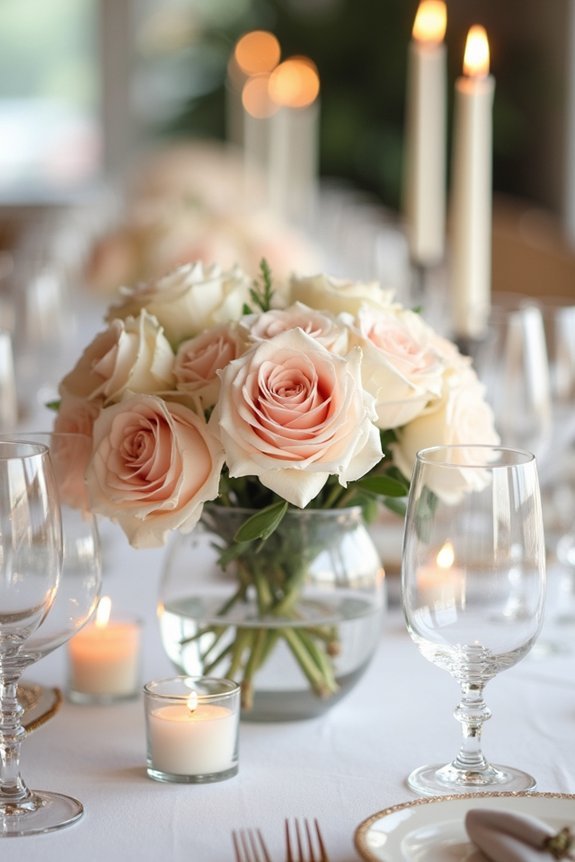
The right container transforms your rose arrangements from lovely to absolutely stunning—and here’s the beautiful part: you don’t need to spend a fortune to achieve that elevated, magazine-quality look we’re all after.
We’re talking about finding vessels that complement your color story while creating visual interest across your tables.
Consider these container options:
- Vintage glass vases in varying heights for dimension
- Modern cylindrical vessels for sleek, contemporary vibes
- Ceramic urns that add texture and sophistication
- Metallic gold or silver containers for glamorous touches
- Blush or sage-toned vessels that harmonize with soft palettes
The container you choose becomes part of your design narrative, anchoring each table with intention and elegance.
Pairing Roses With Greenery and Filler Flowers
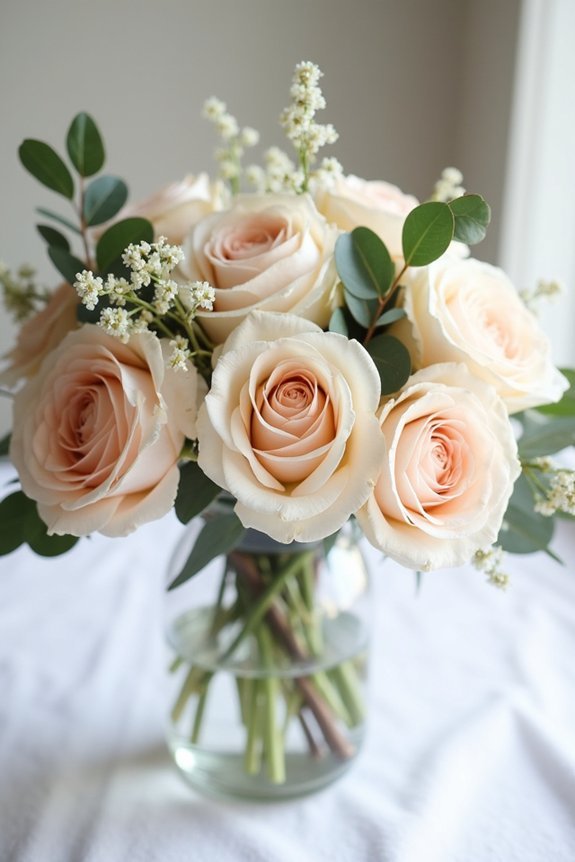
Roses absolutely shine when you pair them with complementary greenery and filler flowers—and this layering is what separates a simple arrangement from one that looks professionally designed.
We recommend combining garden roses with eucalyptus, dusty miller, or Italian ruscus for texture and movement.
Add filler flowers like waxflower, astilbe, or baby’s breath to create depth without overwhelming your focal blooms.
This approach gives your centerpieces dimension and sophistication. The greenery softens hard edges, while filler flowers bridge gaps between roses, creating a lush, intentional look that photographs beautifully and feels effortlessly elegant.
DIY Rose Arrangements or Hire a Florist: Making the Call
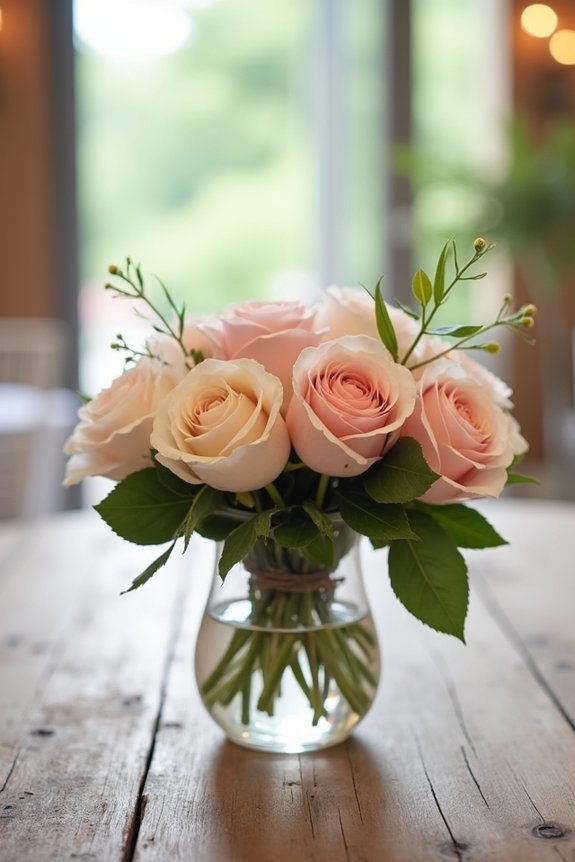
Now that you’ve learned how to build stunning rose arrangements with the right greenery and fillers, you’re ready to tackle one of the biggest decisions in wedding planning: whether you’ll create your centerpieces yourself or work with a professional florist.
Consider these factors:
- Your timeline – DIY requires weeks of preparation; florists handle logistics
- Budget constraints – DIY costs less upfront but demands your time and energy
- Skill level – Professional training creates polished results consistently
- Guest count – Large weddings benefit from florist expertise and efficiency
- Stress tolerance – Outsourcing lets you focus on enjoying your celebration
We understand this choice feels significant.
Trust your instincts about what serves you best.
Rose Arrangements That Allow Guests to Actually Converse
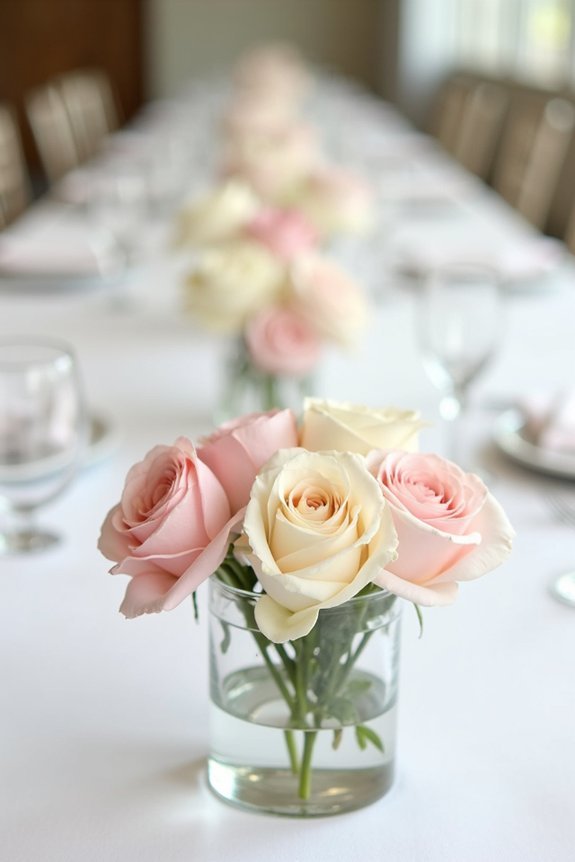
When we design centerpieces, we often get so caught up in creating something visually stunning that we accidentally build a barrier between people who want to talk to each other. The solution? Keep arrangements at or below eye level.
We recommend staying within 12 inches tall, so guests can see across the table while conversing. Low, wide arrangements work beautifully—think garden-style roses sprawling horizontally rather than towering vertically.
You’ll still achieve that magazine-worthy look while honoring what truly matters: meaningful conversations. Your guests will appreciate the thoughtful design choice that prioritizes connection.
Styling Rose Centerpieces for Round, Rectangular, and Sweetheart Tables
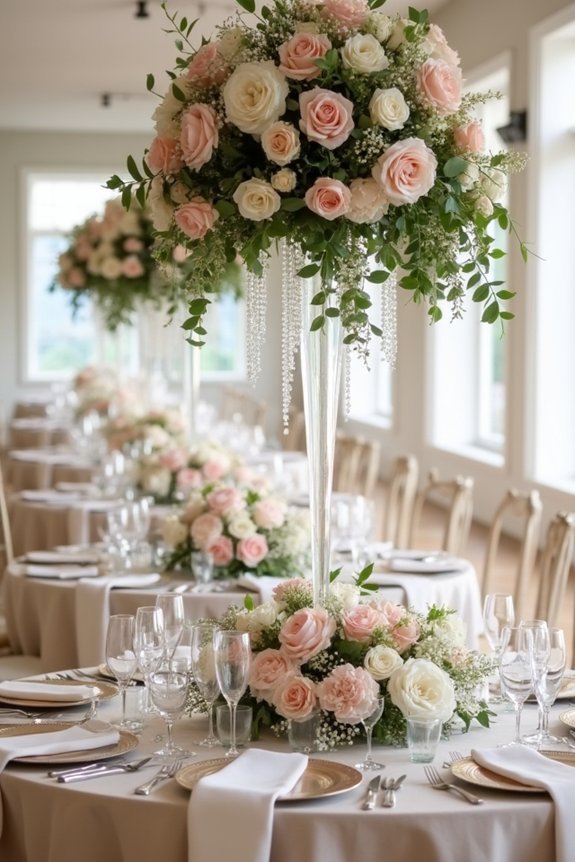
Each table shape calls for a different design approach, and understanding these distinctions helps us create arrangements that feel intentional and balanced.
Round tables work beautifully with low, compact arrangements that let guests see across the table.
Rectangular tables benefit from linear designs or multiple smaller pieces down the center.
Sweetheart tables need focal arrangements visible from all angles, since couples sit facing outward.
Consider these styling tips:
- Keep round table heights under 12 inches for sightlines
- Use elongated holders for rectangular table runners
- Position sweetheart arrangements at table’s edge
- Match arrangement width to table proportions
- Layer textures and rose varieties for visual interest
Conditioning Roses: Last-Minute Prep Before Your Reception
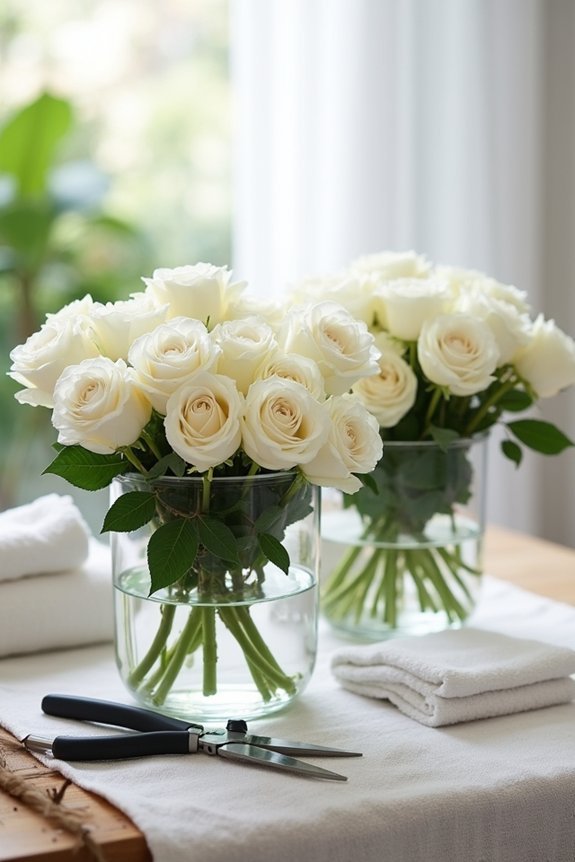
Because roses are living flowers, they’ll thrive—and look their absolute best—when we give them the care they need right before your big day.
Start by trimming stems at a 45-degree angle, removing any leaves that’d sit below the waterline. This prevents bacteria from clogging the stems and keeps water fresh longer.
Place roses in cool water mixed with flower food, then let them hydrate in a cool space for several hours.
Just before arrangements go on tables, do a final check: remove any browning petals, adjust stems for height, and refresh water.
These small steps guarantee your centerpieces stay vibrant throughout the celebration.
Lighting and Décor to Frame Your Roses
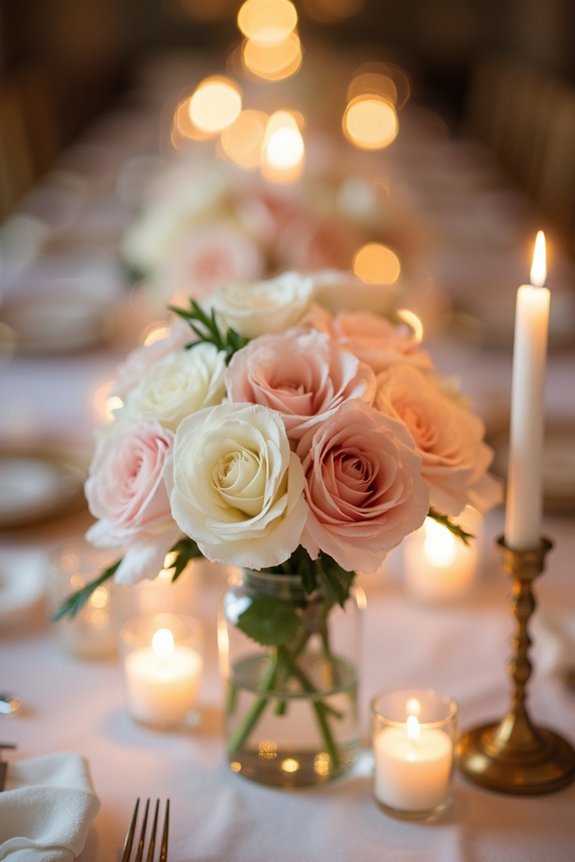
Your roses are beautifully conditioned and ready to shine, so now let’s talk about the lighting and décor that’ll make them truly glow.
The right environment transforms your centerpieces from lovely to breathtaking. Strategic lighting, thoughtful colors, and complementary elements work together to showcase your roses’ natural beauty.
Consider these enhancing touches:
- Warm uplighting beneath or behind arrangements for depth
- Candlelight that creates intimate, romantic ambiance
- Metallic accents like gold or silver vessels for elegance
- Greenery and filler flowers that add texture and dimension
- Linens and table runners in coordinating, sophisticated tones
These layers create visual interest while keeping your roses as the stunning focal point your guests’ll admire throughout the evening.
Gallery: Rose Centerpieces That Inspired Real Weddings
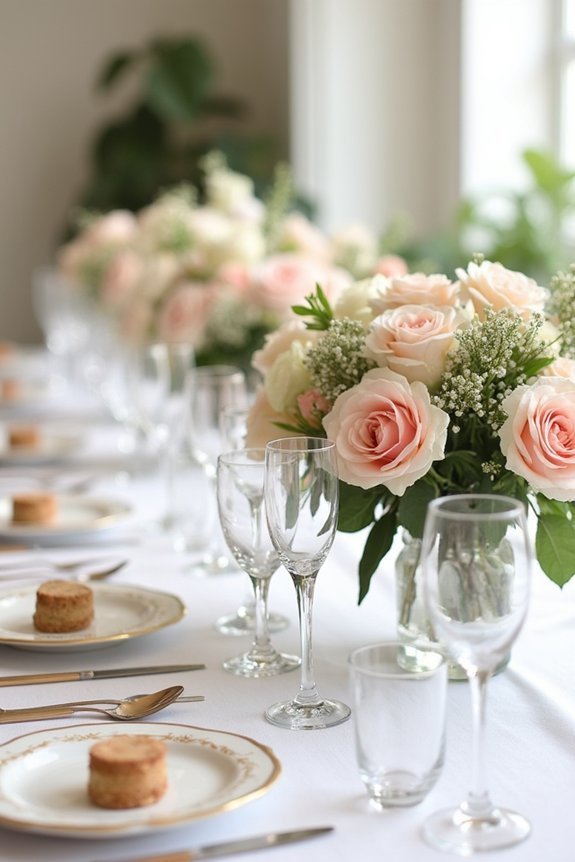
Now that we’ve covered the lighting and design elements that make roses truly luminous, let’s look at real-world inspiration.
We’ve curated a gallery of rose centerpieces from actual weddings that showcase diverse styles, color palettes, and arrangements. These examples demonstrate how couples transformed their visions into stunning tablescapes.
You’ll see classic monochromatic designs, romantic garden-style arrangements, and modern minimalist approaches.
Each photo reveals practical details—vase choices, flower quantities, and complementary greenery—that you can adapt for your celebration.
This gallery serves as your visual roadmap, helping you identify what resonates with your aesthetic and feels achievable for your special day.
Frequently Asked Questions
Can I Use Roses From My Garden or a Local Farm for My Centerpieces?
Yes, absolutely! We’d recommend harvesting garden roses the morning of your wedding or day before, then conditioning them in cool water. Local farm roses work beautifully too—just confirm availability and freshness timing with your farmer early.
How Do I Prevent Rose Petals From Browning or Wilting During My Reception?
We keep your roses’ blush fresh by misting petals lightly, maintaining cool temperatures, and removing lower leaves that absorb water. We’ve found conditioning them overnight before your reception works wonders for longevity.
What’s the Best Way to Arrange Roses so They Look Full and Luxurious?
We’ll layer roses at varying heights, starting with greenery as your base. Angle stems outward at different depths, clustering blooms tightly together. This creates that full, lush look that photographs beautifully and feels intentional.
Should I Choose Garden Roses or Hybrid Tea Roses for My Wedding?
We’ve found that garden roses work beautifully for most weddings—they’re naturally fuller and more romantic than hybrid teas. But here’s the thing: if you’re after that classic, statement-making look, hybrid teas deliver it flawlessly.
How Far in Advance Should I Purchase Roses if Ordering Without a Florist?
We recommend ordering roses 3-5 days before your wedding for peak freshness. If you’re sourcing locally, order a week ahead. For wholesale bulk orders, we suggest purchasing 10-14 days prior and conditioning them properly.