We’ll help you create a meaningful cultural fusion reception by starting with your unique story and selecting two or three cultures that matter most. Then, we’ll establish a unified color palette that honors both traditions, blend textiles intentionally, and design tablescapes that celebrate heritage through layered details. From strategic centerpieces to authentically scaled statement pieces, each element will work together to tell your combined narrative. There’s so much more we can explore about bringing these pieces into harmony.
At a Glance
- Identify and research two to three foundational cultures that matter most to create intentional, cohesive design decisions.
- Establish a unified color palette by identifying signature colors from each culture and finding natural overlaps for balance.
- Layer cultural symbols, textiles, and patterns intentionally in tablescapes and centerpieces to authentically tell your combined heritage story.
- Select decor elements that genuinely represent both traditions, consulting cultural experts to ensure authentic and respectful representation.
- Balance visual harmony with personal meaning by incorporating meaningful artifacts, interactive elements, and unique details celebrating both cultures equally.
Start With Your Cultural Wedding Story
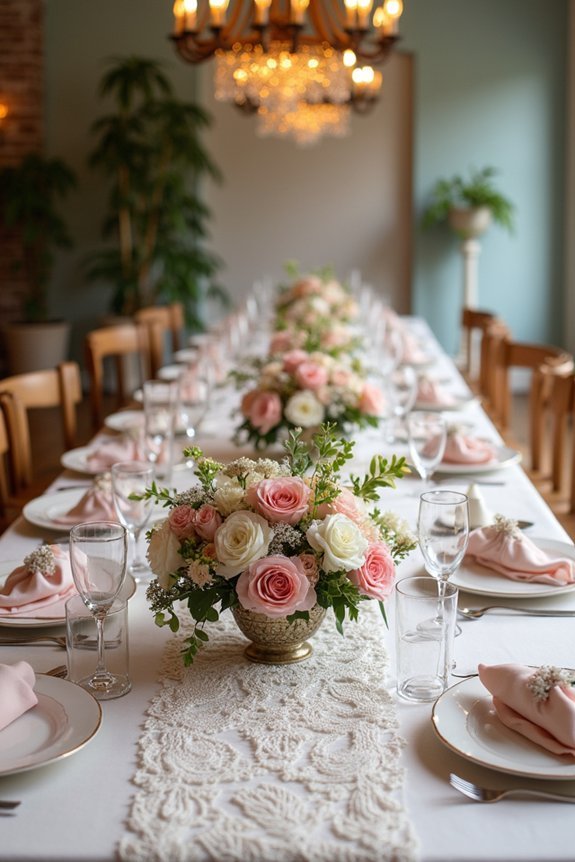
Before you pin a single decoration or sketch a floor plan, let’s pause and think about what makes your celebration uniquely yours.
Your wedding’s cultural elements tell your story—the traditions that shaped you, the values you hold dear, and the heritage you want to honor.
Consider which customs feel essential to include and why they matter to you both. Are there specific colors, symbols, or rituals that represent your families?
Understanding your “why” guides every design decision ahead, ensuring your reception decor feels authentic and intentional rather than trendy or borrowed.
Your vows and ceremony elements are equally important in conveying your personal cultural narrative to your guests and creating a lasting memory of what your union represents.
Choose Two to Three Cultures as Your Foundation
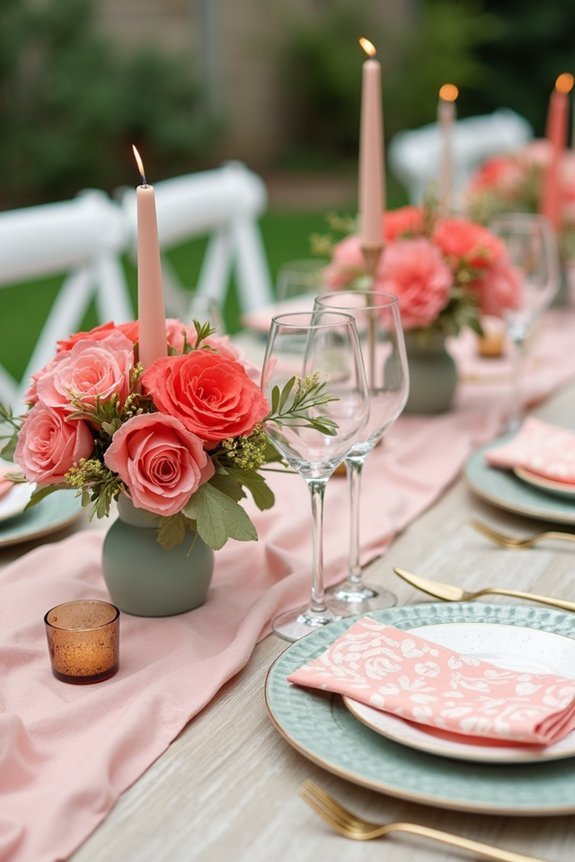
When you’re blending multiple cultural traditions, narrowing your focus to two or three foundational cultures helps you create a cohesive vision instead of feeling pulled in too many directions.
Start by identifying which cultures matter most to you and your partner. Perhaps your heritage, family backgrounds, or meaningful connections guide your choices.
Two or three cultures give you enough material to work with while keeping your design intentional and balanced. This foundation prevents your reception from feeling chaotic or unfocused.
You’ll make clearer decisions about colors, symbols, foods, and traditions when you know exactly what you’re celebrating. For detailed guidance on planning your entire reception, consult the 12-month wedding timeline to ensure all cultural elements are thoughtfully integrated throughout your planning process.
Harmonize Colors Across Both Traditions
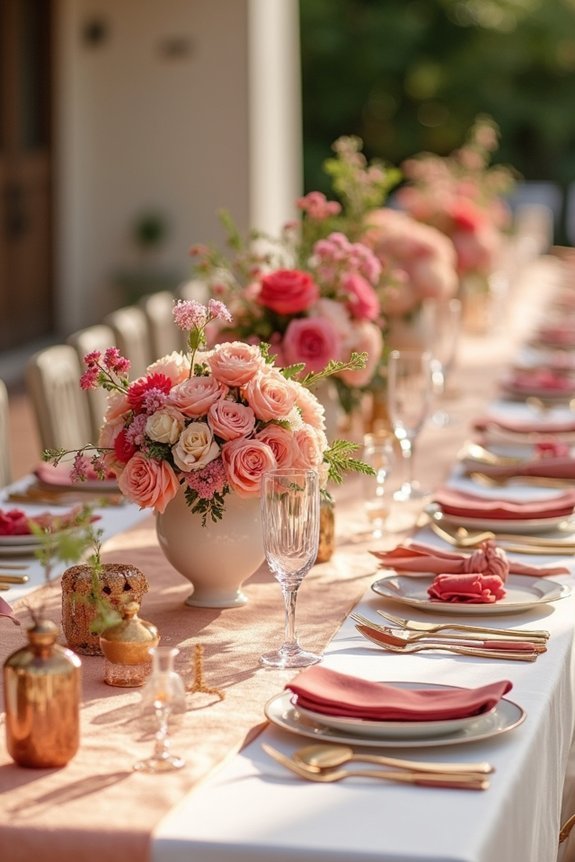
Once you’ve chosen your foundational cultures, it’s time to find the color palette that honors both traditions without creating visual conflict.
We recommend starting by identifying signature colors from each culture—perhaps jewel tones from one tradition and warm metallics from another.
Look for natural overlap points where these colors complement each other naturally. Consider using one culture’s colors dominantly and weaving the other’s as accents through linens, florals, and lighting.
This balanced approach lets both traditions shine while maintaining a cohesive, elegant aesthetic that feels intentional rather than mismatched. Artificial flower wall panels can serve as a flexible design element that incorporates both color palettes seamlessly across your reception space. Your guests will appreciate the thoughtful harmony.
Blend Textiles and Patterns From Both Cultures
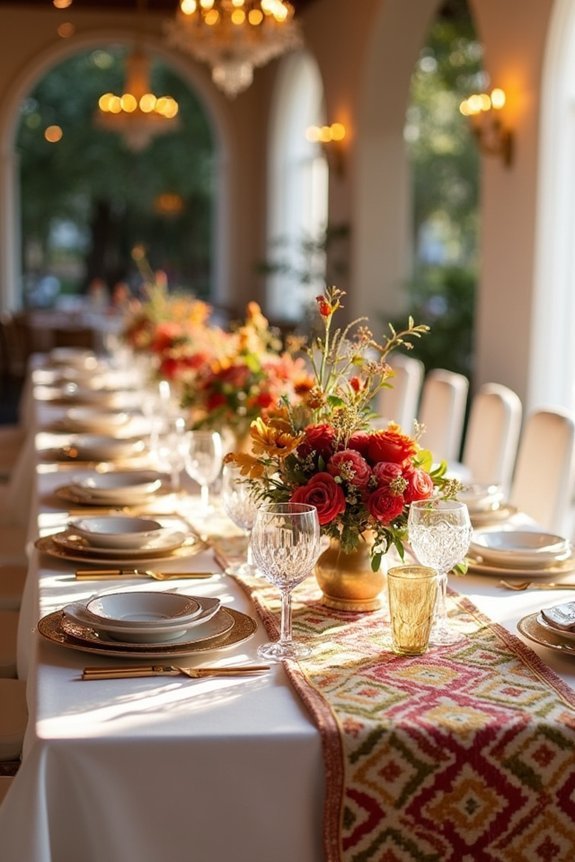
With your color palette established, textiles and patterns become your next powerful tool for weaving both cultures together into a cohesive design story.
We recommend layering fabrics intentionally—perhaps pairing a delicate lace runner with a richly patterned silk fabric, or combining traditional embroidered textiles with modern geometric designs.
Mix table linens, napkins, and chair details to create visual interest without clashing.
Consider using one culture’s signature pattern as your primary design element, then accent with complementary patterns from the other tradition.
This balanced approach honors both heritages while creating an elegant, unified aesthetic that feels authentically yours. For added elegance, consider incorporating bridal jewelry sets that reflect both cultural aesthetics, allowing your personal style to shine through in every carefully curated detail.
Design Cohesive Tablescapes for Both Traditions
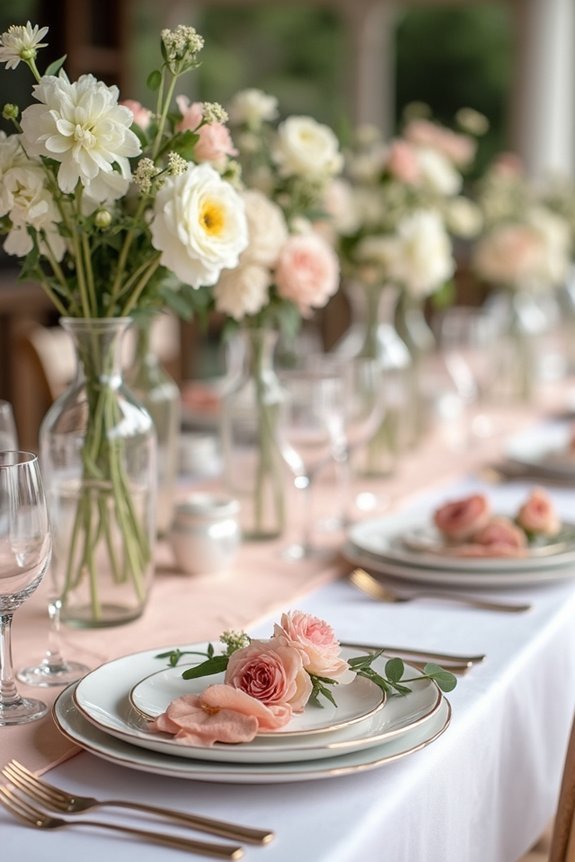
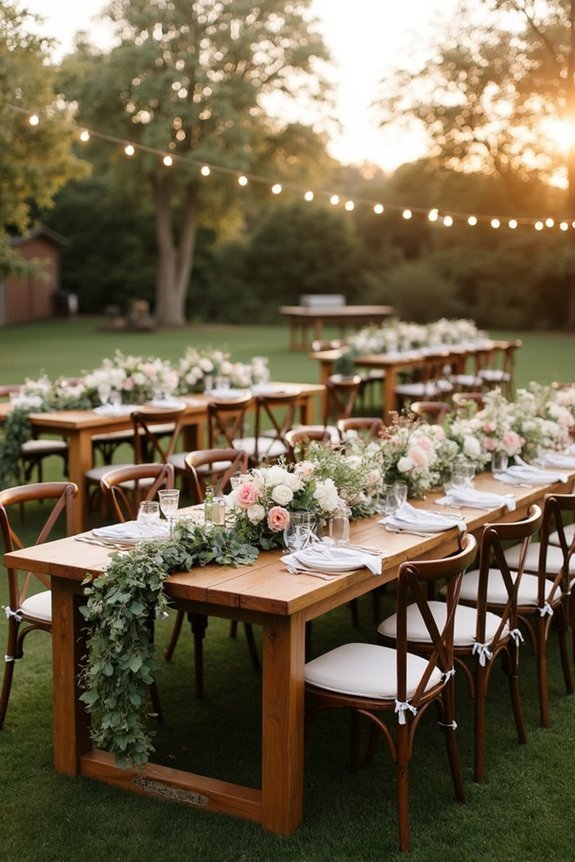
Your tablescape is where the magic happens—it’s the first thing your guests see when they sit down, and it’s your chance to tell your cultural story through every carefully chosen detail.
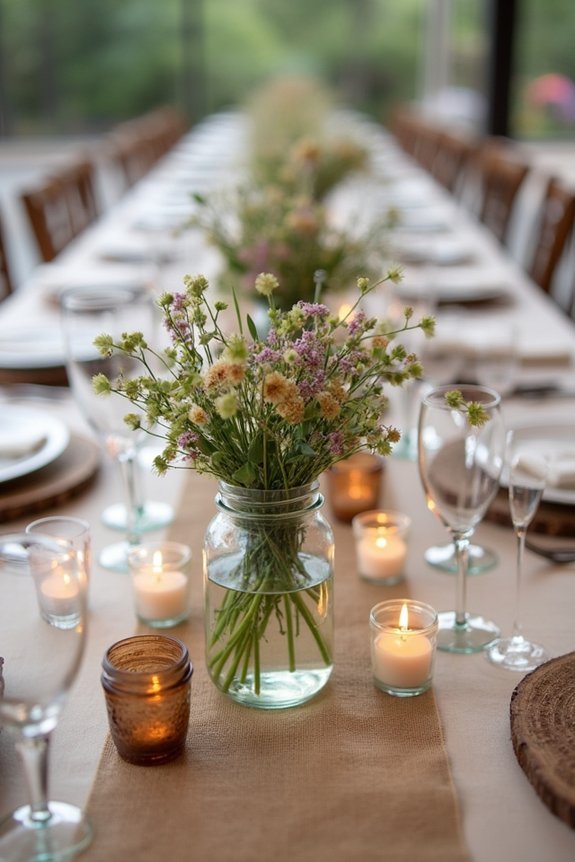
We recommend layering elements that honor both traditions: pair a runner from one culture with linens from another, then add centerpieces that blend flowers, candles, or symbolic objects meaningful to each side.
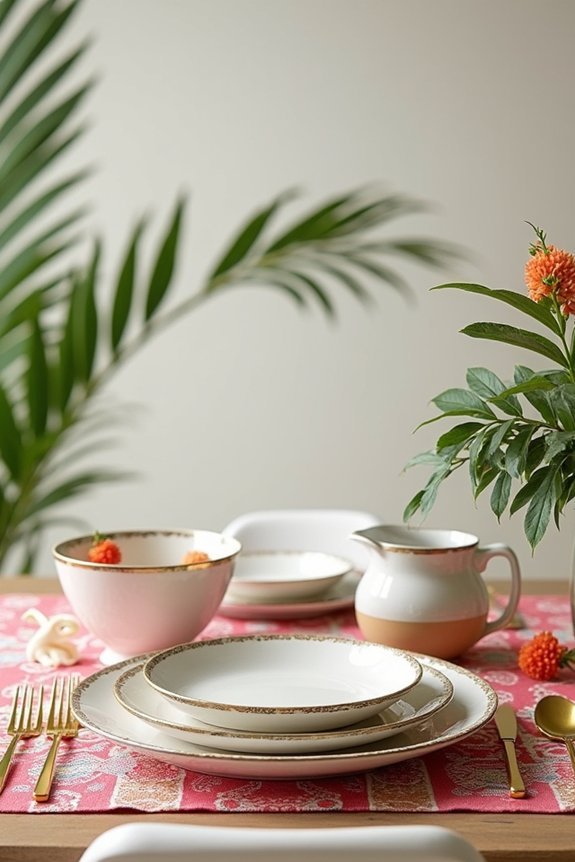
Consider place settings that incorporate cutlery, dishware, or napkin folds from both backgrounds. This thoughtful mixing creates visual harmony while celebrating your unique heritage together. For an elegant finishing touch, incorporate bridal pearl jewelry sets as part of your place card displays or as gifts for your wedding party, adding luxury and sophistication to your tablescape design.
Design Centerpieces That Bridge Both Cultures
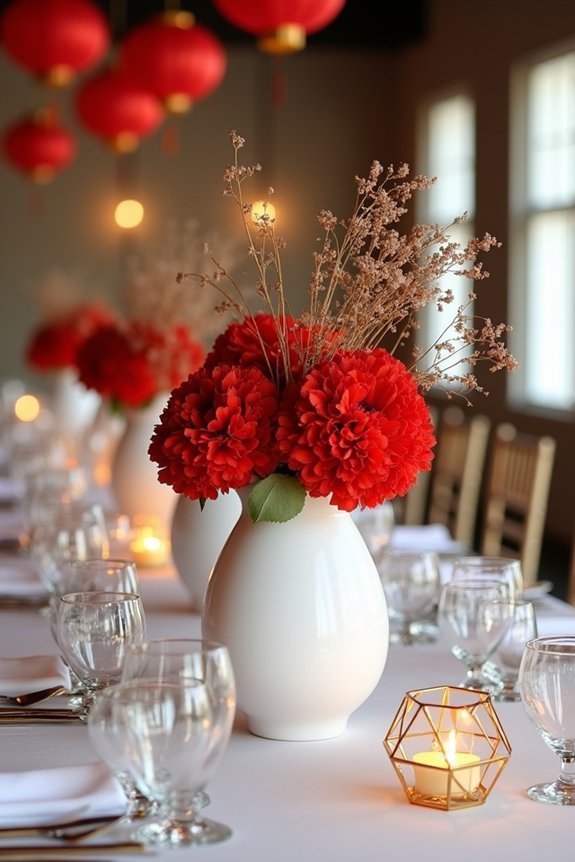
Because centerpieces sit at the heart of your table—literally and figuratively—they’re the perfect vehicle for weaving your two backgrounds into one cohesive visual story.
We recommend combining symbolic elements from each tradition: pair marigolds with roses, incorporate meaningful colors side-by-side, or blend candleholders and vessels that reflect both heritages.
Consider height variation and texture layering to create visual interest. You might use flowers traditional to one culture with greenery from another, or arrange candles in holders representing both families.
This approach creates genuine connection without feeling forced or cluttered, allowing guests to appreciate both cultures equally.
Honor Traditions Authentically
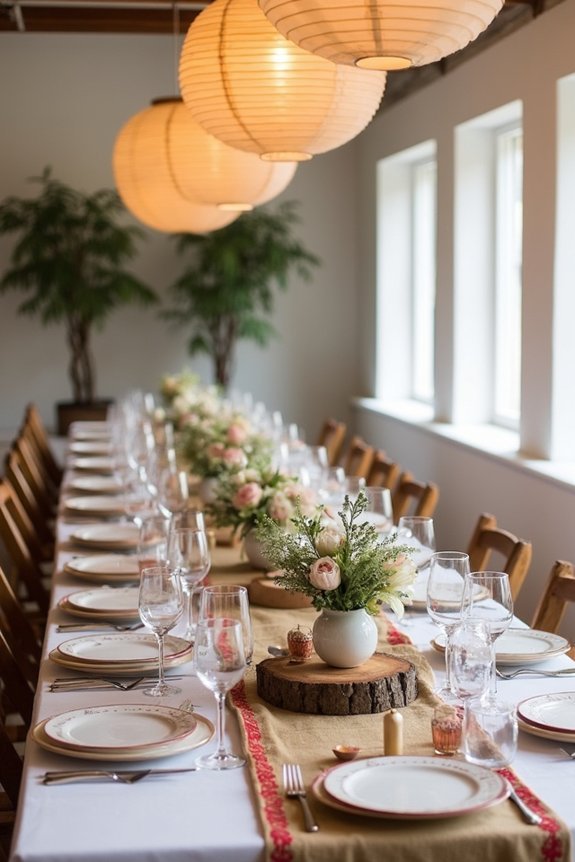
When we layer cultural elements into your reception décor, authenticity becomes our greatest design asset. We honor traditions by researching their true meanings and significance rather than borrowing surface-level aesthetics.
Consider consulting with family members or cultural experts who can guide your choices. We recommend featuring authentic fabrics, colors, and symbols that genuinely represent your heritage.
Display items with purpose—perhaps your grandmother’s textiles or meaningful ceremonial pieces. This approach creates deeper connections for your guests and celebrates what truly matters to you both, transforming your reception into a meaningful reflection of your identities and values.
Scale Statement Pieces Strategically
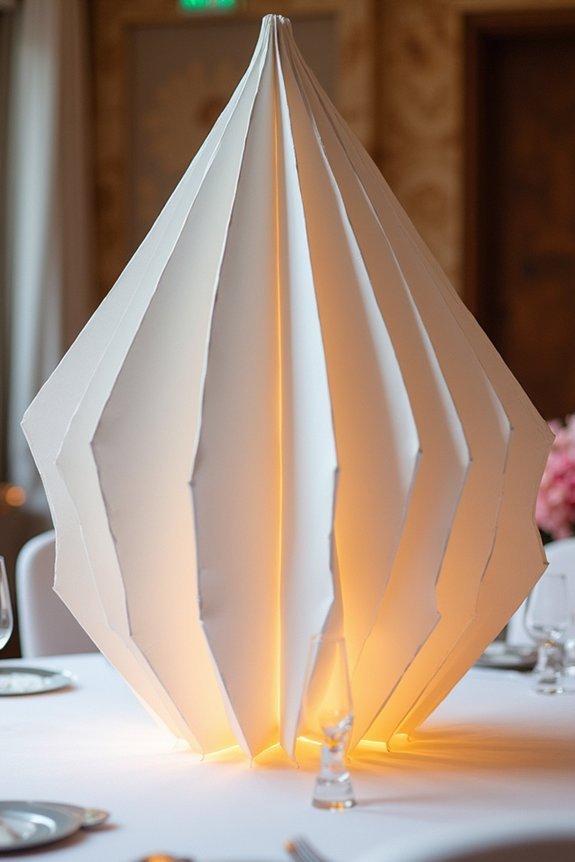
Once you’ve chosen authentic cultural elements, the real magic happens in how we size and place them throughout your reception space.
A large statement piece—like an ornate backdrop or elaborate centerpiece—works best as your focal point, drawing guests’ eyes naturally. Smaller complementary pieces then echo that theme without competing for attention.
Consider your venue’s dimensions carefully; oversized elements can feel cramped, while tiny details disappear. We recommend anchoring one dramatic piece per room section, then layering smaller cultural touches around it.
This strategic scaling creates visual harmony, guarantees your heritage shines clearly, and prevents your decor from feeling chaotic or cluttered.
Finalize Your Vision Without Losing the Details
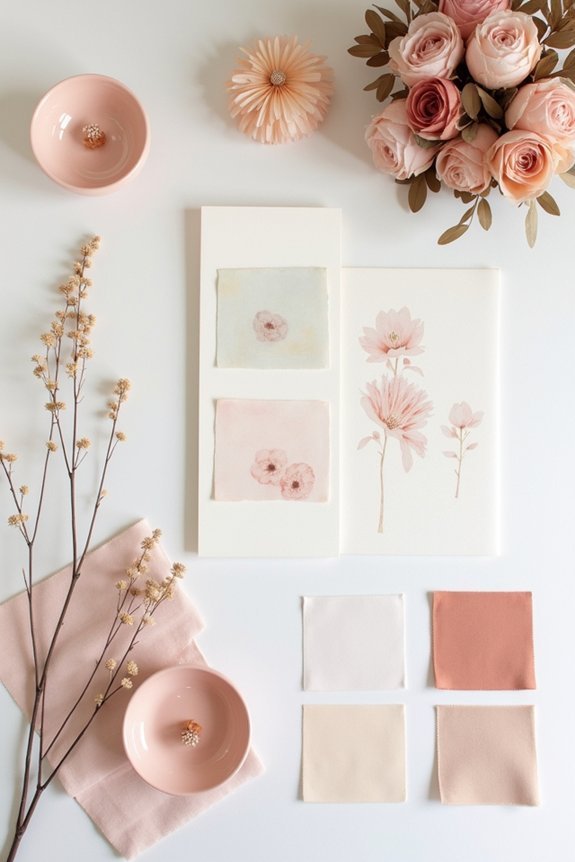
You’ve chosen your statement pieces and mapped out their placement—now comes the work that transforms a good reception into a stunning one.
We refine every detail that brings your cultural fusion vision to life. Consider these finishing touches:
- Linens and table runners that echo your color palette
- Centerpiece flowers that complement, not compete, with larger installations
- Lighting that highlights cultural elements without creating shadows
- Menu cards and signage reflecting your combined traditions
Each small choice matters. We layer these details thoughtfully, ensuring nothing feels random.
Your reception becomes cohesive—a beautiful story told through intentional design that honors both cultures while creating something entirely your own.
Frequently Asked Questions
How Do I Avoid Cultural Appropriation While Blending Traditions in My Reception Décor?
We honor traditions by understanding their meaning before incorporating them. Research origins, consult community members, and prioritize authenticity over aesthetics. We’ll blend elements respectfully when we’ve earned the right to do so.
What’s the Timeline for Sourcing Décor Pieces From Multiple Cultural Vendors and Artisans?
We recommend starting six to nine months before your wedding—think of sourcing like planting seeds that need time to grow. You’ll want three months minimum per vendor to guarantee authenticity and quality craftsmanship from artisans who deserve unhurried collaboration.
How Can I Incorporate Cultural Fusion Décor Without Overwhelming Small or Intimate Venue Spaces?
We prioritize statement pieces over volume—select one cultural element per table, mix vintage finds with modern accents, and let negative space breathe. We layer textures thoughtfully so your intimate venue feels curated, not cluttered.
Should I Explain Cultural Elements to Guests Unfamiliar With One or Both Traditions?
Yes, we recommend it. Small, elegant touches—a card at each place setting or a subtle program note—help your guests appreciate the meaning behind your décor choices without feeling like outsiders to your celebration.
What’s the Budget Impact of Sourcing Authentic Pieces From Two Different Cultural Traditions?
Like blending two premium ingredients, sourcing authentic pieces from dual traditions requires strategic budgeting. We’ve found that sourcing directly from artisans costs more upfront than mass-produced alternatives, but thoughtfully mixing statement pieces with simpler decor keeps costs manageable.