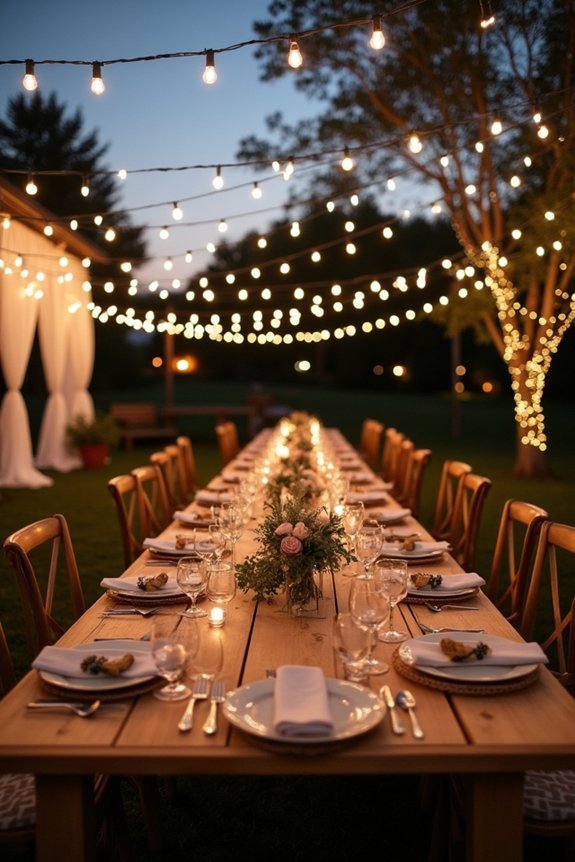
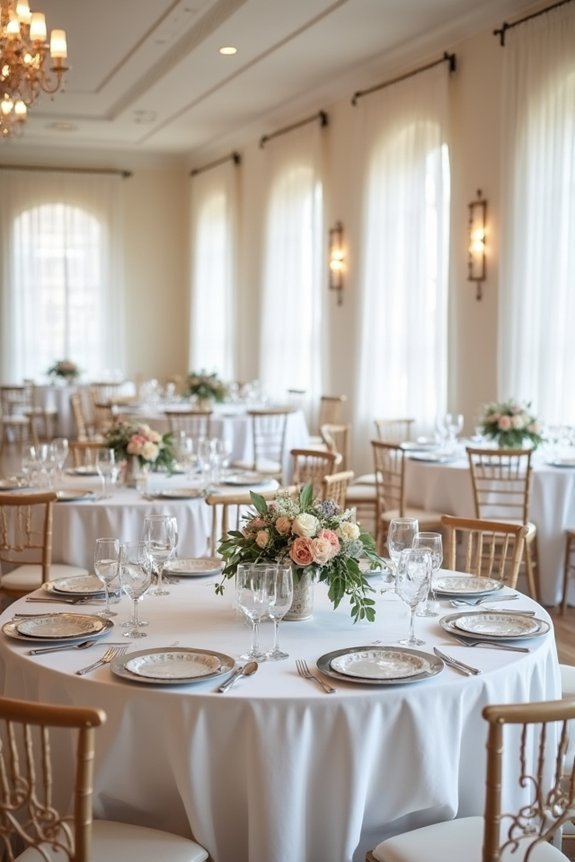
We’ll help you create a functional, beautiful banquet table layout that guests will love. Start by measuring your venue and sketching where tables fit comfortably with clear pathways between them. Calculate your table count by dividing your guest list by capacity—typically eight to ten per banquet table. Position your sweetheart table where everyone can see it, arrange service areas along side walls, and make certain at least three feet of space between tables for movement. Thoughtful placement transforms your reception into an elegant, welcoming celebration where everything flows smoothly.
At a Glance
- Calculate table count by dividing total guests by eight to ten capacity per banquet table, adding one to two extra tables for last-minute additions.
- Position banquet tables to create clear pathways between seating areas, ensuring at least three feet of spacing for comfortable guest movement throughout the venue.
- Arrange tables to maintain sightlines to the ceremony, dance floor, and sweetheart table from all guest seats for full event engagement.
- Place bars and service stations along side walls away from main pathways to prevent congestion and enable efficient server movement between tables.
- Use low or airy centerpieces, quality linens, and layered lighting elements to enhance the elegant banquet table presentation without obstructing guest interactions.
Start With Venue Layout and Table Arrangement Basics
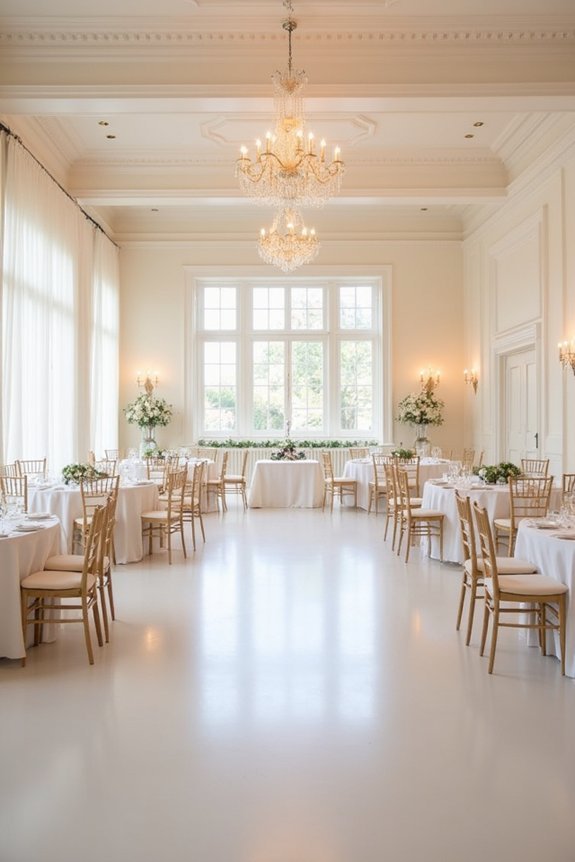
Before you plunge into the fun details like linens and centerpieces, we need to tackle the foundation of your reception layout—and this step matters more than you might think.
Start by measuring your venue’s dimensions and identifying fixed elements like doors, pillars, and the dance floor. We’ll sketch out a floor plan, positioning your sweetheart table, guest tables, and buffet strategically.
Consider traffic flow—guests need clear pathways to move comfortably. Think about sightlines too; everyone should see the ceremony moments.
This thoughtful foundation transforms your space into an elegant, functional gathering place where your celebration truly shines. For comprehensive guidance on all aspects of your reception planning, consult the 12-month wedding timeline to ensure every detail is coordinated seamlessly.
Round or Banquet Tables: Which Fits Your Vision?
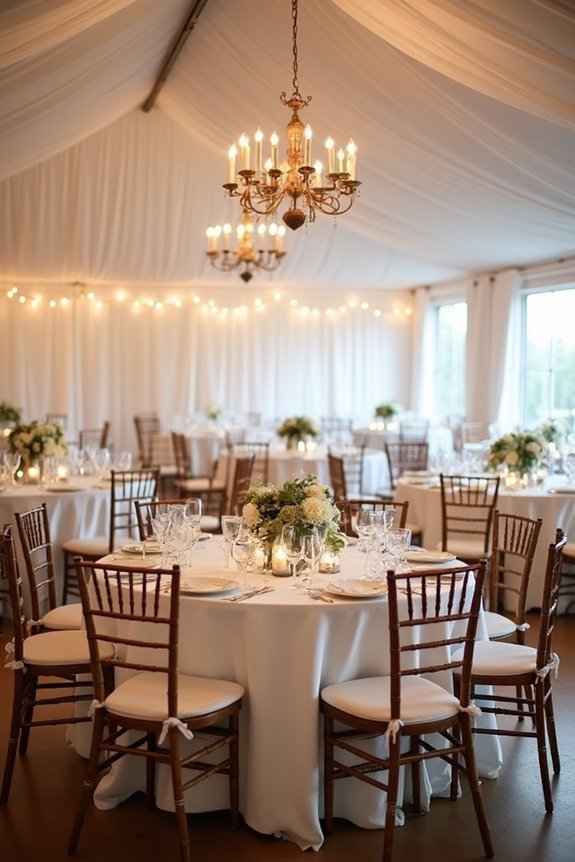
How do you want your guests to experience your reception—gathered intimately around a table or seated in a more formal arrangement?
Round tables create conversation-friendly spaces where everyone can see and hear each other easily. They work wonderfully for smaller weddings or when you’re prioritizing connection.
Banquet tables, meanwhile, feel more formal and traditional, offering a classic elegance that photographs beautifully. We’d choose banquet tables if you’re envisioning a sophisticated, structured celebration.
Consider your wedding’s tone, your venue’s shape, and how you want guests interacting. Both options can feel utterly magical when thoughtfully styled. Once you’ve decided on your table layout, use a wedding budget spreadsheet to track costs associated with your furniture rentals and reception setup.
Calculate How Many Tables You Need
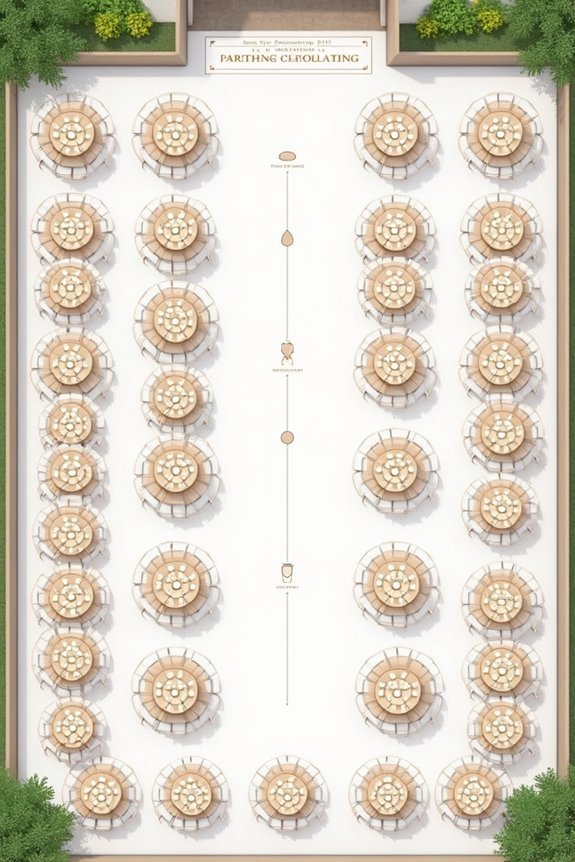
Once you’ve decided on your table style, the next step is figuring out exactly how many tables you’ll need—and this math doesn’t have to feel intimidating.
Start by dividing your guest count by your table’s capacity. Round tables typically seat six to eight people comfortably, while banquet tables fit eight to ten. Add one or two extra tables as a buffer for last-minute additions.
Don’t forget to account for your sweetheart table, kids’ table, or cocktail seating if you’re planning those. We recommend writing down your numbers to visualize the layout clearly before finalizing your count. Using a Guest List Manager tool can help you track your final guest count accurately to ensure your table calculations are precise.
Map Your Table Arrangement for Flow
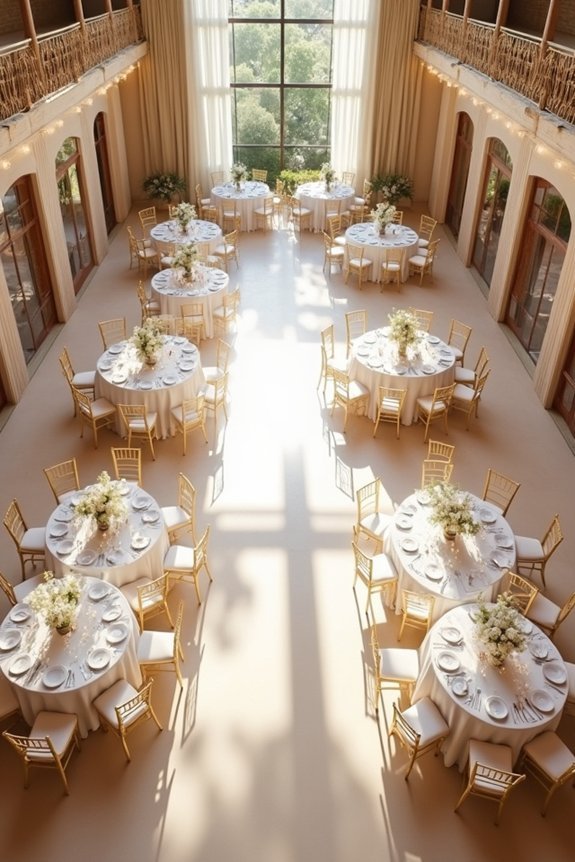
With your guest count and table quantities locked in, it’s time to sketch out where everything goes—and this is where your reception truly comes to life.
We’ll map your layout by considering traffic flow, sight lines, and how guests naturally move through your space. Position your head table where everyone can see it easily. Leave clear pathways to bathrooms, bars, and exits.
Arrange tables so conversations feel intimate, not cramped. We recommend creating a rough floor plan on paper first, testing different configurations until the room breathes beautifully and your guests can move with ease throughout the evening. Using a comprehensive planning checklist can help ensure you’ve considered all layout details and logistics for your reception space.
Design Your Seating Chart
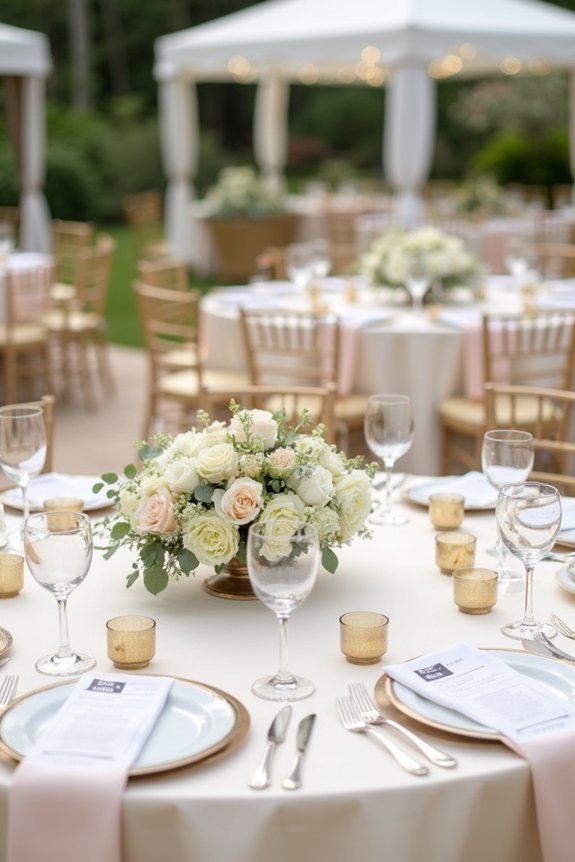
Now that your floor plan is set, it’s time to decide who sits where—and we won’t lie, this part takes thoughtfulness.
Create a seating chart that mixes friends from different circles so conversations flow naturally. Seat relatives strategically to prevent tension. Place your most engaging guests at tables that might feel quieter.
Consider dietary needs, mobility, and personalities when grouping people. We recommend writing names on a diagram first, then transferring them to your actual place cards. Use a guest list manager to track dietary restrictions and preferences, ensuring you have all the information needed to make thoughtful seating decisions.
This intentional approach transforms your reception into genuine connection rather than obligation.
Position Your Sweetheart Table
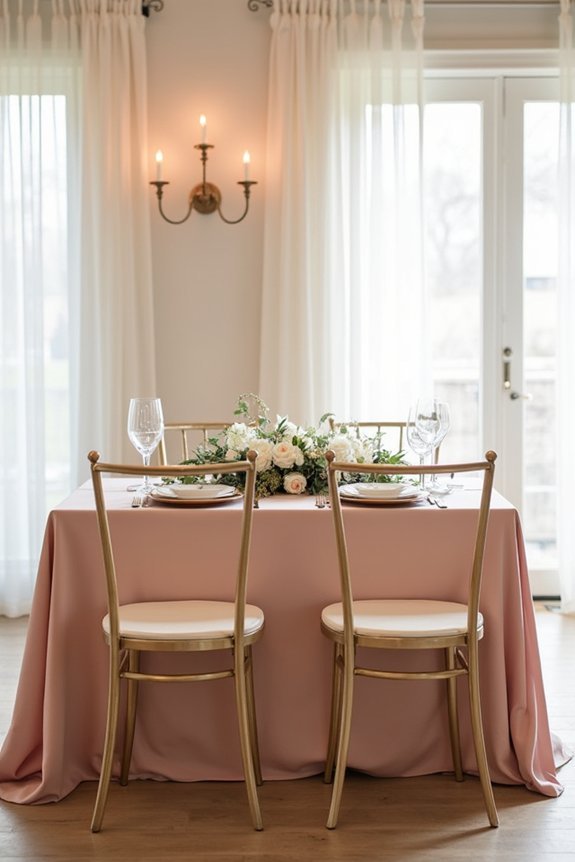
Your sweetheart table deserves its own thoughtful placement strategy, as this is where all eyes naturally gravitate during your reception.
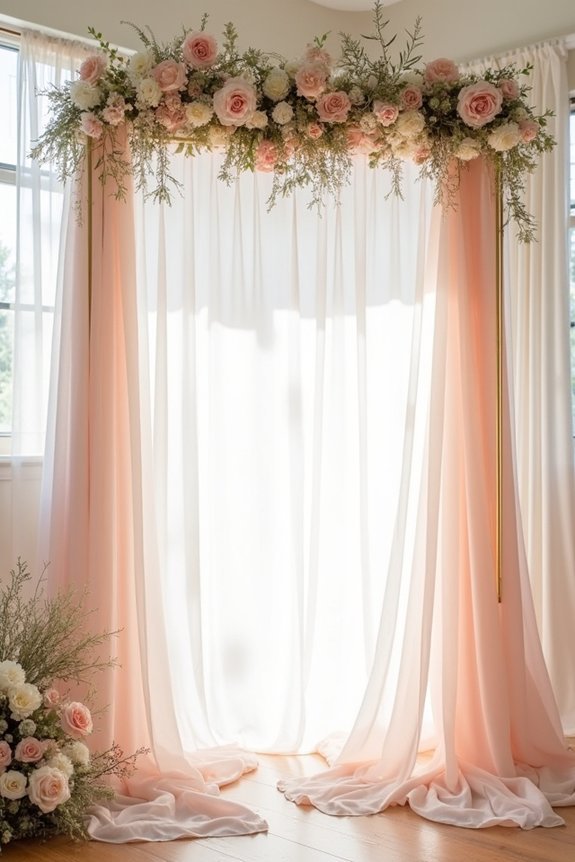
We recommend positioning it perpendicular to your guests, allowing them to see you both clearly while you enjoy your meal together. Consider placing it on a slight elevation or at the room’s focal point—near windows, a fireplace, or your backdrop. This positioning feels intimate yet celebratory.
Make certain there’s adequate space around the table so your photographer can capture beautiful moments.
The sweetheart table becomes a natural gathering point, so strategic placement amplifies its impact on your overall room design.
Place Cocktail Tables to Keep Guests Moving
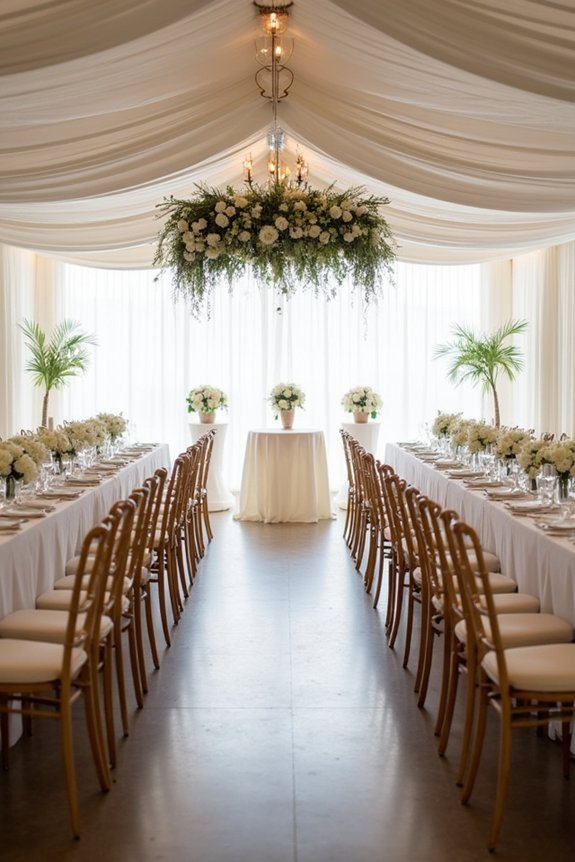
Once you’ve anchored your sweetheart table as the room’s centerpiece, cocktail tables become your secret weapon for guiding guests through the space and encouraging natural mingling.
We recommend scattering them strategically between dining tables, creating pathways that feel intentional rather than cramped.
Position them at varying heights—mix tall cocktail tables with lower ones—to maintain visual interest and accommodate different preferences.
Leave adequate walking space around each table so guests can circulate comfortably without bumping elbows.
This thoughtful arrangement transforms your reception from static seating into a flowing experience where conversations bloom naturally and your celebration feels genuinely connected.
Plan Your Bar and Service Areas Without Sacrificing Flow
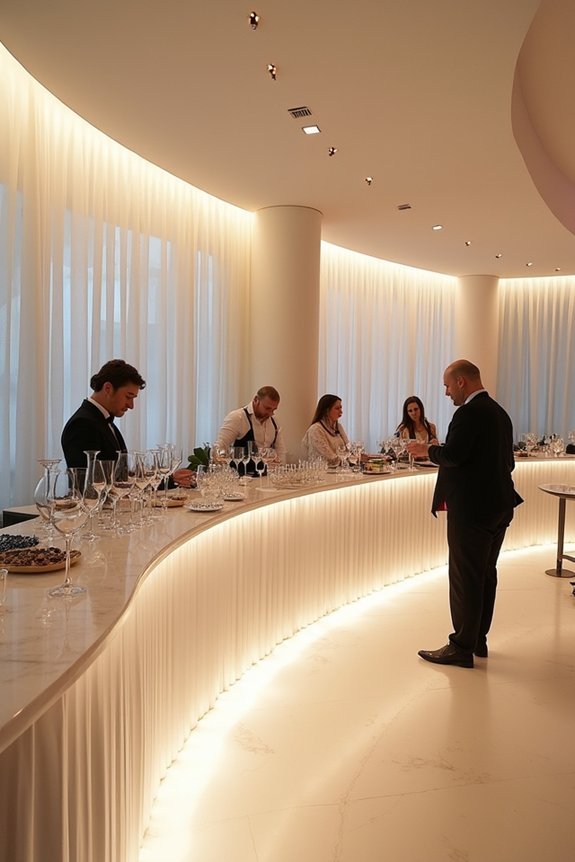
The bar and service stations deserve as much strategic attention as your seating arrangements, because they’re the spaces where guests naturally gather—and where traffic can easily bottleneck if we’re not thoughtful.
We’ll want to position bars away from main pathways between tables, ideally along a side wall or corner.
Create clear sightlines so servers can move freely without weaving through crowds. Position service stations near kitchen access points.
Keep adequate spacing around these areas—we’re aiming for two-way traffic flow. When guests can easily access drinks and food, they’ll naturally disperse throughout your venue, preventing that crowded, congested feeling.
Clear Sightlines to the Altar and Sweetheart Table
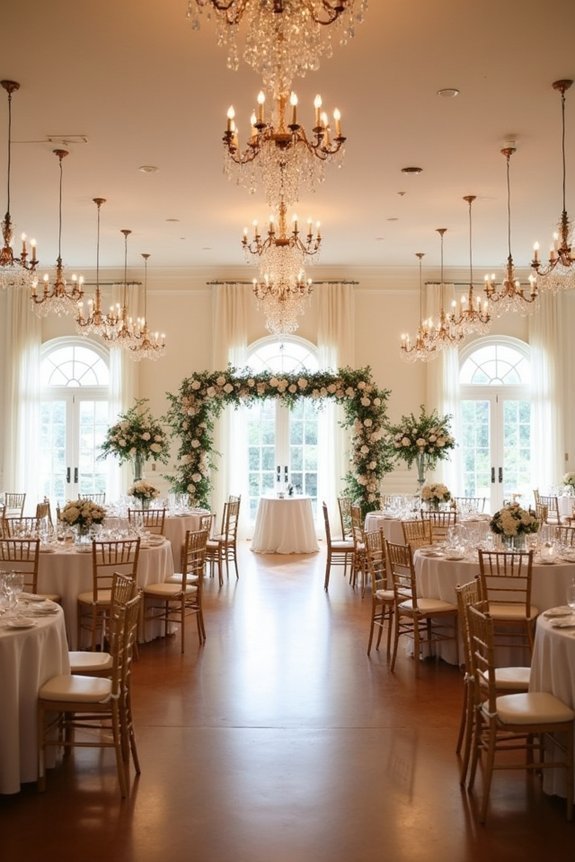
While we’ve carefully positioned bars and service areas to keep guests moving freely, we can’t overlook one of the most important sightlines at your reception—the view of you and your new spouse.
Position your sweetheart table so that guests at every table can see you clearly. Arrange banquet tables in a curved or angled pattern rather than straight rows, which naturally creates better sight lines.
Avoid placing tall centerpieces or decorative elements that block views. Consider elevating your sweetheart table slightly on a small platform.
These thoughtful adjustments guarantee your guests can celebrate your special moments together, creating those magazine-worthy photos everyone treasures.
Decorate Tables to Enhance Your Reception
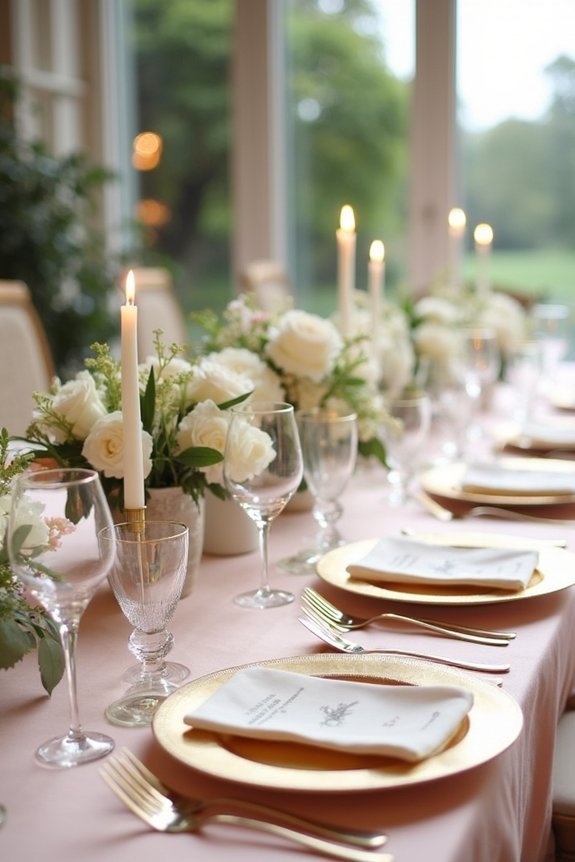
Your tables are where the magic happens—they’re the canvas for your guests’ entire experience, and we can absolutely make them stunning.
Thoughtful decoration transforms ordinary spaces into memorable moments. Consider these elements:
- Linens and runners that complement your color palette and add texture
- Centerpieces that don’t block sightlines—think low arrangements or tall, airy designs
- Place settings with quality chargers, napkins, and name cards for personal touches
- Lighting accents like candles or subtle uplighting to create warmth
Layer these details intentionally.
Each element works together to craft an atmosphere that feels both elegant and welcoming, making your reception genuinely unforgettable for everyone gathered.
Fix Layout Problems: Cramped Corners, Poor Flow, and Blocked Sightlines
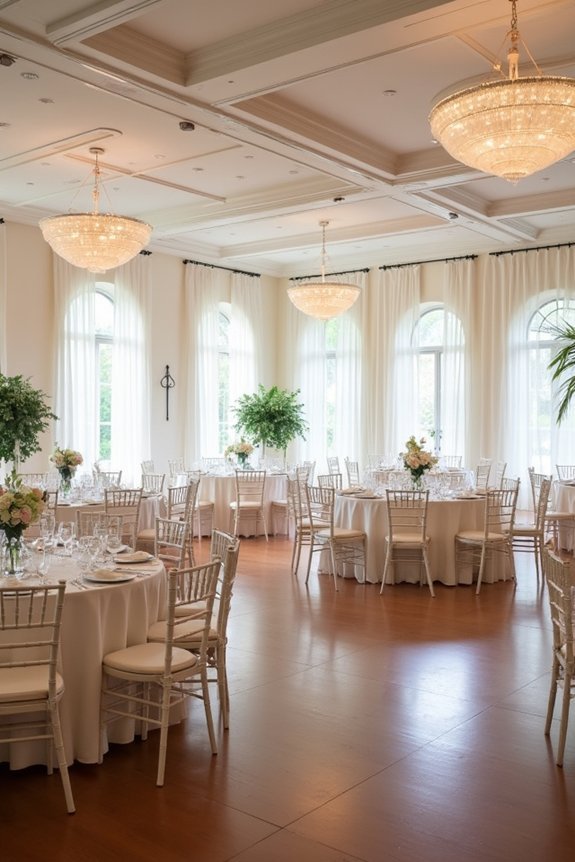
Once we’ve layered in all those beautiful design details, we need to make certain guests can actually enjoy them—and each other.
Start by checking your floor plan for tight corners where tables crowd together awkwardly. Confirm adequate spacing between seating areas so servers can move freely and conversations flow naturally.
Position tables to avoid blocking sightlines to the dance floor or ceremony space—your guests want clear views of important moments. Test different arrangements before committing, considering how people will navigate the room.
Small adjustments in placement create significant improvements in comfort and experience.
Your Table Layout Checklist: Final Checks Before the Wedding
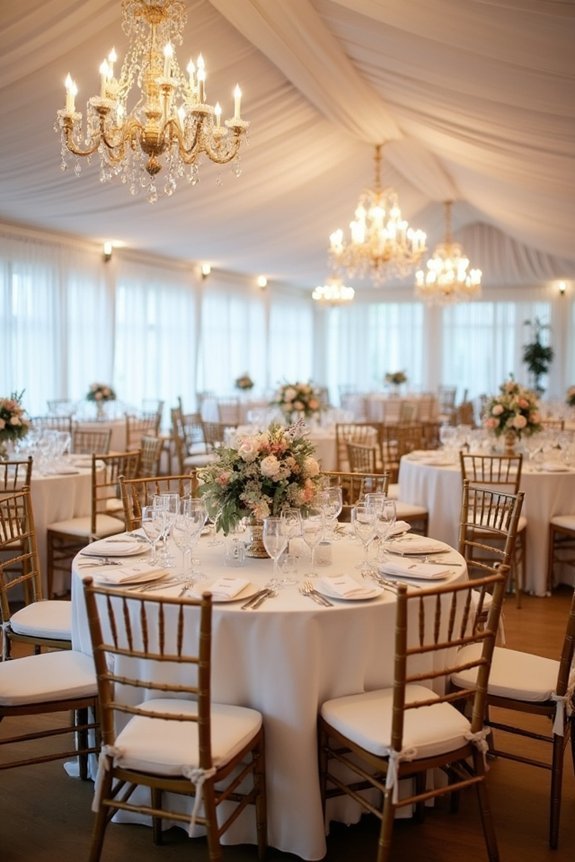
Three essential details deserve our attention before we finalize the seating arrangement: sight lines, spacing, and server flow.
Let’s walk through these final checks:
- Verify guest sightlines to the ceremony space, dance floor, and head table from every seat
- Confirm adequate spacing between tables—at least three feet for comfortable movement and server access
- Test server pathways to guarantee staff can deliver plates and clear dishes without disrupting conversations
- Double-check electrical access for uplighting, centerpiece features, or sound equipment near tables
These steps prevent last-minute surprises and create an effortless experience for everyone.
We’re almost there—your thoughtful planning is setting the stage for a genuinely beautiful celebration.
Frequently Asked Questions
How Do I Accommodate Guests With Mobility Issues or Accessibility Needs in My Table Layout?
We’ll reserve accessible tables near entrances and restrooms, ensuring wheelchair clearance and wide aisles. We’ll also confirm mobility needs during RSVPs so we can arrange seating accordingly for every guest’s comfort.
Should I Reserve a Table for Wedding Gifts, Cards, and Guest Books at Reception?
We’d absolutely recommend reserving a dedicated table near your entrance. It keeps gifts secure, displays cards beautifully, and gives guests a clear place to drop their contributions without cluttering your dining areas.
What’s the Ideal Table Height for Cocktail Tables Versus Dining Tables at Weddings?
We’ve found that cocktail tables work best at 42 inches high—bar-height standards that encourage mingling—while dining tables should sit at traditional 30 inches, letting guests comfortably enjoy their meals without feeling cramped or rushed.
How Can I Arrange Tables to Facilitate Mingling Before the Formal Dinner Service?
We recommend creating multiple conversation zones by spacing cocktail tables throughout your venue’s perimeter. This layout encourages guests to circulate naturally while keeping the center floor open for movement and mingling.
Do I Need a Separate Table for the Wedding Cake, Desserts, and Cutting Ceremony?
We recommend dedicating a separate dessert table for your cake and treats—it creates a gorgeous focal point, prevents crowding during the cutting ceremony, and lets guests enjoy desserts at their own pace without disrupting dinner flow.