It is understood coastal weddings demand flowers that laugh in the face of salt spray and strong winds. Pampas grass sways gracefully without wilting, while white roses and ranunculus burst with color despite intense sun. Dusty miller’s silvery leaves soften arrangements beautifully, and garlic vine plus jasmine deliver fragrance that lingers through your celebration. These resilient blooms thrive where traditional flowers fade, ensuring your bouquets stay stunning from ceremony to sunset. Discover the specific strategies that’ll keep every petal perfect.
At a Glance
- Pampas grass moves gracefully with ocean breezes, withstands salt spray, and creates romantic, airy textures.
- White roses and ranunculus thrive in bright coastal light while maintaining color vibrancy and elegance.
- Dusty miller tolerates salt spray, requires minimal water, and photographs beautifully with silvery foliage texture.
- Garlic vine and jasmine deliver fragrant blooms resilient to windy, salty coastal conditions throughout celebrations.
- Coastal flower combinations require salt-tolerant, drought-resistant varieties that maintain vibrancy despite environmental stress factors.
Understanding Coastal Climate Challenges: Why Standard Wedding Flowers Fail by the Sea
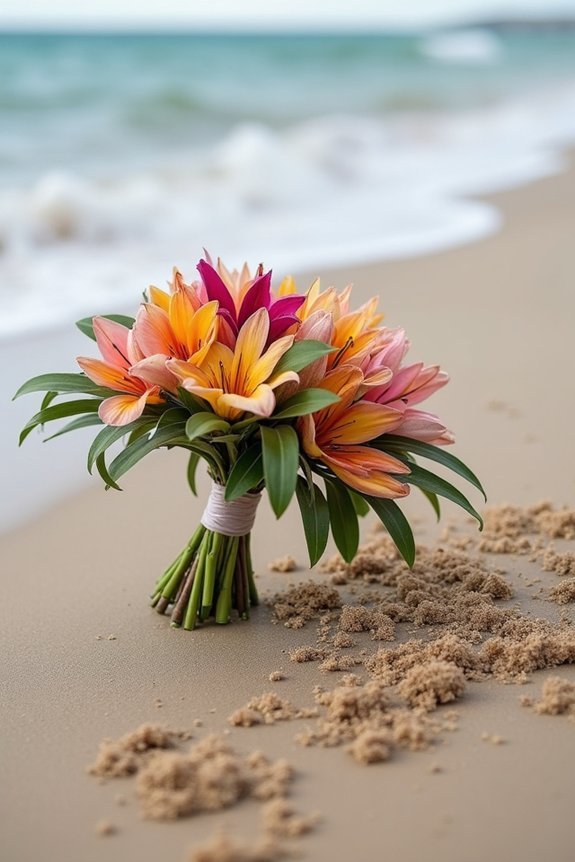
When we picture a coastal wedding, we imagine soft ocean breezes and salt-tinged air creating an idyllic backdrop for our celebration—but that same environment poses real challenges for traditional wedding flowers.
Salt spray damages delicate petals, while intense sun bleaches colors and dries blooms quickly. Strong winds topple arrangements, and humidity encourages wilting and mold growth.
Roses, peonies, and gardenias—classic wedding favorites—struggle in these conditions. We require flowers with thicker petals, deeper roots in the sand, and natural resilience to salt and sun exposure.
A well-designed pergola can provide shelter from salt spray and harsh winds while framing your coastal ceremony beautifully.
Choosing coastal-appropriate blooms guarantees our arrangements stay fresh, vibrant, and beautiful throughout our special day.
Pampas Grass: Effortless Movement That Handles Wind and Salt
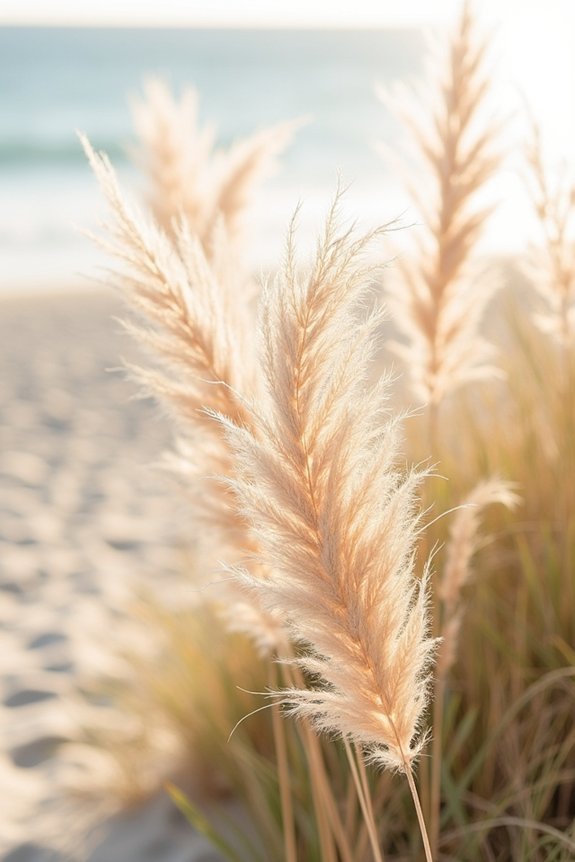
Now that we grasp why coastal air challenges our blooms, let’s introduce a hero ingredient that thrives in exactly these conditions: pampas grass.
This stunning grass brings effortless elegance to coastal arrangements because it:
- Moves gracefully with ocean breezes rather than breaking or wilting
- Withstands salt spray without browning or deteriorating quickly
- Creates airy, romantic textures that photograph beautifully
We love how pampas grass adds volume and movement to bouquets without requiring constant attention.
Its feathery plumes soften any arrangement, making your florals feel naturally windswept and sophisticated.
You’ll find it incredibly forgiving—it practically thrives on neglect, making your coastal wedding flowers genuinely manageable.
For maximum visual impact at your ceremony, consider pairing pampas grass with artificial greenery wall backdrops to create a cohesive and stunning coastal aesthetic that frames your celebration beautifully.
White Roses and Ranunculus: Romance That Thrives in Coastal Light
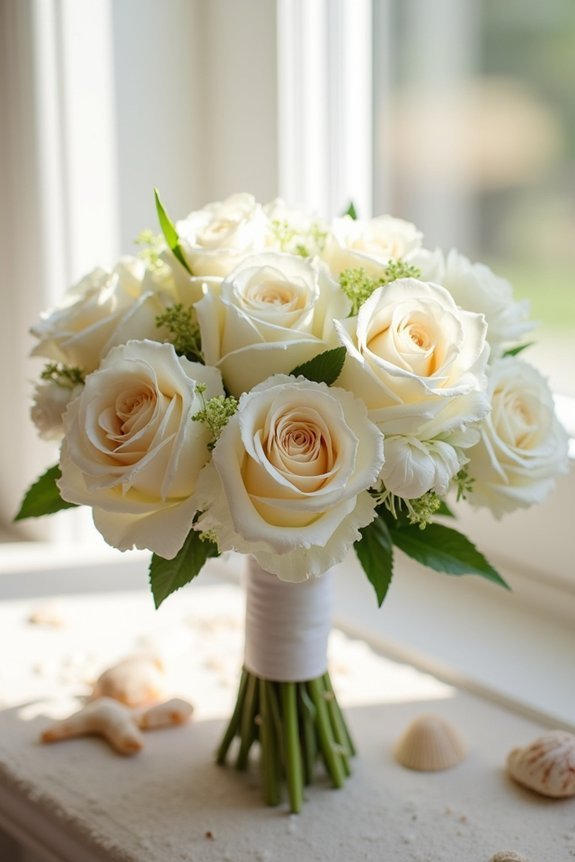
While pampas grass brings movement and texture to coastal bouquets, we need flowers that anchor arrangements with timeless romance—and white roses and ranunculus do exactly that.
These blooms thrive in bright coastal light, their petals glowing softly without fading or bleaching. Roses offer classic elegance and structure, while ranunculus layers in delicate, romantic texture with their ruffled petals.
Together, they’re incredibly forgiving flowers that handle salt air beautifully. We love pairing them with greenery for a sophisticated look that photographs gorgeously in natural light. For brides seeking coordinated elegance, bridal pearl jewelry sets complement these romantic florals with understated luxury that won’t compete with your bouquet’s natural beauty.
They’re the romantic backbone every coastal wedding needs.
Dusty Miller: The Hardy Silvery Foliage Coastal Weddings Need
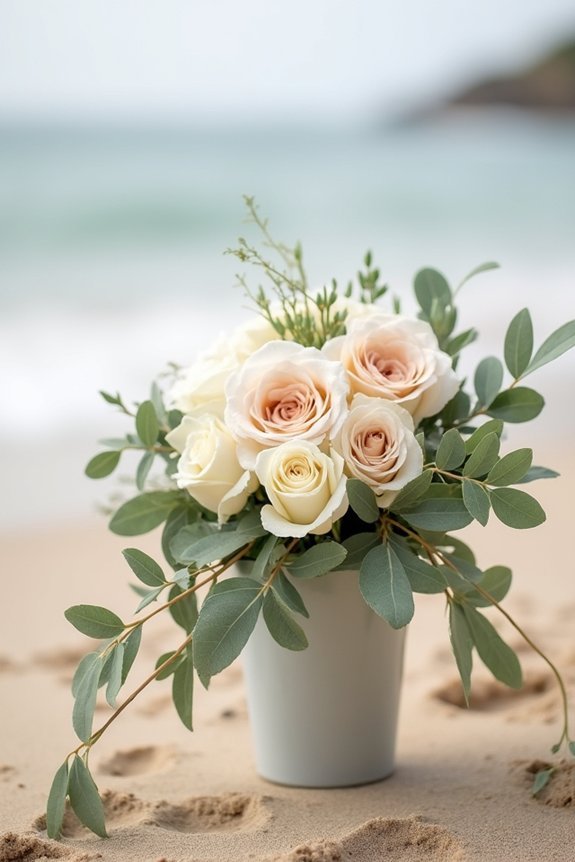
If you’ve been scrolling through coastal wedding inspiration, you’ve probably noticed a silvery-gray foliage showing up again and again—that’s dusty miller, and it’s become essential for seaside celebrations for good reason.
This hardy plant thrives in coastal conditions we’d struggle with otherwise:
- Salt spray tolerance that keeps it looking fresh near ocean breezes
- Drought resistance, requiring minimal water in sandy environments
- Natural silvery texture that photographs beautifully in bright seaside light
We love dusty miller because it softens bridal bouquets and arrangements while adding movement and depth.
Its delicate, feathery leaves pair perfectly with roses and ranunculus, creating that effortless elegance coastal weddings deserve.
For a cohesive bridal look, consider pairing dusty miller arrangements with silver hair vines that echo the foliage’s natural shimmer and complement your seaside aesthetic.
Hydrangeas in Soft Colors: Why They’re the Coastal Florist’s Secret
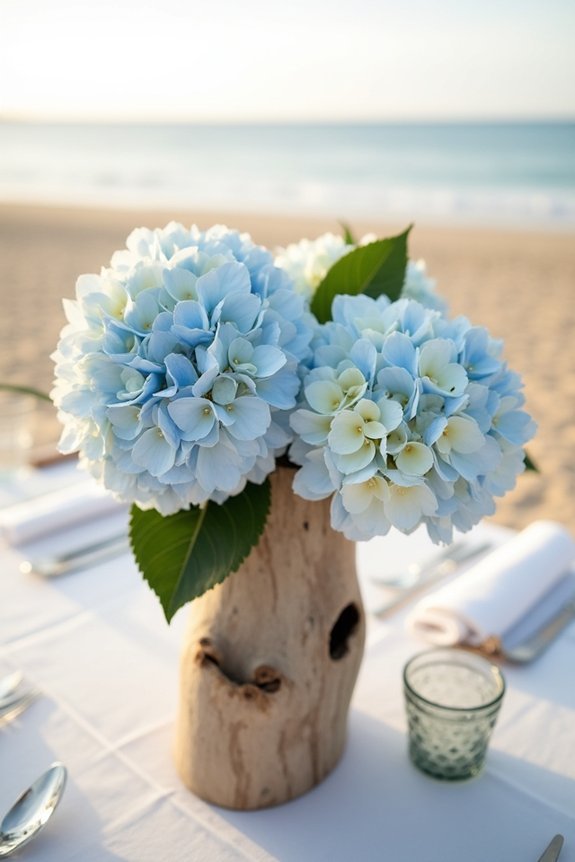
Pairing dusty miller’s silvery texture with the right blooms takes a coastal bouquet from lovely to stunning, and hydrangeas in soft colors are exactly what we need to complete that vision.
Hydrangeas bring volume and romance while their muted tones—pale blue, blush pink, and cream—echo the ocean and sky beautifully. They’re reliable workhorses that won’t wilt easily, perfect for outdoor seaside ceremonies.
Their soft, romantic appearance creates that effortless elegance coastal weddings demand. We love how they fill space naturally, reducing the need for excessive florals while maintaining that lush, magazine-worthy aesthetic you’re after. Consider complementing your coastal hydrangea arrangements with timeless bridal jewelry sets to create a cohesive and elegant overall wedding look.
Garlic Vine and Jasmine: Fragrance Built for Windy, Salty Air
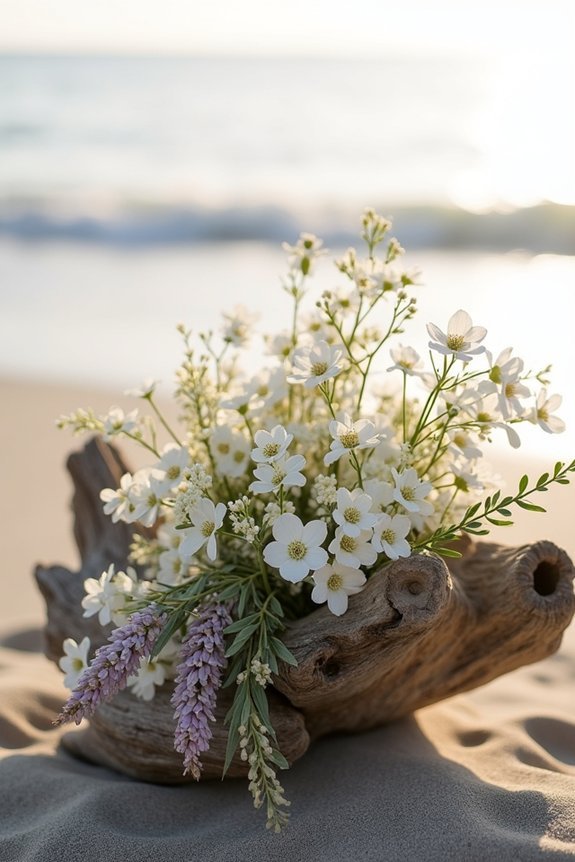
When you’re planning a seaside celebration, fragrance becomes just as important as visual beauty—and not every flower can hold its scent against ocean breezes and salt spray.
We love choosing flowers that thrive in coastal conditions while delivering stunning aromatics:
- Garlic vine produces delicate white blooms with a surprisingly sweet fragrance that salt air won’t diminish.
- Jasmine offers intoxicating evening scent, naturally resilient to windy, salty environments.
Both flowers add romantic charm while maintaining their fragrance throughout your celebration.
These beauties won’t wilt under coastal stress, letting you enjoy gorgeous florals and heavenly scents effortlessly.
Protect Your Blooms: Timing, Sourcing, and Day-Of Strategies for Salt Spray
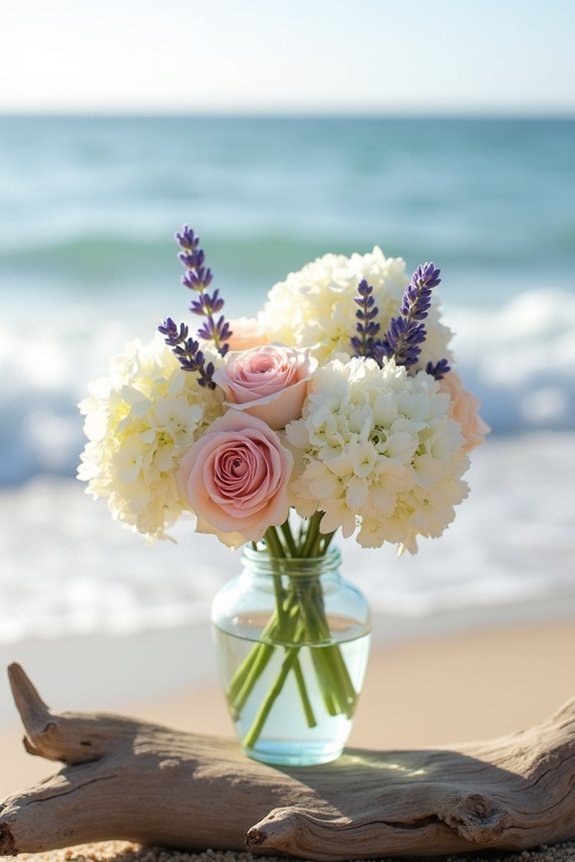
Beyond selecting salt-tolerant flowers, we’ve got to protect them strategically—and that starts long before your wedding day.
Order blooms from florists who understand coastal conditions and can source hardy varieties. Time your flower delivery for the morning of your ceremony to minimize salt spray exposure.
On the day itself, we recommend positioning arrangements in sheltered spots away from direct ocean wind. Consider lightweight, protective sprays designed for flowers—they create an invisible shield.
Keep stems hydrated in fresh water, as salt air dehydrates blooms faster. These practical steps guarantee your coastal wedding flowers stay vibrant and gorgeous throughout your celebration.
Frequently Asked Questions
How Far in Advance Should I Order Coastal Wedding Flowers to Ensure Availability?
We recommend ordering your coastal wedding flowers 6-9 months ahead to guarantee availability, especially during peak season. For popular blooms like garden roses and ranunculus, earlier booking guarantees we’ll reserve exactly what you’re envisioning.
What’s the Average Cost Difference Between Coastal and Traditional Wedding Flower Arrangements?
We’ve found coastal arrangements typically cost 15-25% more than traditional designs due to specialty flowers, salt-air durability requirements, and sourcing challenges. However, you’ll save money by reducing elaborate centerpieces—coastal elegance thrives in simplicity.
Can I Use Tropical Flowers for a Coastal Wedding, or Do They Wilt?
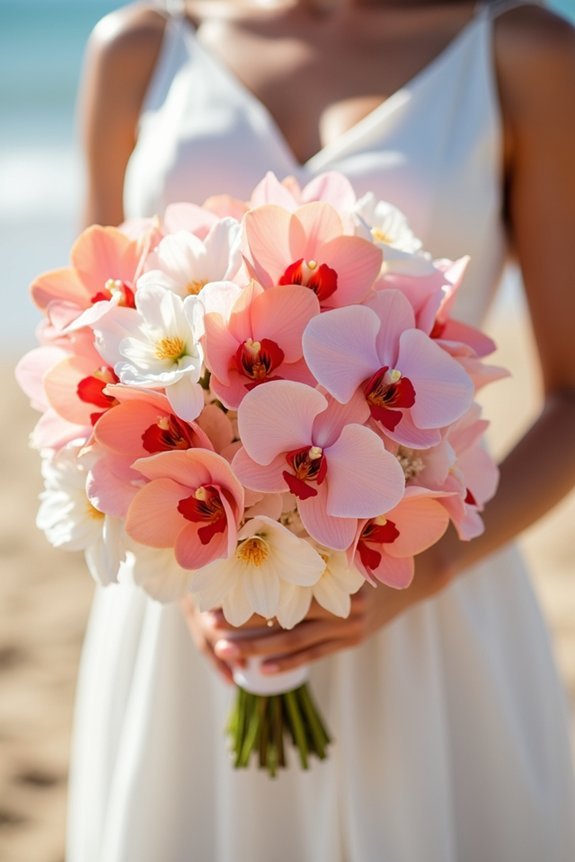
Tropical flowers absolutely work for coastal weddings—they’re actually ideal for beach settings. We recommend choosing varieties like orchids, anthuriums, and birds of paradise, which thrive in salt air and won’t wilt quickly in humidity.
Should I Hire a Florist Familiar With Beach Weddings, or Use My Local Option?
We’ve seen couples trust local florists who’ve never battled salt spray—like asking a desert gardener to tend a reef. Hire someone with coastal experience; they’ll know which flowers actually survive the elements.
How Do I Prevent Sand and Salt Water From Damaging My Bouquet During Photos?
We recommend keeping your bouquet in a sealed box until photos begin, using a protective spray beforehand, and scheduling shoots before peak salt spray times. Have an assistant hold an umbrella for wind protection.