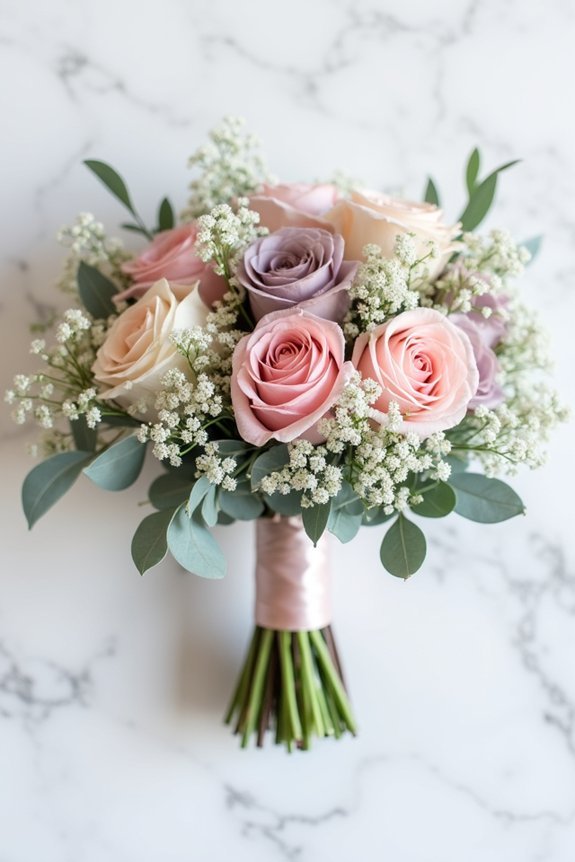
We can build a gorgeous dusty rose bouquet by starting with core flowers like garden roses and ranunculus, then layering in accent blooms for texture and depth. You’ll want to gather quality tools—sharp shears, floral foam, and ribbon—to make arranging easier. Begin with greenery as your base, position focal flowers in the center, then add secondary blooms and fillers around them. This strategic layering creates dimension through color, texture, and visual weight. Understanding how season, venue lighting, and your wedding style influence flower selection will help you craft something truly special.
At a Glance
- Select garden roses, spray roses, and ranunculus as core blooms for dusty rose bouquets with timeless, sophisticated appeal.
- Layer greenery and filler flowers as your base, then position focal flowers centrally for maximum visual impact.
- Combine lisianthus and astilbe accents with stock flowers for texture, airiness, and structural height in your arrangement.
- Use floral foam, sharp shears, and floral wire to ensure proper hydration and secure stem positioning throughout.
- Coordinate bouquet colors with bridal jewelry and venue lighting to achieve understated luxury that complements every wedding aesthetic.
Why Dusty Rose Is the Ultimate Bridal Flower Choice
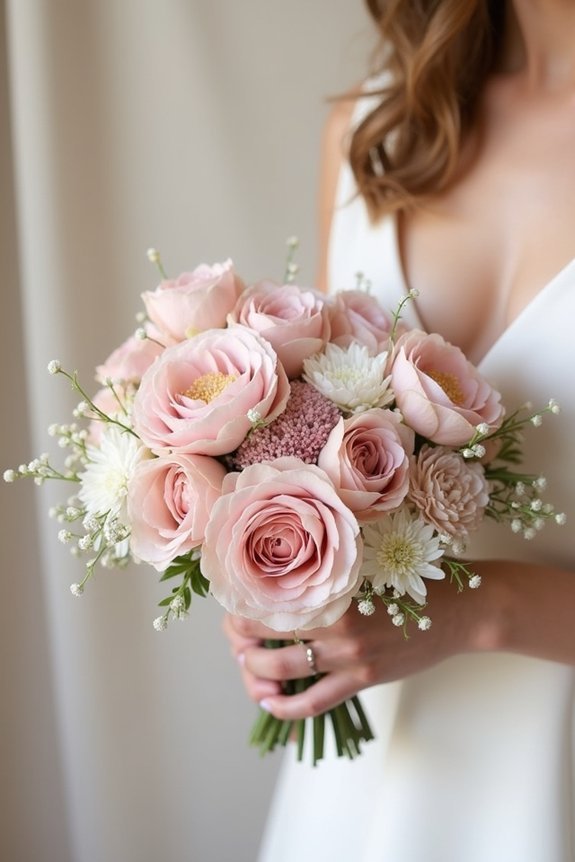
Dusty rose has become the go-to color for brides who want their bouquets to feel timeless, romantic, and effortlessly sophisticated.
We love this shade because it bridges the gap between blush pink and mauve, creating visual depth that photographs beautifully. Unlike bright florals that can feel trendy, dusty rose carries an inherent elegance that complements every skin tone and wedding aesthetic.
Whether you’re planning a garden ceremony or modern celebration, this muted rose tone works seamlessly with nearly any color palette. It’s romantic without being overly sweet, making it the perfect choice for brides seeking understated luxury. For those looking to enhance their wedding décor, lightweight plastic materials offer durability and versatility in creating cohesive ambient lighting alongside your floral arrangements.
Know Your Season and Style Before Selecting Flowers
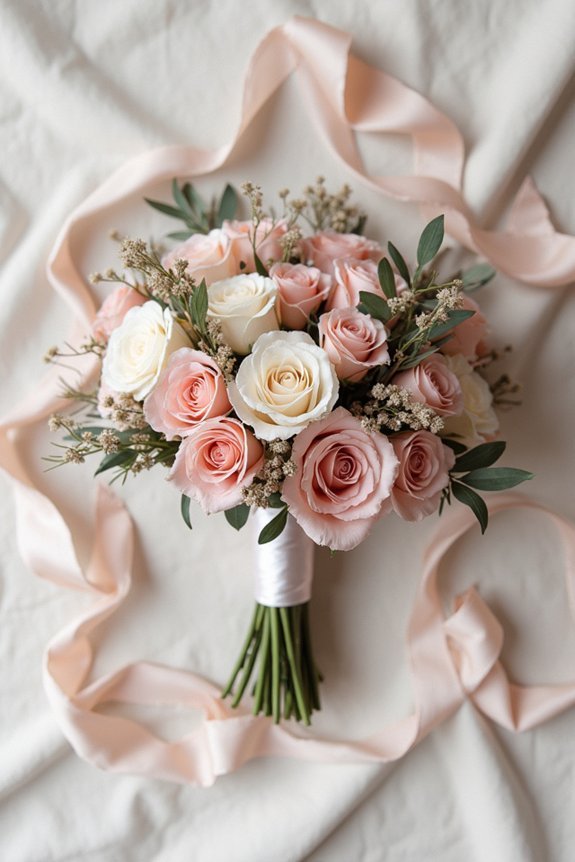
Now that you’ve decided on dusty rose as your color, it’s time to think about what varieties will actually work for your wedding day.
Consider these key factors:
- Season availability: Spring and fall offer the most dusty rose options, while summer requires careful sourcing
- Wedding style: Garden weddings suit loose, romantic blooms; modern celebrations benefit from structured roses and dahlias
- Venue lighting: Indoor spaces need deeper tones; outdoor settings shine with softer, lighter dusty roses
- Budget reality: Seasonal flowers cost less than out-of-season varieties
Matching your bouquet to these elements guarantees you’ll get exactly what you’re envisioning while keeping costs manageable. Using a wedding budget spreadsheet can help you track floral expenses alongside your other vendor costs throughout the planning process.
Choose Your Dusty Rose Core Flowers and Accents
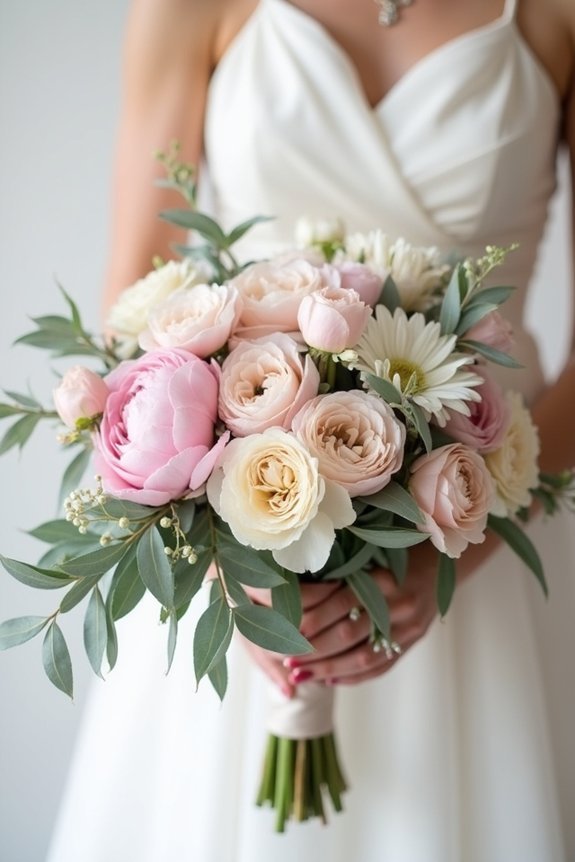
Building a gorgeous bouquet starts with selecting flowers that’ll form its foundation—these are your core blooms that create volume, color, and visual impact.
Garden roses, spray roses, and ranunculus are excellent dusty rose choices because they’re full, romantic, and naturally occur in this soft, muted shade.
We recommend pairing these with accent flowers like lisianthus, which adds delicate texture, or astilbe for an airy, feathery quality.
Stock flowers bring height and structure beautifully.
Don’t forget greenery—eucalyptus and dusty miller complement dusty rose perfectly, enhancing the sophisticated, cohesive look you’re creating.
Consider coordinating your bouquet with bridal pearl jewelry sets to complete your wedding day ensemble with timeless elegance.
Gather the Right Tools and Materials
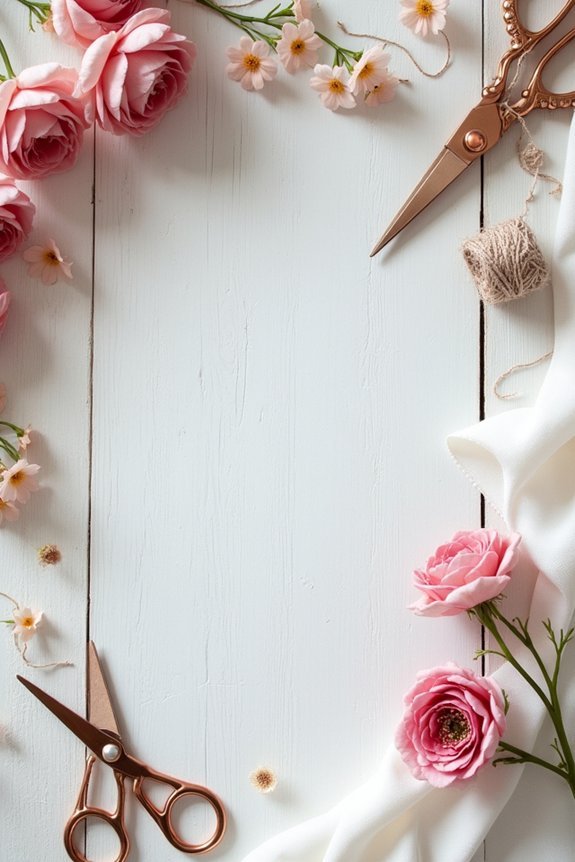
Once you’ve selected your flowers, you’ll want to assemble the essential tools and materials that make arranging your bouquet straightforward and enjoyable.
- Floral foam or grid tape – provides structure and keeps stems in place
- Sharp floral shears – guarantees clean cuts that help flowers absorb water
- Floral wire and tape – strengthens delicate stems and creates stability
- Binding materials – ribbon, twine, or fabric to wrap your handle
We recommend gathering these items before you start arranging. Having everything within reach prevents frustration and lets you focus on creating something beautiful.
Quality tools genuinely make the difference between a bouquet that feels effortless and one that feels challenging. Consider complementing your dusty rose bouquet with bridal jewelry sets that enhance your overall wedding aesthetic and complete your look.
Build Structure With Greenery and Filler Flowers
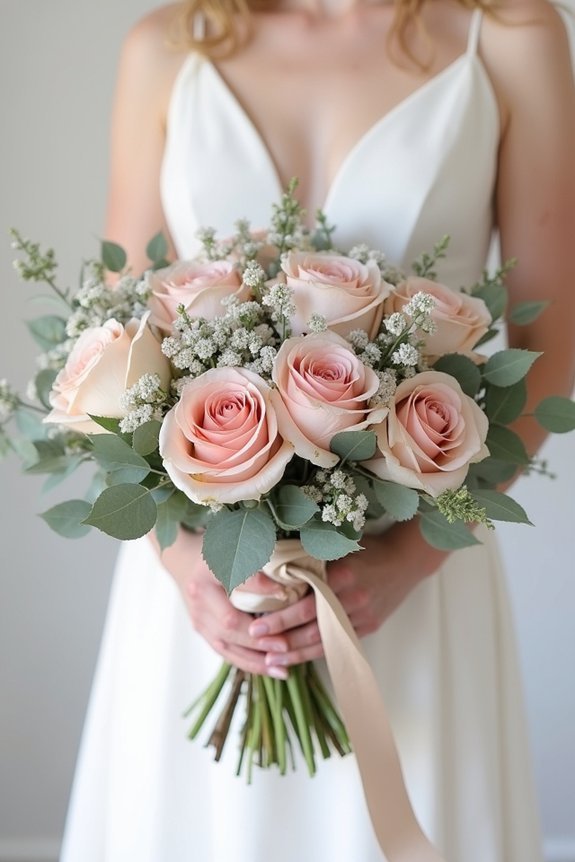
The foundation of your bouquet starts with greenery and filler flowers—these elements create the framework that’ll support your focal blooms and give your arrangement its lush, romantic shape.
We recommend starting with eucalyptus, which adds soft, silvery texture, or ruscus for fuller coverage. Layer in baby’s breath or waxflower as delicate fillers that bridge gaps between larger roses.
These supporting players aren’t afterthoughts; they’re essential. They hide stems, add movement, and create dimension that makes your bouquet look professionally designed.
Begin by forming a base with greenery, then tuck filler flowers throughout, building outward as you work. Consider adding hair vine accents to your bouquet’s handle for an elegant touch that coordinates with your bridal accessories.
Arrange Your Dusty Rose Bouquet Layer by Layer
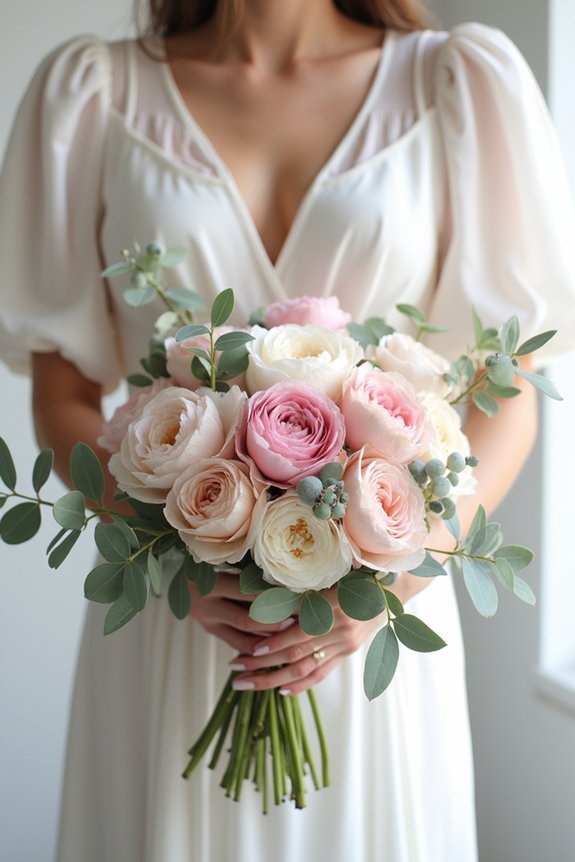
Your greenery base is now ready to support the stars of the show—those gorgeous dusty rose blooms that’ll make your bouquet truly stunning.
Let’s build your layers thoughtfully:
- Start with focal flowers in the center, positioning your largest dusty rose blooms first.
- Add secondary flowers around them, creating depth and visual interest throughout.
- Nestle filler flowers between blooms to soften edges and enhance movement.
- Turn and evaluate frequently, rotating your bouquet to guarantee balanced coverage from every angle.
This layering technique creates dimension while keeping your arrangement cohesive.
You’re building something beautiful that looks intentional and professionally designed—exactly what you deserve.
Create Dimension: Color, Texture, and Visual Weight
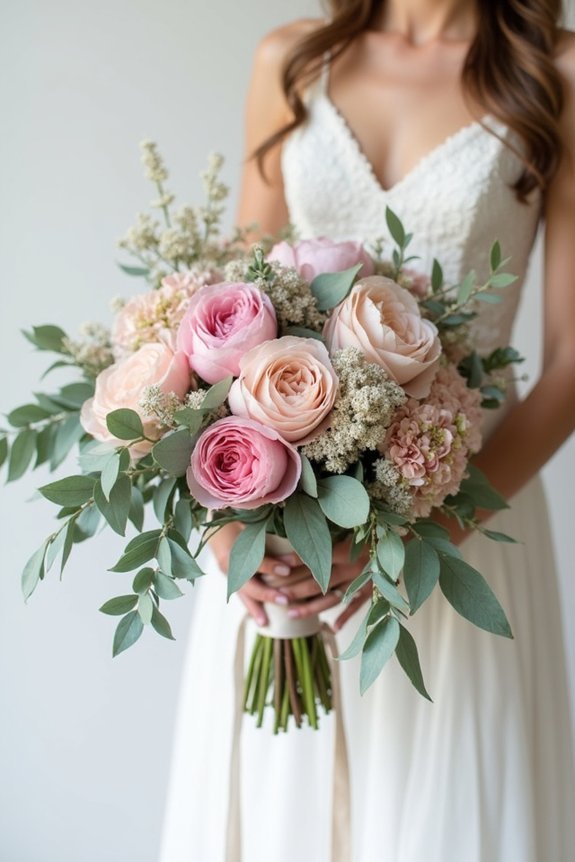
As we layer in those secondary and filler flowers, we’re not just filling space—we’re creating visual magic through thoughtful choices about color, texture, and weight.
We’ll incorporate blush peonies and garden roses alongside dusty rose, adding depth and sophistication.
Introduce textural elements like eucalyptus, dried grasses, or waxflower to break up solid blooms and catch light beautifully.
Consider visual weight by balancing heavy flowers with airy fillers. Lighter hues peek through darker dusty rose tones, while varied surfaces—smooth petals against wispy stems—create the dimensional, magazine-worthy bouquet we’re building together.
Condition and Preserve Your Bouquet for Longevity
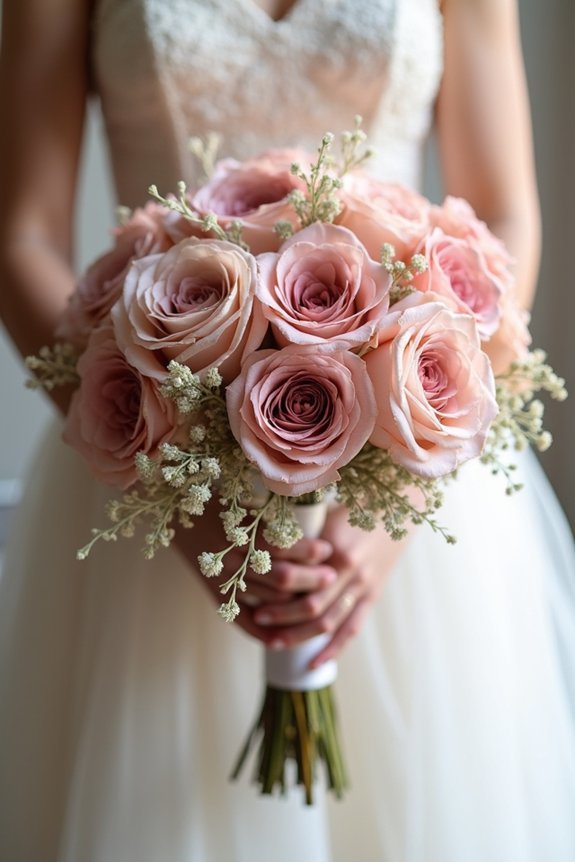
Now that we’ve built a bouquet bursting with dimensional color and texture, let’s make sure it stays as stunning as the moment you carry it down the aisle.
Fresh flowers need consistent care to maintain their beauty throughout your wedding day.
- Hydrate the stems – Keep flowers in cool water until the ceremony, then mist petals lightly before photos.
- Trim stems at angles – Cut a half-inch from the bottom at forty-five degrees to maximize water absorption.
- Remove lower leaves – Strip any foliage below the waterline to prevent bacterial growth.
- Use flower food – Add the packet provided by your florist to nourish blooms and extend freshness.
Frequently Asked Questions
How Do I Choose the Right Bouquet Size and Shape for My Body Type and Dress?
We recommend choosing a cascading bouquet if you’re petite or wearing a fitted dress—it elongates your silhouette. Opt for round, compact arrangements if you’re taller or prefer a classic look that won’t overwhelm your frame.
Can I Use Artificial Dusty Rose Flowers if Fresh Ones Aren’t Available?
We absolutely recommend artificial dusty rose flowers when fresh blooms aren’t available. High-quality silk flowers photograph beautifully, last throughout your day, and won’t wilt. You’ll achieve that magazine-perfect look we’re after.
What’s the Best Timeline for Ordering Flowers Before My Wedding Day?
We recommend ordering your flowers 4-6 weeks before your wedding. This timeline gives florists adequate time to source quality dusty rose stems, plan your arrangements, and handle any last-minute adjustments without rushing.
How Much Should I Budget for a Professional-Quality Dusty Rose Bridal Bouquet?
We’d recommend budgeting $150–$300 for a professional-quality dusty rose bridal bouquet, depending on your florist’s expertise, flower variety, and seasonal availability in your area.
Can I DIY My Bouquet or Should I Hire a Professional Florist?
We’ve all seen the Pinterest disasters—wilted roses, drooping stems, and lopsided arrangements. We’d recommend hiring a professional florist who’ll deliver a magazine-worthy dusty rose bouquet you’ll actually love photographing.