We’ve found that garden wedding bouquets truly shine when they blend color, texture, and movement together. You can choose soft pastels for timeless elegance, wildflowers for natural charm, or bold jewel tones for drama. English garden styles offer romantic appeal, while cascading greenery creates modern sophistication. The key is matching your bouquet to your garden’s backdrop and season. Each approach transforms your ceremony into a visual masterpiece, and we’re excited to show you exactly how to create yours.
At a Glance
- Soft pastel bouquets with garden roses and eucalyptus create timeless elegance perfect for garden ceremonies.
- Wildflower arrangements combine unexpected textures like Queen Anne’s lace for natural, budget-friendly sophistication.
- Bold jewel-tone bouquets provide dramatic contrast in garden settings with deep burgundy and purple flowers.
- English garden bouquets blend soft pastels with loose, organic arrangements for romantic outdoor weddings.
- Cascading greenery bouquets use eucalyptus and trailing foliage with focal flowers for minimalist sophistication.
Soft Pastel Bouquets: Blush, Cream, and Sage
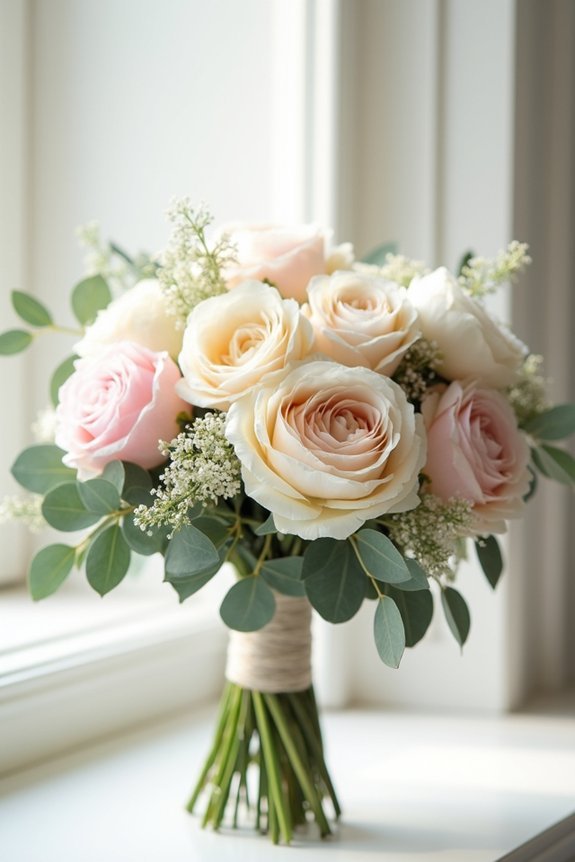
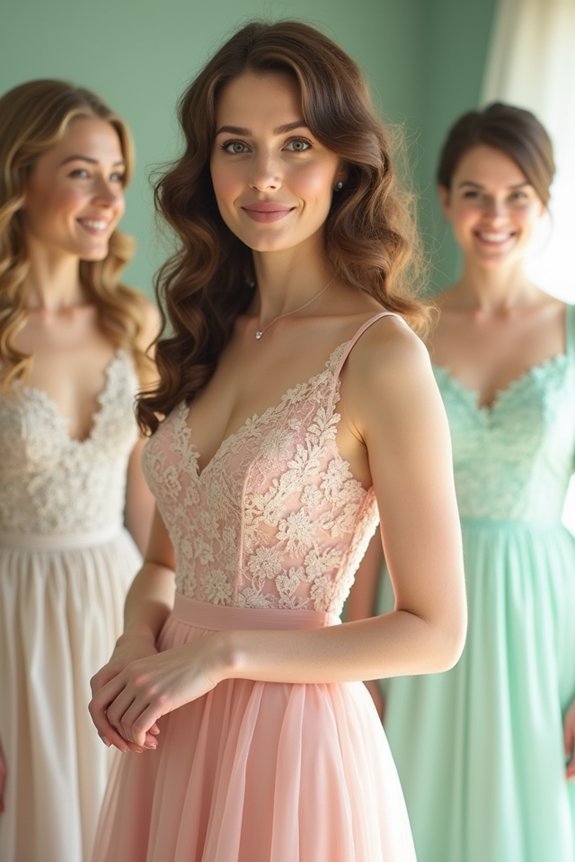
Soft pastels offer a timeless elegance that’ll make your wedding feel like it stepped right out of a luxury bridal magazine.
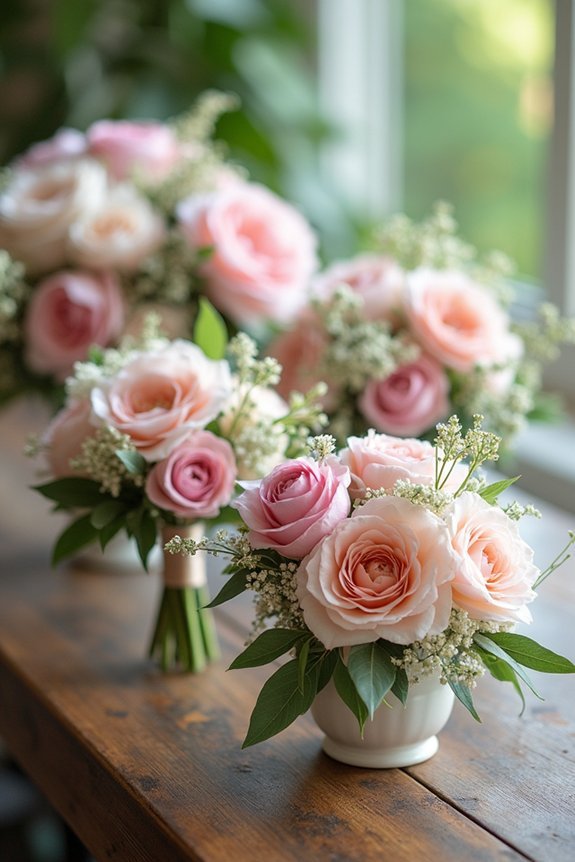
We love how blush, cream, and sage create a romantic, sophisticated palette that complements garden settings beautifully. These gentle hues work wonderfully with garden roses, ranunculus, and eucalyptus.
The softness of pastels photographs gorgeously in natural light, giving you those dreamy images you’ll treasure. We recommend mixing textures—combining delicate flowers with wispy greenery—to add dimension.
This color combination feels effortlessly refined, allowing your bouquet to enhance rather than overpower your overall wedding aesthetic. Consider pairing your soft pastel bouquet with delicate bridal jewelry sets that feature subtle rhinestones and lightweight materials to complete your cohesive wedding look.
Wildflower Bouquets for Effortless Elegance
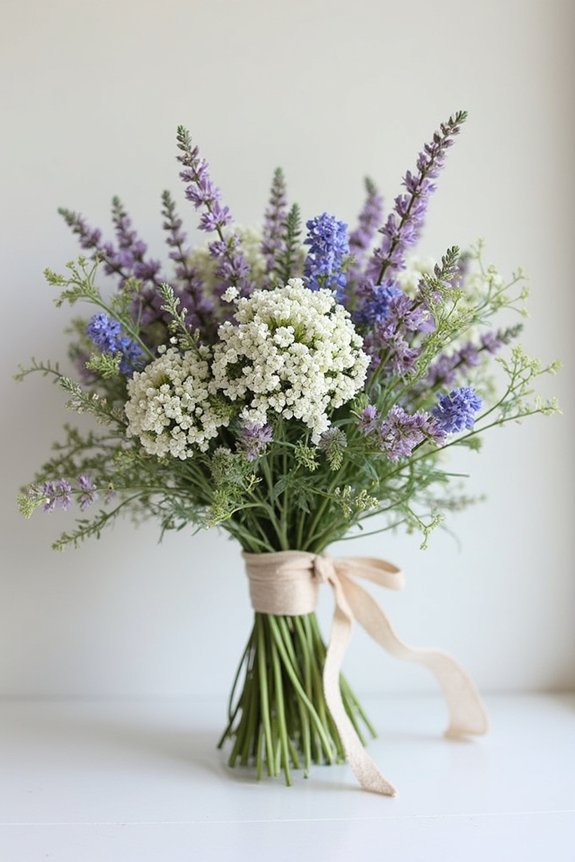
When you’re drawn to natural, garden-style beauty, wildflower bouquets deliver that coveted “picked-this-morning” charm without sacrificing sophistication.
We love how these arrangements blend unexpected textures—delicate Queen Anne’s lace, cheerful yarrow, and wispy grasses—creating visual depth that feels intentional rather than random.
The key is mixing heights and colors thoughtfully; soft purples, warm yellows, and white blooms work beautifully together.
Wildflower bouquets photograph wonderfully too, capturing authentic garden romance. They’re also budget-friendly and often more sustainable than heavily cultivated florals.
This style works perfectly for outdoor ceremonies and pairs beautifully with relaxed, elegant garden aesthetics. Consider pairing your wildflower bouquet with a greenery wall backdrop to create a cohesive natural setting for your ceremony photos and reception space.
Bold Jewel-Tone Bouquets for Drama and Depth
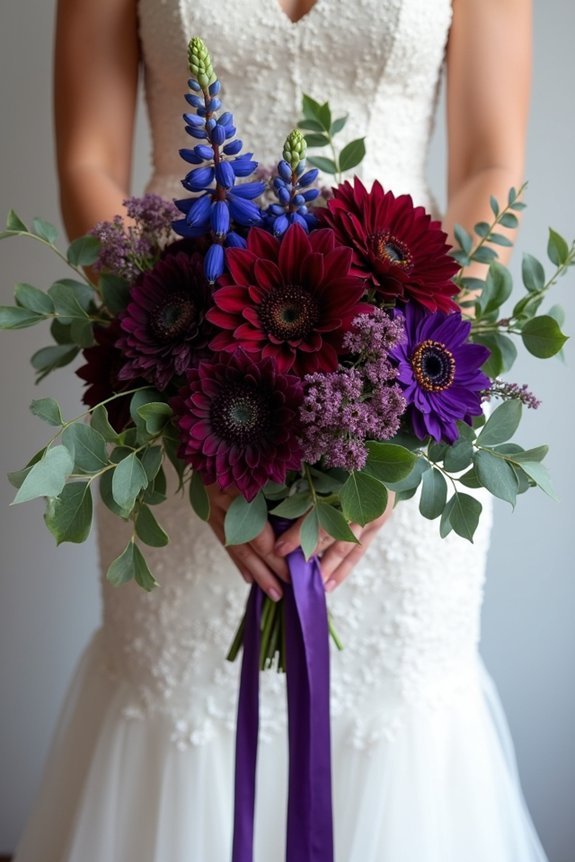
If you’re ready to make a statement, jewel-tone bouquets deliver the sophisticated drama that commands attention in photos and down the aisle.
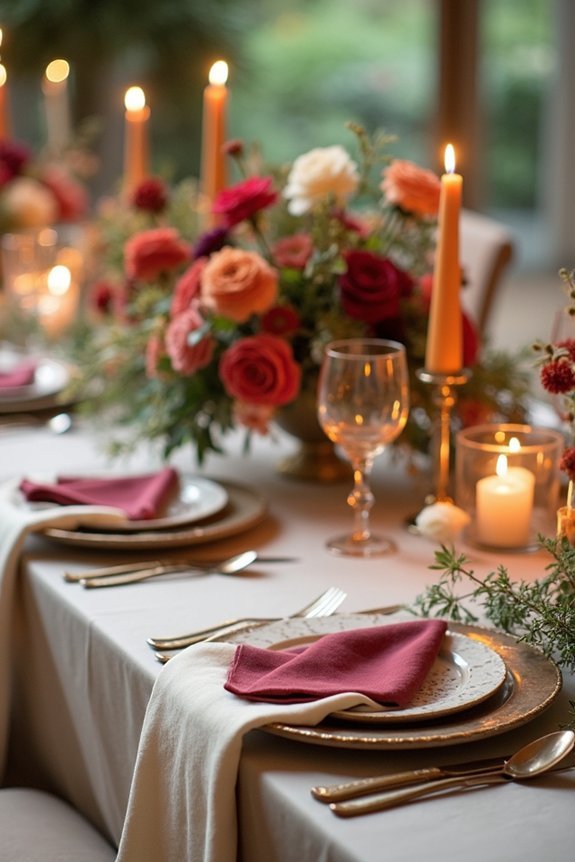
Deep emeralds, sapphires, and amethysts create richness that photographs beautifully, especially in natural light. We love pairing jewel tones with metallics like gold or copper for added glamour.
These colors work wonderfully with garden settings, creating striking contrast against greenery. Consider combining deep burgundy roses with purple lisianthus and bronze seeded eucalyptus for dimension.
Jewel tones suit fall and winter weddings particularly well, though they’re stunning year-round. To complete your cohesive look, pair your jewel-tone bouquet with bridal headpiece accessories in matching metallics and crystals that echo your bouquet’s richness and elegance. This approach transforms your bouquet into a bold, memorable accessory that reflects your confident style.
The Romantic English Garden Bouquet
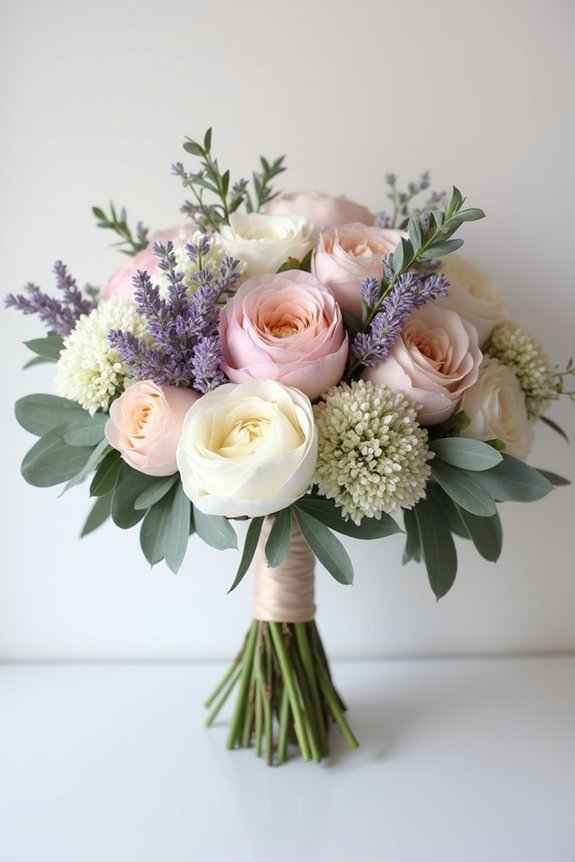
There’s something genuinely magical about the English garden bouquet—it captures the effortless elegance of a countryside garden in full bloom, where flowers seem to tumble together in beautiful, intentional abundance.
We love how this style blends soft pastels with unexpected textures, mixing roses, garden-style ranunculus, sweet peas, and delicate greenery.
The key is layering different bloom sizes and shapes so nothing looks too perfect or formal. You’ll want to embrace loose, flowing arrangements that feel organic rather than structured.
This approach works beautifully for outdoor ceremonies and gives your wedding that romantic, lived-in sophistication your guests will admire. Consider complementing your garden bouquet with coordinating bridal accessories like hair vines with pearls and crystals to complete your romantic aesthetic from head to toe.
Cascading Greenery: Maximum Impact, Minimal Florals
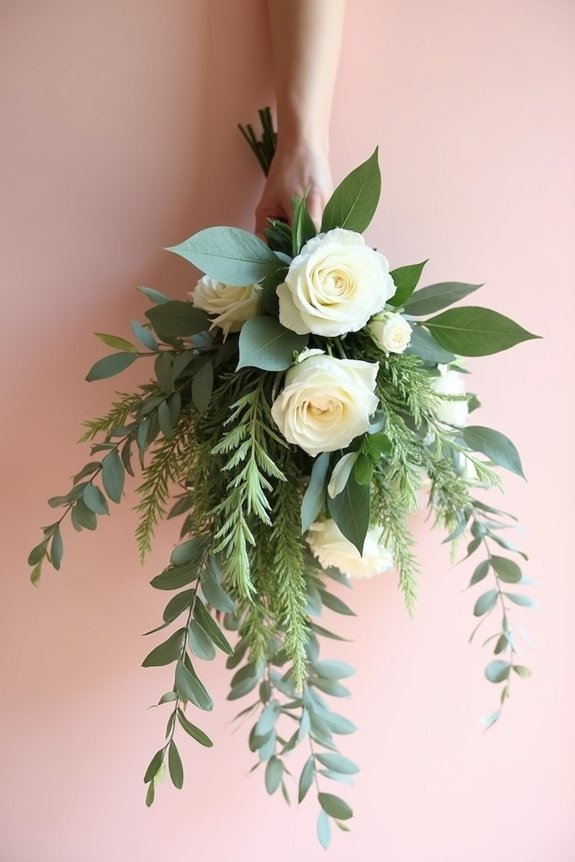
While the English garden bouquet celebrates floral abundance, cascading greenery takes a rejuvenating different approach—one that lets foliage do the heavy lifting.
We love this option because it’s invigoratingly modern yet timeless. Imagine eucalyptus, Italian ruscus, and trailing smilax creating elegant movement down your arm.
You’ll add just a few focal flowers—perhaps white roses or garden roses—letting them shine against the verdant backdrop.
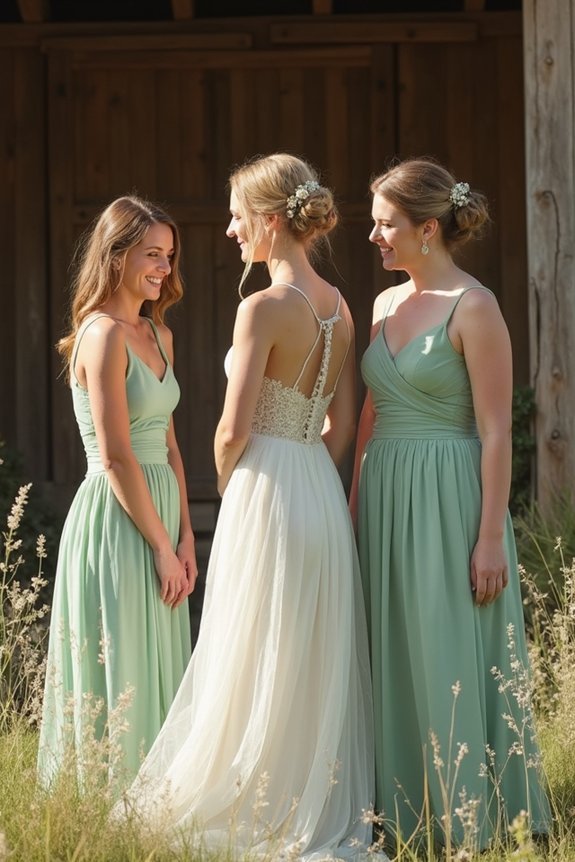
This style works beautifully for minimalist brides who want sophistication without visual heaviness. Plus, you’ll enjoy longer-lasting arrangements since greenery outlasts most flowers, keeping your bouquet fresh throughout your celebration. To complete your garden wedding aesthetic, consider pairing your cascading greenery bouquet with bridal hair accessories that echo the natural, organic feel of your florals.
Textured Bouquet Layers: Creating Depth and Movement
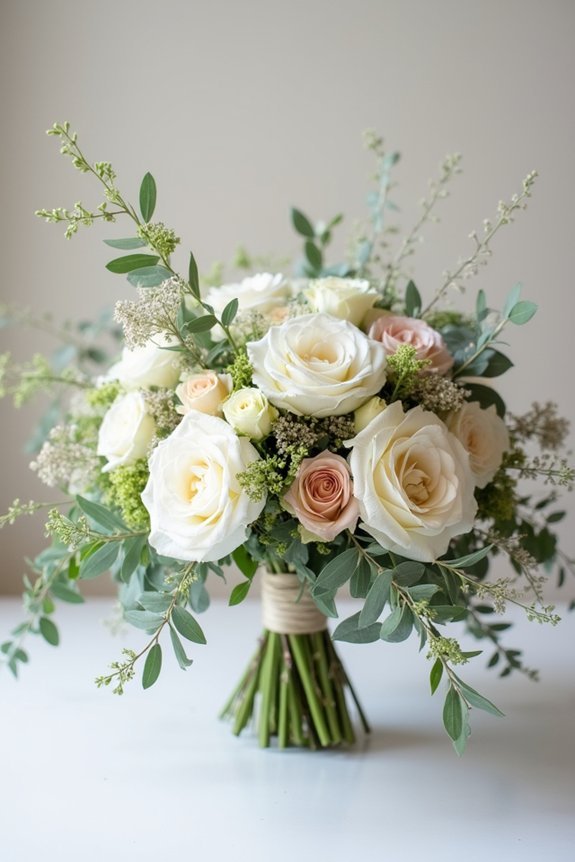
Layering different textures throughout your bouquet transforms a simple flower arrangement into a sophisticated, dimensional masterpiece.
We love combining soft peonies with spiky thistle, feathery astilbe, and delicate baby’s breath to create visual interest from every angle. Add trailing silk ribbons and lush greenery that spill downward—these elements catch light differently and draw the eye through the arrangement.
The key is varying heights and densities, so no two sections feel identical. When your bouquet has this kind of depth, it photographs beautifully and feels substantial in your hands.
Each texture tells part of your garden wedding story, creating an intentional, polished look guests will absolutely adore.
What’s in Season: Blooms That Last and Look Stunning
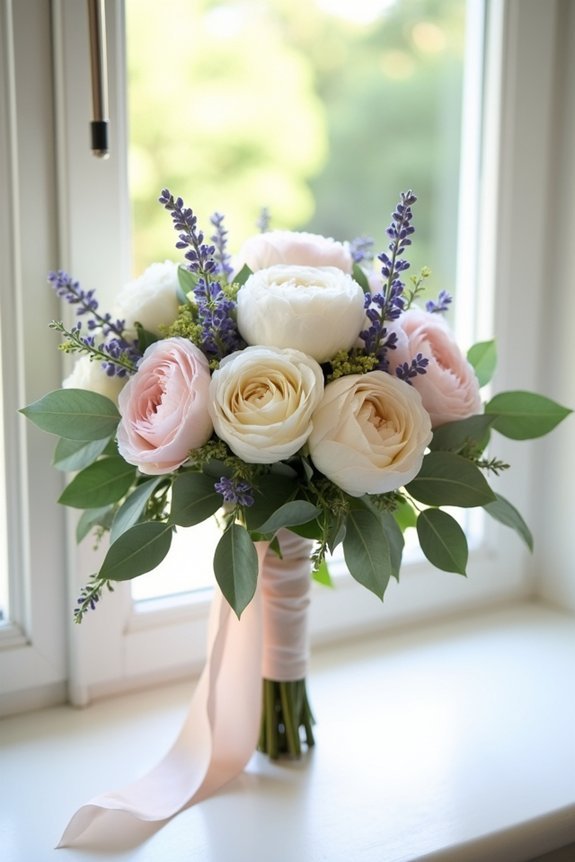
Now that you’ve built your bouquet with gorgeous layers and textures, let’s talk about choosing flowers that’ll actually last through your big day—and look as stunning in your photos as they do walking down the aisle.
Seasonal blooms are your secret weapon. Peonies, garden roses, and hydrangeas hold up beautifully and photograph like dreams. Ranunculus adds delicate romance without wilting quickly. Dahlias bring bold drama that lasts.
Greenery like eucalyptus and Italian ruscus stays fresh longer than filler flowers.
Choose what’s naturally blooming during your wedding month. These flowers require less processing, arrive fresher, and cost less. Your bouquet stays vibrant from ceremony through reception.
Frequently Asked Questions
How Much Should I Budget for a Garden Wedding Bouquet?
We’d recommend budgeting $75–$200 for your garden wedding bouquet, depending on seasonality, flower selection, and your florist’s expertise. Spring blooms cost less than exotic varieties, so choosing what’s in season saves you considerably.
When Should I Order My Bouquet From My Florist?
We recommend ordering your bouquet six to eight weeks before your wedding day. This timeline gives us enough breathing room to source seasonal blooms, finalize design details, and guarantee we’re delivering the lush, garden-fresh arrangement you’re envisioning.
How Do I Keep My Bouquet Fresh Throughout the Wedding Day?
We’ll keep your bouquet hydrated by misting it with water throughout the day, storing it in a cool location between photos, and wrapping the stems in wet floral tape or a damp cloth to maintain freshness.
Can I DIY My Garden Wedding Bouquet Myself?
Absolutely—we’ve seen brides create stunning DIY bouquets successfully. You’ll need floral experience, quality stems, proper conditioning techniques, and time to prep day-of. We recommend starting with hardy garden flowers and practicing arrangements beforehand.
What Size Bouquet Is Most Flattering for My Body Type?
We’ve found that petite frames shine with compact, rounded bouquets, while taller brides carry fuller arrangements beautifully. Your bouquet should be roughly one-third your torso length—it’s the proportion that photographs best and flatters most figures.