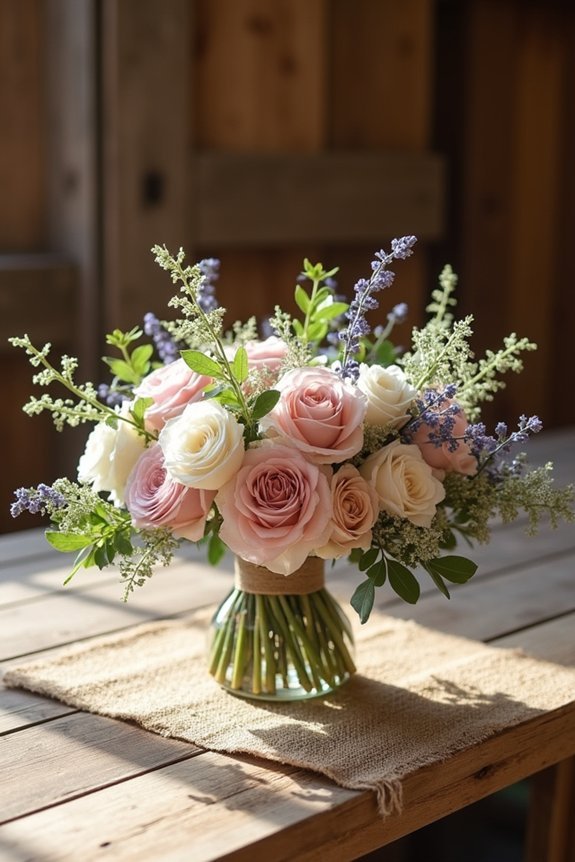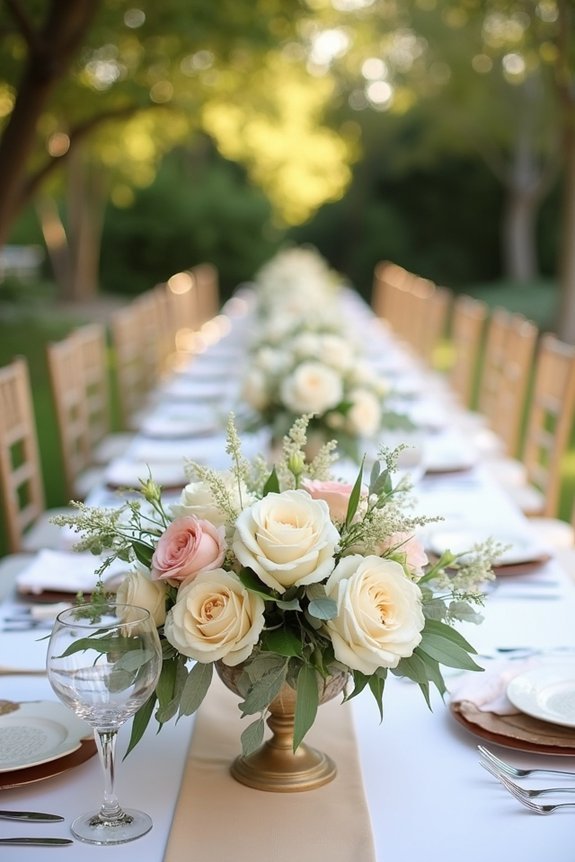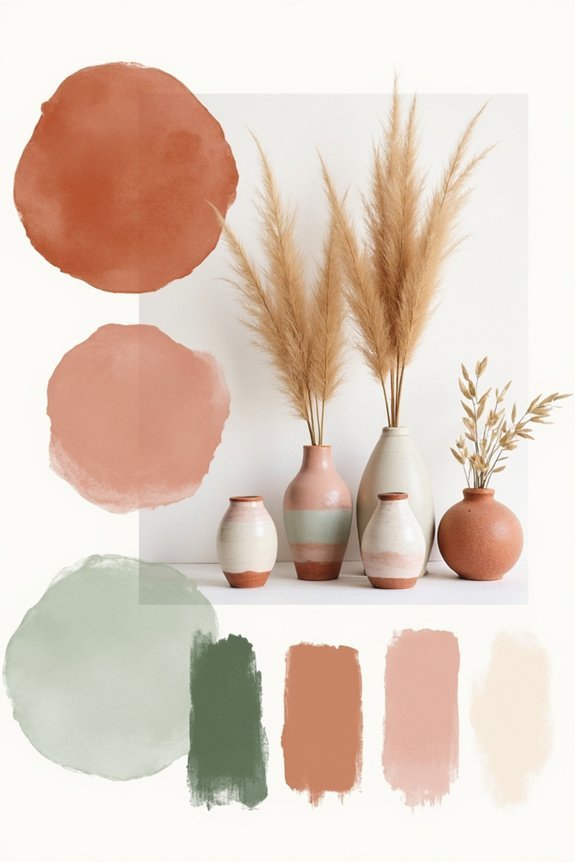
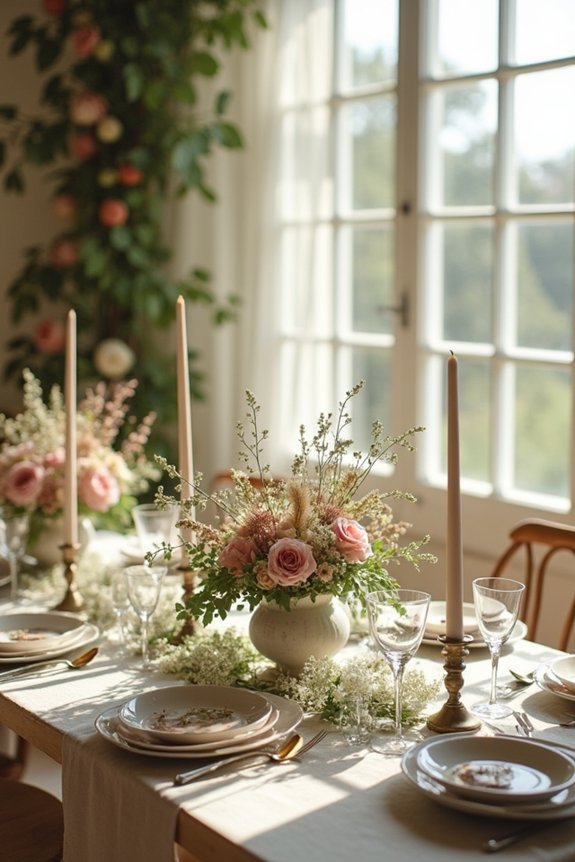
We’ll help you build a rustic wedding palette that feels both grounded and elegant. Start by letting your venue guide your choices—barns shine with warm terracottas and creams, while garden spaces glow with soft blushes and sage greens. Layer in neutrals like cream and ivory, add rich earth tones, then choose accent colors that reflect your personality. Test swatches under different lighting before committing. Finally, extend your palette through florals, linens, and stationery to create a cohesive story. The details of making this come together beautifully await you.
At a Glance
- Venue selection is foundational—barns suit warm terracottas, gardens favor blushes and sage, estates work with jewel tones.
- Build your palette with neutral bases like cream and ivory, then layer earth tones and accent colors for depth.
- Balance sophistication with warmth by pairing warm beiges with cool grays and introducing sparing metallics for polish.
- Test colors using fabric swatches and paint samples under different lighting conditions before finalizing your palette.
- Apply your chosen colors consistently across flowers, linens, stationery, bridesmaid dresses, and décor for cohesive visual impact.
Let Your Venue Guide Your Color Palette
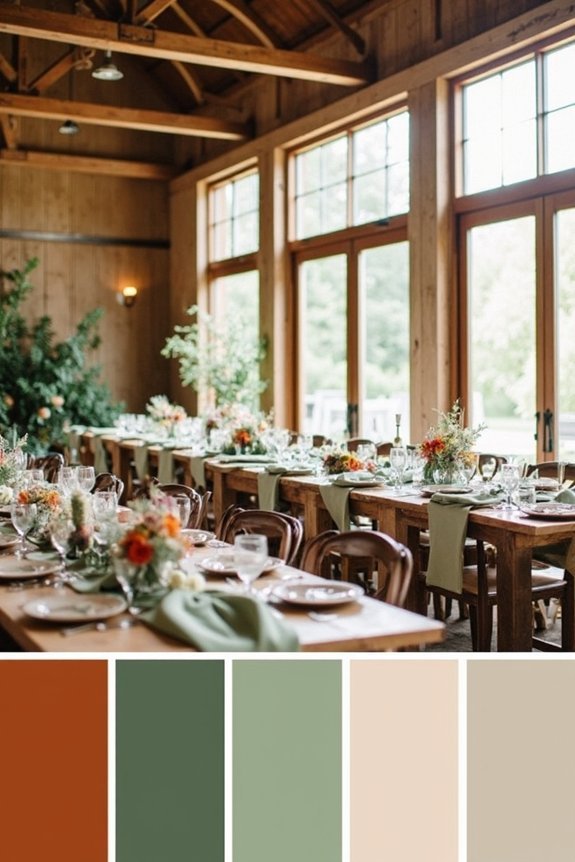
Your venue is one of the most powerful tools we’ve when selecting a wedding color palette, so let’s start there.
A barn’s weathered wood naturally calls for warm terracottas and creams. A garden venue thrives with soft blushes and sage greens. Historic estates work beautifully with jewel tones and metallics. By anchoring our color choices to what’s already present, we create harmony rather than fighting against the space.
This approach simplifies decision-making and guarantees our palette enhances the venue’s existing beauty. We’re not starting from scratch—we’re collaborating with the space itself. For venues seeking added floral elegance, artificial flower wall panels offer a low-maintenance option that complements any color scheme while maintaining the rustic aesthetic throughout the celebration.
The Core Rustic Trio: Neutrals, Earth Tones, and Accents
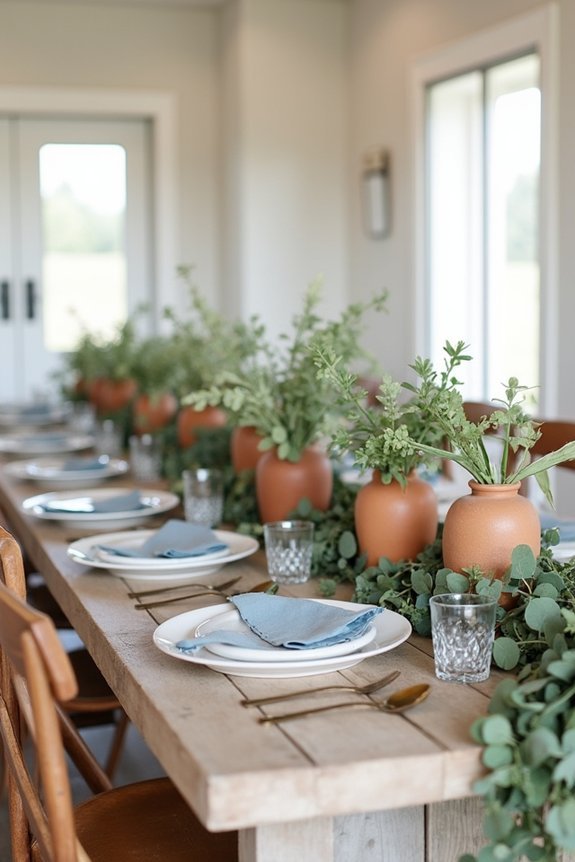
Neutrals like cream, ivory, and soft gray create a calming base that lets everything else shine. Earth tones—think warm browns, terracotta, and muted greens—add richness and connection to nature.
Finally, accent colors bring joy and individuality. Whether we choose dusty blush, deep burgundy, or golden yellow, these pops of color express who we’re while honoring rustic elegance.
When planning your rustic wedding, consult the Master Wedding Planning Checklist PDF to ensure you’ve considered all design elements alongside your color selections.
Choose Sophistication Without Losing Warmth
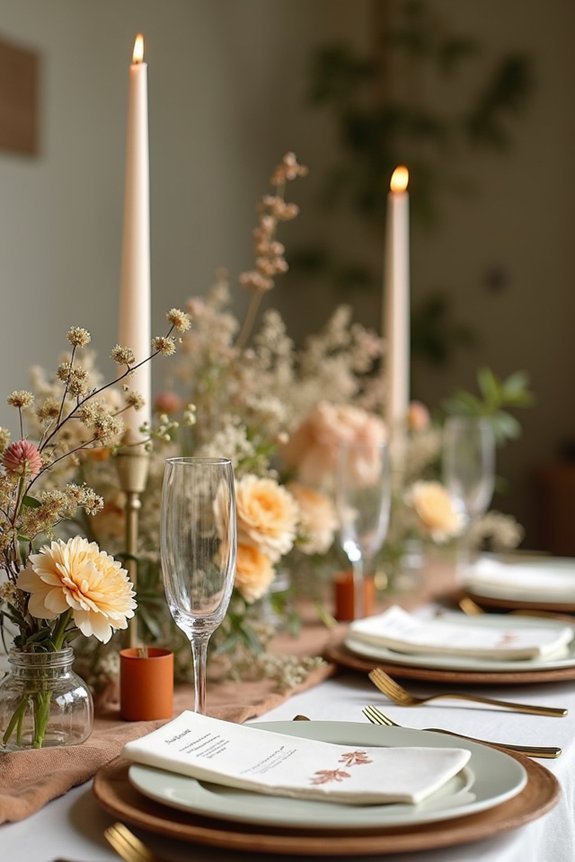
The beauty of rustic design lies in its ability to feel both refined and approachable—and we can absolutely achieve this balance in our color palette.
We’re combining warmth with elegance by layering our neutrals strategically and selecting accent colors thoughtfully.
Consider these elements to elevate your palette:
- Pair warm beiges with cool grays for sophisticated contrast
- Introduce jewel tones like emerald or sapphire for unexpected richness
- Use metallics sparingly to add polish without losing authenticity
- Balance earthy browns with crisp whites for visual breathing room
This approach lets us create a wedding that feels both inviting and intentional, where every color choice supports our overall vision. Accessorize your rustic aesthetic with complementary bridal pieces like silver and gold hair vines that echo your chosen metallics and add the perfect finishing touch.
Test Your Colors Before Committing
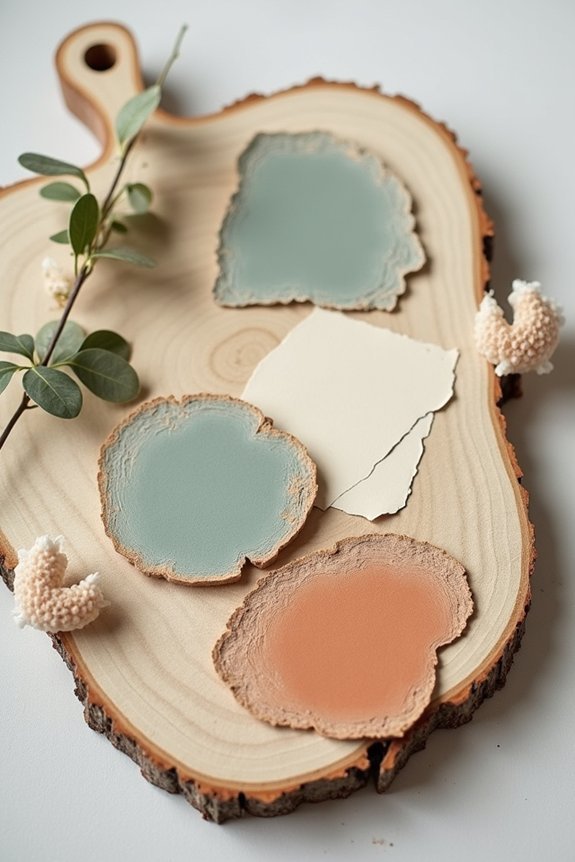
How do we determine if our carefully curated palette will actually work in real life? We test it.
Gather fabric swatches, paint samples, and photos in your venue’s lighting at different times of day. Notice how colors shift under natural sunlight versus evening lamps.
Pin samples together on a board to see how they harmonize. Take photos with your phone’s camera—it reveals what your eye might miss.
Consider how your color palette complements architectural elements like wedding arch frames, which can significantly influence the overall aesthetic of your venue.
Ask trusted friends for honest feedback. This process prevents expensive regrets and confirms your palette creates the sophisticated, warm atmosphere you’re imagining for your special day.
Apply Your Palette Across Every Detail
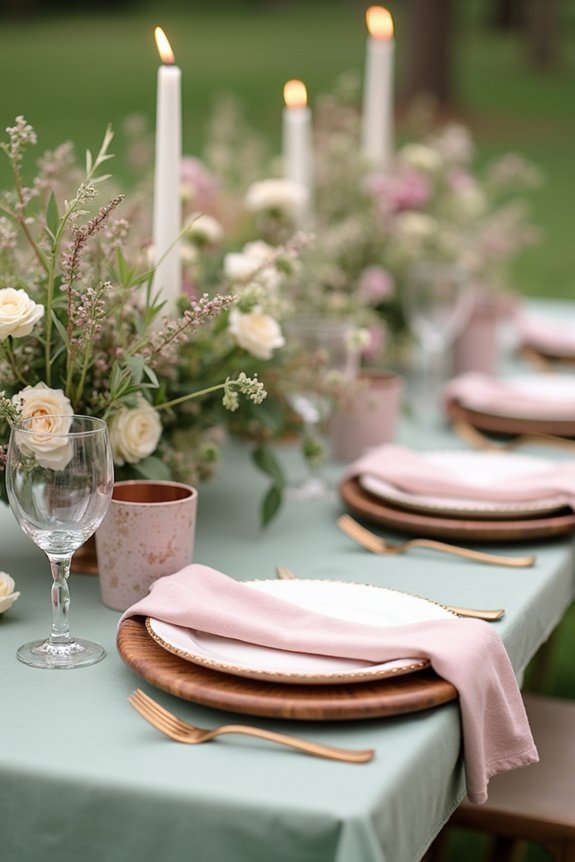
Now that you’ve confirmed your palette works beautifully in your venue’s light, it’s time to weave those colors throughout every element of your wedding day.
This consistency creates a cohesive, intentional experience that feels magazine-worthy.
Consider these applications:
- Florals and greenery: Layer your colors through bouquets, centerpieces, and installations.
- Linens and décor: Use tablecloths, runners, and napkins to anchor your scheme.
- Stationery: Extend colors through invitations, menus, and signage.
- Attire and accessories: Coordinate bridesmaid dresses, groomsmen ties, and personal touches.
Your welcome sign should feature high contrast colors that make your chosen palette immediately recognizable as guests arrive at your venue.
When your palette flows seamlessly from ceremony to reception, it elevates every detail, transforming your vision into reality without requiring constant decision-making.
Source Your Colors: Finding Flowers, Linens, and Décor
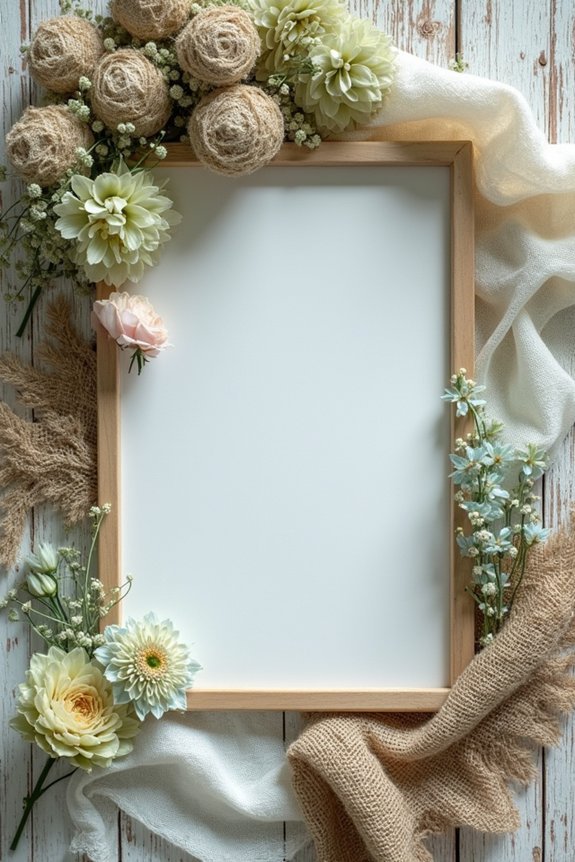
Once you’ve chosen your palette, finding the right flowers, linens, and décor pieces that truly capture those colors becomes the fun part—and we’re here to make it easier.
Start by visiting local florists with your color swatches in hand; they’ll suggest seasonal blooms that match perfectly. For linens, explore specialty rental companies that offer natural fabrics in earthy tones.
Don’t overlook thrift stores and antique shops for unique décor pieces that feel authentically rustic. Pinterest boards and wedding magazines provide inspiration for sourcing ideas.
Request samples before committing, ensuring colors photograph beautifully and feel right in person.
Frequently Asked Questions
How Do I Choose Between Warm and Cool Undertones in Rustic Color Palettes?
We’d recommend considering your venue’s natural lighting and existing architectural elements first. Warm undertones complement golden hour photography, while cool tones enhance moody, intimate settings. Choose what resonates with your personal style.
What’s the Difference Between Rustic and Farmhouse Wedding Color Schemes?
Ever wondered why farmhouse feels brighter than rustic? We’ve found that farmhouse palettes embrace whites, creams, and pastels, while rustic schemes lean into deeper, earthier tones like burgundy, forest green, and weathered browns.
Can I Use Bold Accent Colors Without Compromising the Rustic Aesthetic?
Absolutely—we recommend grounding bold accents in earthy neutrals. Deep jewel tones, burnt orange, or navy work beautifully against cream, taupe, and weathered wood. You’re maintaining rustic integrity while adding sophistication and visual interest throughout your celebration.
How Many Colors Should a Rustic Wedding Palette Realistically Include?
We’d love to tell you seventeen colors work beautifully together—they don’t. Stick with three to five: a base neutral, two complementary tones, and one accent. You’ll create cohesion we’re actually jealous of.
Should My Engagement Photos Match My Wedding Color Palette Exactly?
We’d say no—your engagement photos don’t need to match exactly. They’re your story before the wedding day. Choose outfits and settings you love; we’ll weave those colors into your palette naturally.