We can transform your dinner table into a warm Tuscan retreat by layering rich terracottas, golds, and creamy whites across quality linens. Add texture with lace overlays and burlap runners, then anchor the setting with rustic dinnerware and amber glassware. Candlelight at varying heights creates that essential soft glow, while olive branches and seasonal blooms in muted tones complete the Mediterranean feel. Thoughtful place cards tie everything together beautifully, and we’ve got strategies to help you master each element.
At a Glance
- Combine warm terracottas, deep golds, and burgundies with creamy whites and soft greens for authentic Tuscan color harmony.
- Layer crisp linen, delicate lace, and rustic burlap textures to enhance visual interest and balance sophistication with rustic appeal.
- Use varying heights of candles, amber glassware, and olive branch centerpieces to create warm, inviting Mediterranean ambiance.
- Design personalized place cards with hand-lettering, watercolor washes, and natural elements for cohesive aesthetic coordination throughout the table.
- Plan preparation four weeks ahead, gathering linens and materials, then designing cards and setting the table systematically beforehand.
Start With Your Tuscan Color Palette
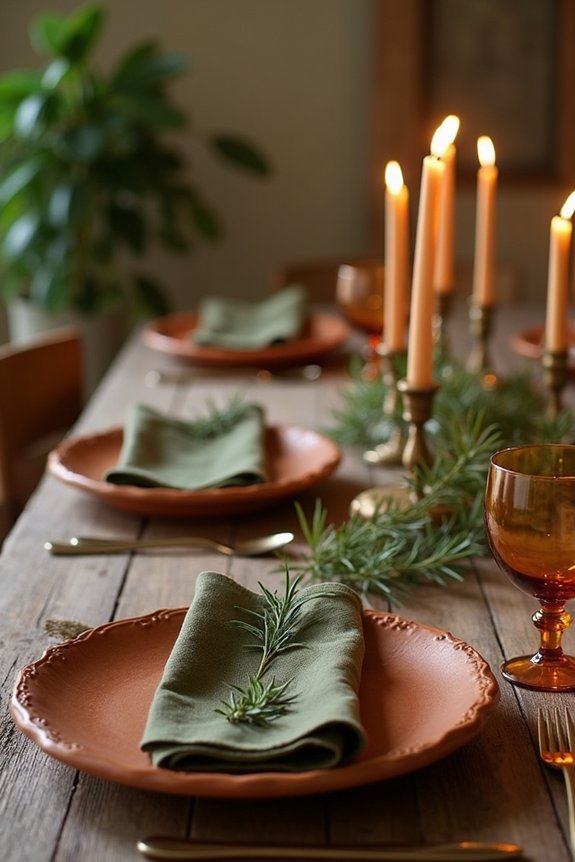
Because color sets the entire mood for your dinner party, choosing the right Tuscan palette is where your design journey truly begins.
We love working with warm terracottas, deep golds, and rich burgundies that capture the essence of the Italian countryside. These colors create an inviting atmosphere that feels both elegant and comfortable.
Pair them with creamy whites and soft greens for balance. Consider your lighting too—candlelight will deepen these hues beautifully, much like how luxurious fabrics such as satin and silk enhance the elegance of your tablescape through their natural luminosity.
Start by selecting two or three main colors, then layer in neutrals. This approach keeps your table cohesive without feeling overwhelming or overdone.
Choose Your Base Linens (The Foundation)
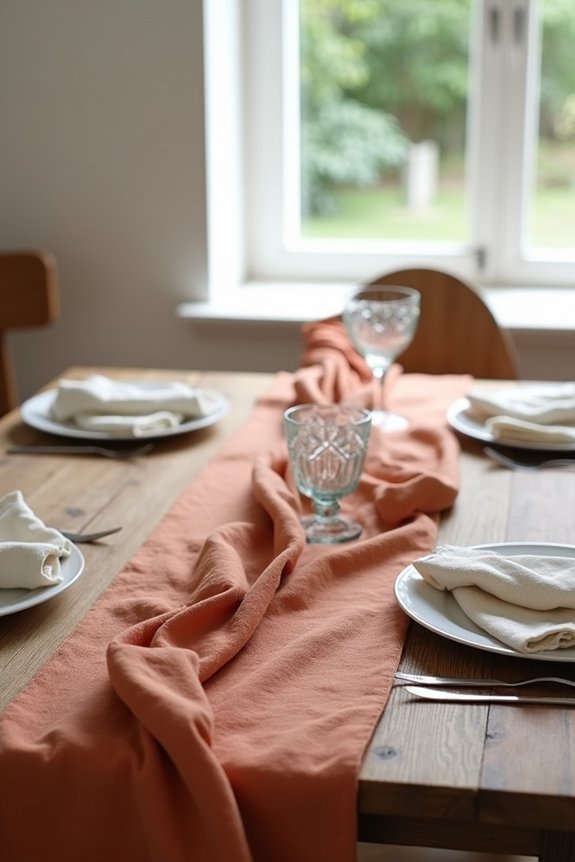
Your linens are the canvas upon which every other element will sit, so selecting the right base matters more than you might think.
We recommend considering these essential choices:
- Linen fabric for its natural texture and elegant drape
- Warm neutrals like cream, ivory, or soft taupe that complement your color palette
- Tablecloth size that allows proper overhang without excess bunching
- Quality weight that feels substantial and holds its shape beautifully
Choose linens that feel luxurious beneath your fingertips.
They’ll anchor your entire table design while letting your other decor elements shine authentically. Creating a cohesive aesthetic across all your table details is easier when you use a comprehensive planning checklist to organize your design decisions.
Layer Textures: Linen, Lace, and Burlap
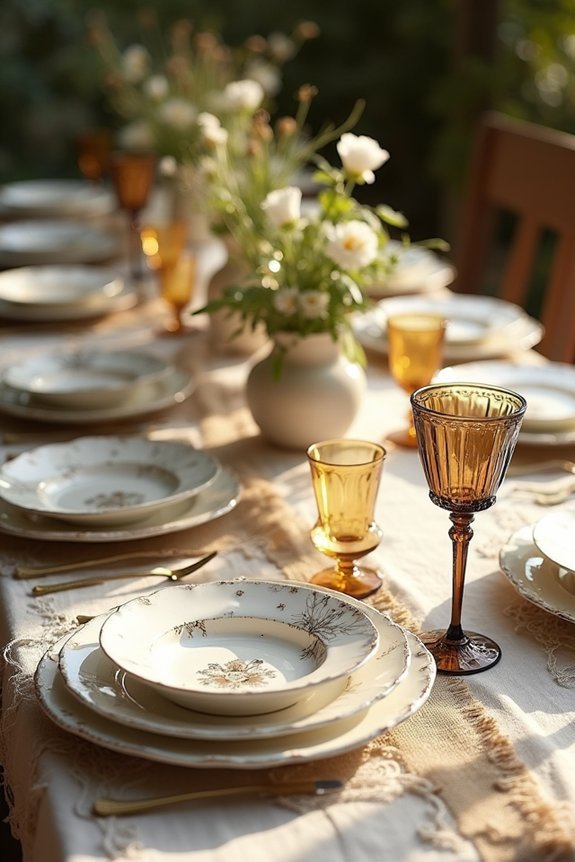
Now that you’ve established your foundation with luxurious linens, it’s time to build visual interest through layering.
We recommend combining three key textures: crisp linen, delicate lace, and rustic burlap. Start with your base linen, then add lace overlays for elegance and softness. Drape burlap as a runner down the table’s center for authentic Tuscan charm.
This combination balances sophistication with rustic appeal, creating depth and dimension. The textures work together beautifully—lace softens burlap’s rough edges, while burlap grounds lace’s delicacy.
Layer thoughtfully, letting each texture breathe rather than overwhelming your table with too many competing fabrics. For larger gatherings, ensure your table size and dimensions can accommodate multiple layers without appearing cluttered.
Your Table Runner: Statement Piece or Subtle Layer?
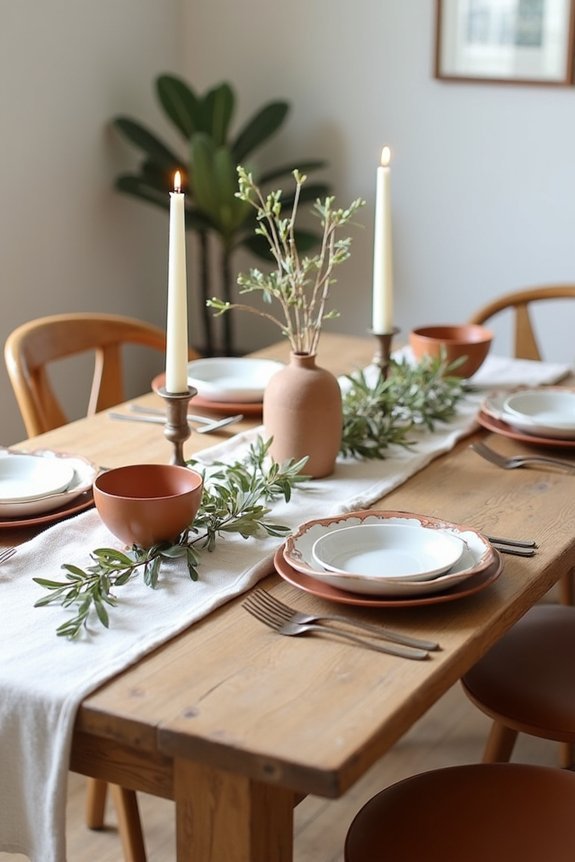
One of the most impactful decisions we’ll make when styling a Tuscan table comes down to choosing our table runner’s role—and honestly, this choice transforms the entire look.
We can either anchor the design or enhance it subtly, depending on what we’re envisioning.
Consider these options:
- Neutral linen: Lets other textures and florals shine
- Patterned fabric: Adds visual interest and a focal point
- Metallic accents: Introduces warmth and elegance
- Layered runners: Creates depth with multiple complementary fabrics
Our choice depends on how bold we want to go. Just as color coordination matters for wedding welcome signs, the right table runner color should complement your overall Tuscan palette to create a cohesive atmosphere.
A statement runner works beautifully when we’re keeping place settings simple, while subtle runners invite attention toward centerpieces and dinnerware instead.
Match Your Dinnerware to Your Palette
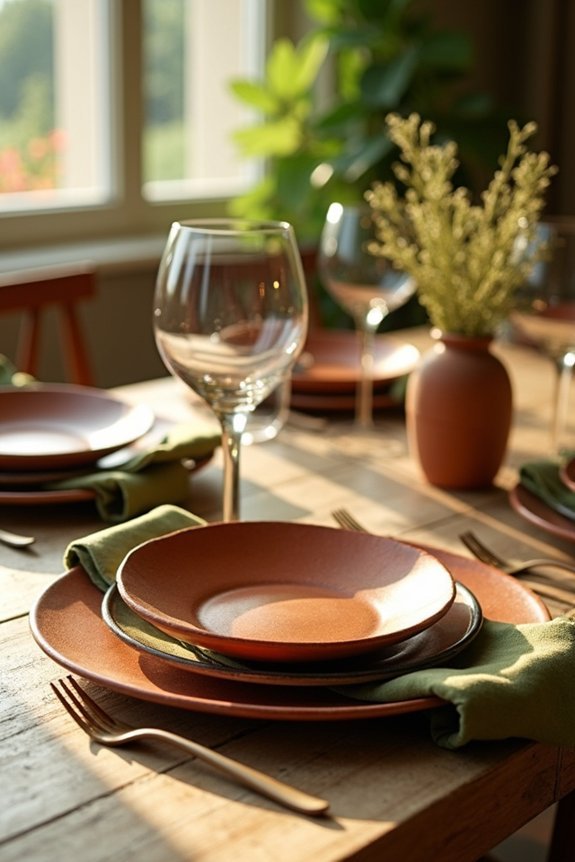
Once we’ve settled on our table runner, the dinnerware becomes the next essential layer in bringing our Tuscan vision to life.
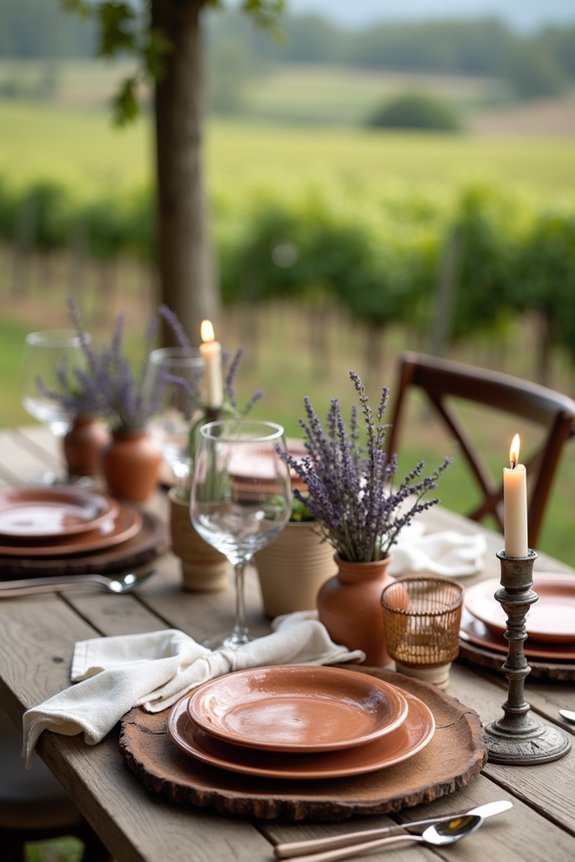
We’ll want to choose plates that complement our color palette beautifully. Cream, soft whites, and warm earth tones work wonderfully for rustic Tuscan settings.
Consider mixing textures—perhaps pairing smooth ceramic with slightly textured plates for visual interest.
If our palette includes terracotta or ochre accents, we can select dinnerware with subtle patterns or glazed finishes that echo those warm hues.
Mismatched vintage pieces can add authentic charm while maintaining cohesive color harmony throughout our tablescape.
For outdoor dining, consider pairing your Tuscan table setting with a wood pergola structure to create an elegant garden atmosphere that frames your rustic dinnerware beautifully.
Pick Glassware That Feels Tuscan, Not Formal
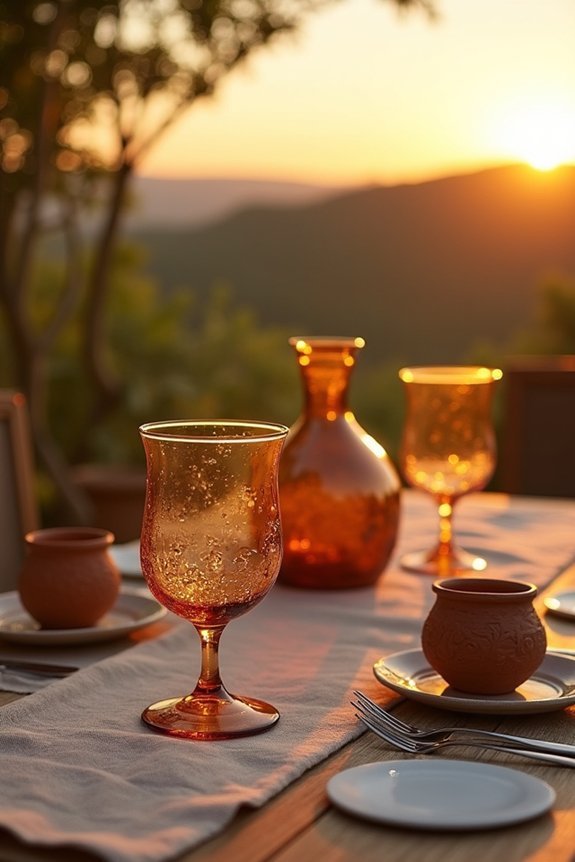
With our dinnerware settled into place, we can turn our attention to the glassware that’ll frame each sip and toast throughout the evening.
The right glasses transform your table from formal to invitingly rustic. We’re looking for pieces that feel organic and lived-in:
- Handblown or textured glass with slight imperfections
- Amber or smoky tones that echo Tuscan vineyards
- Varied heights and styles across your place settings
- Simple, unadorned rims without decorative etching
These choices ground your table in warmth and authenticity.
Skip uniform, matching sets that feel stuffy. Instead, embrace glassware with character—pieces that whisper stories of Italian countryside gatherings where comfort matters more than perfection.
Flatware Placement: Where Everything Goes
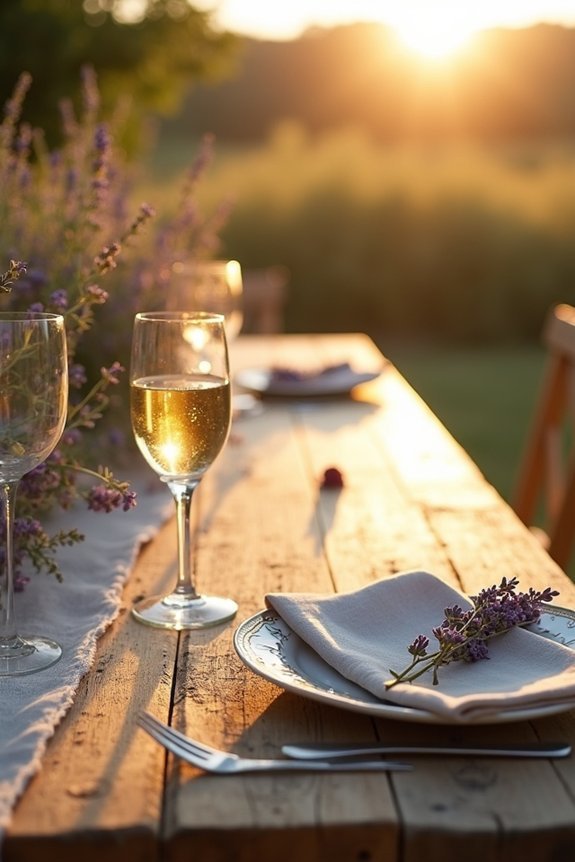
Now that your glassware’s gleaming above each plate, let’s talk about the silverware that’ll guide your guests through each course.
We’ll place forks on the left and knives on the right, with spoons furthest right. Work from the outside in—your guests naturally know to use the outermost utensils first.
For a Tuscan dinner, we can keep this beautifully simple with just a dinner fork and knife, adding a salad fork if needed. This intentional placement feels effortless and elegant, letting your guests relax and enjoy the meal without confusion or stress.
Fold and Style Your Napkins
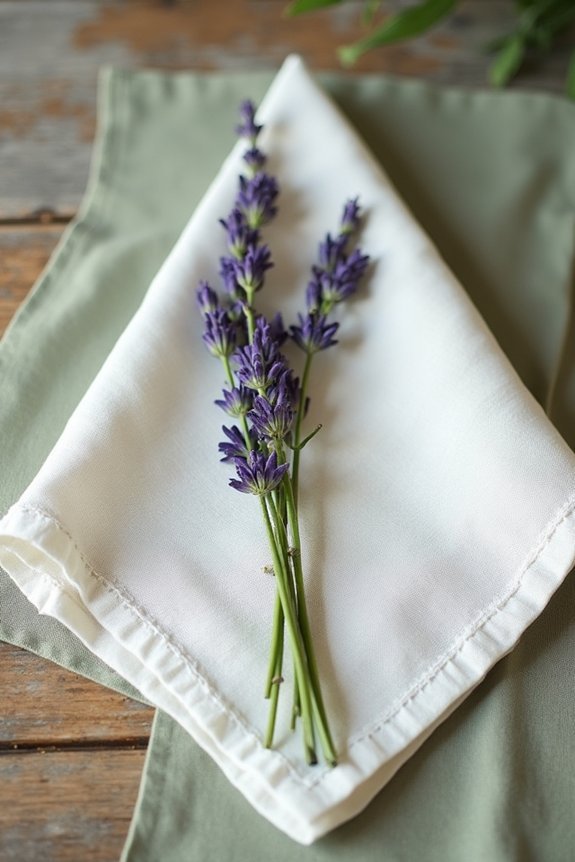
The napkin might seem like a small detail, but it’s actually one of the most noticeable elements on your table—and it’s where we can inject personality into your Tuscan setting.
We love these folding options for rustic elegance:
- Simple triangle fold – Fold your napkin diagonally, then drape it across the plate for understated sophistication
- Loose knot – Tie a soft knot for relaxed charm that feels authentically Tuscan
- Casual bundle – Roll the napkin loosely and secure with twine or fresh herbs for natural appeal
- Pocket fold – Create a pocket to tuck a sprig of rosemary or bread for functional beauty
Build Your Centerpieces: Height, Proportion, and Balance
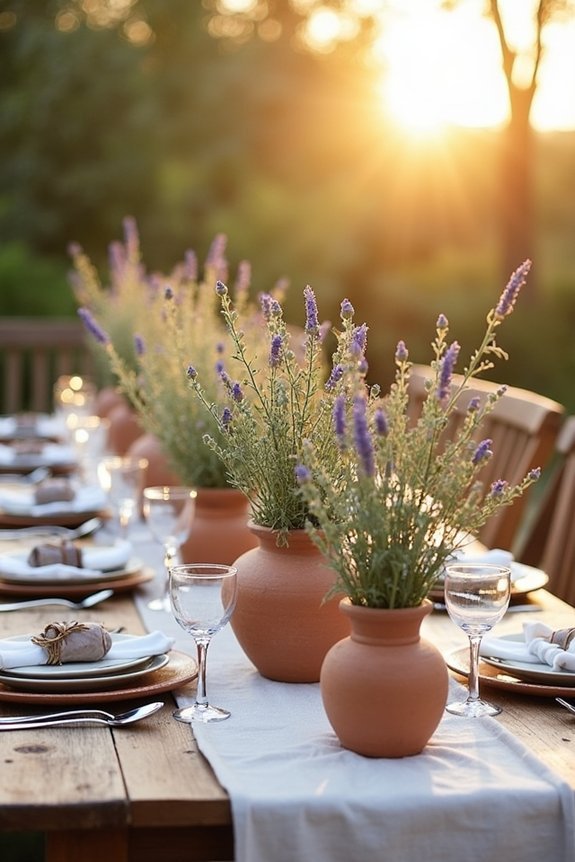
Once your napkins are beautifully styled, it’s time to focus on what’ll anchor your table—the centerpiece.
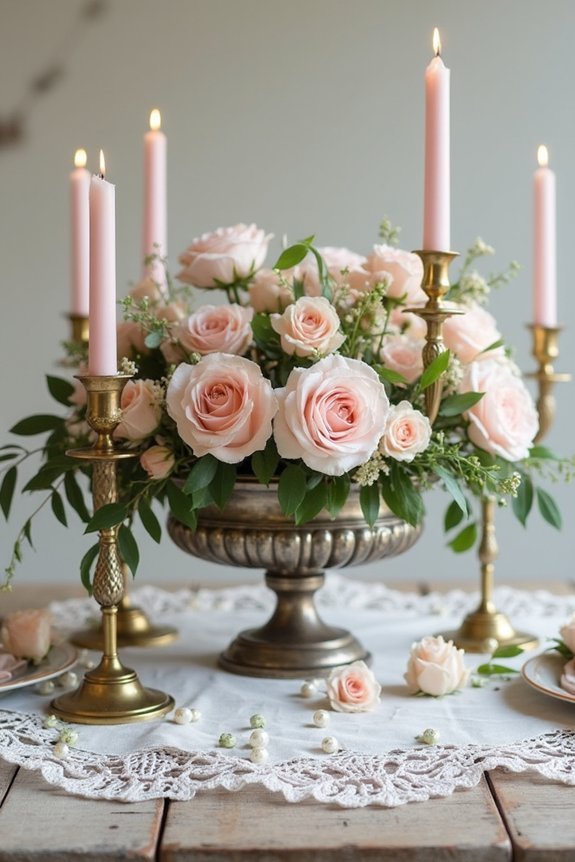
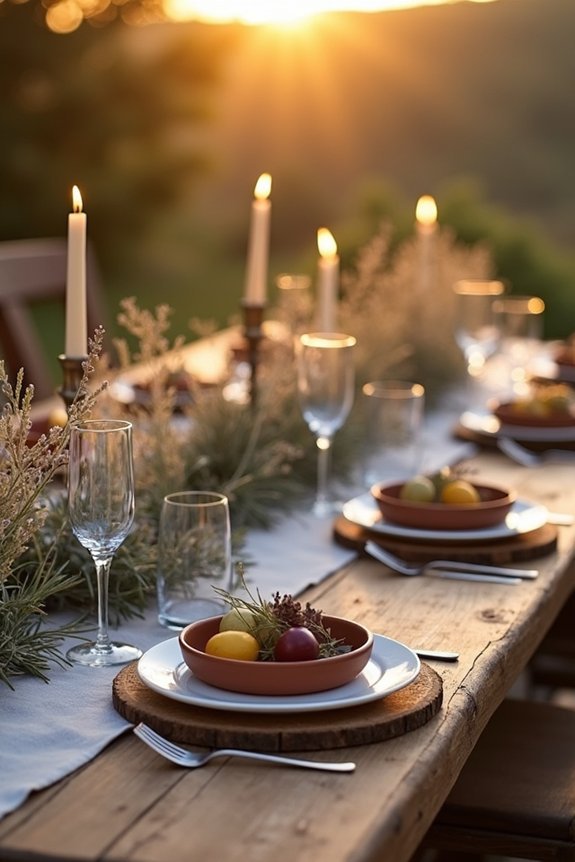
We recommend varying heights to create visual interest and draw the eye around your arrangement. Place taller elements like branches or candles toward the back, then layer shorter flowers and greenery in front. This tiered approach prevents guests from feeling blocked during conversation.
Balance is equally important: distribute visual weight evenly across the centerpiece so it doesn’t look lopsided.
Consider your table’s width too—centerpieces should occupy roughly one-third of the space, leaving room for place settings and food.
Fresh Florals and Greenery: What Actually Works
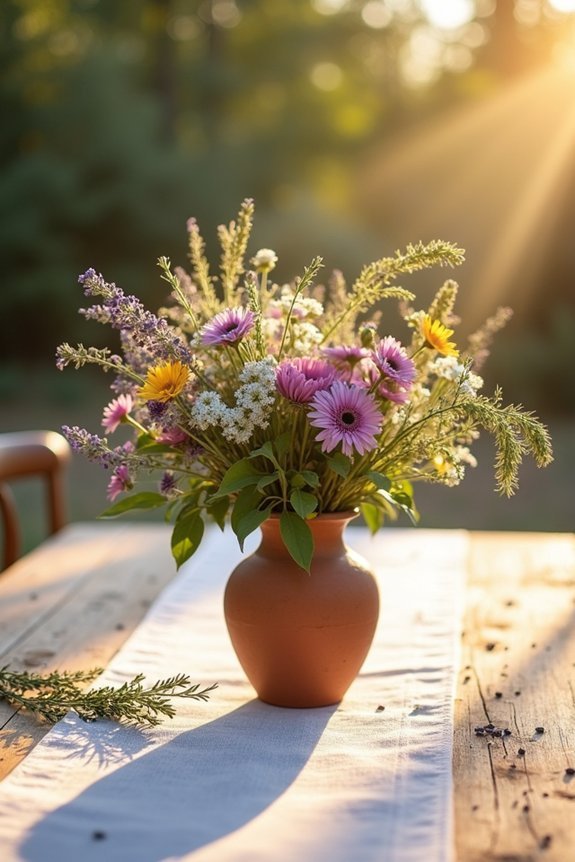
When we’re building a Tuscan-inspired tablescape, the flowers and greenery we choose make all the difference between a centerpiece that feels alive and one that falls flat.
We recommend focusing on these elements:
- Olive branches – their silvery-green leaves add authentic Mediterranean charm
- Dried wheat or grasses – they bring texture and warmth without wilting
- Seasonal blooms – roses, lavender, or sunflowers in muted tones feel naturally elegant
- Mixed greenery – eucalyptus, Italian ruscus, or bay leaves create fullness
Stick with a soft color palette of creams, sage, and dusty rose.
This approach keeps your arrangement looking fresh throughout your dinner party while maintaining that effortless, rustic sophistication you’re after.
Candlelight: Why It Matters and How to Layer It
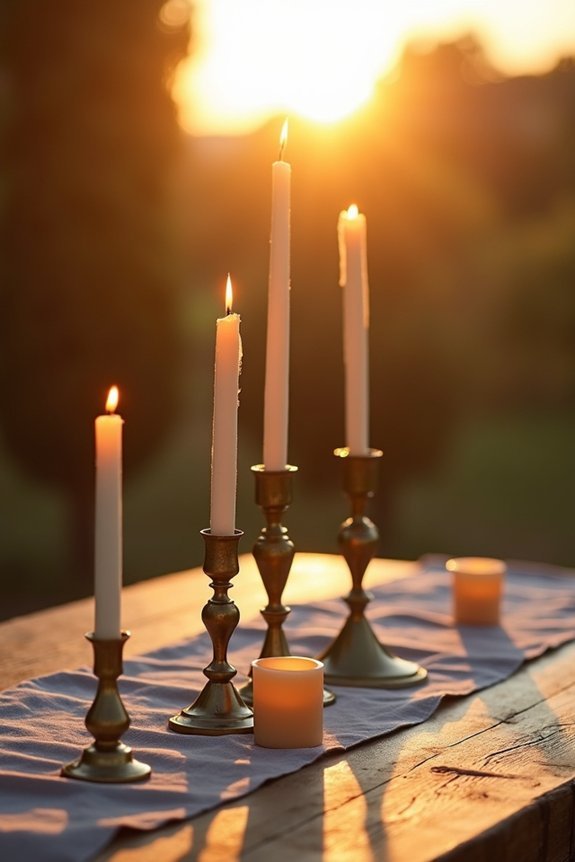
Your florals and greenery set the stage beautifully, but here’s what truly transforms a Tuscan dinner table into something magical: candlelight.
We layer it by mixing heights and styles—tall tapers in vintage candelabras, votives nestled among centerpieces, and tea lights scattered across the table. This variation creates depth and prevents flatness. The warm glow softens everything, making guests feel relaxed and cherished.
We recommend unscented candles so they won’t compete with your food or florals. Start lighting them thirty minutes before guests arrive, allowing the ambiance to build naturally.
The result? An intimate, sophisticated atmosphere that photographs beautifully and feels utterly intentional.
Lighting Beyond Candles: Lanterns and String Lights
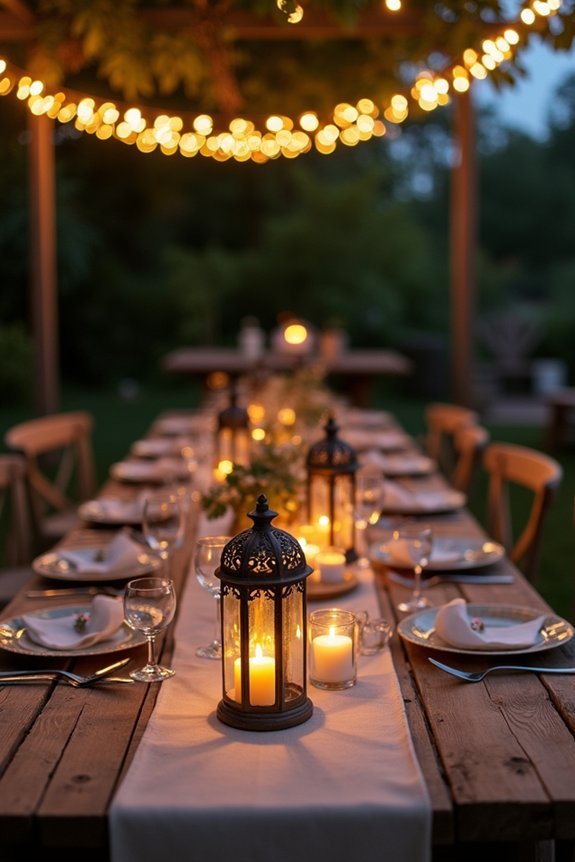
While candlelight creates that intimate glow we love, layering in lanterns and string lights gives us the flexibility to illuminate larger spaces and extend that magic beyond the immediate table.
Consider these lighting additions:
- Moroccan lanterns positioned on side tables or hung from pergolas for dramatic shadows
- Warm-white string lights strung overhead to define the dining area and create visual boundaries
- Lantern centerpieces combining candles with glass holders for soft, contained light
- Solar-powered options for outdoor spaces that require no electrical setup
These elements work beautifully together, allowing us to design layered lighting that feels intentional and sophisticated while keeping our dinner party manageable and stress-free.
Design Place Cards That Match Your Aesthetic
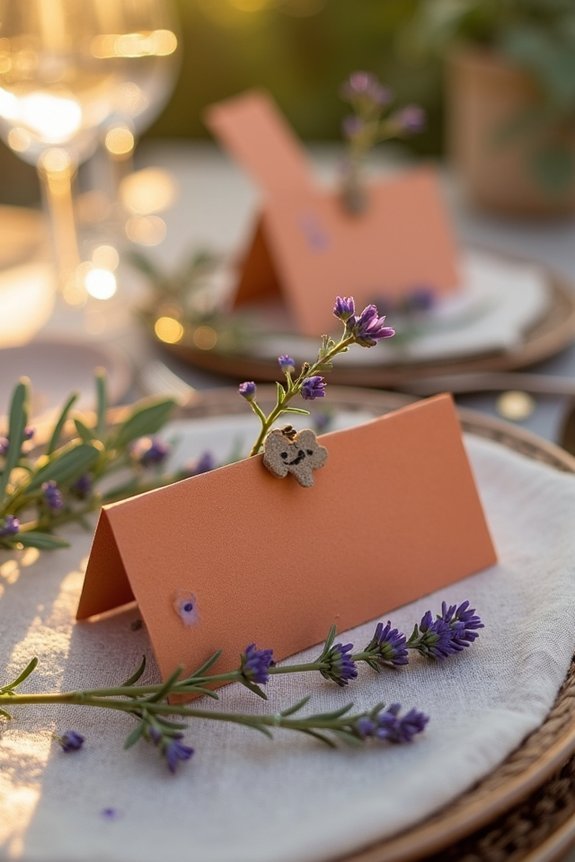
Place cards serve as both a practical guide and a design element that ties your whole aesthetic together, so we’ll want them to feel intentional and beautifully coordinated with everything else on your table.
Consider hand-lettering names on kraft cardstock for an organic, rustic feel, or try watercolor washes in warm terracottas and ochres. You might incorporate natural elements like pressed herbs, dried flowers, or twine for texture.
If you’re seeking sophistication, calligraphy on cream cardstock pairs beautifully with your Tuscan vibe.
Whatever style you choose, consistency matters—repeat your chosen design across all cards to create visual harmony that pulls your entire tablescape together.
Timeline: How to Prep Your Table Without Stress
If you’re wondering when to start pulling your tablescape together, the good news is that we can break this into manageable chunks spread across several weeks.
Here’s how we’d approach it:
- Four weeks before: Gather linens, centerpiece containers, and place card materials
- Two weeks before: Design and print place cards; arrange flowers if using fresh blooms
- One week before: Polish glassware and flatware; iron linens
- Day before: Set the table completely, then make minor adjustments morning-of
This staggered approach prevents last-minute scrambling and lets us enjoy the process rather than stress about it.
Frequently Asked Questions
How Do I Adapt These Tuscan Ideas for a Smaller Dining Table or Apartment Setting?
We’re absolutely *obsessed* with proving that Tuscan elegance doesn’t require a sprawling villa. Scale down your runner, layer fewer place settings, and let a single statement centerpiece do all the heavy lifting. You’ve got this.
What Budget Should I Realistically Expect for a Beautiful Tuscan Table Setting?
We’ve found you can create a stunning Tuscan table for $75–$150 per person, depending on whether you’re sourcing vintage pieces or investing in new linens, ceramics, and centerpieces.
Can I Recreate This Look Using Mostly Items I Already Own at Home?
We’ve found that you’ll absolutely recreate this aesthetic using what you’ve got—layering existing linens, repurposing glassware, and incorporating natural elements from your garden transforms any table into sophisticated Tuscan elegance.
How Far in Advance Should I Shop for Flowers and Perishable Table Décor Elements?
We recommend shopping for flowers and perishables 1-2 days before your event. This timing guarantees they’re fresh, vibrant, and at their peak when your guests arrive. You’ll minimize wilting and maintain that magazine-quality look you’re after.
What’s the Best Way to Protect My Linens and Centerpieces During the Actual Dinner Service?
We recommend using table runners strategically to shield linens from spills, and positioning centerpieces slightly off-center so servers can navigate easily. Clear charger plates protect beneath place settings too.