We’d love to help you create a stunning spring bouquet that perfectly captures your vision. Start by choosing a style that complements your dress and wedding setting, then build your structure with greenery, focal flowers, and delicate fillers. Select blooms with rich colors and interesting textures that’ll photograph beautifully. Don’t forget to coordinate your palette with your venue and keep those flowers hydrated throughout the day. The details about layering textures and maintaining freshness will transform your bouquet into something truly magical.
At a Glance
- Match bouquet shape to your dress silhouette and wedding vision for a cohesive, polished appearance.
- Build structure with greenery foundation, focal flowers for shape, secondary blooms for fullness, and filler for texture.
- Select spring flowers with rich colors, interesting textures, and matte finishes that photograph beautifully.
- Choose soft pastels for romance or bold jewel tones for drama, considering venue lighting and dress.
- Keep flowers fresh by coordinating florist delivery near ceremony time and maintaining hydration throughout the day.
Choose Your Spring Wedding Bouquet Style (Based on Dress and Wedding Vision)
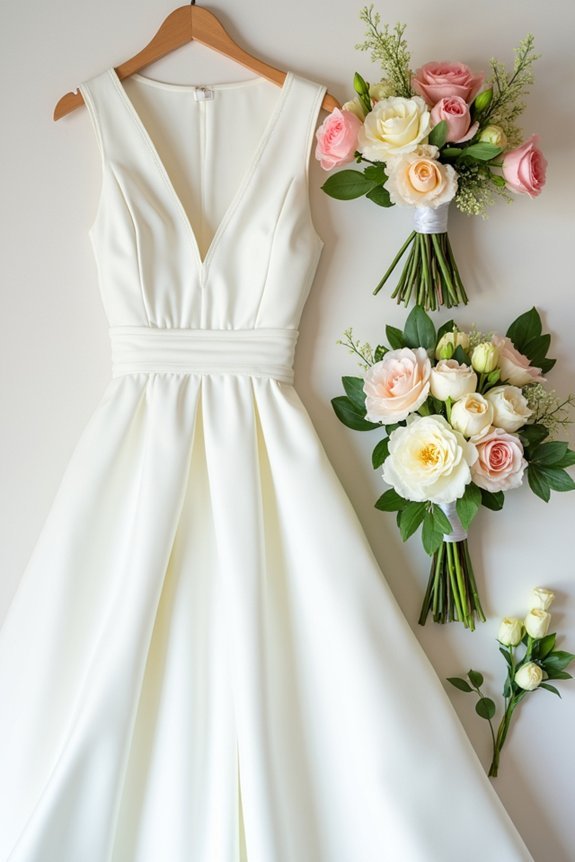
Your bouquet is one of the most visible expressions of your wedding style, so it’s worth choosing a shape and aesthetic that’ll complement everything you’ve envisioned for your day.
We recommend considering your dress silhouette first—a structured, romantic gown pairs beautifully with lush, rounded bouquets, while sleek, modern dresses shine alongside linear or asymmetrical arrangements.
Think about your overall wedding vision too. A garden party calls for loose, organic textures, whereas a formal affair benefits from more controlled, architectural shapes.
Don’t forget that your bridal jewelry set should also coordinate with your bouquet style to create a cohesive and polished overall look.
Build Your Bridal Bouquet Structure: The Magazine-Ready Formula
Once you’ve settled on your bouquet’s overall shape and style, it’s time to build the actual structure—and we promise, there’s a simple formula that works every single time.
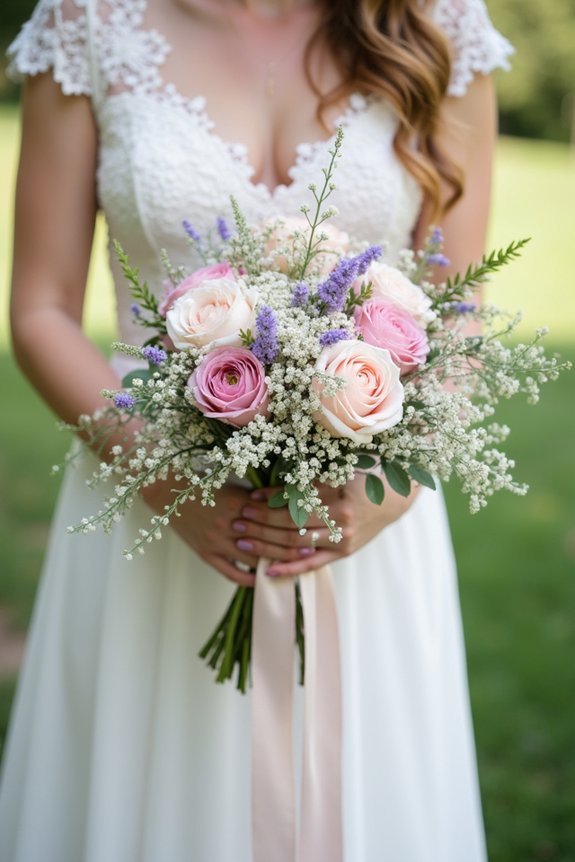
Start with greenery as your base, creating the foundation and volume. Layer in your largest focal flowers next, spacing them throughout to establish your bouquet’s shape. Fill gaps with secondary flowers, then add texture with smaller blooms and filler flowers.
Finally, integrate accent greenery between gaps for visual interest. This layered approach creates depth and movement, giving your bouquet that effortless, magazine-quality appearance that photographs beautifully. For couples seeking reusable alternatives, artificial flower wall panels offer the same lifelike silk flowers and design flexibility to create stunning bridal backdrops and bouquet inspirations.
Select Spring Flowers That Photograph Beautifully
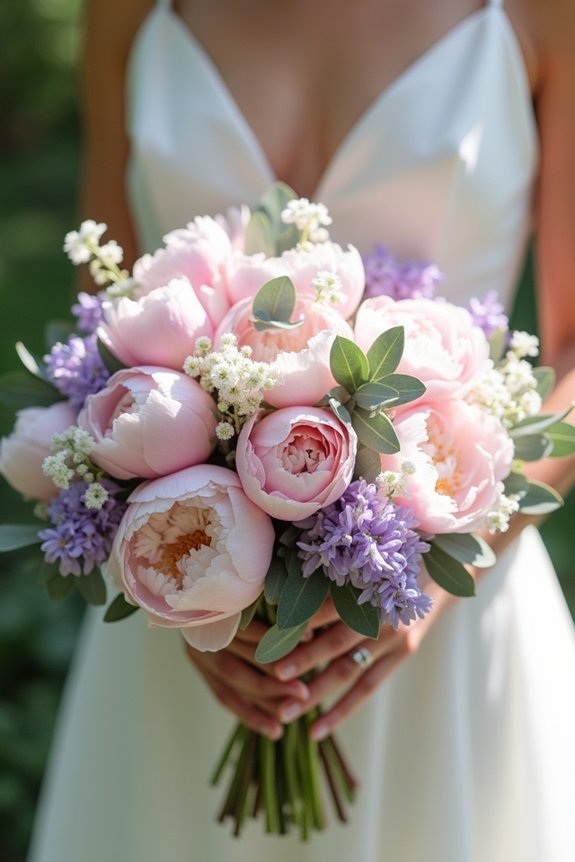
What makes a spring flower truly camera-ready? Blooms with rich, saturated colors photograph best—think garden roses in blush, ranunculus in cream, and tulips in jewel tones.
We want flowers with interesting textures that catch light beautifully, like garden roses’ layered petals or astilbe’s feathery plumes. Matte finishes photograph better than overly shiny surfaces, so skip waxy blooms when possible.
Fresh spring bulbs like hyacinths and fritillaria add unexpected visual interest. Choose flowers with clean stems and healthy foliage too—details matter in close-up shots.
These selections guarantee your bouquet looks as stunning in photos as it does in person. Using a wedding day timeline helps ensure you source and prepare your blooms at the optimal moment before your ceremony.
Choose Your Spring Wedding Bouquet Color Palette
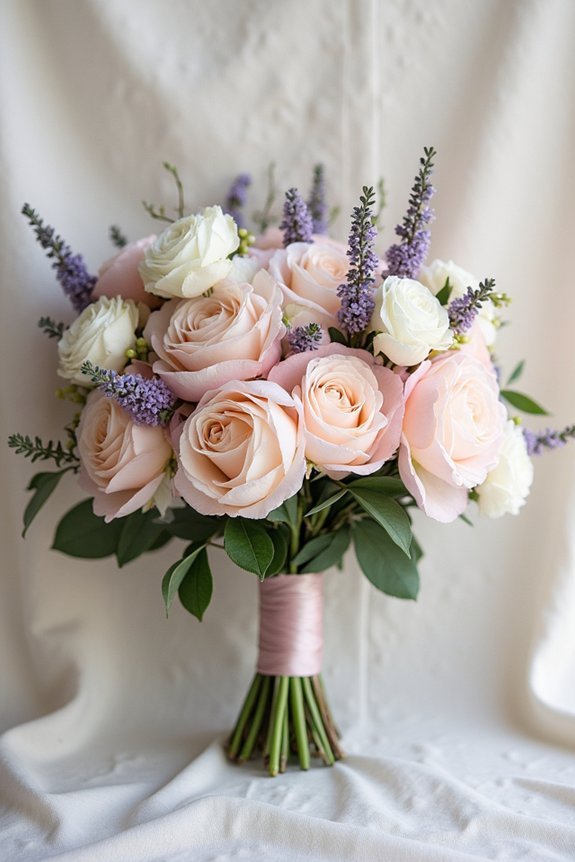
Now that we’ve selected flowers with camera-ready appeal, it’s time to think about the colors that’ll tie everything together. Your palette sets the tone for your entire wedding day.
Consider soft pastels like blush, ivory, and sage for a romantic, timeless feel. Or go bold with jewel tones—emerald, sapphire, and burgundy—for drama and sophistication.
Think about your venue’s backdrop and lighting. Spring allows endless possibilities, so choose colors that genuinely excite you and complement your dress. To complete your bridal look, consider pairing your bouquet with high-quality bridal hair accessories that echo your chosen color palette and wedding theme.
Your bouquet should feel like an extension of your vision, not an afterthought.
Layer Textures and Add Movement for Visual Impact
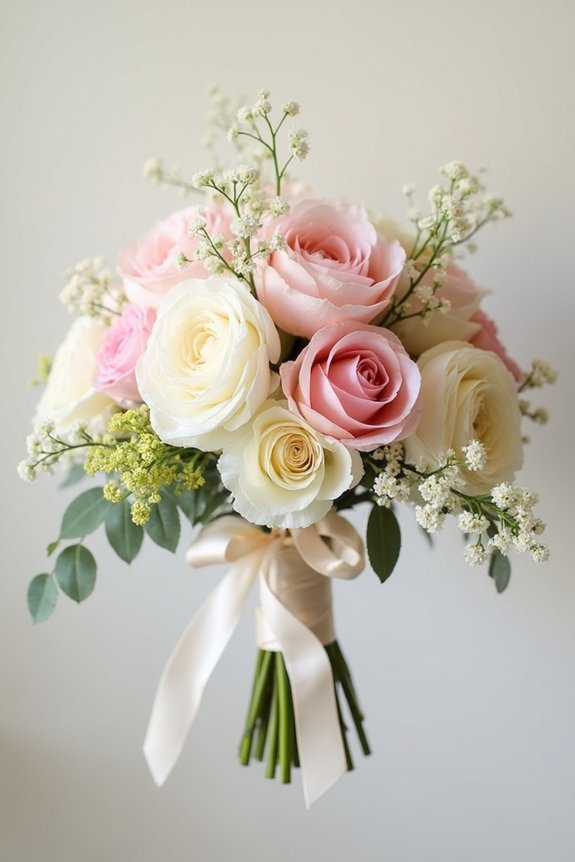
A bouquet with visual depth—one that draws the eye inward and makes people lean closer—combines varied textures that work together like a well-composed photograph.
We recommend layering these elements:
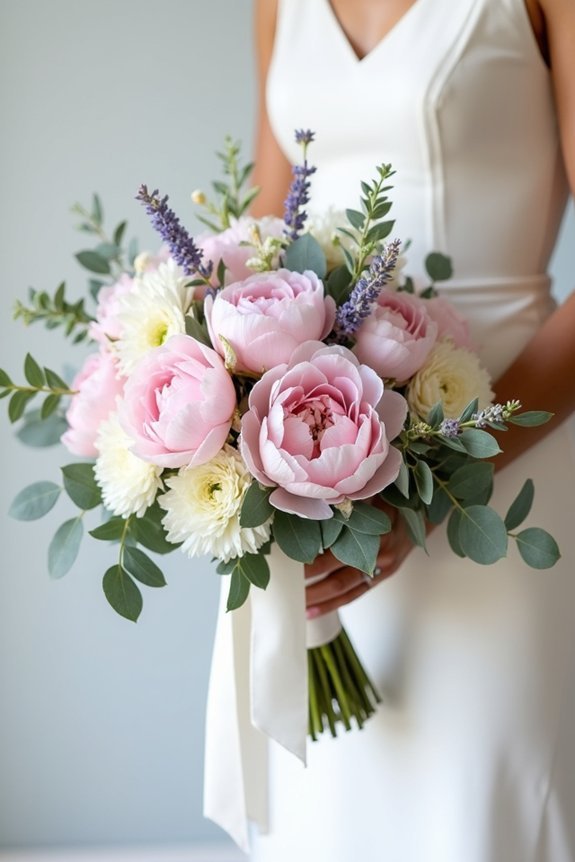
- Focal flowers (roses, peonies) as your anchor points
- Filler flowers (waxflower, astilbe) to add airiness and movement
- Greenery and branches (eucalyptus, ruscus) for structure and softness
Mixing soft blooms with spiky grasses or feathery ferns creates dimension that photographs beautifully.
We suggest positioning larger flowers slightly forward, then nestling smaller blooms and greenery around them.
This layering technique guarantees your bouquet feels organic and intentional, catching light from every angle. Consider complementing your bouquet with coordinating bridal accessories like hair vines with crystals to create a cohesive and elegant overall aesthetic.
Keep Your Flowers Fresh From First Look to Reception
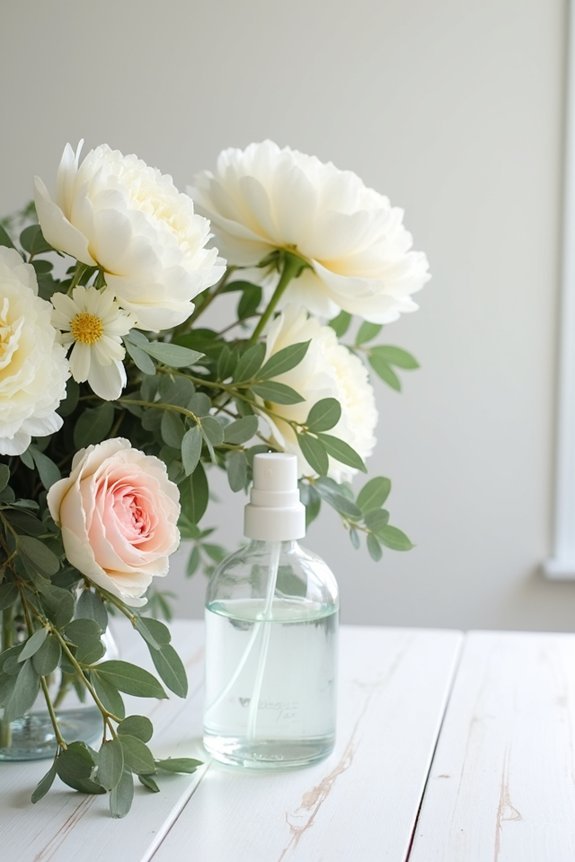
Since you’ve invested time layering textures and selecting the perfect blooms, keeping them fresh throughout your wedding day becomes just as important as the design itself.
We recommend having your florist deliver the bouquet as close to your ceremony as possible. Keep flowers in cool water until the last moment, then mist them lightly before photos. Ask your photographer to work quickly during your first look, and consider having a bridesmaid hold a small water bottle nearby.
For the reception, place your bouquet in a tall vase with fresh water between the ceremony and dancing. These simple steps preserve that just-picked beauty all day long.
Frequently Asked Questions
How Much Should I Budget for a Spring Wedding Bouquet?
We’ll tell you the secret florists don’t advertise: spring bouquets cost $75–$300, yet most couples overspend by choosing trendy blooms. We recommend budgeting $150–$200 for stunning, seasonal flowers without breaking the bank.
When Should I Order Flowers to Ensure Availability and Freshness?
We recommend ordering your spring wedding flowers 1-2 weeks before your wedding day. This timing guarantees we’ve got peak freshness and availability, especially since spring blooms are in high demand during peak season.
Can I Use Grocery Store Flowers Instead of a Florist?
We can absolutely use grocery store flowers—think of it like developing a Kodachrome photograph in your kitchen. You’ll need fresh stems, proper conditioning, and creative arrangement skills, but we’ll save substantially on costs this way.
How Do I Prevent My Bouquet From Wilting During Outdoor Photos?
We keep your bouquet fresh by misting it with water beforehand, wrapping stems in damp paper towels, and scheduling photos early morning when it’s cooler. You’ll want to avoid direct sun between shots.
What’s the Typical Weight and Size of a Bridal Bouquet?
We create bouquets weighing 8–12 pounds with 16–20 stems, resting comfortably in your hands. The lush, rounded shape fills your arms gracefully without exhausting you during photos and the ceremony.