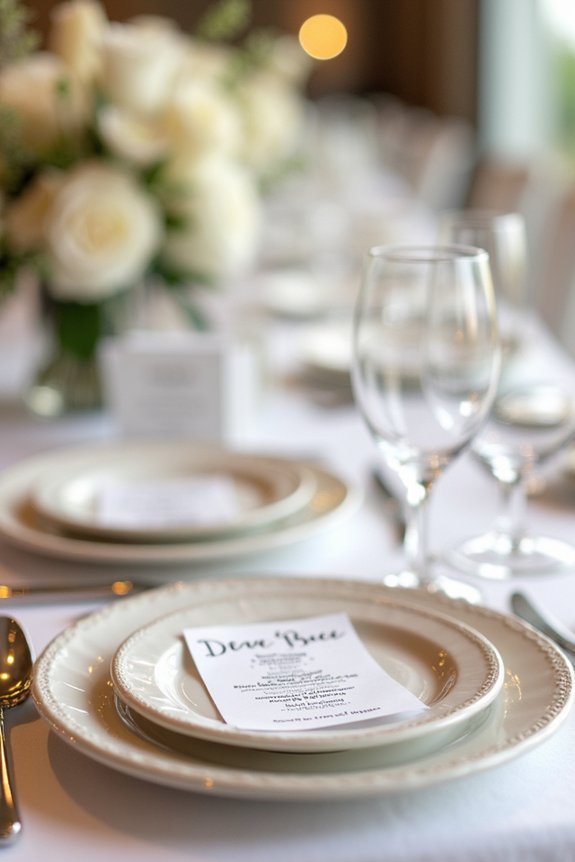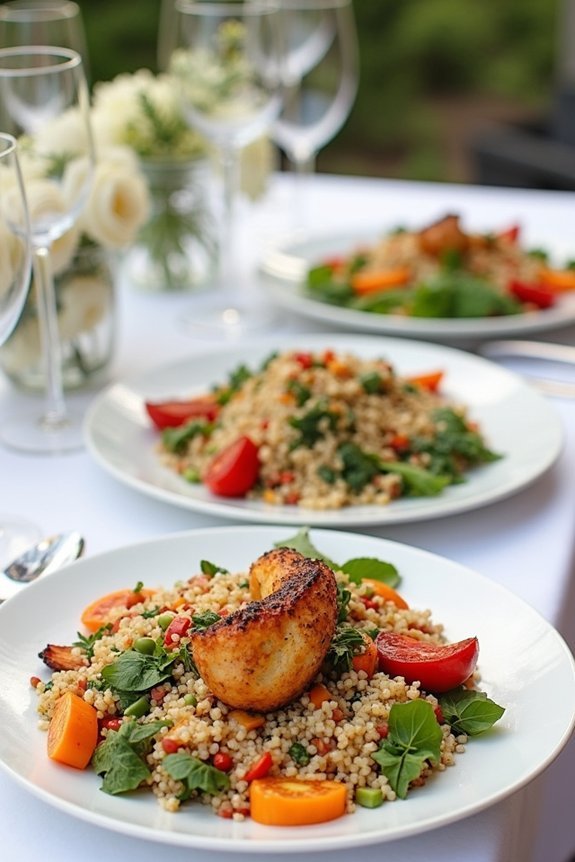
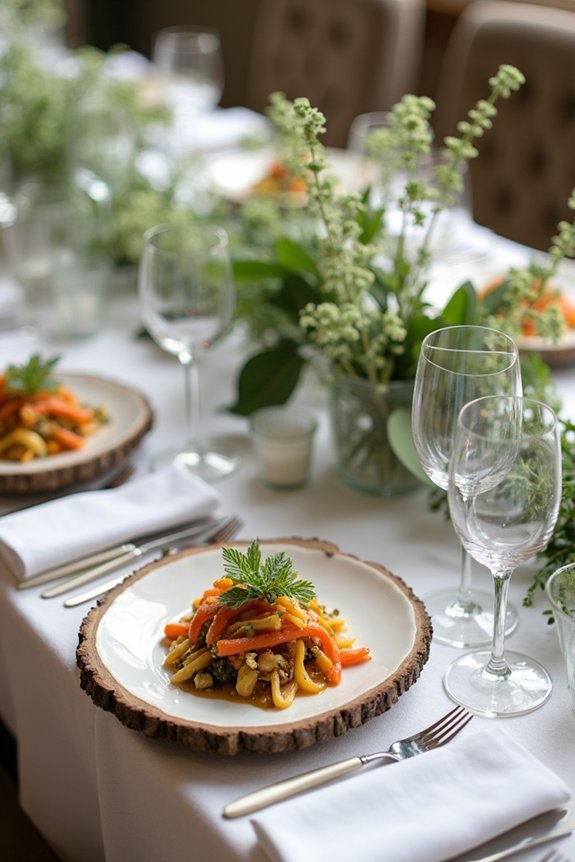
Planning a vegan wedding menu starts by choosing your style—whether elegant fine dining, casual family-style, or modern stations—that matches your celebration’s tone. Next, find a caterer who specializes in plant-based cooking and understands seasonal ingredients. Build your courses around what’s fresh right now, then pair wines thoughtfully with each dish. Don’t forget to gather detailed dietary information from guests to guarantee everyone feels included. We’ve got specific strategies for each step ahead.
At a Glance
- Choose a menu style (fine dining, family-style, or buffet) that aligns with your venue, guest count, and wedding atmosphere.
- Partner with a caterer specializing in vegan cuisine who sources fresh, seasonal ingredients and understands nutritional balance.
- Build your menu around seasonal produce available at your wedding date to maximize flavor and freshness.
- Pair wines strategically: lighter whites for appetizers, fuller bodies for mains, sparkling for plant-based dishes, and alcohol-free options.
- Collect dietary information via RSVP questionnaires and communicate final menus to caterers to ensure all guests enjoy inclusive dining.
Choose Your Vegan Menu Style
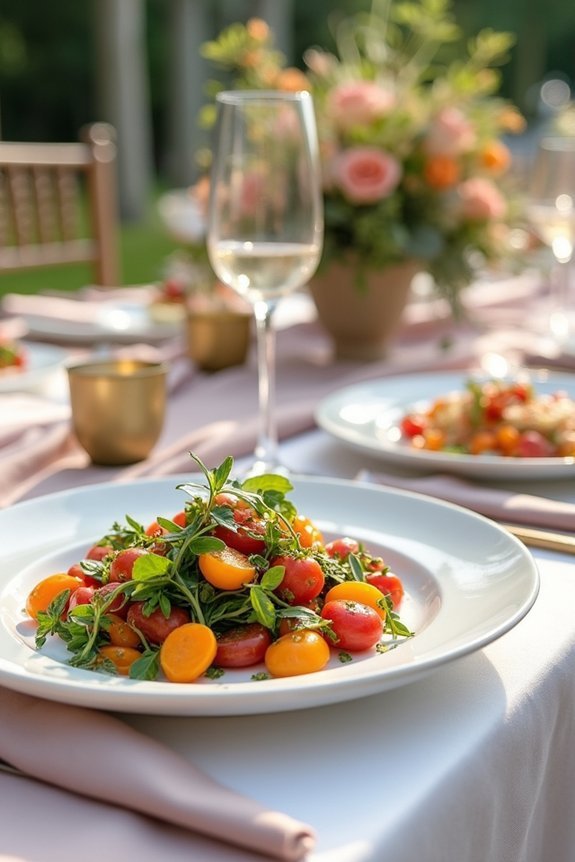
Before you immerse yourself in selecting specific dishes, let’s explore the different vegan menu styles that’ll help your wedding feel authentically *you*.
Think about what resonates with your celebration: elegant fine dining with multi-course plating, casual family-style that encourages sharing and connection, or modern buffet stations offering interactive choices. Each style sets a different tone. Fine dining feels formal and refined, family-style builds intimacy, and stations keep energy vibrant.
Consider your venue, guest count, and the atmosphere you’re creating. Your menu style should reflect your vision while ensuring every guest—vegan or not—enjoys a memorable meal that celebrates your values. Organizing your menu choices alongside your budget overview will help you align your culinary vision with your financial plan.
Find a Caterer Who Gets Vegan Cooking
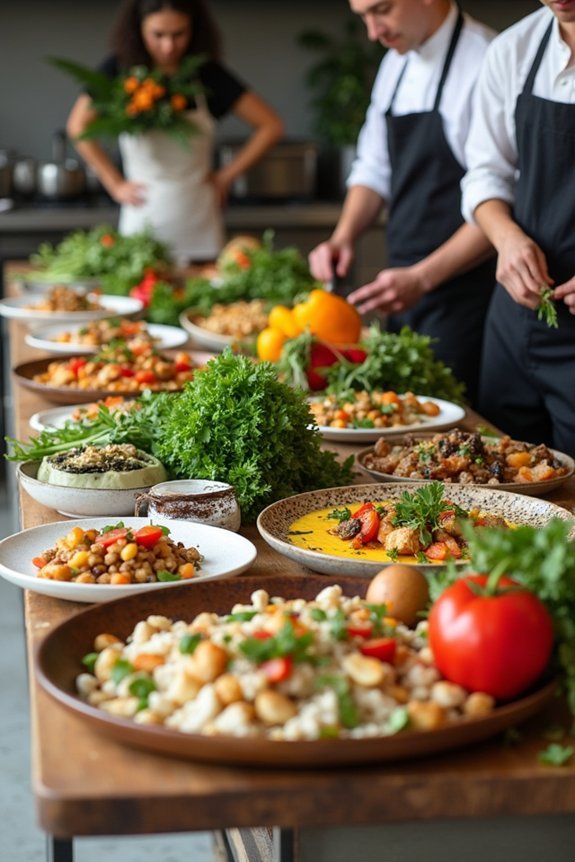
Once you’ve decided on your menu style, finding the right caterer becomes essential—and we can’t stress this enough: not all caterers understand vegan cooking the way you need them to.
You’ll want someone who celebrates plant-based cuisine rather than simply removing animal products from traditional dishes.
Look for caterers who:
- Specialize in vegan or plant-forward menus and have a dedicated vegan portfolio
- Use fresh, seasonal ingredients to create flavorful, creative dishes
- Understand nutritional balance and can accommodate dietary restrictions seamlessly
Ask potential caterers about their ingredient sourcing, plating aesthetics, and how they’d approach your specific vision. Using a wedding budget spreadsheet can help you track catering costs and compare quotes from different vendors. Their enthusiasm and expertise will shine through immediately, guiding you toward elegant, memorable meals.
Build Your Vegan Menu: Seasonal Ingredients That Shine
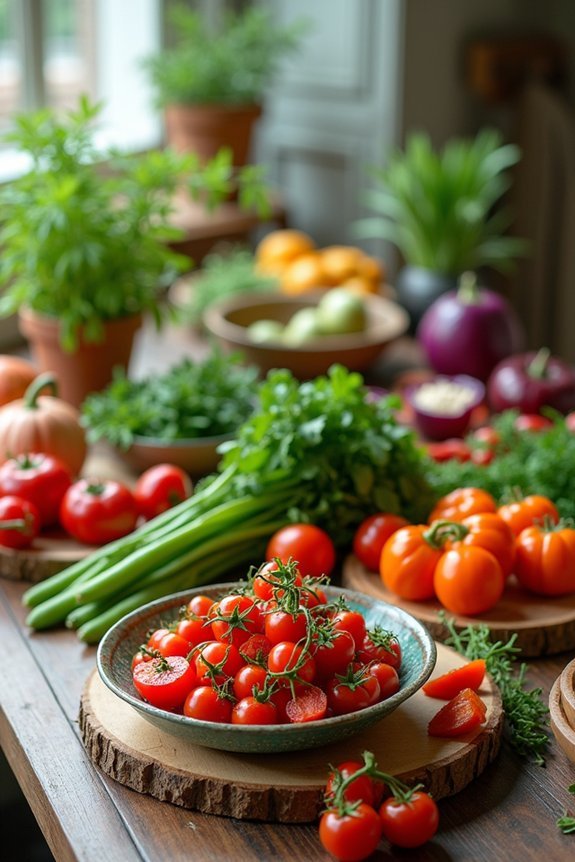
When we build a menu around what’s freshly harvested right now, we’re setting ourselves up for flavors that’ll make your guests remember this meal for years to come.
Spring offers tender asparagus and peas, summer brings vibrant berries and heirloom tomatoes, fall showcases squash and mushrooms, and winter features root vegetables and hearty greens.
Working with seasonal ingredients means your caterer sources better quality produce at peak flavor, which reduces costs too.
Ask your caterer what’s in season during your wedding date, then design dishes that let those ingredients truly shine without heavy sauces masking their natural beauty.
Please note that this information is provided for entertainment purposes and should be reviewed alongside Tiny Luxe Weddings’ full policies for complete guidance on your wedding planning journey.
Plan a Vegan Menu Course by Course
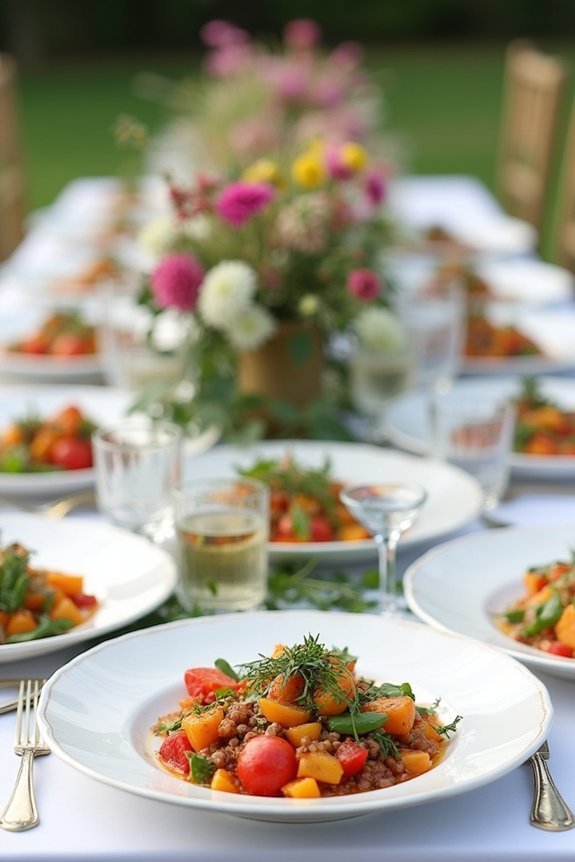
Now that you’ve chosen your seasonal ingredients, it’s time to structure them into a menu that flows beautifully from start to finish. We’ll help you organize your courses strategically so each dish complements the next.
- Appetizers and starters set the tone—think vibrant vegetables, fresh herbs, and light flavors that excite your guests’ palates.
- Main courses showcase your star ingredients with heartier, satisfying dishes that feel special and intentional.
- Desserts provide a memorable finale with plant-based elegance that rivals traditional options.
Consider pacing between courses, allowing time for conversation. Just as color, finish, and material variety matter when selecting bridal accessories to complement your wedding aesthetic, balance rich dishes with lighter ones, varying textures and flavors throughout your menu. This thoughtful approach guarantees your vegan menu feels cohesive and celebratory.
Pair Wines With Your Vegan Menu
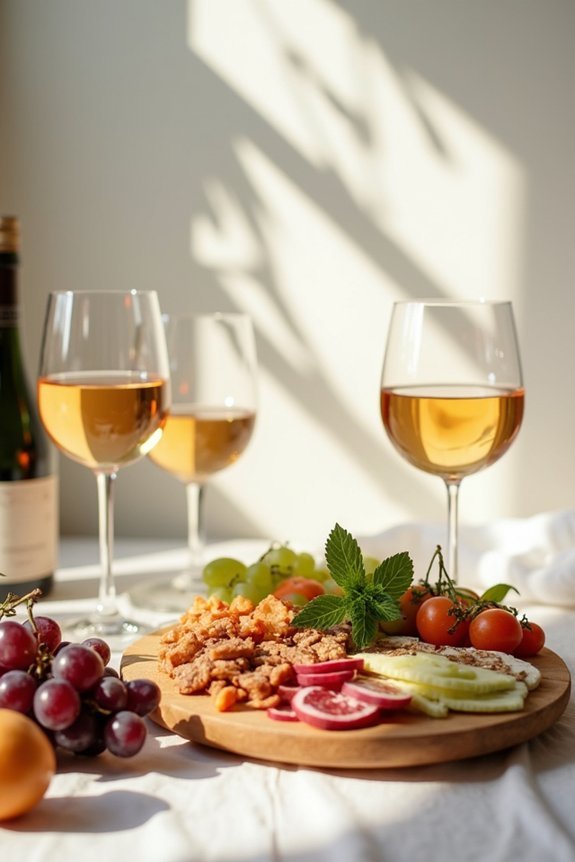
Have you considered how thoughtfully chosen wines can elevate each course and create a seamless dining experience for your guests?
We recommend pairing lighter whites with fresh appetizers, then moving to fuller-bodied options alongside heartier mains. Sparkling wines work beautifully with plant-based dishes, their acidity cutting through rich sauces wonderfully.
For dessert, consider natural wines or dessert wines that complement your sweet finale. Don’t overlook quality alcohol-free options for non-drinking guests—they deserve equally sophisticated pairings.
We suggest consulting your caterer about specific menu items before selecting wines, ensuring each bottle enhances your carefully crafted vegan courses perfectly. Just as secure attachment features are essential for bridal headpieces to stay in place throughout a celebration, the right wine pairings ensure your vegan menu remains the focal point of your wedding day.
Manage Multiple Dietary Restrictions
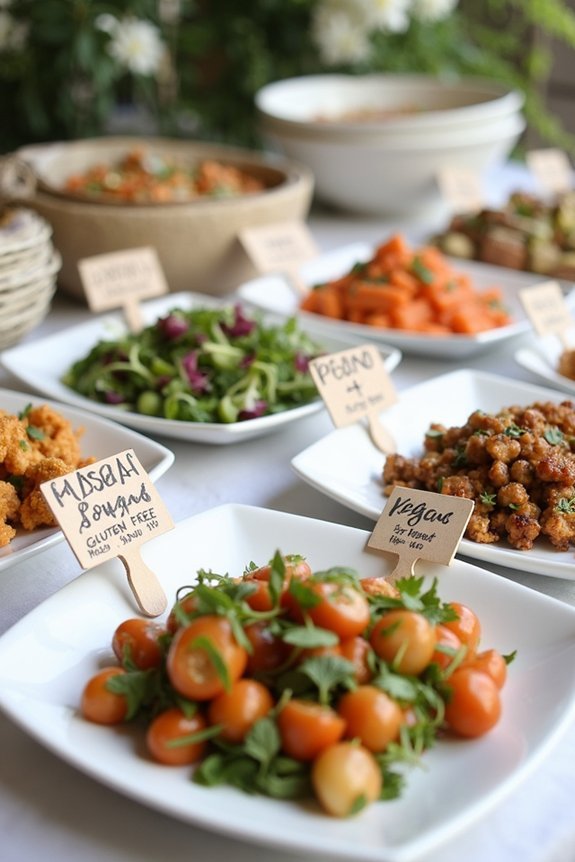
Beyond vegan dietary needs, you’re likely managing multiple restrictions among your guests—gluten-free, nut allergies, soy sensitivities, and more—which means we can’t simply offer one alternative menu and call it done.
Create a detailed dietary questionnaire during your RSVP process. This captures every restriction upfront, preventing last-minute surprises.
Then, we can design dishes that naturally accommodate overlapping needs rather than creating separate meals.
- Map common allergens to identify naturally compliant dishes
- Use ingredient substitutions that work across multiple restrictions
- Communicate final menus to your caterer and venue clearly
We’re building an inclusive celebration where everyone enjoys beautiful food.
Schedule Tastings: What to Sample and When to Book
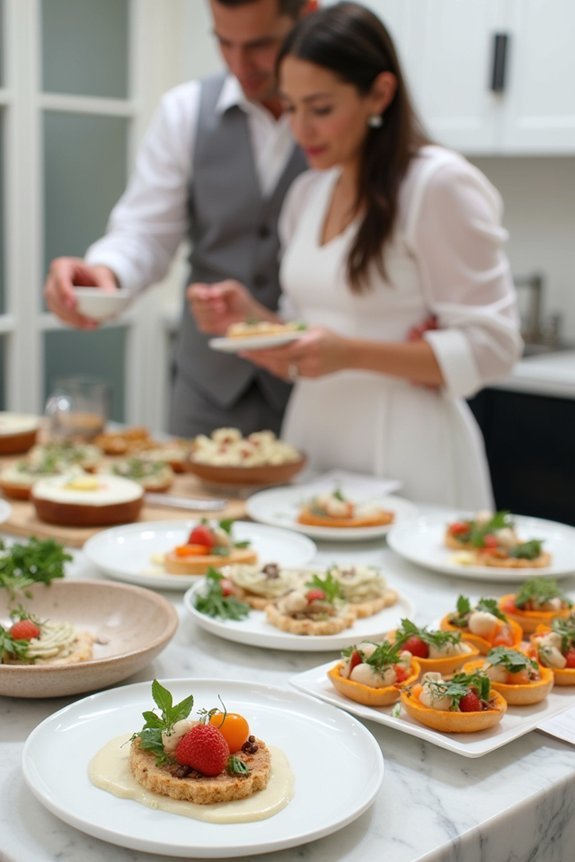
Tastings are where your vegan menu transforms from concept to reality, and they’re one of the most enjoyable parts of the planning process.
We recommend scheduling tastings eight to twelve weeks before your wedding, giving you time to make adjustments. Sample your appetizers, mains, sides, and desserts together—this shows how flavors work as a complete meal.
Request vegan versions of dishes you’re considering, not afterthoughts. Bring your partner and perhaps a close friend whose palate you trust.
Take notes on what excites you, and don’t hesitate to ask your caterer about modifications that’ll make your menu feel authentically yours.
Communicate Your Vegan Menu to Guests and Vendors
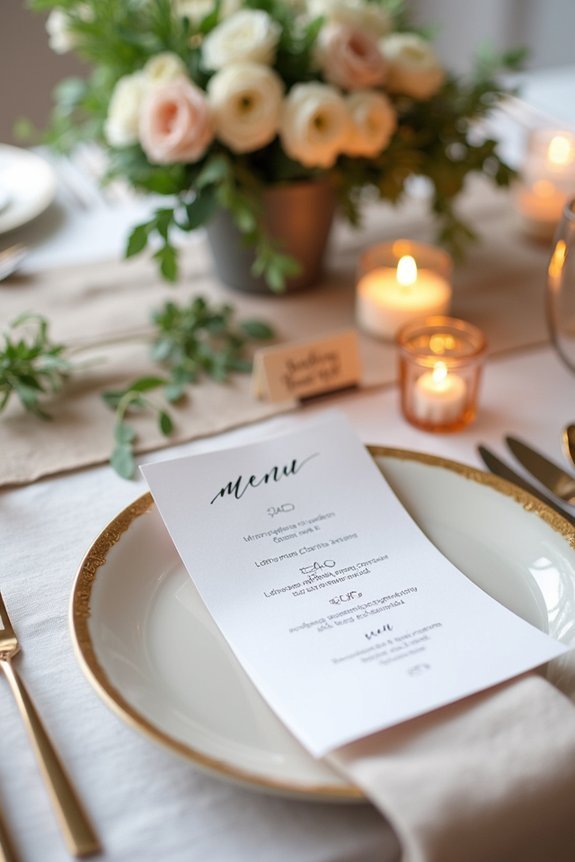
Once you’ve settled on your final menu, letting your guests and vendors know what to expect creates a smooth experience for everyone involved.
Clear communication prevents confusion and shows thoughtfulness.
- Include menu details on invitations — mention vegan options upfront so guests feel considered and prepared
- Provide vendor timelines — share your finalized menu with caterers and florists weeks in advance for proper planning
- Create a wedding day guide — brief your team on dietary needs and presentation preferences to guarantee flawless execution
We recommend sending written confirmation to all parties, addressing specific allergens and preparation methods to eliminate any last-minute surprises.
Frequently Asked Questions
How Much Does a Vegan Wedding Menu Typically Cost Compared to Traditional Options?
Vegan menus typically cost 10-15% less than traditional options since plant-based proteins and dairy alternatives are generally more affordable. You’ll save considerably on premium meats, though specialty vegan dishes can increase costs.
Can Vegan Wedding Cakes Taste as Delicious as Traditional Wedding Cakes?
Can we really expect vegan cakes to rival traditional ones? Absolutely—we’ve discovered that plant-based wedding cakes deliver equally decadent flavors and textures. Our favorite bakers craft stunning vegan designs that taste as divine as they look.
What’s the Best Way to Source Local, Organic Vegan Ingredients for Weddings?
We recommend starting with local farmers’ markets and organic co-ops, then connecting directly with producers. Build relationships with vegan-friendly caterers who’ve already vetted suppliers—they’ll share their trusted networks with you.
How Do I Handle Guests Who Are Skeptical About Vegan Food at My Wedding?
We’ve found that the proof’s in the pudding—serve absolutely delicious vegan dishes, and skeptics become believers. Focus on bold flavors, elegant plating, and creative proteins. Let your menu’s sophistication speak for itself.
Are There Vegan Options for Traditional Wedding Foods Like Seafood or Beef Dishes?
We’ve got excellent vegan swaps that’ll impress everyone. Plant-based seafood alternatives like hearts of palm ceviche or mushroom scallops deliver that elegance. For beef, we’re loving jackfruit and lentil-walnut dishes that satisfy traditional palates beautifully.