We can create a welcoming menu by starting with a dietary questionnaire that captures each guest’s allergies, restrictions, and preferences. Then, we’ll choose a service style—like family-style or buffet—that lets guests customize their plates. Partner with your caterer to confirm cross-contamination protocols and separate prep stations. Clear labeling and vivid menu descriptions help guests navigate confidently. Testing dishes with people who have specific dietary needs guarantees nothing feels like an afterthought. With thoughtful planning, we’ll discover how to make every guest feel genuinely valued at your celebration.
At a Glance
- Collect detailed dietary information through simple questionnaires to identify allergies, restrictions, and preferences from all guests.
- Choose flexible service formats like family-style or buffet with clear allergen labeling to accommodate diverse dietary needs safely.
- Coordinate with caterers on cross-contamination protocols, including separate prep stations and dedicated utensils for allergen-free foods.
- Conduct taste-tests with individuals having specific dietary restrictions to ensure substitutions are flavorful and genuinely satisfying.
- Finalize menus after testing all dishes, adjusting recipes based on feedback to create a cohesive dining experience.
Start With a Dietary Questionnaire
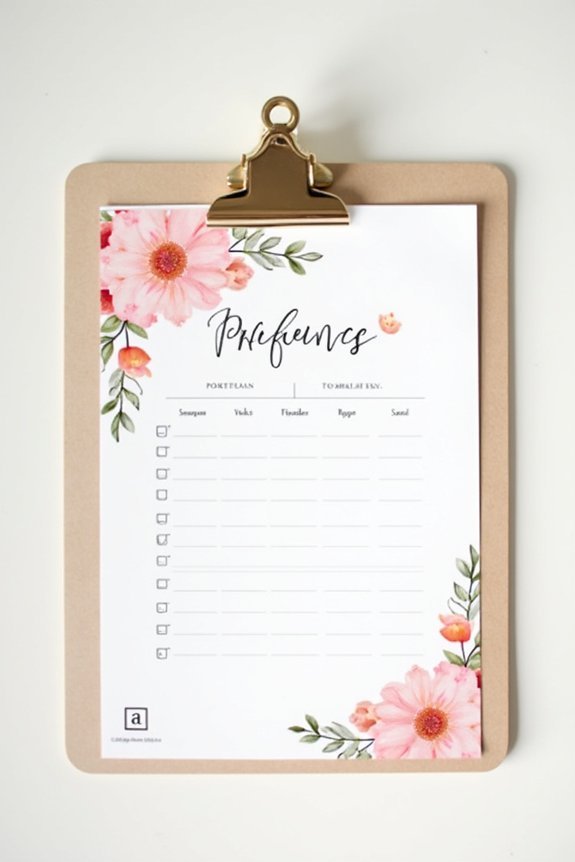
Before you finalize your menu with your caterer or chef, sending a dietary questionnaire to your guests helps you understand their needs and preferences so you can create a meal that truly works for everyone.
We recommend asking about allergies, religious restrictions, vegetarian or vegan preferences, and other dietary limitations. Keep questions simple and straightforward so guests answer honestly.
This information lets you work with your caterer to design a cohesive menu that accommodates various needs without feeling like afterthoughts. Using a meal preference tracker ensures all dietary information is organized and easily accessible for your catering team.
When guests see their requirements thoughtfully considered, they’ll feel welcomed and valued at your celebration.
Choose a Menu Format That Scales Dietary Accommodations
Once you’ve gathered dietary information from your guests, the next step is selecting a menu format that’ll actually work with all those needs.
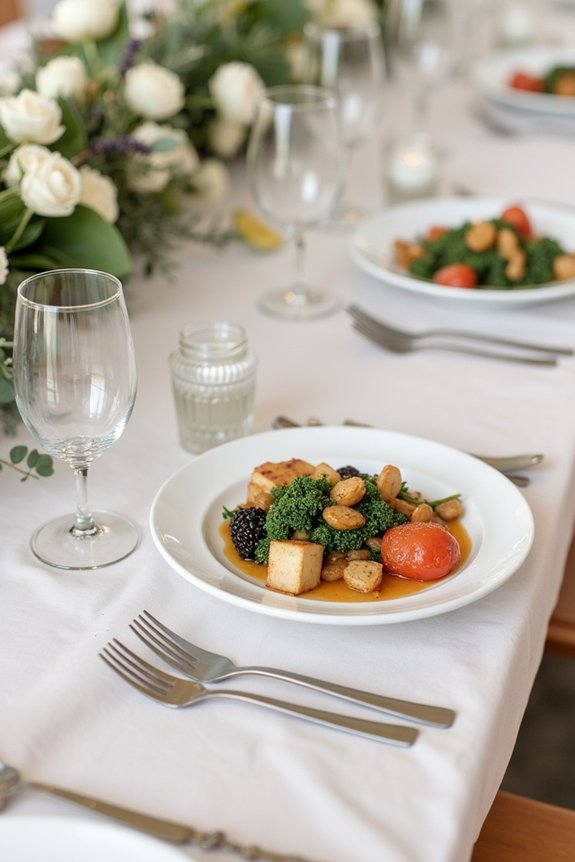
Consider a family-style service where dishes come to the table—guests easily customize portions and skip items they can’t eat. Alternatively, plated meals work beautifully when your caterer prepares several proteins and sides, allowing flexibility for modifications.
A buffet offers similar adaptability, though it requires clear labeling. Station-style dining lets guests choose what appeals to them.
We recommend matching your format to your guest count and venue. Smaller weddings often benefit from family-style service’s intimate, inclusive feel. For complete guidance on planning your celebration, consult the Master Wedding Planning Checklist PDF to ensure no detail is overlooked.
Build Your Menu Around Naturally Flexible Proteins

When you’re designing a menu that works for everyone at your table, the proteins you choose matter more than you might think.
We recommend building around these naturally flexible options:
- Fish and seafood – easily prepared grilled, poached, or pan-seared for various dietary needs
- Chicken – versatile enough to accommodate nearly every preference and restriction
- Plant-based proteins – legumes and tofu adapt beautifully to multiple cooking methods
These proteins shine because they don’t require complicated modifications.
A chef can prepare them simply for some guests while adding rich sauces or creative preparations for others.
You’ll create an inclusive menu that feels intentional, not accommodating. Consider using a budget tracking spreadsheet to manage catering costs across your various menu options and vendor selections.
Label Dishes Clearly for Every Diet
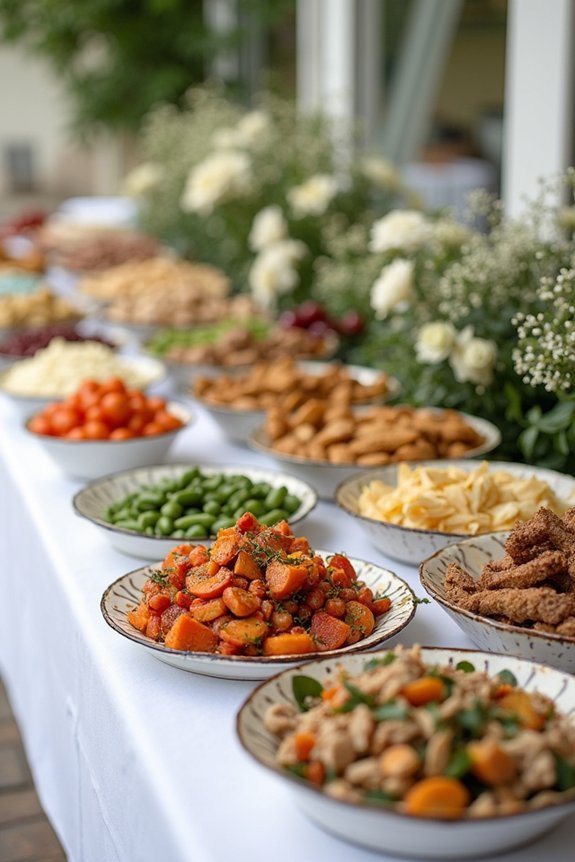
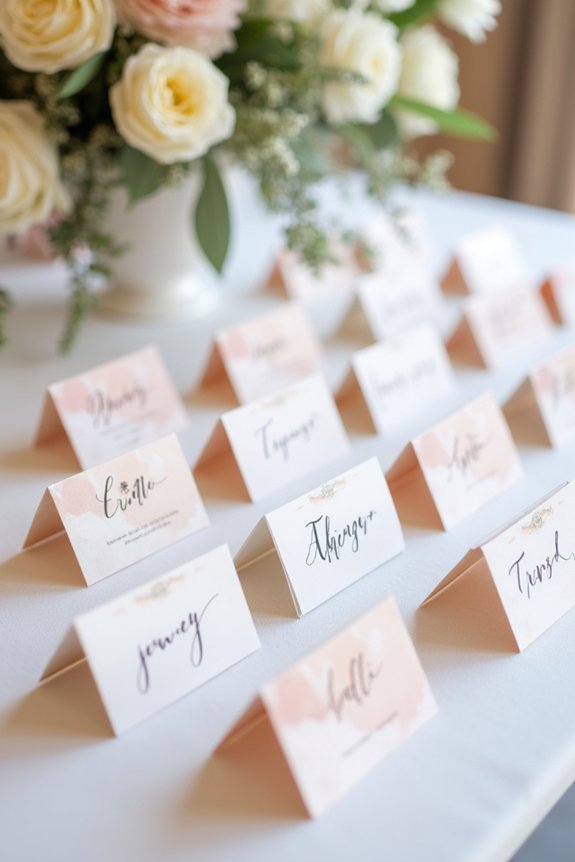
Your thoughtfully chosen proteins mean nothing if your guests can’t easily identify what’s safe to eat. We recommend creating small tent cards or table markers listing each dish’s main ingredients, potential allergens, and dietary labels like “vegetarian,” “gluten-free,” or “dairy-free.”
This straightforward approach eliminates confusion and lets guests confidently fill their plates without asking questions. We can place cards directly beside each dish or include them on the menu card at each place setting. Using high contrast between text and background ensures all your guests can read the labels clearly from a distance.
Clear labeling shows genuine care for your guests’ wellbeing, transforming dietary accommodations into an elegant detail that enhances the entire dining experience.
Ask Your Caterer About Cross-Contamination Protocols
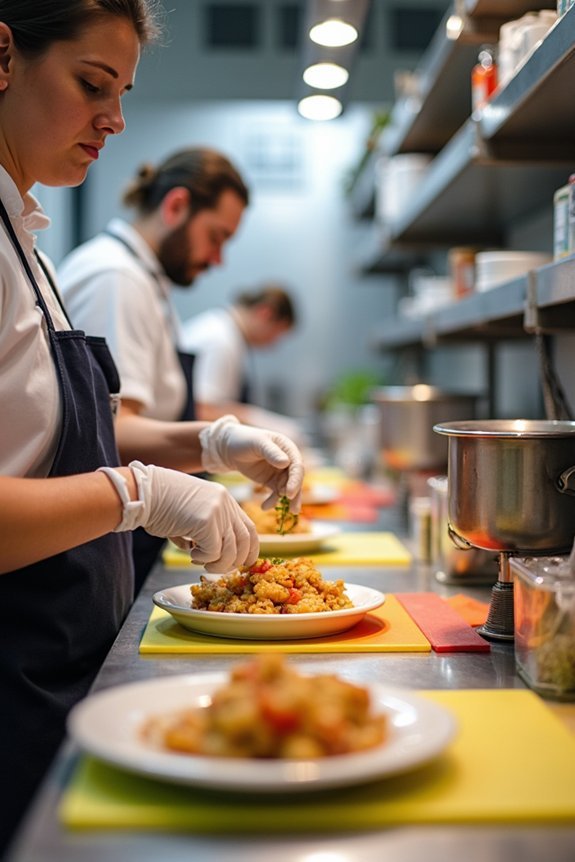
How do your caterers handle cross-contamination, and what specific procedures do they follow in their kitchen?
We want to guarantee your guests with allergies feel completely safe. Ask your caterer about these protective measures:
- Separate prep stations for different dietary needs
- Dedicated utensils and cutting boards for allergen-free foods
- Staff training on allergen awareness and handling protocols
Request written documentation of their procedures. Using a wedding planning checklist can help you organize these important questions to ask your caterer ahead of time.
We recommend discussing how they store ingredients, clean equipment between dishes, and prevent airborne particles from affecting sensitive meals.
These conversations might feel detailed, but they’re essential for protecting your guests’ health and letting everyone enjoy your celebration without worry.
Plan Plating That Celebrates Every Dietary Choice
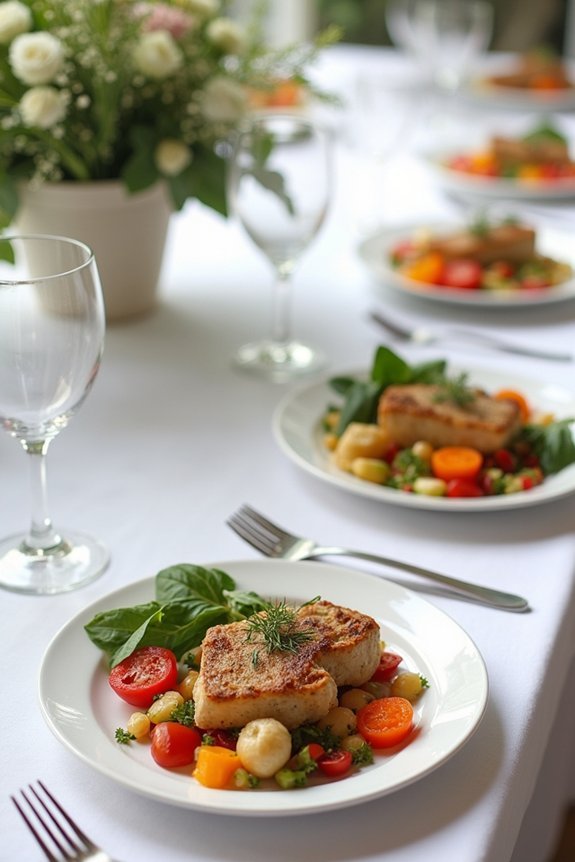
Once you’ve confirmed your caterer’s safety protocols, the next step is designing plates that make every guest feel celebrated.
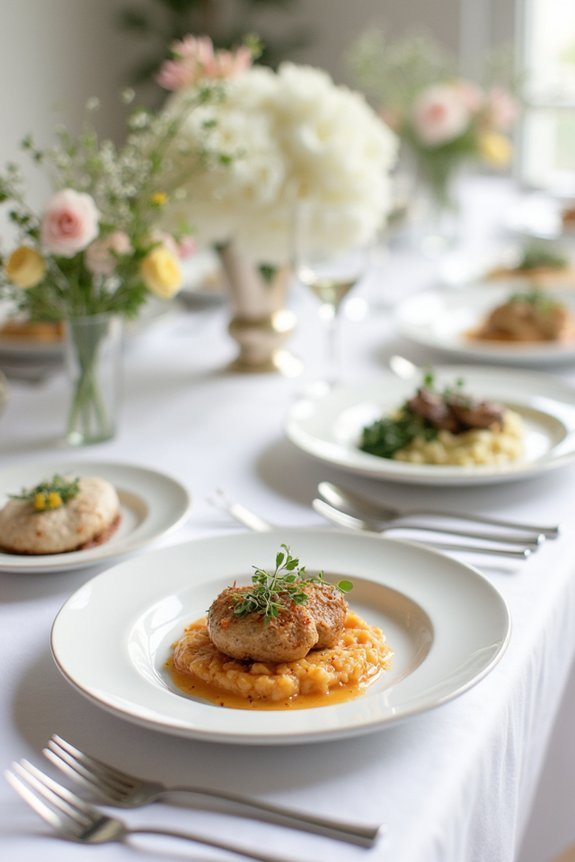
We recommend presenting all dietary variations with equal visual appeal and portion sizes. Rather than serving smaller plates to guests with restrictions, we suggest plating everything identically so no one feels singled out.
Work with your caterer to guarantee vegetarian, vegan, gluten-free, and other modified meals look as impressive as the standard entrée.
This thoughtful approach transforms accommodations into inclusive design choices, letting every guest enjoy your wedding feast with genuine confidence and joy.
Partner With Your Caterer on Seamless Accommodation

Since dietary accommodations require coordination between multiple moving parts, partnering closely with your caterer transforms potential logistical challenges into seamless execution.
We recommend discussing these key elements with your team:
- Create a detailed accommodation list identifying each guest’s dietary needs before final menu approval.
- Establish clear labeling systems so servers confidently present each dish to the right person.
- Schedule a final walkthrough where we review plating, timing, and service flow together.
Your caterer becomes your ally in delivering an inclusive celebration. When everyone’s aligned on priorities, we guarantee your guests feel genuinely welcomed and cared for through thoughtful, delicious meals that honor their needs.
Confirm Your Venue’s Prep Station Capacity
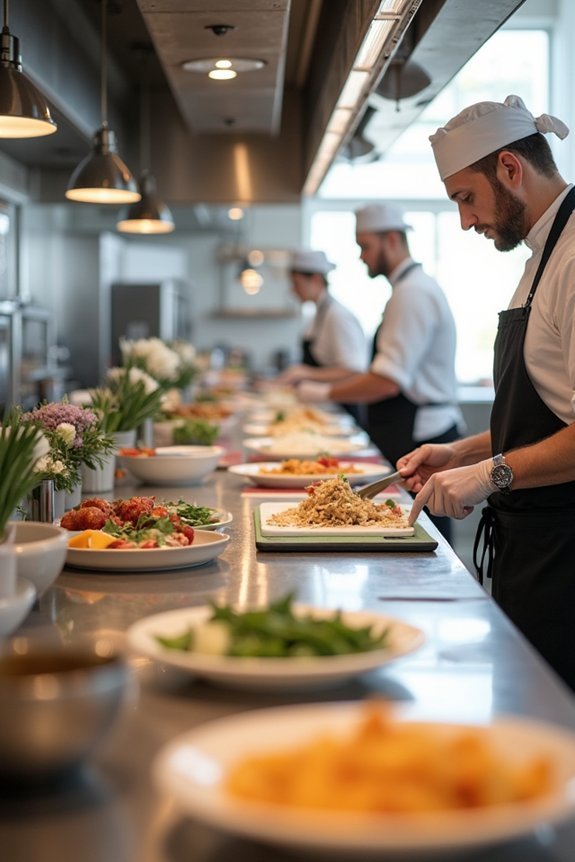
Your venue’s prep station isn’t just a behind-the-scenes detail—it’s the backbone of your menu execution, especially when we’re working with multiple courses and dietary accommodations.
Before finalizing your menu, we need to ask your caterer and venue some vital questions: How much counter space exists? What equipment’s available—extra ovens, burners, warming stations?
Can they handle simultaneous prep for gluten-free, vegan, and standard dishes without cross-contamination? Understanding these limitations helps us design a menu that’s both beautiful and actually achievable.
We’ll work within your venue’s real capacity, ensuring smooth service that keeps your guests happy and your catering team confident.
Write Menu Descriptions That Build Trust
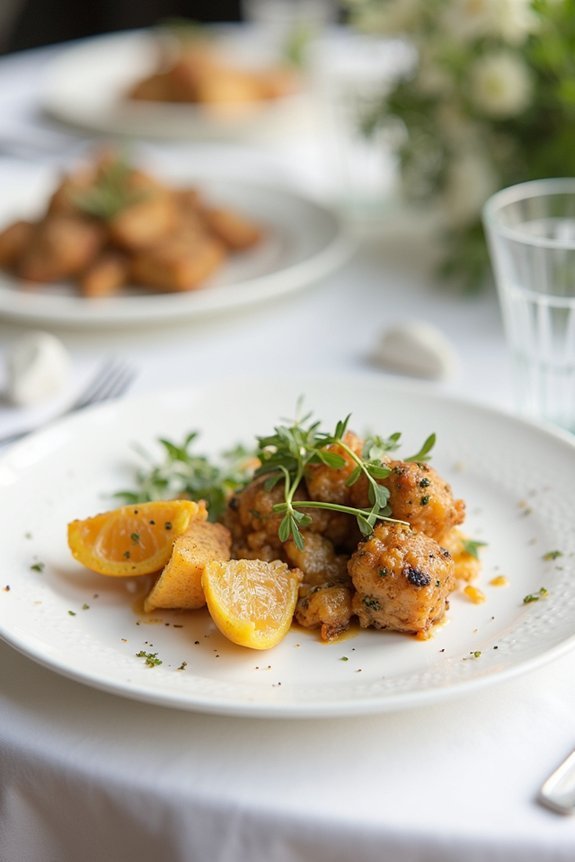
When guests read your menu card, they’re not just learning what they’ll eat—they’re getting a preview of the care and intention behind your wedding.
Thoughtful descriptions build confidence, especially for those with dietary restrictions or unfamiliar ingredients.
We recommend including:
- Ingredient origins – “heirloom tomatoes from local farms”
- Preparation methods – “hand-rolled pasta” or “slow-roasted”
- Allergen clarity – “contains nuts” or “gluten-free option”
Clear, descriptive language transforms a simple menu into a promise.
Your guests will feel considered and excited, knowing you’ve thoughtfully planned every detail of their dining experience.
Test Your Final Menu With Real Dietary Needs
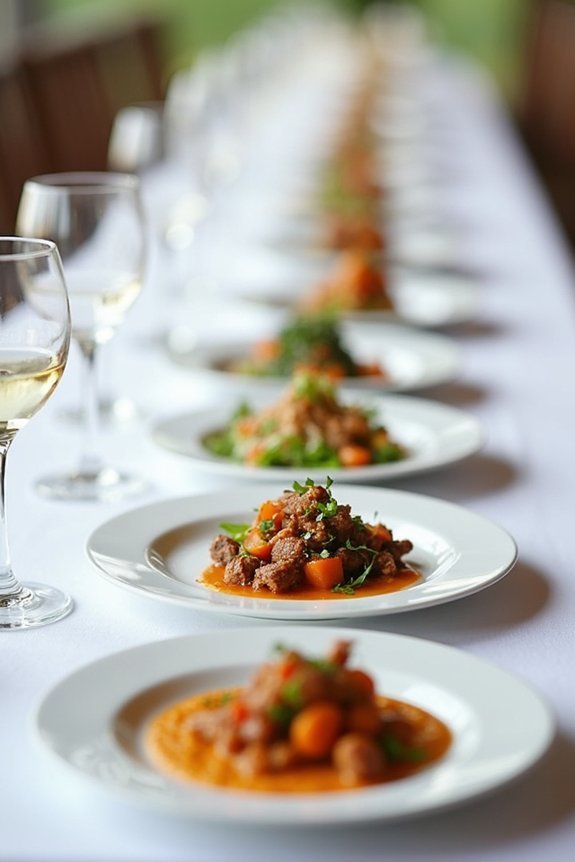
before we finalize those beautiful menu cards, we need to taste-test our selections with people who actually have the dietary needs we’ve promised to accommodate.
Invite a vegetarian friend to sample your plant-based entrée. Ask someone with a gluten allergy to try your alternative pasta option. This isn’t just courtesy—it’s crucial. Real feedback reveals whether your substitutions taste genuinely delicious, not like afterthoughts.
We’ll discover if portions feel satisfying, if flavors shine, if guests will actually enjoy their meals. Testing with actual dietary needs guarantees our promises translate into memorable experiences.
Frequently Asked Questions
How Early Should I Request Dietary Information From Guests Before Finalizing the Menu?
We recommend requesting dietary information at least six to eight weeks before your wedding. This timeline gives us enough time to finalize menus, coordinate with caterers, and make any necessary adjustments without last-minute stress.
What’s the Best Way to Handle Last-Minute Dietary Restriction Changes From Guests?
We’ve found that last-minute changes rarely derail well-planned menus—they test our flexibility instead. Build buffer dishes we can quickly adapt, communicate directly with your caterer immediately, and keep simple alternatives ready. You’ll handle shifts gracefully.
Should I Offer a Separate Kids’ Menu With Dietary Accommodation Options?
We’d recommend offering a simplified kids’ menu with clear dietary options—it’s less overwhelming than a full adult menu and shows thoughtfulness. Most children appreciate familiar foods with their specific needs accommodated separately.
How Do I Budget for Premium Dietary Alternatives Without Significantly Increasing Costs?
We’ll help you keep costs down by ordering premium alternatives in bulk, sourcing directly from suppliers, and strategically swapping just one or two menu items rather than creating entirely separate dishes.
Can I Serve a Beautiful Family-Style Meal While Maintaining Dietary Accommodations?
We’ve mastered family-style service in the Instagram age—and yes, absolutely. We plate individual dietary versions while guests share communal bowls, creating that intimate, elegant aesthetic you’re craving without compromising anyone’s needs.