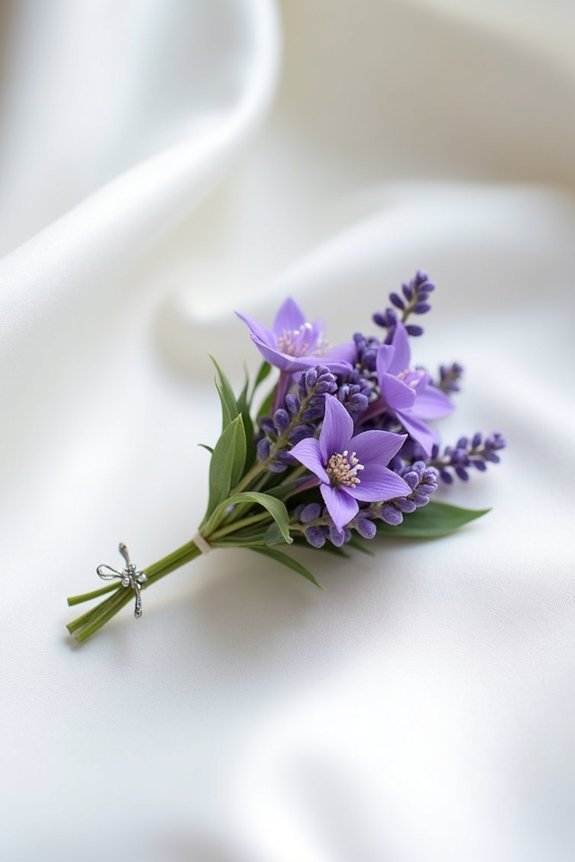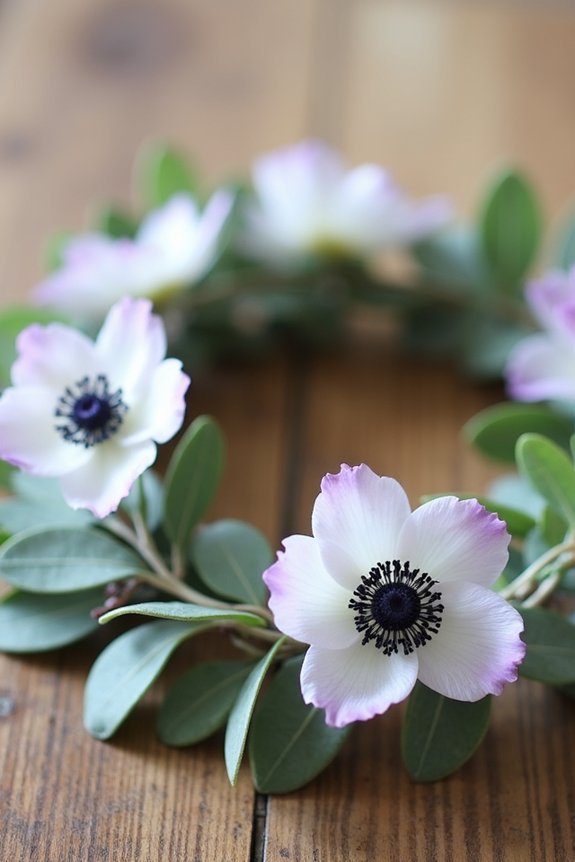
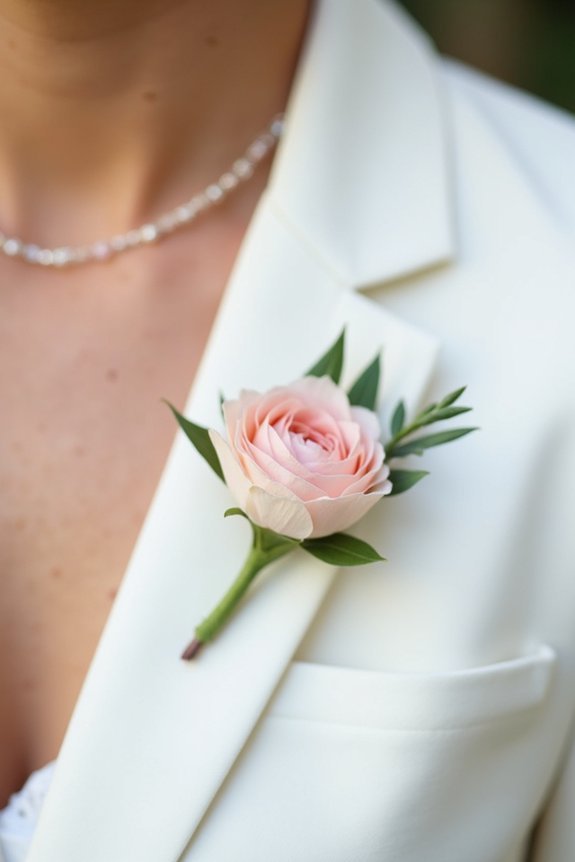
We love ranunculus boutonnieres because they’re absolute showstoppers! Their lush, layered petals create stunning visual depth that photographs beautifully in any lighting. They’re incredibly affordable compared to garden roses, yet they last all day without wilting. Available in gorgeous colors like blush pink, ivory, and burgundy, they complement any wedding theme perfectly. Plus, their romantic garden-style appearance adds sophistication while handling humidity and movement with impressive resilience. Understanding how to care for them and style them strategically opens even more possibilities for your special day.
At a Glance
- Lush, layered petals create stunning visual depth with gorgeous colors like blush pink, ivory, and burgundy for elegant designs.
- Ranunculus symbolizes charm and attractiveness, representing love and radiance perfectly suited for romantic wedding themes and ceremonies.
- They last longer than roses, maintain freshness throughout events, and are more affordable than garden roses for budget-conscious couples.
- Resilient flowers handle humidity and movement well, staying fresh for hours with proper hydration and refrigeration before ceremonies.
- Unique petal texture adds dimension unmatched by other flowers, photographs beautifully in various lighting, and requires no maintenance.
Why Ranunculus Flowers Steal the Show in Boutonnieres
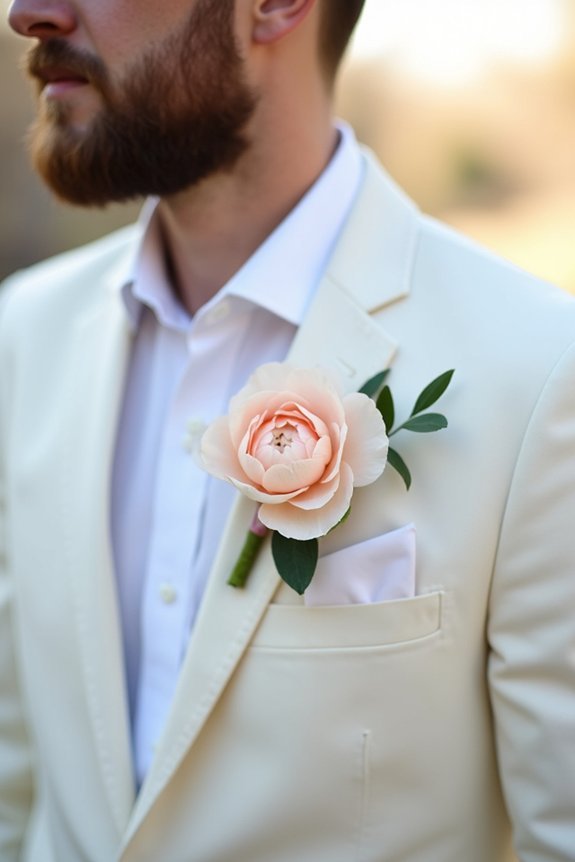
When it comes to choosing flowers for groomsmen and wedding party boutonnieres, ranunculus deserve your attention.
These blooms captivate with their lush, layered petals that create stunning visual depth—far more interesting than traditional roses.
Ranunculus flowers come in gorgeous colors, from blush pink to ivory to deep burgundy, making it easy to match your wedding palette.
They’re surprisingly durable, holding up beautifully throughout your ceremony and reception. Their romantic, garden-style appearance adds sophistication to any wedding aesthetic.
We love how ranunculus elevate boutonniere designs from simple to genuinely show-stopping. Pairing these flowers with complementary bridal headpiece styles creates a cohesive and elegant look for your entire wedding party.
When to Order: Seasonal Ranunculus Availability
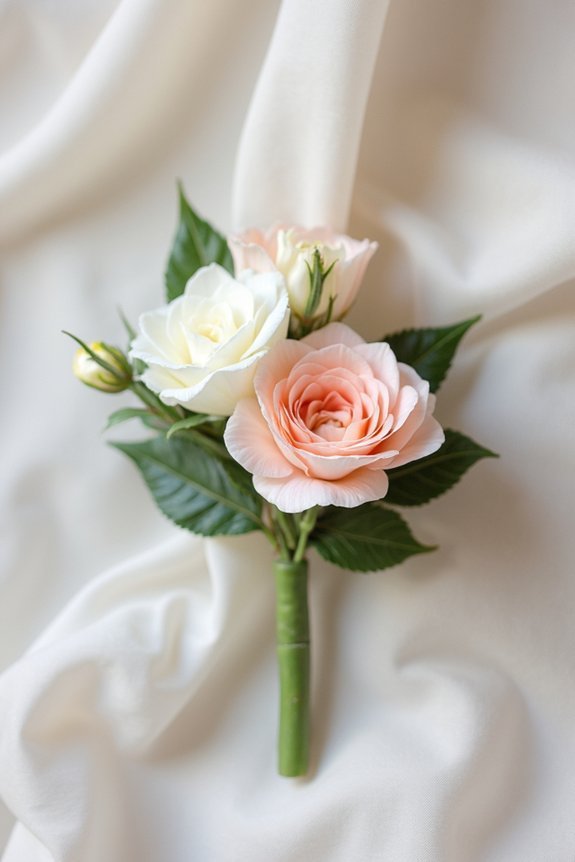
Because ranunculus have distinct growing seasons, timing your flower order is crucial to getting exactly what you want for your wedding day.
We recommend ordering three to four months in advance to secure your preferred colors and quantities.
Here’s what we need you to know about seasonal availability:
- Peak season (February–May) offers the widest color selection and freshest blooms
- Summer months mean limited availability and higher prices
- Fall brings renewed variety as new crops flourish
- Winter requires early booking, but romantic jewel tones shine
Working with your florist on timing guarantees you’ll get those picture-perfect boutonnieres you’re envisioning. For comprehensive planning guidance, consult the 12-Month Timeline to coordinate your flower orders with other wedding preparations.
Affordable Ranunculus Boutonnieres: Luxury on a Budget
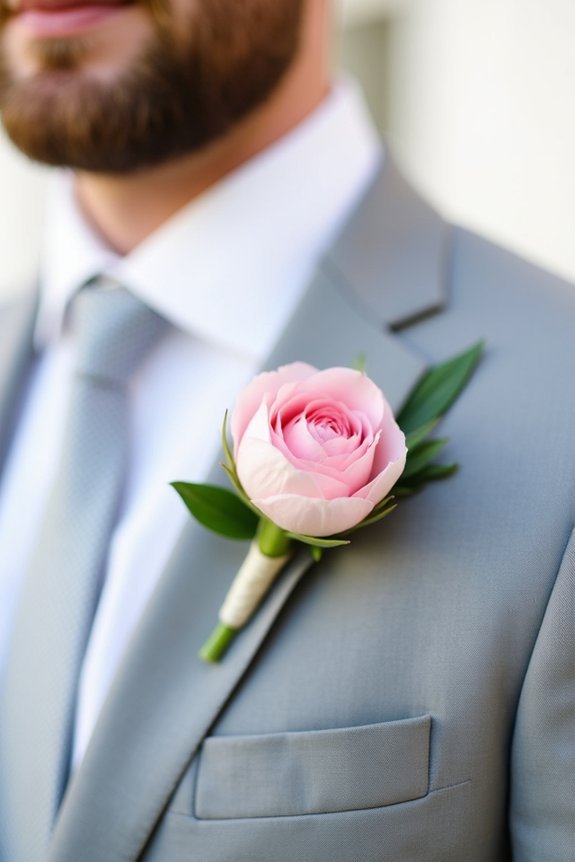
Now that you’ve locked in your timeline and secured those gorgeous ranunculus, let’s talk about making them work within your budget—because you shouldn’t have to choose between elegance and affordability.
Consider mixing ranunculus with greenery or filler flowers to stretch your stems further without sacrificing impact.
Ordering directly from wholesalers or local growers often costs less than traditional florists.
Smaller boutonnieres featuring just two to three ranunculus blooms look sophisticated and require fewer flowers per piece. Clustering them together creates fullness visually while using less product.
Using a budget tracking spreadsheet helps you monitor florals expenses alongside other wedding costs to ensure your ranunculus boutonnieres fit seamlessly into your overall financial plan.
These smart approaches let you achieve that luxe aesthetic you’re dreaming of.
Ranunculus vs. Other Boutonniere Flowers
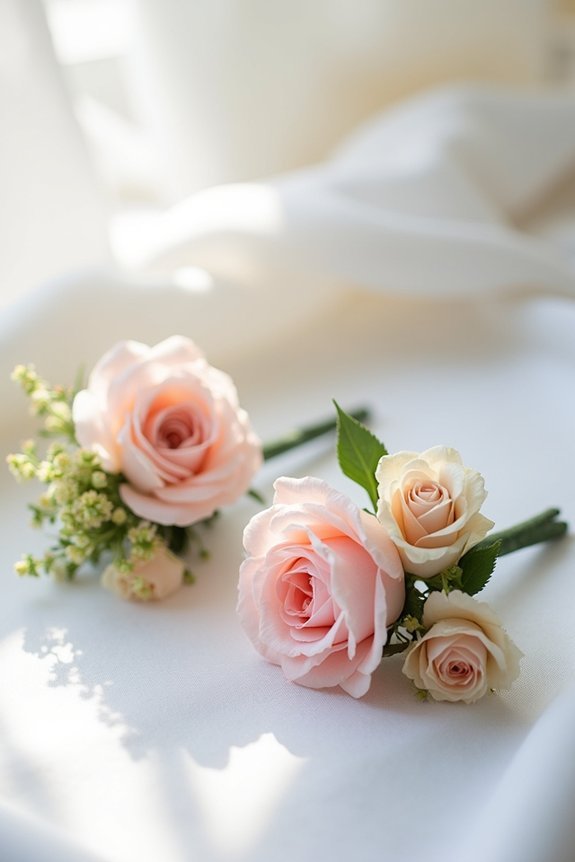
If you’re comparing ranunculus to other boutonniere options, you’ll quickly discover what makes them stand out—and where they mightn’t be the perfect fit for your vision.
We love ranunculus for their layered, romantic petals and longevity.
Here’s how they compare:
- Ranunculus last longer than roses, holding their beauty throughout your wedding day and beyond.
- They’re more affordable than garden roses, stretching your budget further without sacrificing elegance.
- Their texture adds dimension that carnations and spray roses simply can’t match.
- They photograph beautifully in all light, creating that magazine-quality look you’re after.
- Unlike battery-operated decorative elements, ranunculus boutonnieres require no power source or maintenance, keeping your focus entirely on the florals and your special day.
Consider your aesthetic, timeline, and budget when choosing.
Ranunculus Color Options for Any Wedding Palette
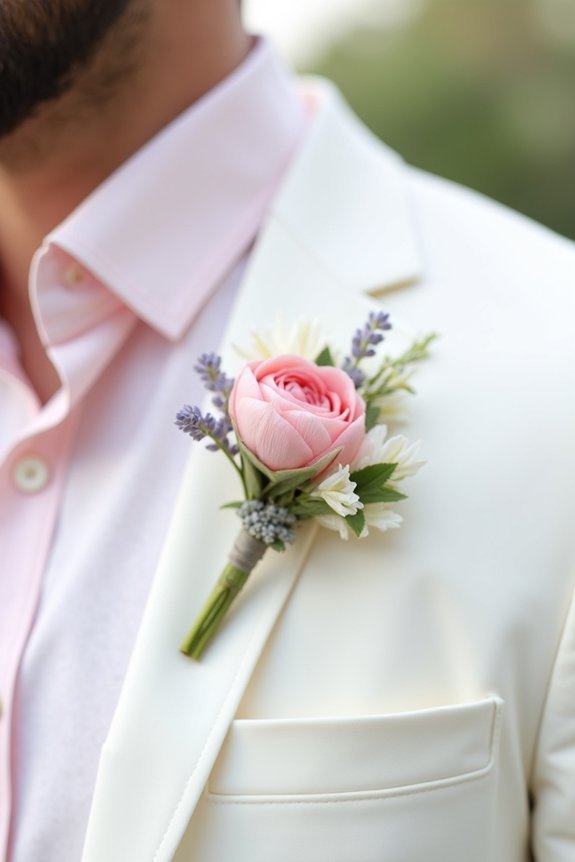
Once you’ve decided that ranunculus are the right choice for your boutonnieres, the real fun begins—selecting the colors that’ll make your wedding vision come to life.
These blooms offer incredible range, from soft pastels like blush, ivory, and pale pink to rich jewel tones including burgundy, coral, and peach. You can even find ranunculus in vibrant red, cream, and white varieties.
Whether you’re building a romantic, monochromatic look or mixing complementary shades, ranunculus adapts beautifully to any palette. Their naturally layered petals photograph gorgeously in every hue, ensuring your boutonnieres feel intentional and polished. Pairing your ranunculus boutonnieres with bridal pearl jewelry sets in complementary colors creates a cohesive and elegant look for your wedding day.
The Instagram Effect: Why Ranunculus Photographs Better
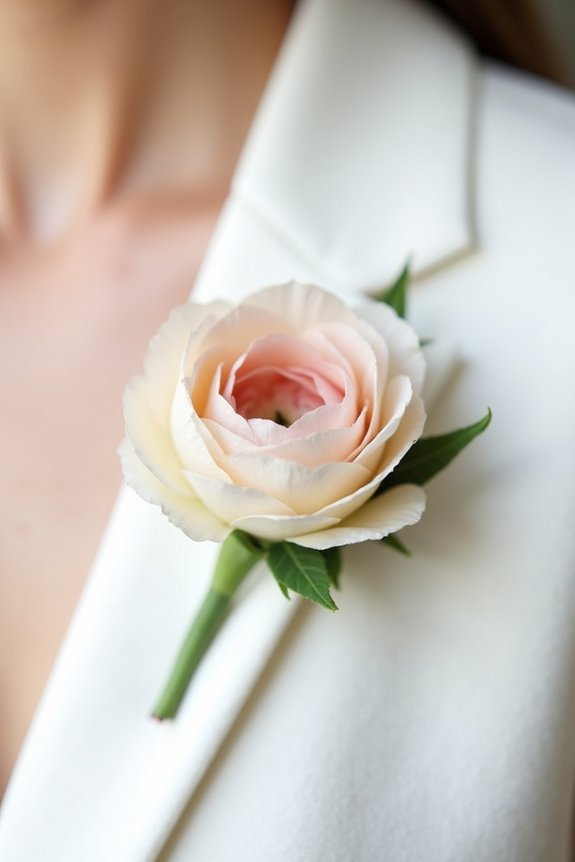
Have you noticed how certain flowers just look better on camera?
Ranunculus boutonnieres photograph beautifully, and there’s real science behind it. Their layered petals create stunning depth and dimension that cameras absolutely love.
Here’s why we’re so excited about them:
- Rich, saturated colors that pop in every lighting condition
- Romantic texture that translates gorgeously to photos and videos
- Natural symmetry that photographs from any angle
- Luminous quality that flatters skin tones in close-up shots
Your boutonnieres will look just as stunning in your wedding photos as they do in person.
That’s the ranunculus magic we’re celebrating.
How to Style Ranunculus for Maximum Impact
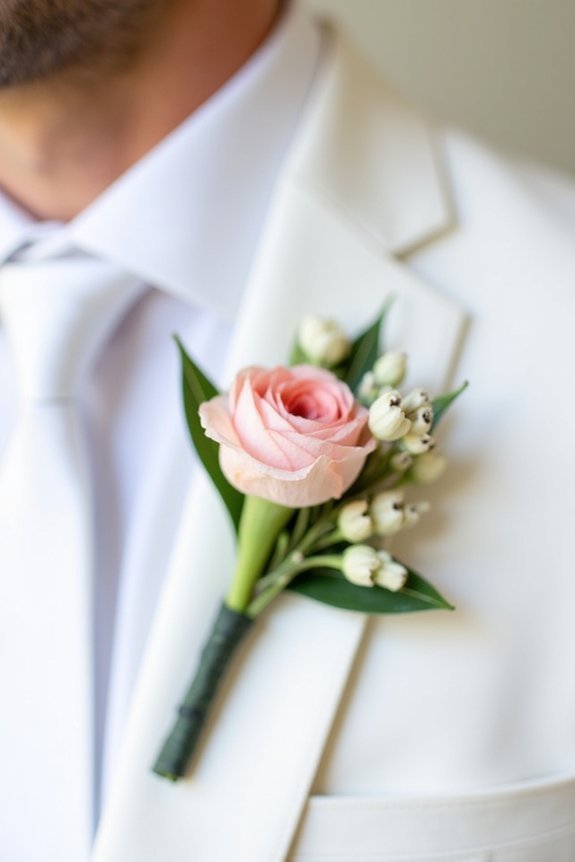
Now that you understand why ranunculus photographs so beautifully, let’s talk about how to arrange them in ways that’ll make your boutonnieres truly shine.
We recommend pairing ranunculus with complementary textures—dusty miller adds softness, while eucalyptus brings modern elegance. Keep arrangements compact so the delicate petals remain the focal point.
Consider your color palette carefully; blush ranunculus works beautifully with ivory and sage, while deeper jewel tones create dramatic impact.
Layer different bloom stages for dimension, mixing fully opened flowers with tighter buds.
This thoughtful approach transforms simple boutonnieres into sophisticated, intentional details that reflect your wedding’s overall aesthetic and vision.
Do Ranunculus Boutonnieres Last All Day?
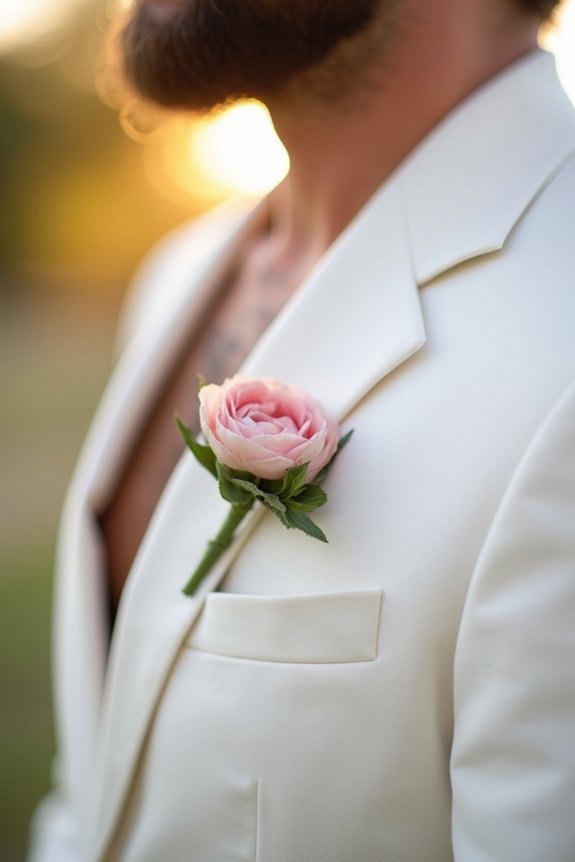
your boutonnieres need to look fresh from getting ready through the final dance, and ranunculus can absolutely deliver that.
These resilient flowers naturally hold their shape and color for hours, staying gorgeous from ceremony to reception.
We love ranunculus boutonnieres because they:
- Maintain their layered petals without wilting or browning
- Stay hydrated longer than many delicate flowers
- Preserve their rich color intensity throughout the day
- Handle the humidity and movement without falling apart
With proper hydration before pinning and a light mist, your boutonnieres will look magazine-worthy in every photograph.
Pre-Wedding Care: Keeping Your Ranunculus Fresh Until Showtime
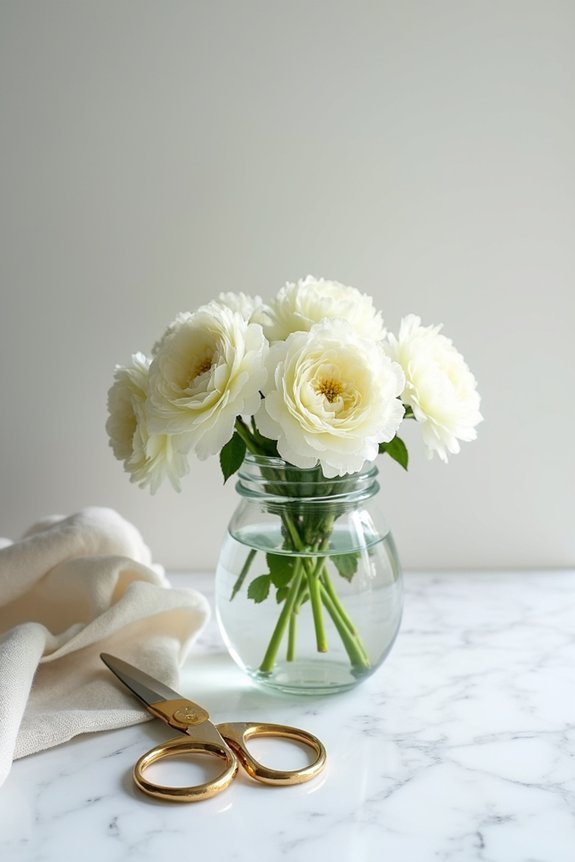
The day before your wedding is when the real magic happens—that’s when we shift our focus to keeping those gorgeous ranunculus in peak condition until the moment you walk down the aisle.
Store them in cool water inside your refrigerator, away from ripening fruit, which releases ethylene gas that wilts flowers. Keep the stems trimmed at a 45-degree angle, and change the water daily.
Remove any leaves that’d sit below the waterline, preventing bacterial growth. About two hours before the ceremony, remove the boutonnieres from the fridge, allowing them to acclimate gradually to room temperature.
This gentle approach guarantees they’ll look absolutely radiant throughout your celebration.
Frequently Asked Questions
How Many Ranunculus Blooms Do I Need for Each Groomsman’s Boutonniere?
We recommend using 3-5 ranunculus blooms per boutonniere, depending on bloom size and your desired fullness. Pair them with greenery and filler flowers to create sophisticated, layered designs that photograph beautifully.
Can I Mix Ranunculus With Other Flowers in My Groomsmen’s Boutonnieres?
Absolutely, we recommend mixing ranunculus with complementary flowers like hypericum berries, dusty miller, or eucalyptus. This combination adds texture and depth while keeping your groomsmen’s boutonnieres sophisticated and visually interesting.
What Size Ranunculus Works Best for Men’s Wedding Day Boutonnieres?
We recommend medium-sized ranunculus blooms for men’s boutonnieres—they’re substantial enough to make a statement without overwhelming a lapel. Smaller varieties get lost, while oversized ones look disproportionate.
Do Ranunculus Boutonnieres Work for Casual or Outdoor Wedding Settings?
We’ve found ranunculus boutonnieres work beautifully for casual and outdoor weddings. Their romantic, layered petals suit garden settings perfectly, while their sturdy stems withstand outdoor conditions better than delicate flowers. They’re versatile enough for any vibe.
How Should I Attach Ranunculus to Boutonniere Backing Without Damaging Petals?
We recommend using floral tape wrapped gently around the stem rather than adhesive, which can crush delicate petals. Secure the ranunculus to your backing with soft ties, working carefully from the outside inward for protection.