Let’s start by checking your venue’s rules for timing and setup requirements—these shape everything else. We’ll build your timeline around a four- to six-hour reception, scheduling cocktail hour right after your ceremony for ninety minutes. Then we’ll plan dinner service thirty to forty-five minutes later, weaving in toasts and dances strategically. We’ll add fifteen-minute buffers between major moments to handle unexpected delays, then share this clear schedule with your wedding party and vendors so everyone’s on the same page. The details ahead will show you exactly how to customize this framework for your celebration.
At a Glance
- Confirm venue policies on start/end times and setup requirements before finalizing your reception schedule.
- Plan a four to six-hour reception with cocktail hour lasting sixty to ninety minutes after ceremony.
- Schedule dinner service thirty to forty-five minutes after cocktail hour, positioning toasts and cake cutting strategically.
- Distribute a clear timeline document to wedding party, family members, and all vendors well in advance.
- Build fifteen-minute buffers between major events and conduct rehearsal walkthroughs to test timing and identify issues.
Start With Your Venue’s Constraints and Policies

Before you sketch out your dream timeline, you’ll want to understand what your venue actually allows.
Every space has different rules about when events can start and end, how long you can occupy the space, and what activities fit their policies.
Some venues have strict cutoff times for music or dancing. Others limit the number of hours you’re allowed.
We recommend calling your venue coordinator directly and asking about their specific requirements, setup times, and any restrictions.
Getting these details locked in first saves you from redesigning your schedule later. It’s the smart foundation for everything that follows.
For additional guidance on planning your entire wedding day, consult the 12-Month Timeline to ensure every element aligns with your venue’s policies.
Choose Your Reception Length and End Time
Now that you’ve got your venue’s rules in hand, it’s time to decide how long you actually want your reception to last. Most receptions run between four and six hours, though you’ll want to reflect on your guest count, budget, and energy level.
A shorter reception—around four hours—works beautifully for afternoon celebrations or smaller gatherings. Longer receptions give guests more time to enjoy dinner, dancing, and connecting with you.
Think about what matters most: the cocktail hour, dinner service, dancing, or speeches? Your end time naturally follows once you know your start time and desired length. Use the Hour-by-Hour Schedule Template to map out exactly which activities occur during each segment of your reception.
Map Out Cocktail Hour Timing
Your cocktail hour deserves its own thoughtful planning because it sets the tone for the entire evening and gives your guests a natural progression into celebration.
We recommend scheduling it immediately after your ceremony while your photographer captures candid moments. Plan for sixty to ninety minutes, allowing guests time to enjoy appetizers, drinks, and conversation without feeling rushed.
This breathing room prevents your reception from feeling jam-packed and gives your team flexibility with timing adjustments. When you position cocktail hour strategically, you create a natural buffer that lets everyone move seamlessly into dinner service and dancing. Using a comprehensive planning checklist ensures you account for all timing details and coordinate every element of your reception schedule.
Plan Your Dinner Service (Seated or Stations?)
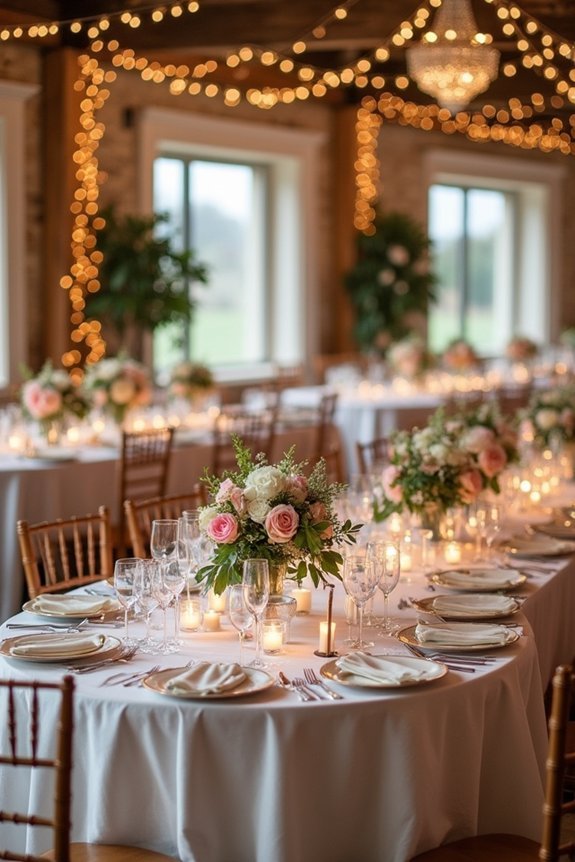
Dinner service is where you’ll make one of the biggest decisions about your reception’s flow and feel—whether you’ll go with a traditional seated meal or opt for a more interactive station setup.
Seated dinners create an intimate, formal atmosphere and keep guests anchored to their tables, which works beautifully for speeches and toasts.
Food stations encourage mingling and let guests customize their plates, adding energy and flexibility.
Consider your venue size, guest count, and the vibe you’re creating.
Both approaches deserve thoughtful timing—typically starting thirty to forty-five minutes after cocktail hour concludes.
Using a guest list manager helps you track meal preferences for either service style, ensuring your caterer has accurate counts for seated courses or station offerings.
Schedule Toasts, Dances, and Key Moments

The magic of your reception really unfolds when we strategically time the moments that’ll stick with your guests long after the night ends.
We recommend scheduling toasts early, while everyone’s energized and attentive. Space out dances—first dance, parent dances, then open dancing—so they feel special rather than rushed.
Position cake cutting midway through dinner to break up the meal naturally. Plan your grand exit near the evening’s end to leave guests on a high note.
These intentional gaps between moments let conversations flourish and energy build organically throughout your celebration. Using a reception timeline spreadsheet helps you coordinate these key moments with vendor schedules and guest arrivals for seamless execution.
Factor in Strategic Buffer Time
Even with the most detailed timeline, unexpected moments will shift your schedule—a toast runs longer than planned, guests linger at cocktail hour, or the band needs an extra few minutes to set up.
We recommend building 15-minute buffers between major segments. This breathing room prevents one delay from cascading into chaos. Think of it as insurance for your day. You won’t regret having flexibility when real life happens.
Strategic pauses also give your vendors time to reset and your guests moments to naturally adapt. Your timeline becomes a helpful guide rather than a stressful script.
Align Your Timeline With Vendors and Staff
Once you’ve built in those strategic buffers, it’s time to share your timeline with everyone who’ll make your day happen—your caterer, photographer, florist, DJ, coordinator, and any other vendors involved.
Send each vendor your detailed schedule so they understand exactly when they’re needed and what happens before and after their services. This alignment prevents miscommunication and guarantees smooth shifts between events.
When vendors know the full picture, they can coordinate setup times, breaks, and departures efficiently.
We recommend scheduling a final confirmation call with key vendors one week before your wedding, confirming all timing details and addressing any last-minute questions.
Create Your Minute-by-Minute Schedule
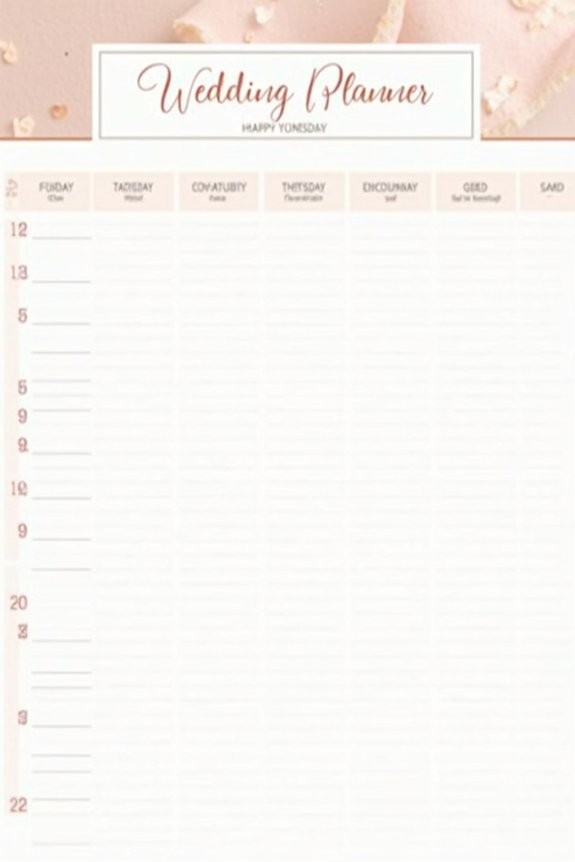
With your vendors aligned and your major time blocks mapped out, we’re ready to drill down into the details that’ll keep your day flowing seamlessly.
Start by listing every element: cocktail hour, dinner service, toasts, dancing, cake cutting, and any special moments you’ve planned. Assign specific times to each, building in buffer minutes between shifts.
Consider your guests’ energy and attention spans—don’t clump emotional moments together. Write everything down, then walk through it mentally.
You’ll spot potential conflicts and timing issues before they happen, allowing you to adjust with confidence and ease.
Account for Setup and Breakdown Time
the behind-the-scenes work that happens before your guests arrive and after they leave.
We need to block out setup time for your venue, caterer, florist, and rentals—typically one to three hours depending on complexity.
Similarly, breakdown time matters. Plan for at least an hour after your reception ends for staff to clear tables, pack belongings, and restore the space.
Building these windows into your schedule prevents rushing vendors and protects your celebration from feeling cramped or chaotic.
Tailor Your Timeline to Guest Count and Menu
Your guest count and menu choices directly shape how much time you’ll need for each reception segment, so it’s worth thinking through these details early.
A larger guest list requires extended cocktail hours and longer dining periods. Plated dinners take considerably more time than buffets or family-style service. If you’re serving multiple courses, build in extra minutes between each one.
Consider your guests’ experience too—we want them feeling unhurried and celebrated. Discuss these logistics with your caterer, who can provide realistic timing based on their staffing and kitchen setup.
This conversation guarantees your timeline flows smoothly from start to finish.
Plan for Late Arrivals and Vendor Delays
Even with the most thoughtful planning, receptions rarely unfold exactly as scheduled—guests arrive late, vendors encounter unexpected delays, and we need buffers built into our timeline to handle these inevitable hiccups without derailing the entire celebration.
Consider these practical strategies:
- Build 15-minute cushions between major events
- Schedule cocktail hour early to accommodate stragglers
- Brief your coordinator on flexible elements like speeches
- Prepare contingency timings for vendor setup issues
We’re not being pessimistic; we’re being realistic. These buffers protect your reception’s flow and keep you feeling calm.
When unexpected moments happen—and they will—you’ll have breathing room to adjust gracefully without stress derailing your joy.
Share Your Timeline With Your Wedding Party
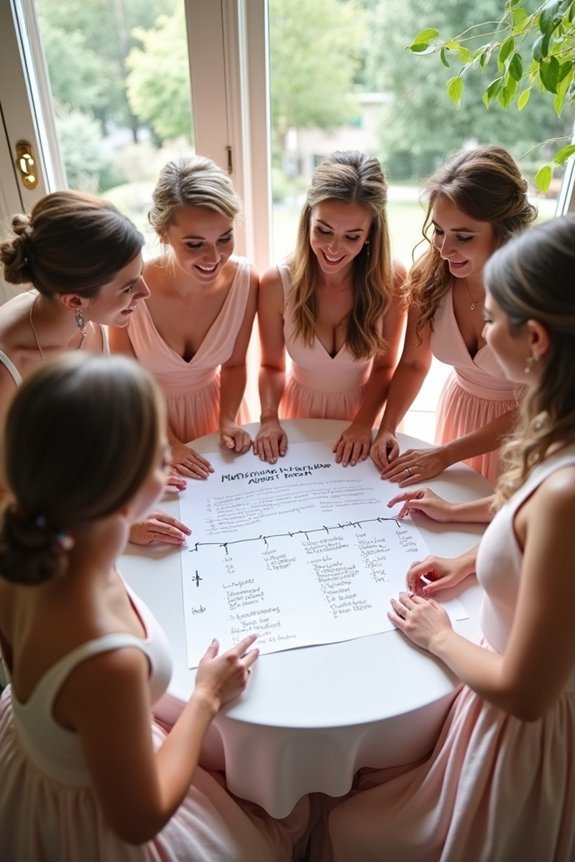
Once you’ve built those protective buffers into your timeline, it’s time to share the full picture with everyone who’s making your day happen—your wedding party, key family members, and vendors all need to know what’s expected and when.
Create a simple, clear document listing arrival times, ceremony start, cocktail hour, dinner service, toasts, dancing, and departure. Send it well in advance so people can plan accordingly.
Include specific responsibilities for your bridesmaids and groomsmen. When everyone understands the flow, your day runs smoothly, and your loved ones can actually enjoy celebrating you instead of scrambling for directions.
Test Your Timeline Before the Big Day

Planning a detailed timeline is one thing, but actually walking through it—ideally during your rehearsal—is what transforms those carefully organized minutes into a smooth, real-world experience.
We recommend testing these key moments:
- Walk the processional at your actual pace
- Practice the ceremony shifts between readings and vows
- Time your cocktail hour setup and guest flow
- Run through the reception entrance and first dance sequence
This dry run reveals unexpected delays, spacing issues, and shifts that need adjusting.
You’ll discover whether fifteen minutes for photos feels adequate or rushed. Your wedding party gains confidence knowing exactly what’s coming next, and you’ll catch timing problems before they affect your celebration.
Frequently Asked Questions
How Do I Time My First Dance if We’re Doing a Late-Night Surprise Performance?
We recommend scheduling your first dance right after dinner, around 8:30-9 p.m., then revealing your surprise performance later when energy dips. This keeps the romantic moment early while building anticipation for your act.
Should I Schedule My Cake Cutting Before or After Dinner Service?
We’d suggest scheduling your cake cutting after dinner—it’s the perfect dessert-and-dancing shift. Timing the treat after guests have eaten guarantees they’re satisfied and ready to celebrate this sweet, significant moment together.
What’s the Best Time to Do Family Photos During the Reception?
We recommend scheduling family photos right after cocktail hour, before guests sit for dinner. You’ll capture everyone while they’re fresh, dressed perfectly, and the light’s still gorgeous—without pulling people away from the celebration.
How Long Should I Allocate for a Sparkler Exit or Send-Off Moment?
We’d recommend allocating 15–20 minutes for your sparkler exit. This gives guests time to line up, light sparklers safely, and capture those magical photos without rushing the moment.
When Should I Schedule My Bouquet and Garter Toss for Maximum Engagement?
We recommend scheduling your bouquet toss about two hours into reception when guests are energized but not yet tired. Follow with the garter toss immediately after to maintain momentum and keep the dance floor buzzing.