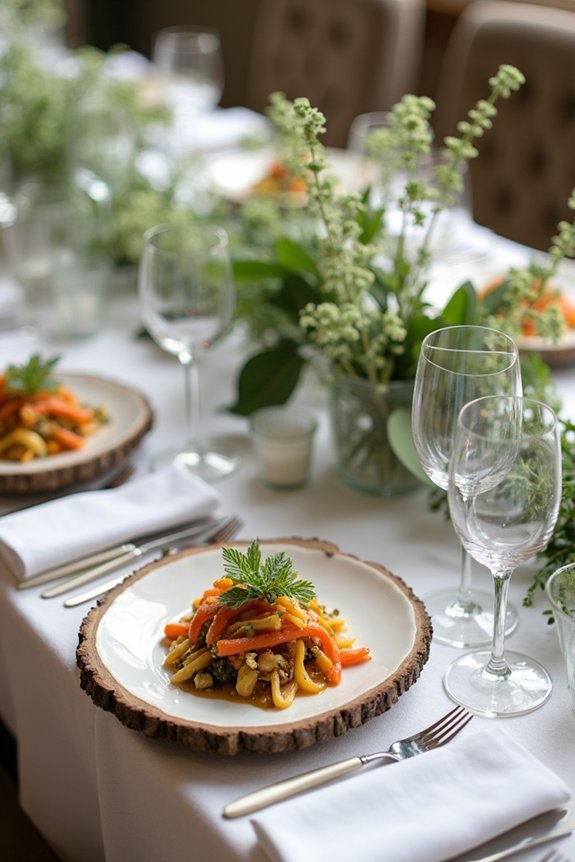
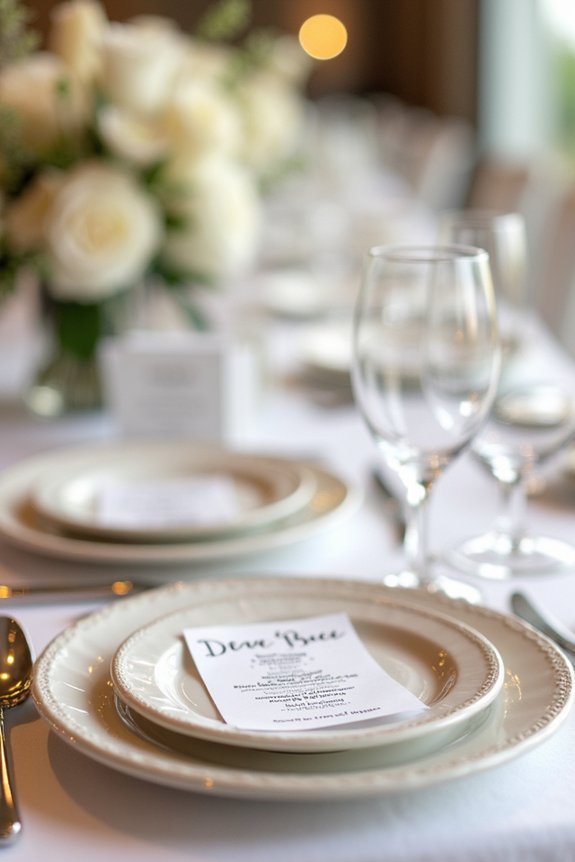
We can make your wedding welcoming for guests with allergies by starting early—gather detailed allergy information through your RSVP cards and follow up personally for clarification. Work closely with your caterer to design elegant dishes that safely accommodate various dietary needs, using dedicated prep stations to prevent cross-contamination. Finally, create a communication plan that briefs your staff and clearly labels all meals so everyone stays safe and informed. Understanding these fundamentals sets the foundation for deeper strategies that’ll transform your celebration.
At a Glance
- Collect detailed allergy information from guests through RSVP cards and confirm severity levels before the wedding date.
- Collaborate with your caterer to design separate preparation stations that prevent cross-contamination of allergen-free meals.
- Clearly label all dishes with ingredients and potential allergens so guests and servers identify safe options easily.
- Use color-coded plates or cards to distinguish special dietary meals during service to prevent mix-ups.
- Brief all venue staff and servers about guest allergies and dietary restrictions before the event begins.
Gather Complete Allergy Information Early
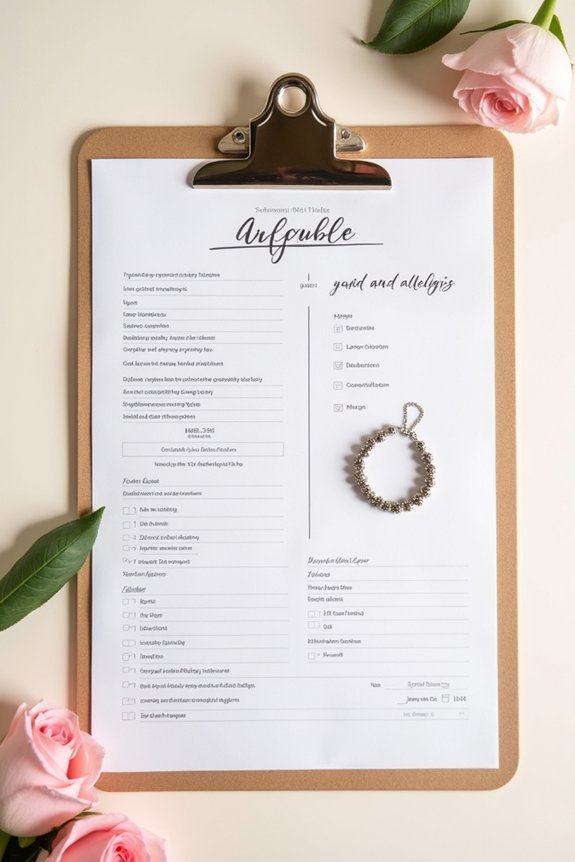
Before we plunge into menu planning or send out those gorgeous invitations, we need to tackle something essential: understanding exactly what allergies and dietary restrictions your guests have.
Create a simple form asking about common allergies like nuts, shellfish, dairy, and gluten. Don’t forget less obvious ones like sulfites or sesame. Send this alongside your RSVP card or include it in your digital invitation.
Follow up personally with guests who list restrictions, asking clarifying questions about severity and cross-contamination concerns. This groundwork prevents stressful last-minute surprises and shows your guests you genuinely care about their safety and comfort. Using a guest list manager with built-in dietary restriction tracking ensures all allergy information is centralized and easily accessible for your caterer.
Design Inclusive, Safe Menu Alternatives With Your Caterer
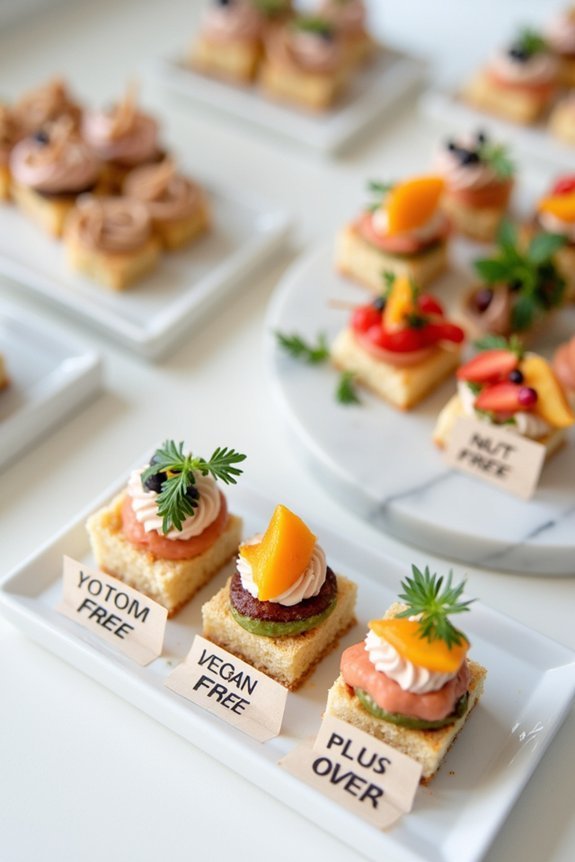
Once you’ve gathered your guests’ allergy information, it’s time to partner with your caterer to create a menu that keeps everyone safe and satisfied.
We’ll work together to design dishes that accommodate various dietary needs while maintaining elegance and flavor.
Consider these collaborative approaches:
- Dedicated preparation stations to prevent cross-contamination during food preparation
- Clearly labeled dishes identifying potential allergens and safe ingredients
- Substitute-friendly options that feel special, not like an afterthought
- Tasting sessions where you approve allergen-free versions before your wedding day
Your caterer becomes your ally in ensuring every guest enjoys their meal confidently and celebrates alongside you.
Using a budget spreadsheet can help you track catering costs while accommodating these necessary allergen-free modifications without exceeding your overall wedding expenses.
Create a Clear Allergy Communication Plan for Guests and Staff
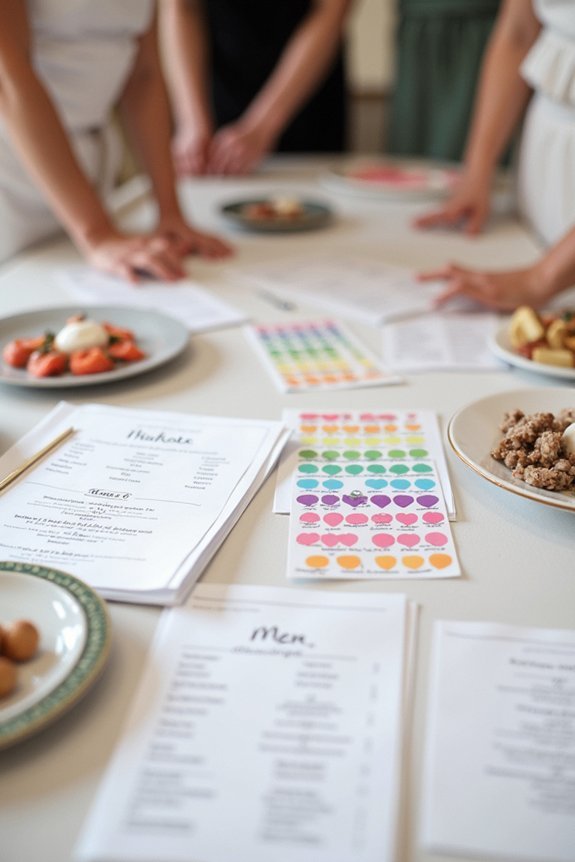
When it comes to keeping your guests safe, we need a communication system that leaves nothing to chance.
Start by asking about allergies on your RSVP card, then confirm details closer to your wedding date. Share this information directly with your caterer and venue staff in writing.
Create a simple chart showing who’s allergies and what they can’t eat. Brief your servers before service begins so they’re aware of dietary restrictions.
Consider color-coded plates or cards identifying special meals. This organized approach guarantees everyone—your guests and your team—knows exactly what’s safe to serve and eat. Review your Refunds Policy to understand how dietary accommodations and service issues may be handled.
Frequently Asked Questions
How Do We Prevent Cross-Contamination in the Kitchen During Food Preparation?
We’ll designate separate cutting boards, utensils, and prep areas for allergen-free dishes. We’ll use clean hands, wash thoroughly between tasks, and keep allergen ingredients isolated. We’ll label everything clearly so your kitchen staff stays aligned.
What’s the Best Way to Label Dishes to Identify Allergens at the Reception?
We recommend using elegant place card labels or table tent cards that clearly identify each dish’s main allergens. You’ll want to work with your caterer to create a simple, readable system—perhaps using icons or color coding—that doesn’t compromise your reception’s aesthetic.
Should We Require Guests to Disclose Allergies Before Sending Invitations?
We’d recommend collecting allergy information *after* sending invitations—about 15% of guests discover allergies later. This timing lets us plan menus accurately without delaying your guest list finalization.
How Can We Handle Last-Minute Allergy Notifications From Guests?
We recommend building buffer dishes into your menu that naturally accommodate common allergies. Coordinate directly with your caterer immediately—they’re equipped to modify plates last-minute without disrupting service flow.
What Liability or Insurance Considerations Apply to Serving Food With Allergens?
We recommend consulting your caterer’s liability insurance and your venue’s policy, as they’re typically responsible for food safety. You’ll want written documentation of all guest allergies for protection.