We can create elegant French table settings by focusing on timeless principles rather than expensive decorations. Start with quality neutral linens—crisp white or cream tablecloths—paired with classic white dinnerware. Arrange silverware properly from outside to inside, place glasses above the knife, and add fresh flowers as your centerpiece. Choose a sophisticated color palette with one neutral base, one accent color, and one metallic tone. Balance visual interest with understated elegance, and you’ll discover how these foundational elements transform any occasion into a refined dining experience.
At a Glance
- Start with a quality neutral tablecloth in white, cream, or soft gray as your elegant foundation for any French-inspired table.
- Arrange flatware from outside to inside by course, with forks left and knife blades facing inward for proper sophistication.
- Limit your color palette to three colors maximum: one neutral base, one accent, and one metallic for visual harmony.
- Use natural fabrics like linen or cotton with subtle patterns such as stripes, toile, or damask for authentic French flair.
- Minimize competing decorations and avoid plastic items to maintain an uncluttered, refined atmosphere that lets linens and centerpieces shine.
Why French Table Design Works for Modern Weddings
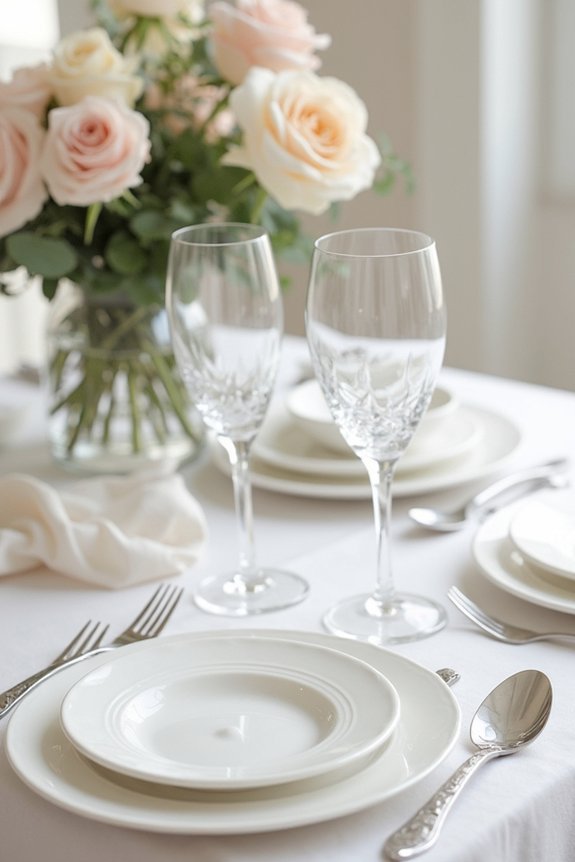
If you’re drawn to timeless elegance but worry it’ll feel stuffy or outdated, French table design offers the perfect solution—it’s sophisticated without being fussy, and it works beautifully with today’s wedding styles.
We love French aesthetics because they balance formality with warmth, creating spaces where guests feel genuinely welcomed rather than intimidated. The approach blends classic elements like fine linens and candlelight with relaxed, personal touches.
You can easily mix vintage pieces with modern décor, natural flowers with structured arrangements, and traditional place settings with contemporary details. This flexibility means French design adapts to your unique vision while maintaining that coveted elegant polish. Consider anchoring your tablescape with a pergola structure as a dramatic overhead element that frames the dining area with architectural interest.
Start With These Five Core Elements
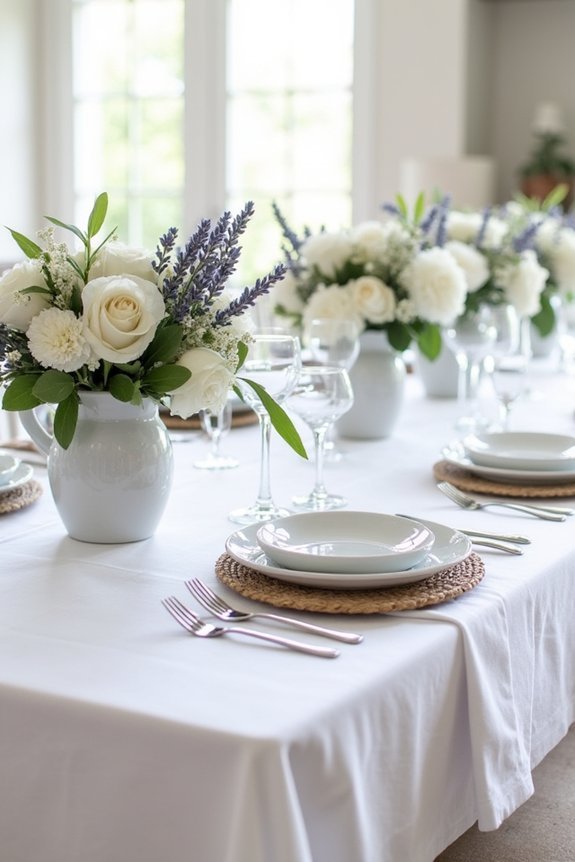
Start with a quality tablecloth in a neutral tone—white, cream, or soft gray creates elegance.
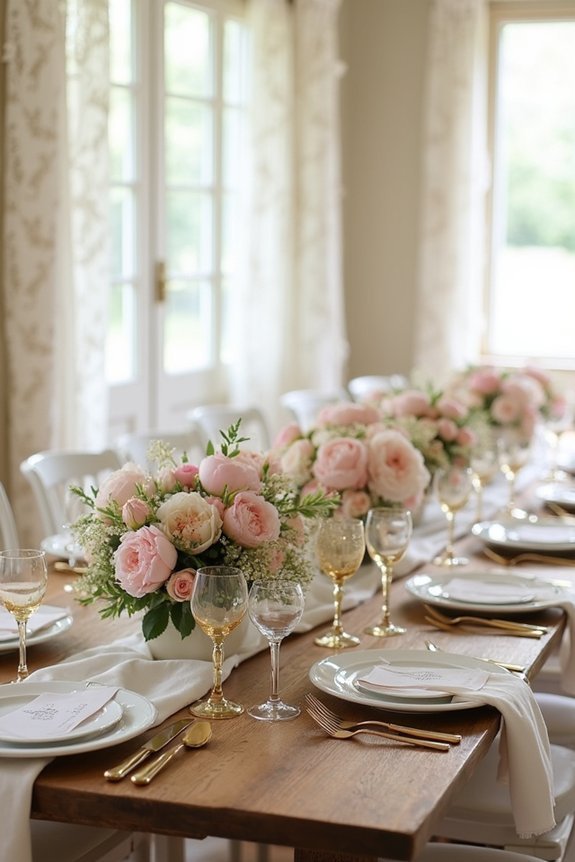
Add layered linens with a contrasting runner for depth.
Next, choose your dinnerware: classic white or ivory plates work beautifully.
Include proper glassware and flatware arranged correctly.
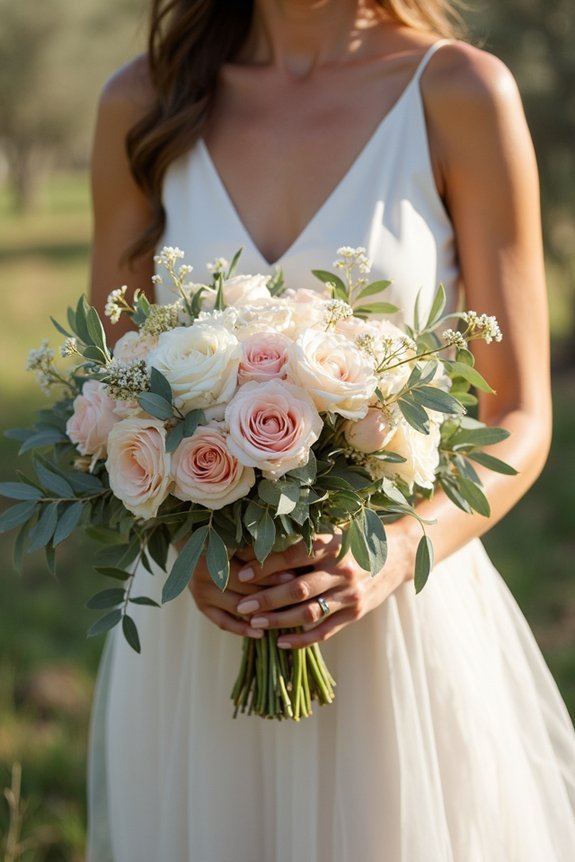
Finally, incorporate fresh flowers and greenery as your centerpiece. For added visual impact, consider pairing your floral arrangements with artificial grass wall panels to create a cohesive garden-inspired backdrop for your dining space.
These five elements work together to create that sophisticated French aesthetic you’re after, making everything else feel naturally cohesive.
Choose a French Table Color Palette
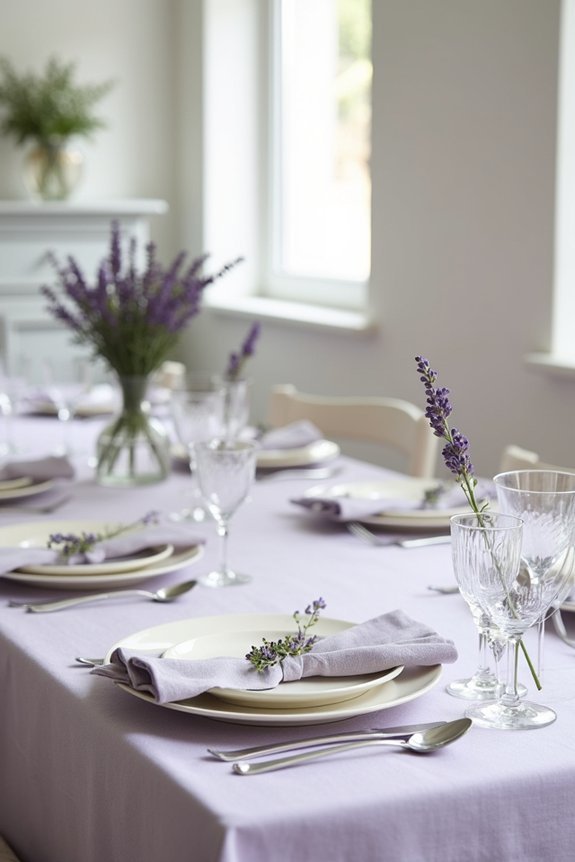
Now that you’ve got your foundational elements in place, let’s talk about the color palette that’ll tie everything together and set the mood for your guests.
French elegance thrives on sophisticated neutrals—think creams, soft whites, and warm grays paired with deep jewel tones like navy or emerald. Blush and champagne add romance without feeling overly sweet.
We recommend choosing three colors maximum: one neutral base, one accent, and one metallic (gold or silver). This restraint creates visual harmony and lets your linens, centerpieces, and tableware shine. Consider incorporating cubic zirconia or pearl accents in your table settings to add luxury and brilliance to your color scheme.
Your palette should whisper rather than shout, reflecting timeless French refinement.
Get the French Place Setting Right
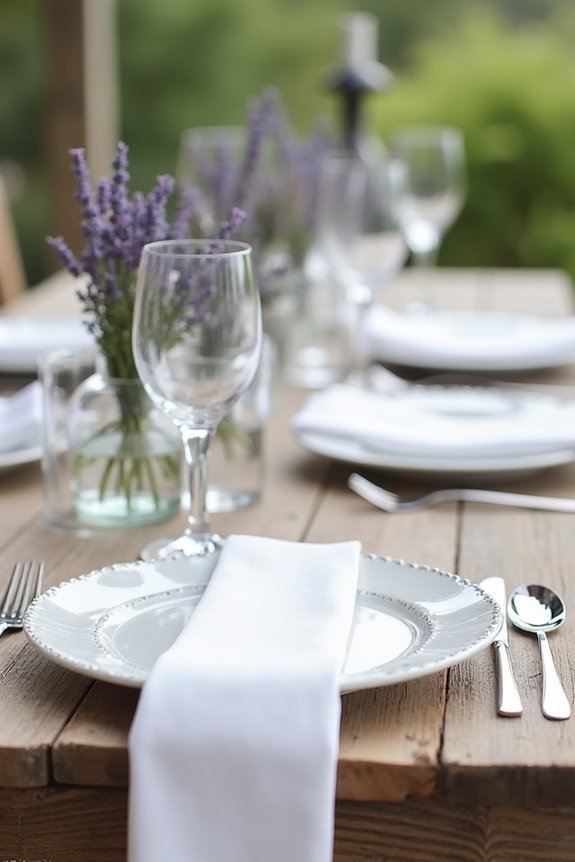
A French place setting might look intimidating at first glance—with its multiple forks, glasses, and precisely positioned plates—but it’s actually a logical system designed to guide your guests through each course with elegance and ease.
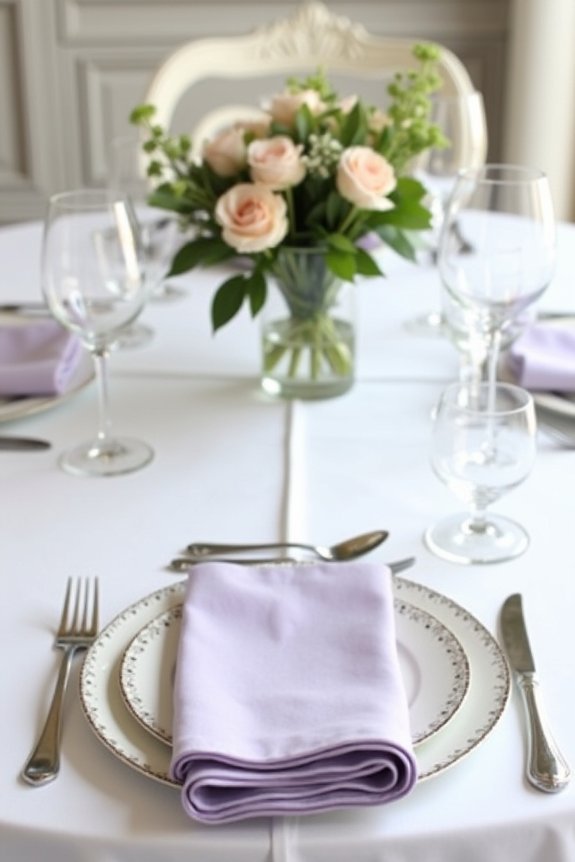
We arrange silverware from outside to inside, working toward the plate as each course progresses. Forks go left, knives and spoons go right with knife blades facing inward.
Place glasses above the knife, positioning water glasses closest to the plate with wine glasses angled slightly outward.
Consider using high contrast color coordination between your table linens and dinnerware to enhance visibility and create visual sophistication at your dining table.
This thoughtful arrangement removes confusion and creates a sophisticated dining experience your guests will genuinely appreciate.
Select French Table Linens
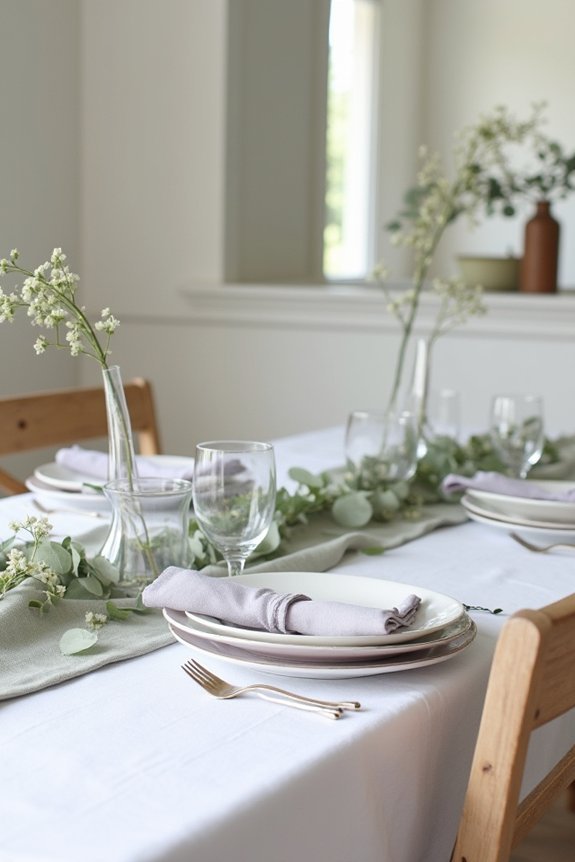
Once your place settings are perfectly arranged, the linens you choose will frame that elegance and set the tone for your entire table.
We recommend starting with quality, natural fabrics like linen or cotton that drape beautifully and feel luxurious. Crisp white or ivory tablecloths create timeless sophistication, while soft neutrals like taupe add warmth.
Consider adding patterned runners or napkins with subtle stripes, toile, or damask designs for French flair. The key is balancing visual interest with understated elegance—let your linens complement rather than compete with your place settings and centerpieces.
For couples planning a coordinated wedding aesthetic, using a comprehensive budget tool can help you allocate funds strategically across all your table décor elements and other expenses.
Layer Textures in Your French Place Setting
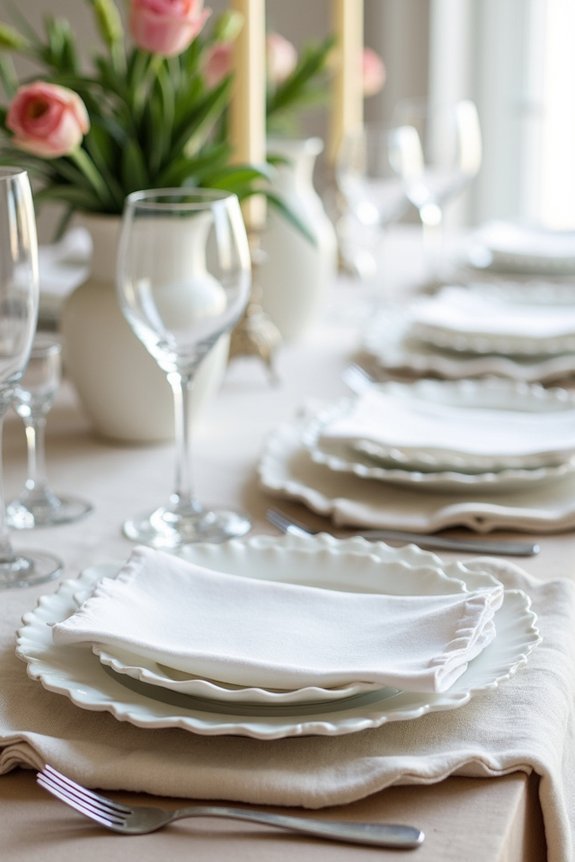
With your linens in place, you’re ready to build visual depth through layering textures—the element that transforms a simple place setting into something truly French and sophisticated.
We love combining smooth linen with tactile elements like lace overlays, delicate runner placements, or embroidered napkins.
Add a charger plate beneath your dinner plate for dimension, then layer in textured glassware and vintage-inspired silverware.
Consider mixing matte and shiny finishes—perhaps a matte ceramic plate against a polished charger.
These subtle contrasts create visual interest that catches light beautifully, making your table feel intentionally curated and undeniably elegant.
Design French Table Centerpieces
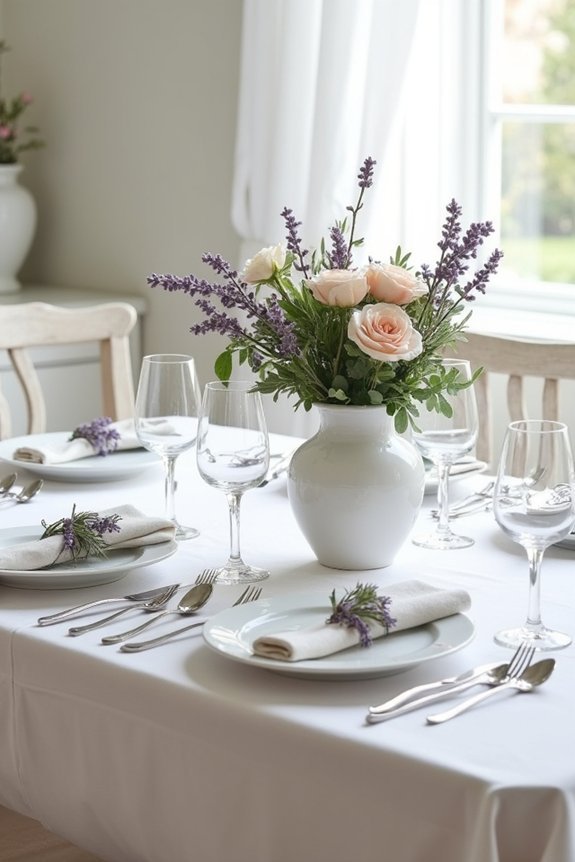
The centerpiece is where your table really comes alive—it’s the focal point that ties together all those textures and linens you’ve carefully layered.
We recommend keeping French centerpieces understated yet impactful. Low arrangements work beautifully, allowing guests to see across the table and connect with one another.
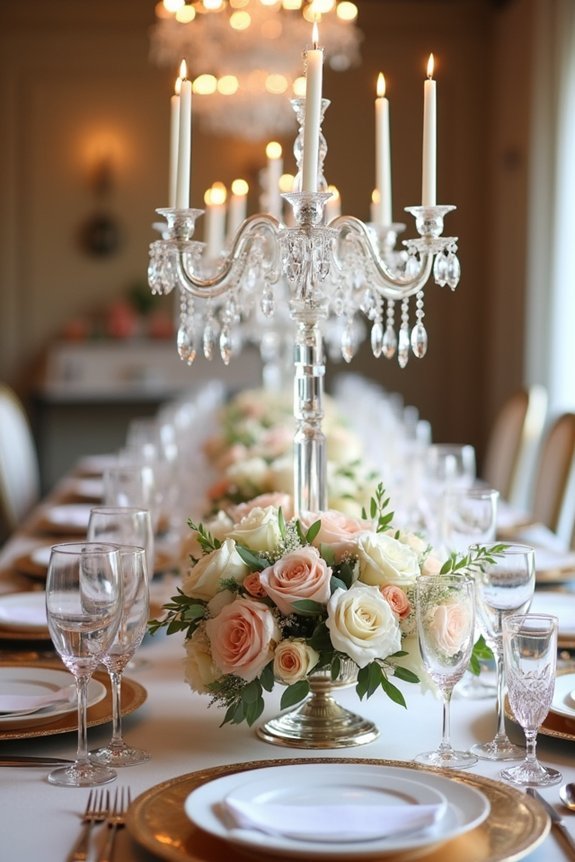
Consider grouping candles at varying heights with fresh flowers like roses, peonies, or lavender. Incorporate natural elements such as greenery, branches, or seasonal foliage.
A simple glass vase, vintage candlestick, or ceramic pitcher anchors the design elegantly.
Adapt French Table Settings for Formal Occasions
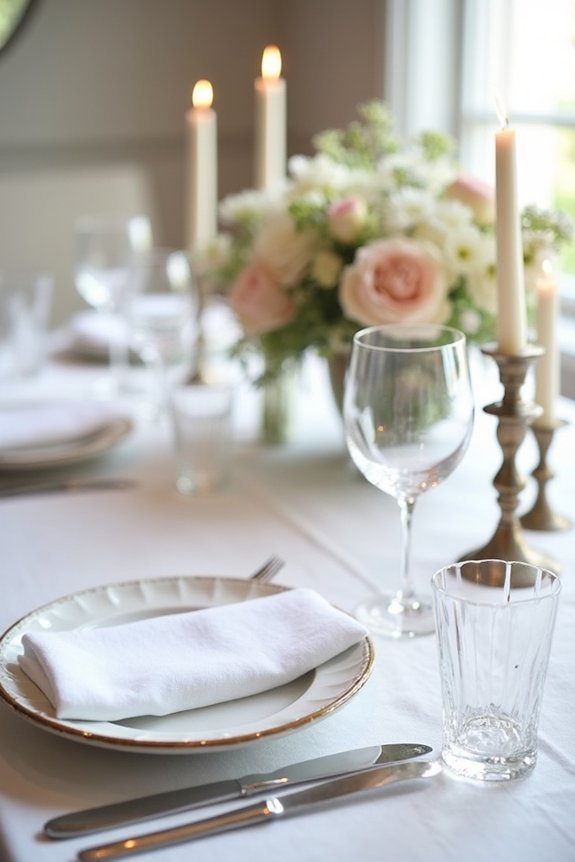
Your centerpiece sets the stage beautifully, and now we’re ready to elevate those French table settings for your most formal occasions.
We’ll swap casual linens for crisp damask tablecloths, add multiple napkin folds, and incorporate fine china with charger plates.
Introduce candlelight with elegant candelabras, place cards with calligraphy, and add subtle touches like silk ribbon chair ties.
Layer your glassware thoughtfully—water, wine, and champagne glasses positioned precisely.
Consider adding small menu cards at each place setting.
These refined details transform your table into a sophisticated dining experience that feels intentional and magazine-worthy, creating moments your guests will genuinely remember.
Avoid These Five Elegance Killers
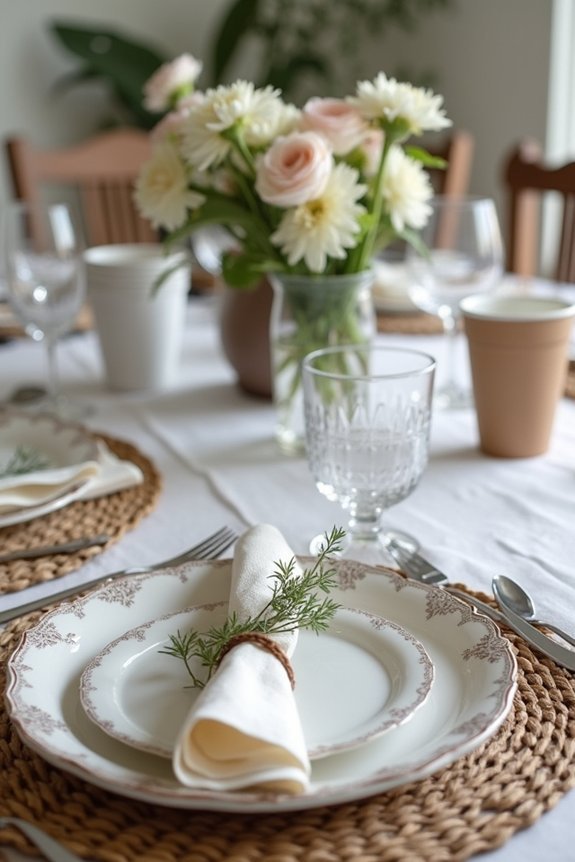
Even when we’ve carefully selected our linens, polished our glassware, and arranged our centerpieces with intention, one overlooked detail can undermine all that thoughtful work.
We’ll want to avoid cluttered tablescapes—too many decorations compete for attention. Mismatched chargers and plates create visual chaos rather than sophistication. Dirty or spotted glassware immediately signals carelessness. Overpowering scents from candles or flowers can overwhelm guests and overshadow your meal.
Finally, we should skip plastic anything; it breaks the elegant mood instantly. By steering clear of these common pitfalls, we protect the refined atmosphere we’ve worked so hard to create.
Frequently Asked Questions
Can I Mix Vintage French Linens With Modern Dishware Without Looking Mismatched?
Can you mix vintage French linens with modern dishware? Absolutely—we’ve found that contrast is where elegance lives. Pair delicate damask linens with clean-lined contemporary plates; the juxtaposition creates sophisticated tension that reads intentional, not accidental.
How Do I Recreate French Table Settings on a Tight Wedding Budget?
We’ll help you nail French elegance affordably. Focus on crisp white linens, simple glassware, and fresh flowers in modest arrangements. Mix vintage finds with budget basics—the Parisian approach values quality over quantity, not price tags.
What’s the Best Way to Source Authentic French Table Décor Items Online?
We’ve found Etsy sellers specializing in vintage French linens offer authentic pieces at reasonable prices. Search “French linen tablecloth” or “vintage French napkins” to discover artisans who source directly from France, giving you genuine décor without department store markups.
How Far in Advance Should I Plan and Order French Table Linens?
We recommend ordering French table linens 3-4 months before your event. This timeline lets us secure quality pieces, handle any custom monogramming, and arrange replacements if needed without last-minute stress.
Can French Table Settings Work for Outdoor Garden Weddings or Only Indoors?
French table settings work beautifully outdoors, especially in garden settings. We love pairing classic linens with natural surroundings—just anchor everything securely against wind and choose weather-resistant fabrics for durability.