We’ll help you select garden rose boutonnieres by considering your wedding style, color palette, and venue conditions. Start by matching your boutonniere colors to your bridal bouquet for visual harmony. Choose fresh or preserved roses based on your timeline and temperature concerns. Coordinate with your florist about budget, lead time, and design flexibility. Test your boutonnieres two weeks prior to guarantee they’ll withstand your wedding day’s heat and humidity. Following these steps will guide you toward gorgeous results that celebrate this special moment.
At a Glance
- Select garden rose colors that complement your bridal bouquet and wedding aesthetic for visual cohesion.
- Choose between fresh roses for natural fragrance or preserved roses for durability in warm venues.
- Coordinate with your florist at least 4-6 weeks in advance to ensure availability and budget alignment.
- Implement preservation techniques like floral preservative, cool storage, and damp wrapping to prevent wilting.
- Schedule a pre-wedding trial two weeks prior to test pinning methods and assess rose performance.
Why Garden Roses Outshine Other Boutonniere Choices
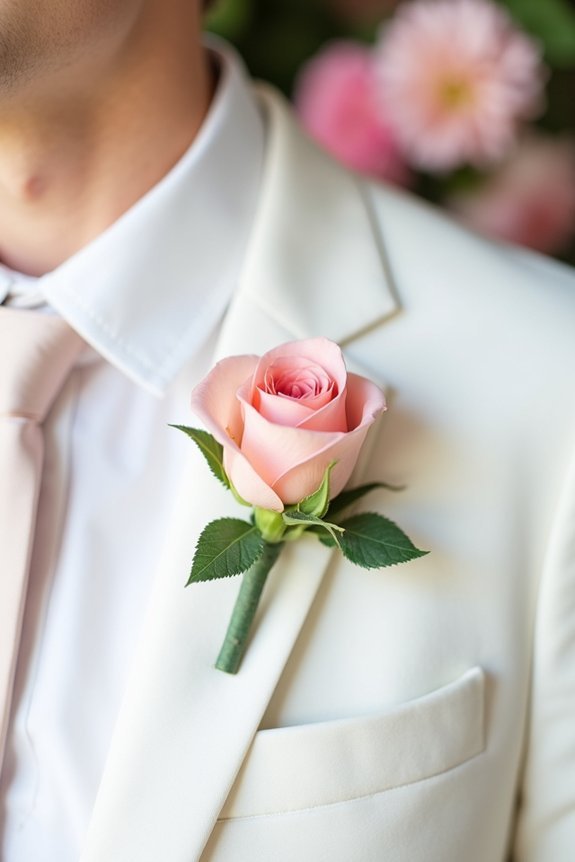
When you’re envisioning your groom and groomsmen walking down the aisle, you want their boutonnieres to feel just as special and intentional as your bridal bouquet—and that’s where garden roses truly shine.
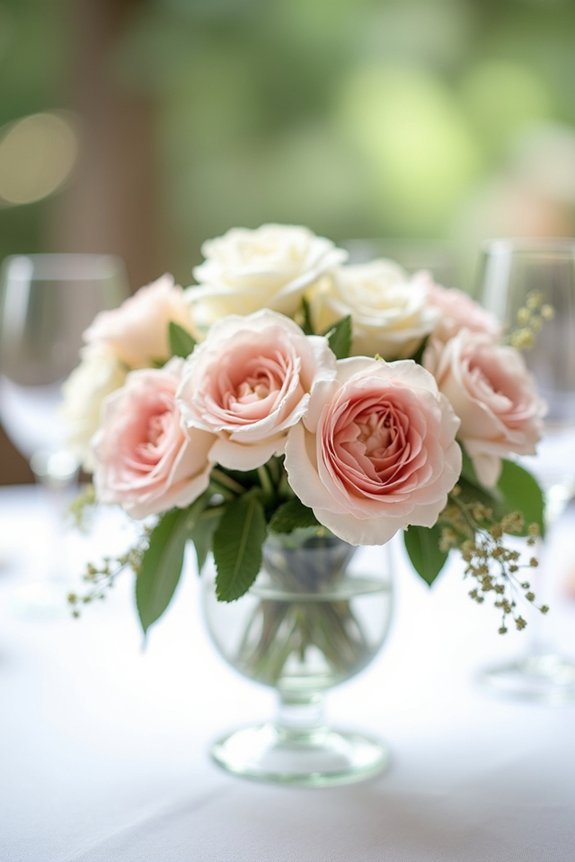
Unlike standard roses, garden roses offer romantic, full blooms with multiple layers of petals that photograph beautifully. They’re available in sophisticated colors and textures that complement any wedding aesthetic.
Garden roses hold up remarkably well throughout the day, maintaining their shape and freshness. Their generous size creates visual impact without needing filler flowers, making them the elegant, low-maintenance choice your wedding party deserves. Just as bridal accessories like hair vines require thoughtful consideration to ensure they complement your overall wedding vision, your boutonniere selection should harmonize with the color palette and style of your entire wedding day look.
Garden Rose Varieties 101: Colors, Sizes, and Styles
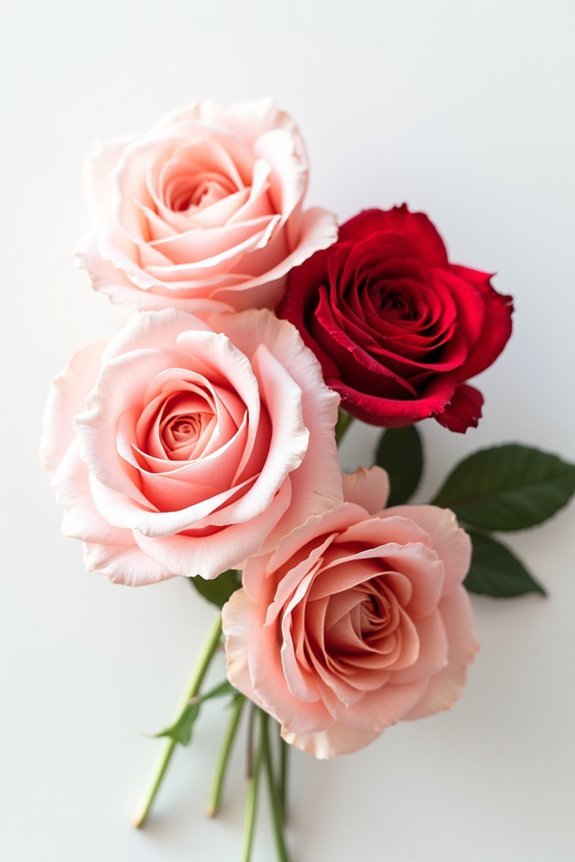
Once you’ve decided that garden roses are the right choice for your groomsmen’s boutonnieres, the real fun begins—exploring the varieties available to you.
Garden roses come in stunning options that’ll perfectly complement your wedding vision:
- Classic pinks and blushes – romantic and timeless choices
- Deep burgundies and wines – sophisticated and dramatic
- Soft whites and creams – elegant and versatile
- Peachy and coral tones – modern and warm
Each variety ranges from 4 to 6 inches in diameter, giving you impressive fullness without bulk.
The layered petals create that coveted garden-fresh aesthetic.
We’d recommend selecting one or two varieties that match your overall color palette, ensuring your boutonnieres feel intentional and cohesive throughout your celebration. To keep your boutonniere selections organized alongside other floral expenses, consider using a budget tracking spreadsheet to maintain clarity on all your wedding costs.
Match Garden Roses to Your Wedding Style and Venue
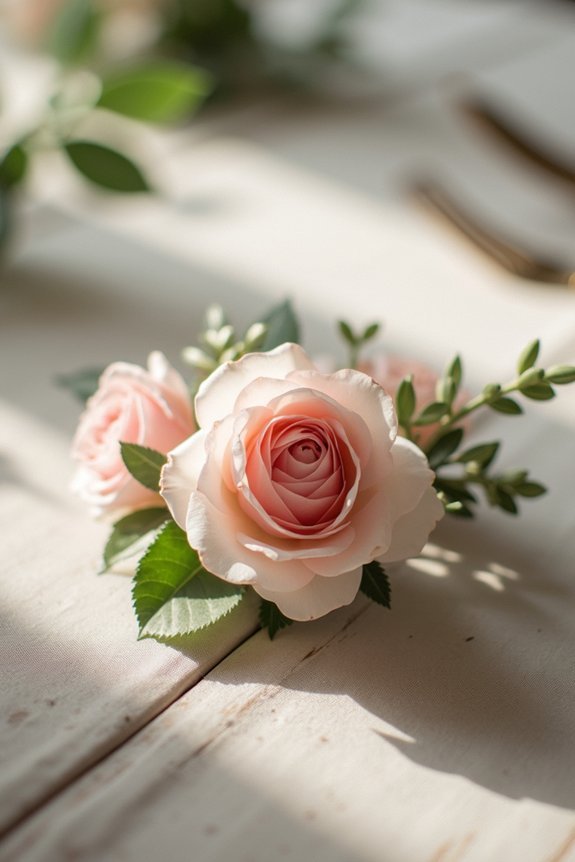
How do we guarantee your boutonnieres feel like a natural extension of your celebration rather than an afterthought?
We match garden roses to your overall wedding aesthetic. For romantic, vintage affairs, softer hues like blush and cream roses create cohesion with your décor. Modern minimalist weddings shine with bold jewel tones or crisp whites.
Consider your venue too—garden settings benefit from naturalistic, wildflower-inspired arrangements, while ballroom events call for structured, polished designs.
Your boutonniere’s color, size, and accompanying greenery should echo your bridal bouquet and ceremony flowers, creating visual harmony throughout your celebration. Just as bridal headpiece materials like Austrian crystals and pearls reflect skilled craftsmanship and elevate your overall look, your boutonniere’s quality flowers and construction should demonstrate the same attention to detail.
Coordinate Your Boutonnieres With Your Bridal Bouquet
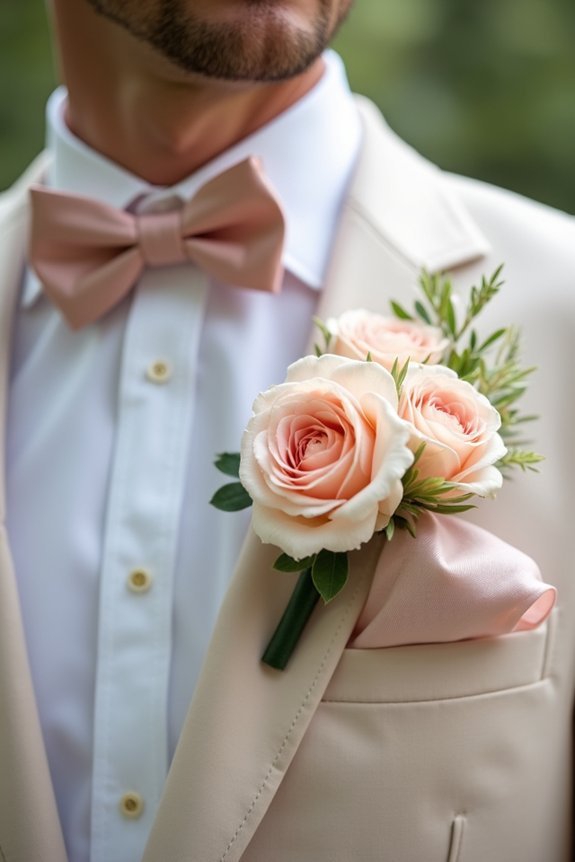
Your bridal bouquet sets the tone for every floral detail at your wedding, and your boutonnieres should echo that same beauty and sophistication.
We love creating a cohesive look by pulling flowers directly from your bouquet into the boutonniere design. This approach unifies your wedding’s floral story beautifully.
Consider these coordination strategies:
- Repeat key flowers from your bouquet in each boutonniere
- Match color palettes exactly, ensuring harmonious visual flow
- Use complementary greenery that appears in your arrangement
- Maintain similar texture and overall aesthetic throughout
When your groomsmen wear boutonnieres that reflect your bridal bouquet, you’re creating an intentional, polished visual narrative that guides your guests through your celebration. Just as bridal jewelry sets complete the bride’s look, coordinated boutonnieres add the finishing touch to every groomsman’s formal appearance.
Boutonniere Size: Finding Your Perfect Scale
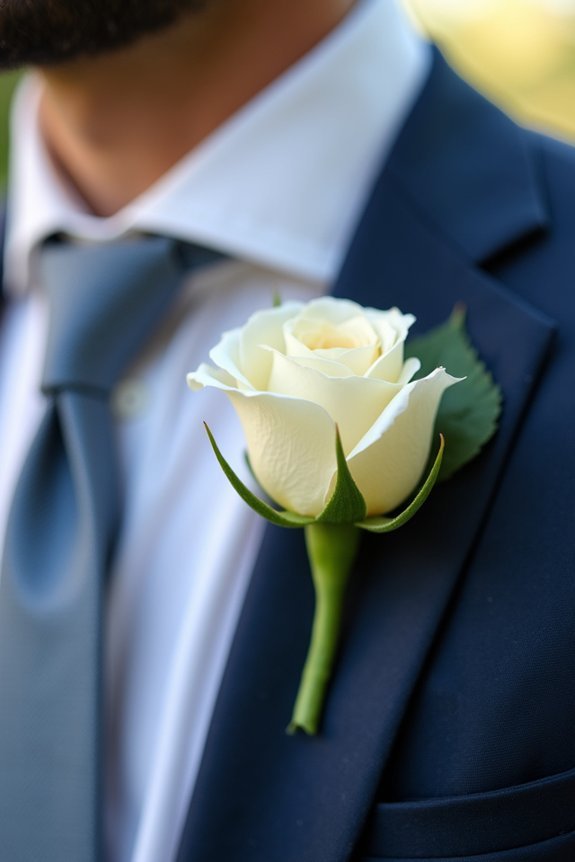
Getting the scale right makes all the difference—a boutonniere that’s too large overwhelms a groomsman’s lapel, while one that’s too small disappears entirely and loses its impact.
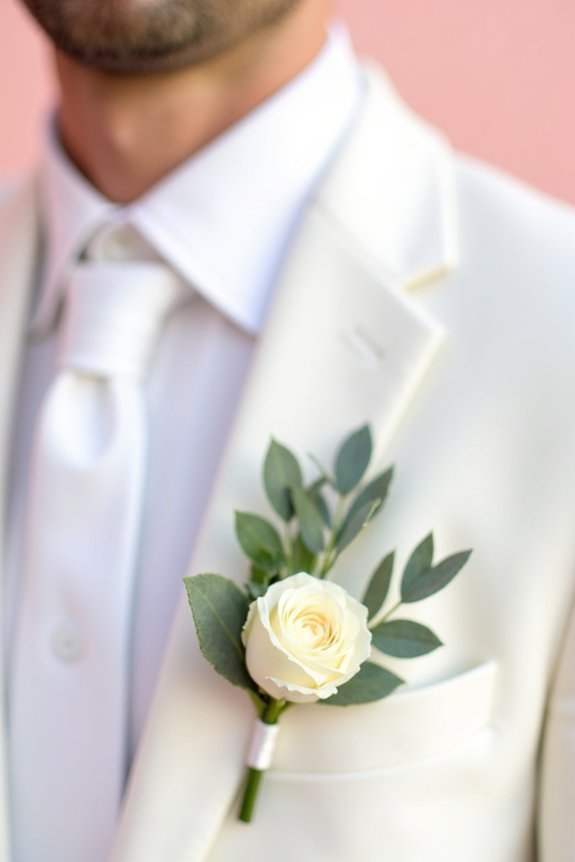
We recommend keeping your garden rose boutonniere between two and three inches in diameter, which creates visual harmony with standard lapel proportions.
Consider your groom’s frame; taller men can carry slightly larger arrangements, while slighter builds work better with more delicate sizing.
Pair your boutonniere with your bridal bouquet‘s scale—if your bouquet is lush and dramatic, your boutonnieres should echo that confidence.
Just as bridal hair accessories require high-quality materials to ensure durability and comfort throughout your wedding day, your boutonniere design should also feature sturdy stems and secure construction to maintain its appearance during photos and celebrations.
This intentional sizing guarantees your wedding party photographs beautifully and feels balanced together.
Single Garden Rose or Mixed Stems for Your Boutonniere
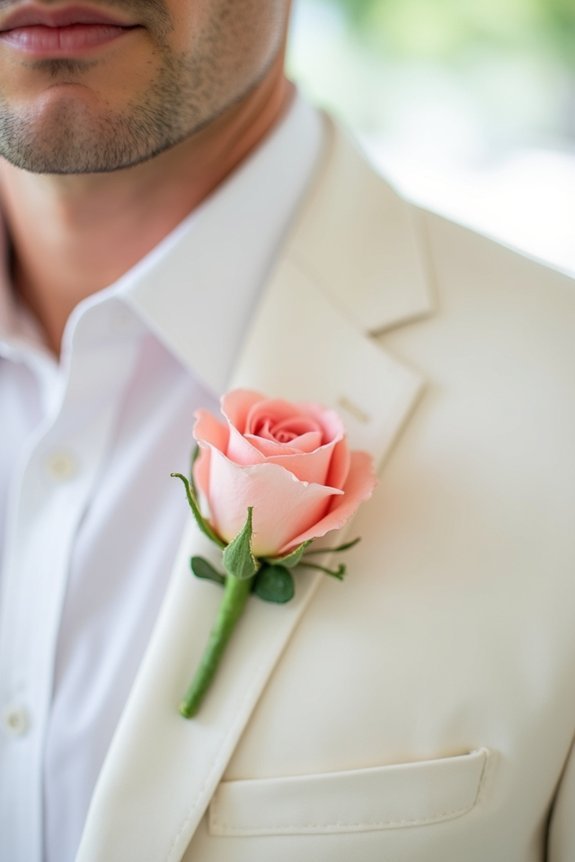
Once you’ve nailed down the perfect size, the next decision comes down to this: should you feature one stunning garden rose as your statement piece, or blend several complementary stems together?
Both approaches create beautiful results, and your choice depends on your vision and wedding style:
- Single garden rose delivers drama and elegance with minimal fuss.
- Mixed stems add texture, depth, and visual interest through layering.
- Consideration your color palette and overall aesthetic.
- Budget impact plays a role in which direction feels right.
A solo rose works beautifully for modern, minimalist weddings.
Mixed arrangements suit romantic or garden-style celebrations.
We encourage you to trust your instincts here—there’s truly no wrong choice.
Fresh vs. Preserved Garden Roses: Which Lasts Until Your Vows
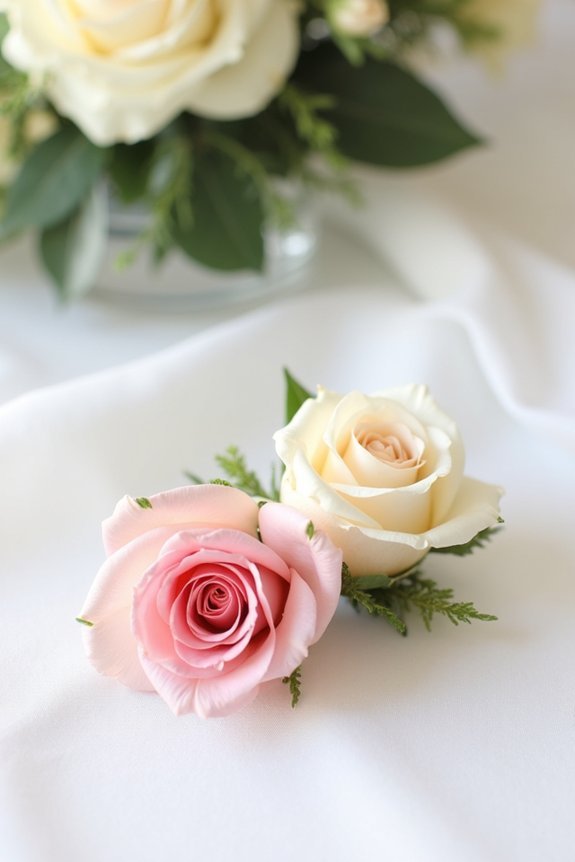
Choosing between fresh and preserved garden roses will shape how your boutonniere looks and feels throughout your entire wedding day.
Fresh roses offer natural beauty and authentic fragrance, but they’re delicate and may wilt in heat or humidity.
Preserved roses maintain their appearance for months, giving you worry-free elegance from ceremony through reception. They’re also practical if you’re planning a destination wedding or outdoor celebration in warm weather.
Consider your venue’s temperature, your timeline, and whether you want that classic fresh-flower feel or lasting durability.
Both choices deliver stunning results—it’s about what works best for your day.
Peak Seasons for Garden Roses (and Why It Matters for Your Date)
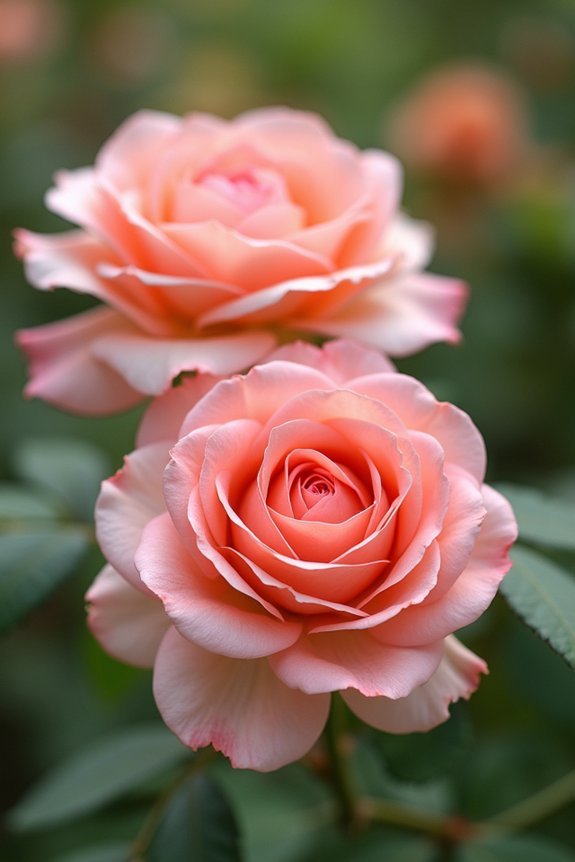
Because garden roses have distinct growing seasons, timing your wedding around peak availability will give you more color options, better prices, and fresher blooms for your boutonniere.
Garden roses thrive during specific months, and we want you to understand how this affects your choices.
Here’s what matters most:
- Spring (April-May): Peak season with vibrant colors and maximum variety
- Summer (June-August): Good availability, though some colors fade in heat
- Fall (September-October): Beautiful jewel tones emerge alongside returning spring varieties
- Winter (November-March): Limited selection and higher costs due to imported roses
Choosing an off-peak date means fewer options and premium pricing.
Planning around peak seasons guarantees you’ll get exactly the boutonniere vision you’re dreaming of.
Protect Garden Roses From Heat and Humidity
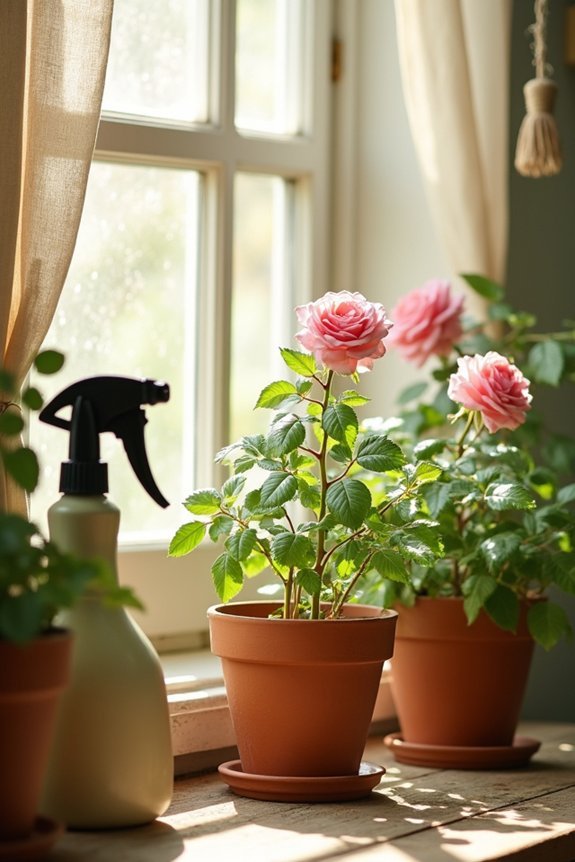
Garden roses are absolutely stunning, but they’re also sensitive to heat and humidity—two conditions that can wilt your beautiful blooms before you even walk down the aisle.
We recommend keeping boutonnieres in a cool space until the ceremony begins. Consider using floral preservative in the water, which helps them stay hydrated longer.
If your wedding’s outdoors or in a warm venue, we suggest misting the petals lightly beforehand. You might also wrap the stems in damp floral tape to maintain moisture.
These simple steps protect your garden roses‘ delicate beauty, ensuring they look fresh and elegant throughout your special day.
Budget, Timeline, and Florist Conversations
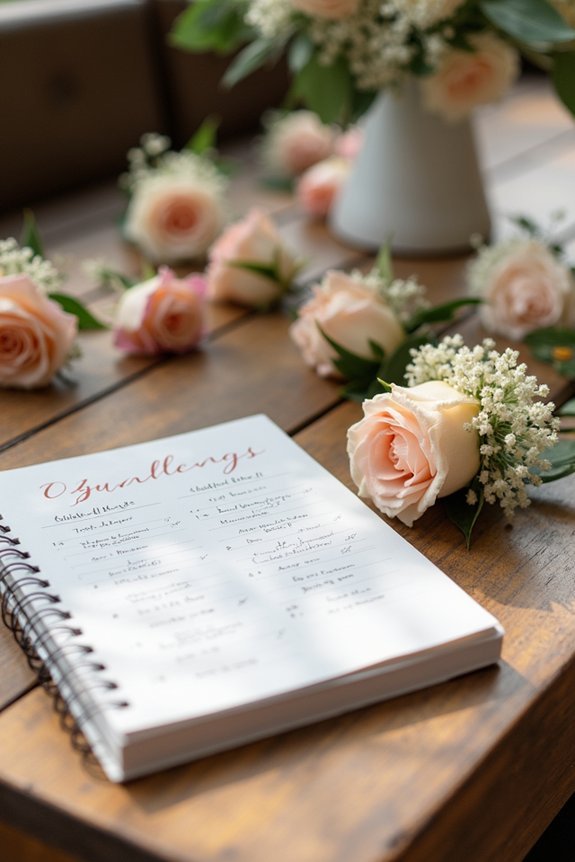
Planning your garden rose boutonniere involves three conversations happening at once: your budget, your timeline, and what’s actually possible with your florist.
We recommend discussing these elements together rather than separately.
Here’s what matters most:
- Budget clarity – Garden roses cost more than standard roses, so knowing your per-boutonniere spend helps your florist suggest realistic options.
- Seasonal availability – Some garden rose varieties appear only during specific months, affecting both price and design possibilities.
- Lead time needs – Most florists require 4-6 weeks’ notice for specialty blooms.
- Design flexibility – Being open to color alternatives or similar varieties expands what’s achievable.
These conversations build trust with your florist and guarantee gorgeous results.
6 Mistakes That Wilt Garden Rose Boutonnieres (And How to Prevent Them)
You’ve had those detailed conversations with your florist, settled on a stunning garden rose design, and now the real work begins—keeping those delicate blooms looking fresh from morning prep through the final dance.
The biggest culprit? Dehydration. Garden roses need constant water access, so we insist your florist uses floral foam that stays moist throughout the day.
Heat and direct sunlight wilt them quickly, so keep boutonnieres in a cool space until the ceremony. Avoid touching petals unnecessarily—oils from your hands damage their delicate surface.
With these preventative steps, your garden roses will stay magazine-perfect all day long.
Test Your Boutonnieres Before the Wedding Day
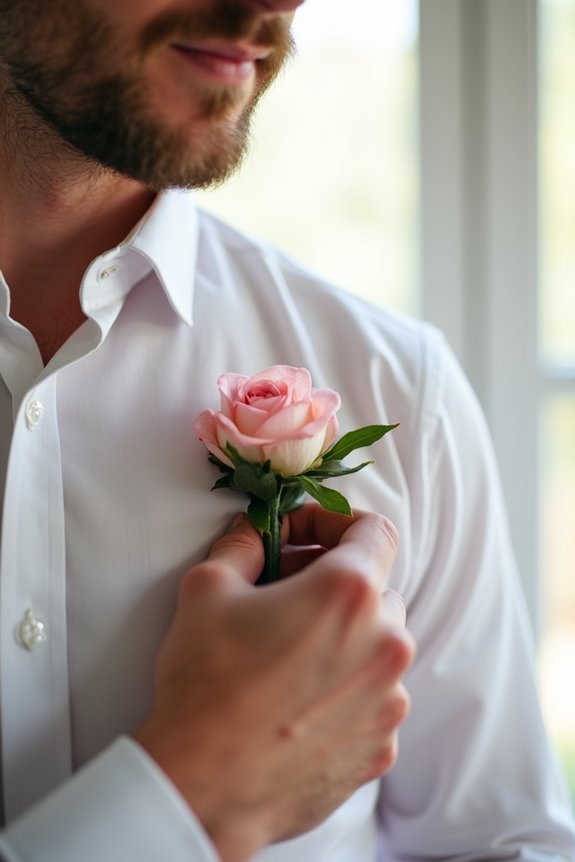
Why wait until your wedding morning to see how your garden roses will actually look and perform? Testing your boutonnieres beforehand gives us peace of mind and catches any issues early.
We recommend scheduling a trial run about two weeks before your wedding:
- Order sample flowers from your florist and practice pinning techniques
- Check how roses hold up in your venue’s temperature and humidity
- Test boutonniere placement on your groom’s and groomsmen’s jackets
- Photograph the boutonnieres in your wedding day lighting
This advance preparation guarantees your boutonnieres look flawless when you walk down the aisle.
Frequently Asked Questions
How Far in Advance Should I Order Garden Roses for My Wedding Boutonnieres?
We’d recommend ordering your garden roses 4-6 weeks before your wedding—basically when you’re still doom-scrolling Pinterest at midnight. This timeline guarantees we’ve got fresh, peak blooms without the last-minute panic.
Can Garden Roses Be Dyed or Tinted to Match My Wedding Color Palette?
We can dye garden roses, but we don’t recommend it—they’re naturally stunning and dyeing often damages their delicate petals. Instead, we’d choose varieties that already match your palette perfectly.
What’s the Difference Between Garden Roses and Cabbage Roses for Boutonnieres?
We hate to break it to you, but they’re basically the same thing—cabbage roses are just garden roses’ frilly cousins. Both work beautifully for boutonnieres; you’re really choosing based on bloom size and texture preferences.
How Do I Attach a Boutonniere to a Groom’s Jacket Without Damaging Fabric?
We recommend using a boutonniere pin with a flat, wide head that won’t puncture fabric. Insert it through the lapel’s underside, securing the stem horizontally. This method protects your groom’s jacket from visible holes or tears.
Are Garden Rose Boutonnieres Appropriate for Casual or Elopement-Style Weddings?
We’d absolutely say yes—garden roses work beautifully for elopements and casual weddings. Their romantic, full blooms add sophistication without feeling overdressed, and they’re perfect whether you’re exchanging vows in jeans or an intimate garden setting.