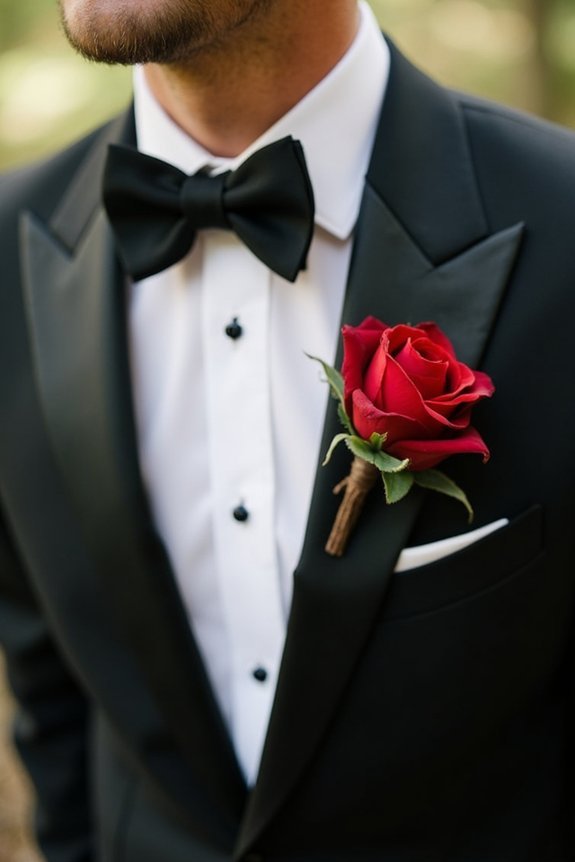
A rose boutonniere is a single bloom or small cluster pinned to a lapel, adding elegance to formal wedding attire. We use boutonnieres to create visual unity among groomsmen, help guests identify the wedding party, and enhance photos. They’re typically made with garden roses, spray roses, or David Austin varieties in colors like red, blush, or white—chosen to match your wedding’s aesthetic. Proper storage in cool temperatures and moisture-retaining methods keep them fresh throughout your celebration, and understanding the details helps us avoid common mistakes that affect their beauty.
At a Glance
- A rose boutonniere is a single flower or small cluster worn on a lapel to add elegance and personality to formal wedding attire.
- Boutonnieres create visual cohesion among the groom’s party and help guests identify wedding party members during ceremonies and photos.
- Rose color selection—red for love, blush for romance, white for elegance—should complement the venue aesthetic and overall wedding color palette.
- Boutonnieres should be ordered six to eight weeks in advance, with final orders locked in two weeks before the wedding day.
- Maintain freshness by storing boutonnieres in cool spaces (45-50°F), wrapping stems in damp floral tape, and using floral preservative in water.
What Exactly Is a Rose Boutonniere?
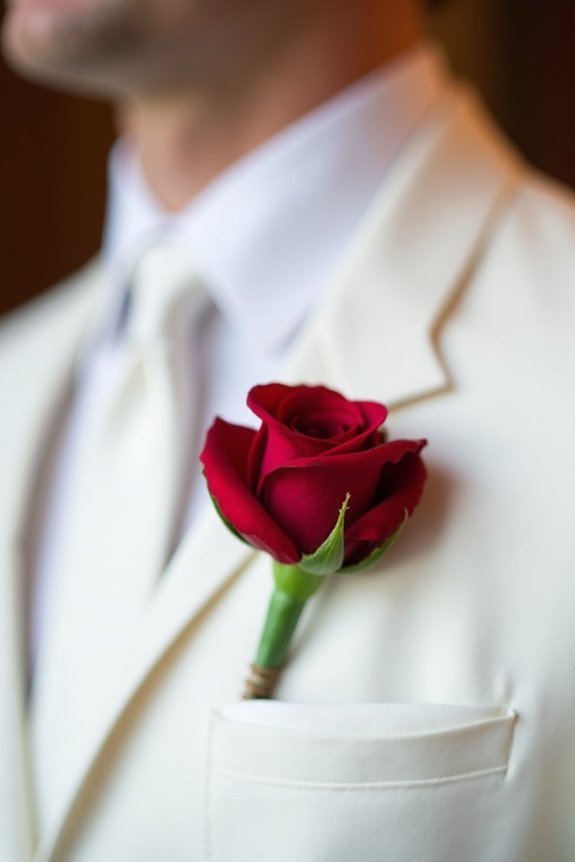
A rose boutonniere is a single flower or small cluster of flowers—typically featuring a rose as the focal bloom—that’s worn pinned to the lapel or chest of a jacket or vest.
We love how this timeless accessory instantly elevates any formal look, adding elegance and personality to your groom’s, groomsmen’s, and father’s wedding day attire.
The boutonniere complements your overall wedding aesthetic, whether you’re going classic, romantic, or modern.
It’s a small detail that makes a big impact, tying your florals together beautifully across the entire celebration.
Just as hair vines enhance bridal updos, boutonnieres serve as the finishing touch for groom and groomsmen looks, creating a coordinated and polished wedding party appearance.
Why Your Groomsmen Wear Boutonnieres
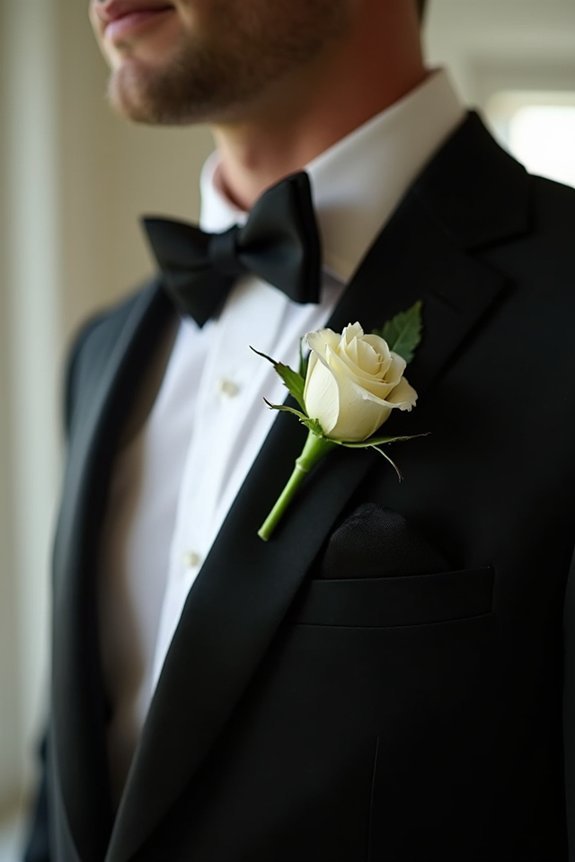
When you’re coordinating your wedding day details, boutonnieres for your groomsmen serve a purpose that goes far beyond pure decoration.
These small floral arrangements create visual cohesion, tying your groom’s party together as a unified group. We love how boutonnieres help guests instantly recognize your wedding party among the crowd. They also add polish and intentionality to photos—those boutonniere details catch the light beautifully in candid shots.
Beyond aesthetics, wearing boutonnieres makes your groomsmen feel honored and included in the celebration. It’s a simple gesture that elevates their role and reminds them they’re essential to your special day. Pairing boutonnieres with thoughtful groomsmen gifts further demonstrates your appreciation for their support and participation.
Choosing Your Rose Type and Color
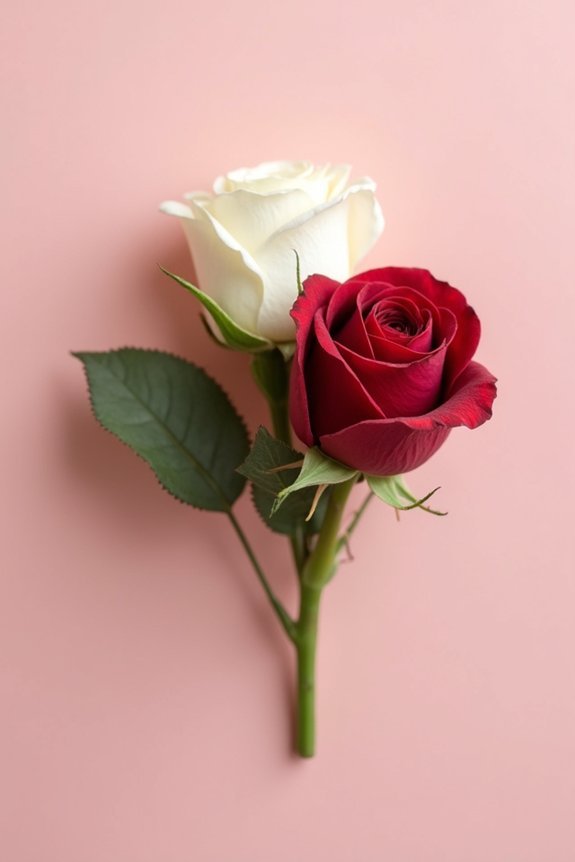
How do you narrow down rose varieties when there are thousands to choose from? We’ll help you navigate this beautifully. Consider these factors:
- Garden roses offer lush, romantic fullness perfect for classic weddings.
- spray roses provide delicate clusters ideal for smaller boutonnieres.
- David Austin roses blend old-world charm with modern durability.
- color psychology matters—red symbolizes love, blush suggests romance, white conveys elegance.
Your rose choice sets your wedding’s emotional tone.
Think about your venue’s aesthetic and your overall color palette. Seasonal availability affects both cost and freshness, so coordinate with your florist early. Pair your boutonniere with bridal jewelry sets that complement your rose colors and overall wedding theme for a cohesive look.
The right rose transforms a simple boutonniere into something truly meaningful.
Timeline: When to Order Your Boutonnieres
Getting your timing right makes all the difference—boutonniere orders aren’t something we can rush at the last minute without risking wilted flowers or stressed florists.
We recommend ordering six to eight weeks before your wedding day. This window gives your florist adequate time to source quality roses and plan their delivery schedule. If you’re marrying during peak season (spring and summer), aim for the earlier end of that timeline.
Confirm your final guest count at least three weeks out, then lock in your order two weeks before the wedding. This approach guarantees fresh, beautiful boutonnieres without last-minute scrambling. Using a guest list manager can help you track your final headcount and communicate it to your florist with confidence.
Classic Rose vs. Mixed Flower Boutonnieres
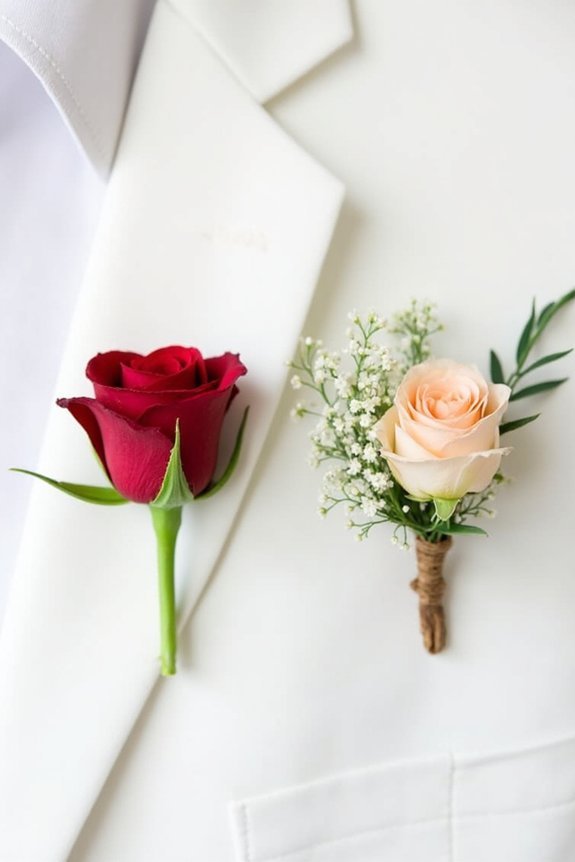
The choice between a single-bloom boutonniere and a mixed arrangement sets the tone for your groom’s and groomsmen’s look—it’s a decision that deserves thoughtful consideration.
A classic rose boutonniere offers timeless elegance and striking simplicity. Mixed arrangements, however, create visual interest and coordinate beautifully with your bridal bouquet.
Consider these factors:
- Your wedding style—formal affairs shine with single roses; garden themes welcome variety
- Color palette—roses alone showcase bold hues; mixed blooms blend multiple tones
- Budget efficiency—single roses cost less; mixed designs add dimension
- Floral cohesion—matching your bouquet creates intentional design flow
We recommend letting your overall aesthetic guide this choice. For comprehensive planning guidance, consult the 12-month wedding timeline to ensure your floral selections align with your overall design decisions.
The Right Flowers to Pair With Roses
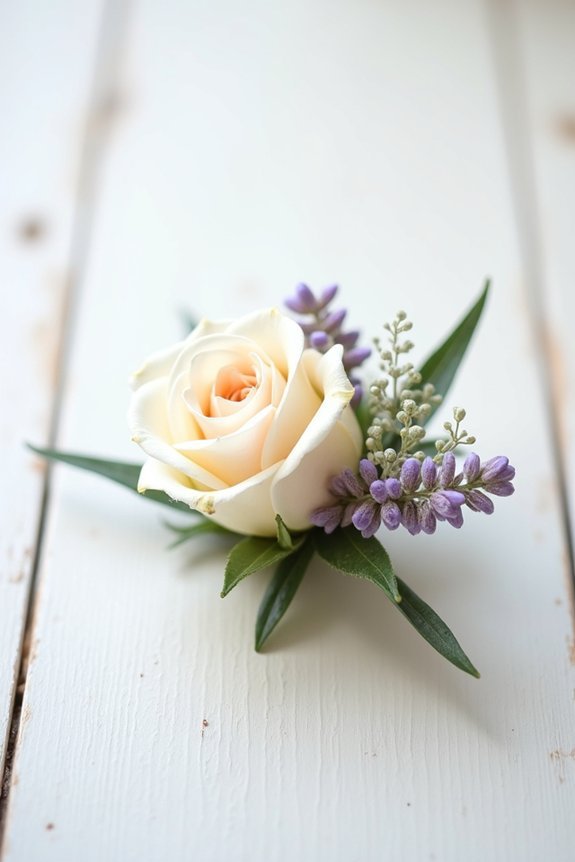
If you’ve decided that a mixed boutonniere suits your vision, selecting complementary flowers transforms a simple rose into a sophisticated statement piece.
We recommend pairing roses with garden roses for texture, spray roses for dimension, or ranunculus for romantic fullness. Greenery like eucalyptus or dusty miller adds elegance and softens the arrangement.
For subtle color contrast, consider hypericum berries or astilbe. Limonium provides airy filler that doesn’t compete with roses.
The key is choosing flowers that enhance rather than overwhelm your rose centerpiece, creating cohesion that photographs beautifully and reflects your wedding’s refined aesthetic.
Build Your Boutonniere: Step-by-Step
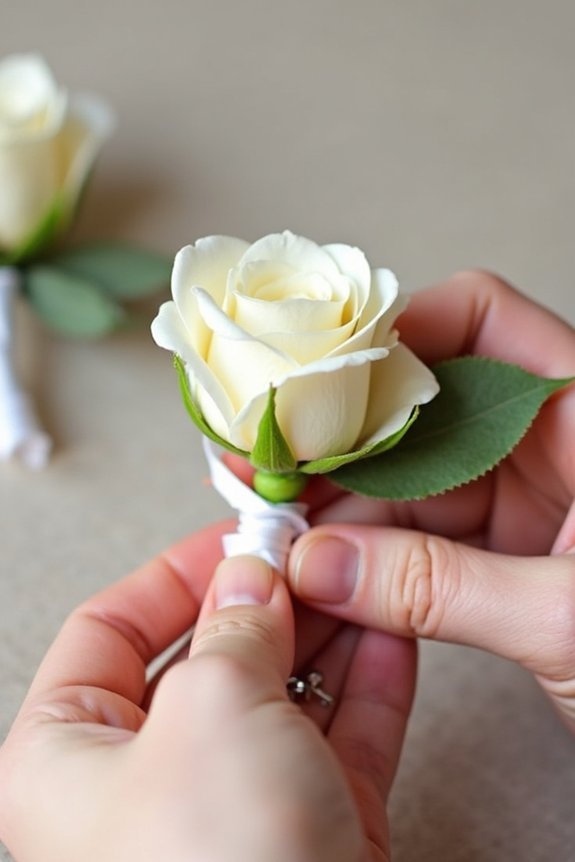
Once you’ve selected your roses and complementary flowers, assembling your boutonniere becomes an enjoyable process that transforms individual stems into a polished accessory.
We’ll guide you through creating something truly special:
- Trim stems at a 45-degree angle to increase water absorption and longevity.
- Remove lower leaves to prevent bacterial growth and keep flowers fresh.
- Arrange flowers in a spiral pattern, rotating each stem slightly for dimension.
- Secure tightly with floral tape, then wrap with ribbon for a finished look.
This hands-on approach gives you complete control over your boutonniere’s appearance, ensuring it perfectly complements your wedding vision.
Get the Sizing Right
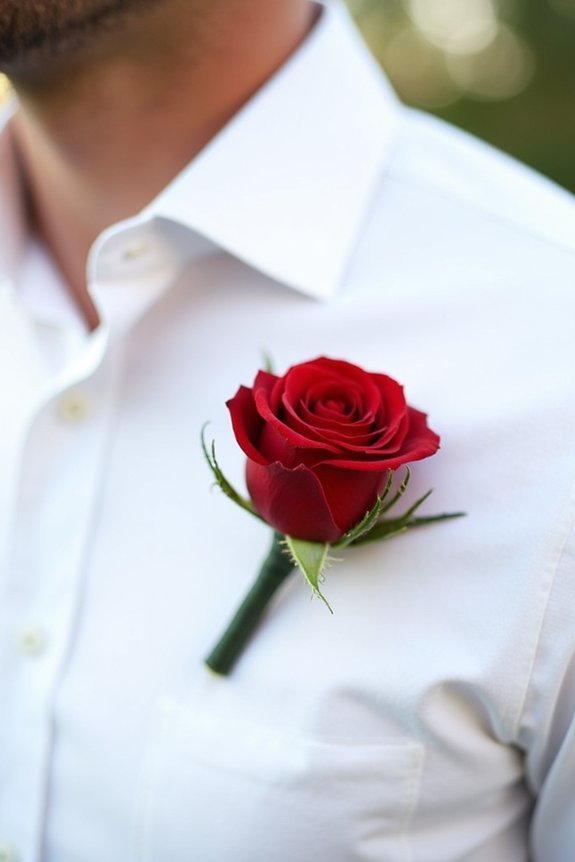
Now that you’ve mastered the assembly, let’s talk about proportions—because a boutonniere that’s too large overwhelms your lapel, while one that’s too small gets lost in your wedding photos.
We recommend aiming for three to four inches in length, which sits perfectly on most suit jackets. The width should measure about two inches across at its fullest point. This sizing guarantees your boutonniere photographs beautifully while maintaining elegant balance against your body.
Consider your frame too—taller grooms might carry slightly larger boutonnieres, while slighter builds work best with more delicate proportions. Getting this right makes all the difference.
What Boutonnieres Actually Cost
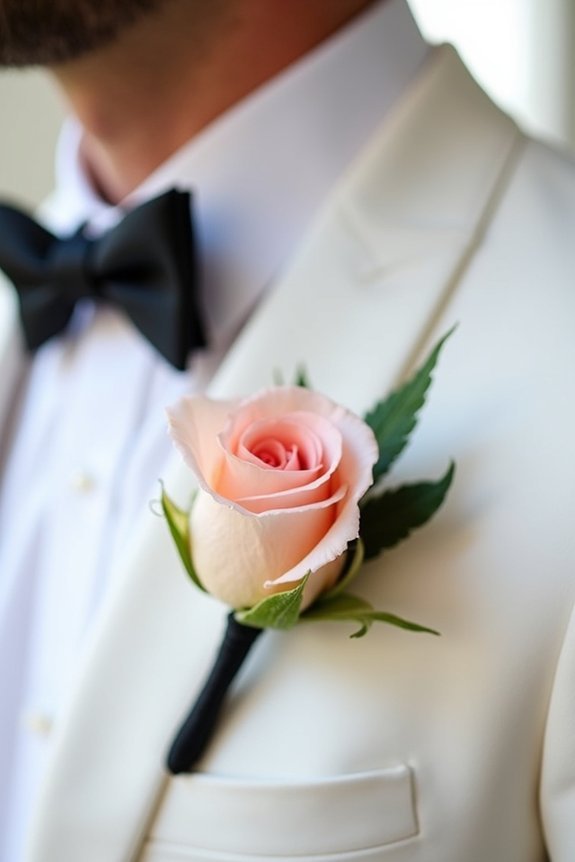
Boutonniere pricing varies widely depending on where you source them and what flowers you choose, so let’s break down what you’re actually paying for.
- Single stem roses typically cost $3–$8 each
- Designer florist boutonnieres range from $10–$20 per piece
- Bulk orders from wholesalers offer discounts at $2–$5 each
- DIY supplies cost $1–$3 per boutonniere when you assemble them yourself
The price reflects flower quality, design complexity, and labor.
Seasonal availability affects costs too—expect premium pricing during peak wedding months.
We recommend getting quotes from multiple florists and considering bulk pricing if you’re outfitting a large wedding party. You’ll find options that fit your budget beautifully.
Keep Boutonnieres Fresh All Day
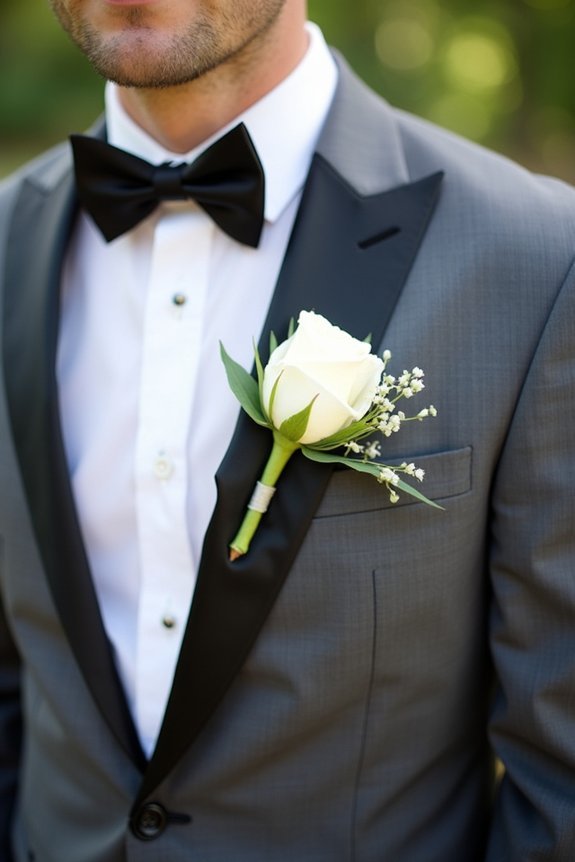
The flower-freshness challenge is real on wedding day, and we comprehend the pressure to keep those boutonnieres looking crisp and vibrant from getting-ready photos through the final dance.
Start by storing them in a cool space—ideally 45-50°F—until it’s time to pin them on. Keep stems wrapped in damp floral tape or a moisture-retaining gel. Mist the petals lightly with water just before photos.
Avoid direct sunlight and heat sources throughout the day. Your florist can add floral preservative to the water, which extends freshness considerably.
These simple steps guarantee your boutonnieres stay beautiful, photo-ready, and lush all day long.
Common Boutonniere Mistakes to Avoid
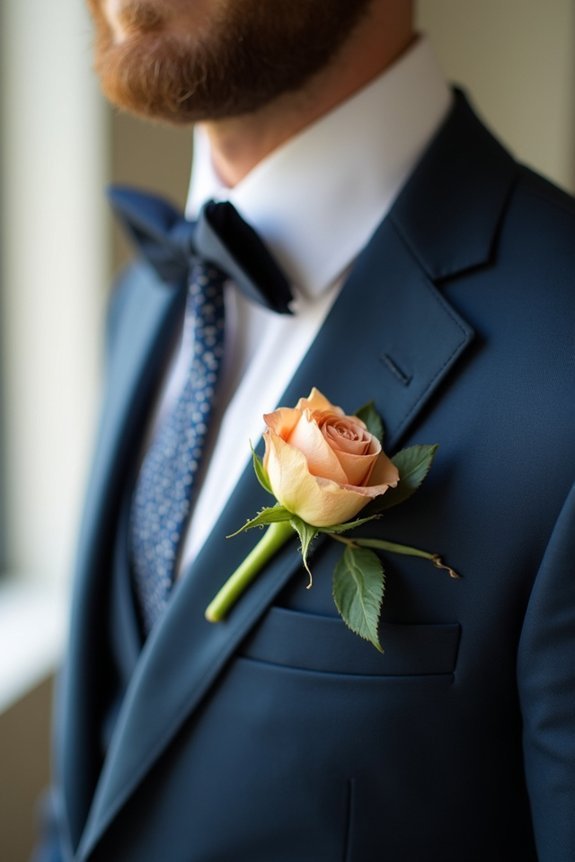
What’s the difference between a boutonniere that wilts by cocktail hour and one that stays picture-perfect? It’s all about avoiding common mistakes we see happen again and again.
- Skipping floral food – those tiny packets matter greatly for keeping stems hydrated.
- Wrapping too tightly – restrict circulation and cause premature wilting of delicate petals.
- Pinning through stems – creates wounds where bacteria enter and block water absorption.
- Storing in warm areas – heat accelerates the wilting process considerably.
We encourage you to implement these simple fixes. Your groom and groomsmen deserve boutonnieres that look as fresh in evening photos as they do during morning preparations.
Frequently Asked Questions
Can I Use Grocery Store Roses for Boutonnieres, or Do I Need Florist-Quality Blooms?
We’d love to say grocery store roses’ll work, but they’ll wilt faster than your Pinterest board. Florist-quality blooms last longer, hold their shape better, and won’t embarrass you in photos. They’re worth the splurge.
How Do I Attach a Boutonniere to a Suit Jacket Without Damaging the Fabric?
We recommend using a boutonniere pin with a plastic guard to protect your jacket’s fabric. Angle the pin through the lapel’s underside, securing the stem firmly without piercing the front surface.
Should the Groom’s Boutonniere Look Different From His Groomsmen’s Boutonnieres?
We recommend differentiating your groom’s boutonniere from his groomsmen’s with a slightly larger bloom, unique flower variety, or distinctive ribbon. This subtle distinction elevates his role while maintaining cohesive wedding aesthetics.
Can Boutonnieres Be Made the Day Before the Wedding?
We recommend making boutonnieres the day before your wedding if you refrigerate them properly. They’ll stay fresh in a cool environment, giving you one less task on your big day.
What’s the Best Way to Transport Boutonnieres to the Ceremony Venue?
We recommend transporting boutonnieres in a sturdy, flat container lined with damp paper towels. Keep them cool and upright during transit, arriving at least an hour before the ceremony so they’re fresh when your groom and groomsmen pin them on.